

Is the Strait of Hormuz blockade working? – The United States has been operating a blockade of the Strait of Hormuz since April, a few months into the war. In recent months, President Donald Trump has touted the blockade’s success in many social media posts, even asserting that the U.S. now has full control of the Strait of Hormuz.
Along with that, the U.S. last month launched a campaign of new sanctions, aimed at countries that continue to do business with Iran, as well as occasional military strikes. The theory is that combined pressure from all of these measures will lead Iran to back down.
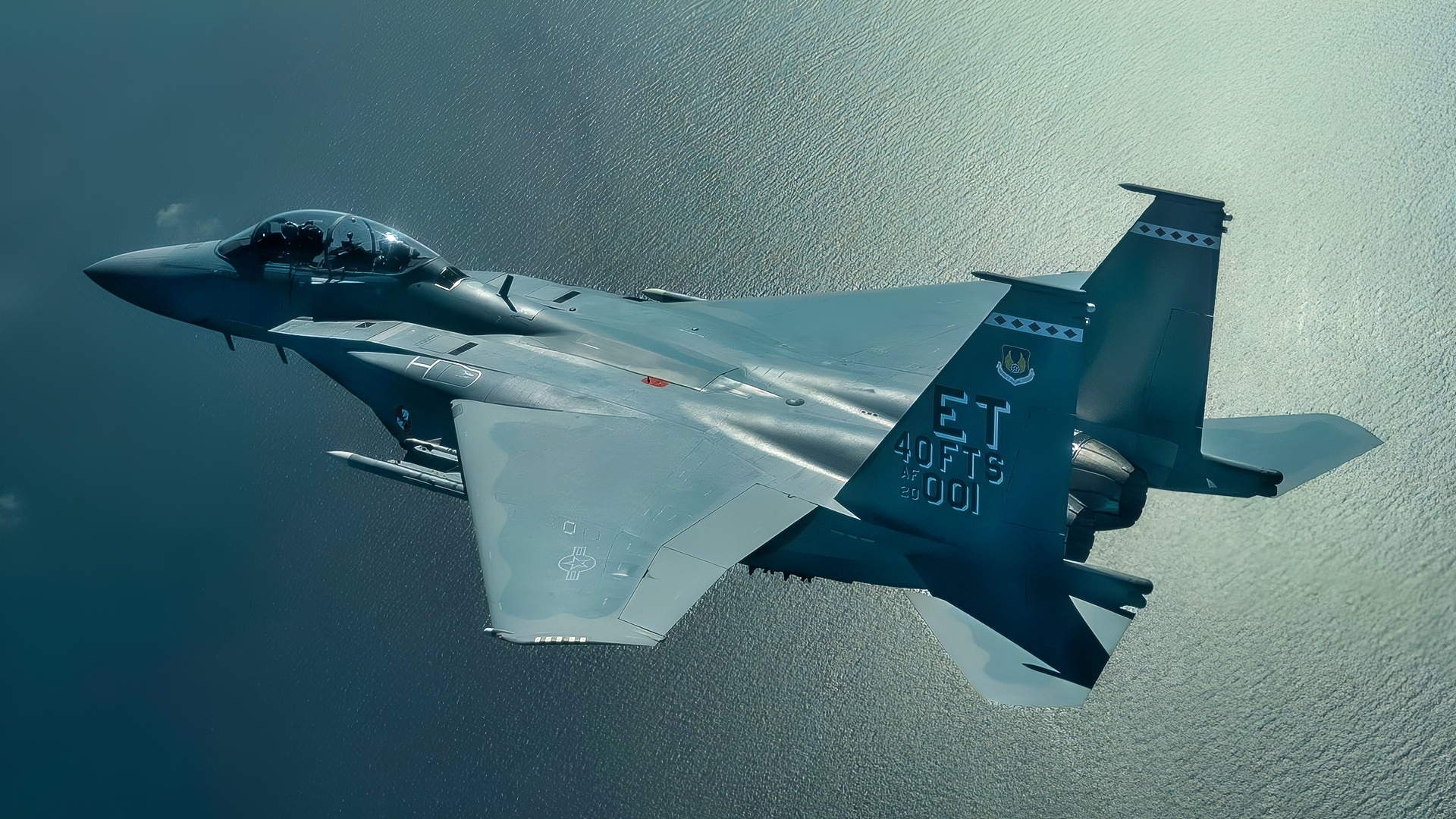
U.S. Air Force Lt. Col. Richard Turner, 40th Flight Test Squadron commander flies 40 FLTS Senior Enlisted Leader, MSgt Tristan McIntire during a test sortie in the F-15EX Eagle II over the Gulf of Mexico on Jun. 14, 2022. Assigned to the 96th Test Wing at Eglin Air Force Base, Fla., the F-15EX Eagle II is the Air Force’s newest 4th generation fighter being tested at the 40 FLTS. (U.S. Air Force photo by Tech. Sgt. John McRell)
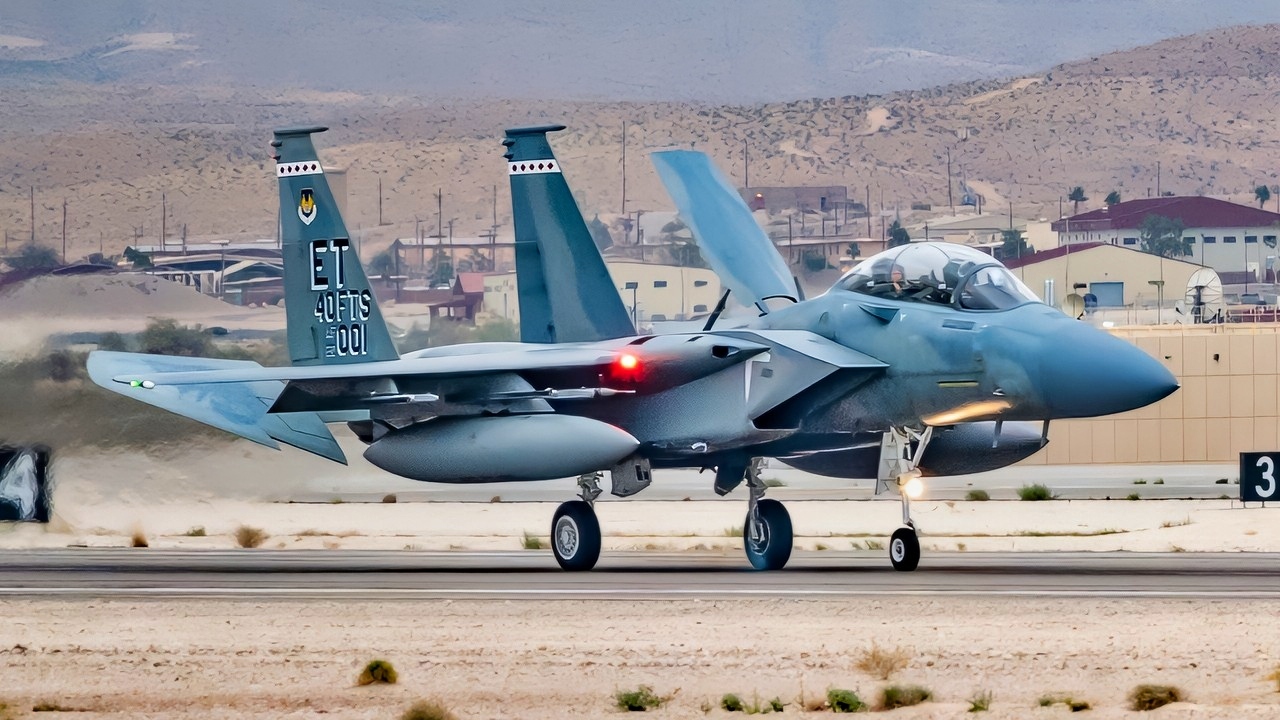
An F-15EX Eagle II lands on the flight line after a training operation at Nellis Air Force Base, Nevada, Nov. 15, 2023. The aircraft is able to fly at a speed of Mach 2.5, constituting it as the world’s fastest fighter jet. (U.S. Air Force photo by Airman 1st Class Elizabeth Tan)
However, a new CNN analysis says that the current strategy is likely to push Iran towards “military escalation.”
“Fundamentally Recalibrated”
In the analysis, Mostafa Salem and Aida Karimi write that Iran isn’t showing any signs of buckling under the pressure.
The regime has been threatening countries that have participated in the blockade.
“New strategies must be adopted in the war, in negotiations, and in confronting the blockade,” Mohsen Rezaei, the leader of the Supreme National Security Council, said this week in an interview with state media, as cited by CNN. He added that potential new tactics included a new “exclusion zone” that could cover more of the Persian Gulf and the Gulf of Oman.
“In recent days, Washington has received a clear warning from Iran’s new missiles,” Rezaei said on X this week. “Economic warfare will be met by a maritime exclusion zone across the Persian Gulf to the blockade perimeter. The operational posture toward US warships and bases has been fundamentally recalibrated.”
And then, on Monday, the Iran-aligned Houthis launched attacks on Saudi oil facilities.
The CNN analysis also said that, after weeks of talks between Iran and Oman about a new governing status for the State of Hormuz, Iranian Foreign Ministry spokesman Esmaeil Baghaei said Monday that a “temporary safe route” would likely be registered this week with the International Maritime Organization, although it’s not clear whether the U.S., whose president threatened last month to bomb the American ally Oman, would recognize any such agreement.
What’s Stopping an Agreement
According to that CNN analysis, Majed al-Ansari, a spokesman for the Qatari Foreign Ministry — which has been at the forefront of mediation between the sides — has pointed to two main obstacles to ending the war: “political will and technical solutions.”
“Political will is based on narrative, meaning that we find the right narrative for the parties of the conflict to get out of this crisis. And it’s juggling four or five balls at the same time in trying to find all the solutions needed,” al-Ansari told CNN.
Iran’s President Masoud Pezeshkian said last week that he is willing to return to the Memorandum of Understanding ceasefire agreement from June, but it’s not clear if more hardline regime elements are on board- and the U.S. almost certainly isn’t eager to return to that peace agreement that collapsed within weeks.
“Tehran is trying to reconcile two pressures: a war-weary population that needs economic relief and an ideological base that does not want capitulation,” Hamidreza Azizi, senior Iran analyst at the International Crisis Group (ICG), told the CNN analysts.
“That is why the preferred outcome is diplomacy, but diplomacy that can be presented domestically as the result of Iranian strength rather than retreat.”
About Those “New Missiles”
The mention by Rezaei of “new missiles” was possibly a reference to the “Castle Breaker” ballistic missiles, also known as Kheibar Shekan. USA Today reported more about those missiles at the end of August.
USA Today described the missiles as “a new generation of ballistic missiles that can evade American air defenses and strike with far greater precision.” The missiles have been used “extensively” during the war, that analysis said, including in Iran’s attacks on the military bases of U.S. allies in the Middle East.
“Unlike a conventional ballistic missile that travels a fixed path defenders can track and try to intercept, the Kheibar Shekan can quickly change course in the final phase of its descent, potentially slipping past air defenses and hitting targets with devastating precision,” USA Today quoted military sources as saying.
About the Author: Stephen Silver
Stephen Silver is an award-winning journalist, essayist, and film critic, and contributor to the Philadelphia Inquirer, the Jewish Telegraphic Agency, Broad Street Review, and Splice Today. The co-founder of the Philadelphia Film Critics Circle, Stephen lives in suburban Philadelphia with his wife and two sons. For over a decade, Stephen has authored thousands of articles that focus on politics, national security, technology, and the economy. Follow him on X (formerly Twitter) at @StephenSilver, and subscribe to his Substack newsletter.


