


Seven months after the February 2026 strikes that killed Iran’s Supreme Leader and shattered much of its nuclear infrastructure, the United States finds itself locked in a different kind of standoff: keeping the Strait of Hormuz open.
The question now dividing Washington is whether that fight for the world’s most important oil chokepoint has crowded out the original goal of the conflict, ensuring that Iran never builds a nuclear weapon.
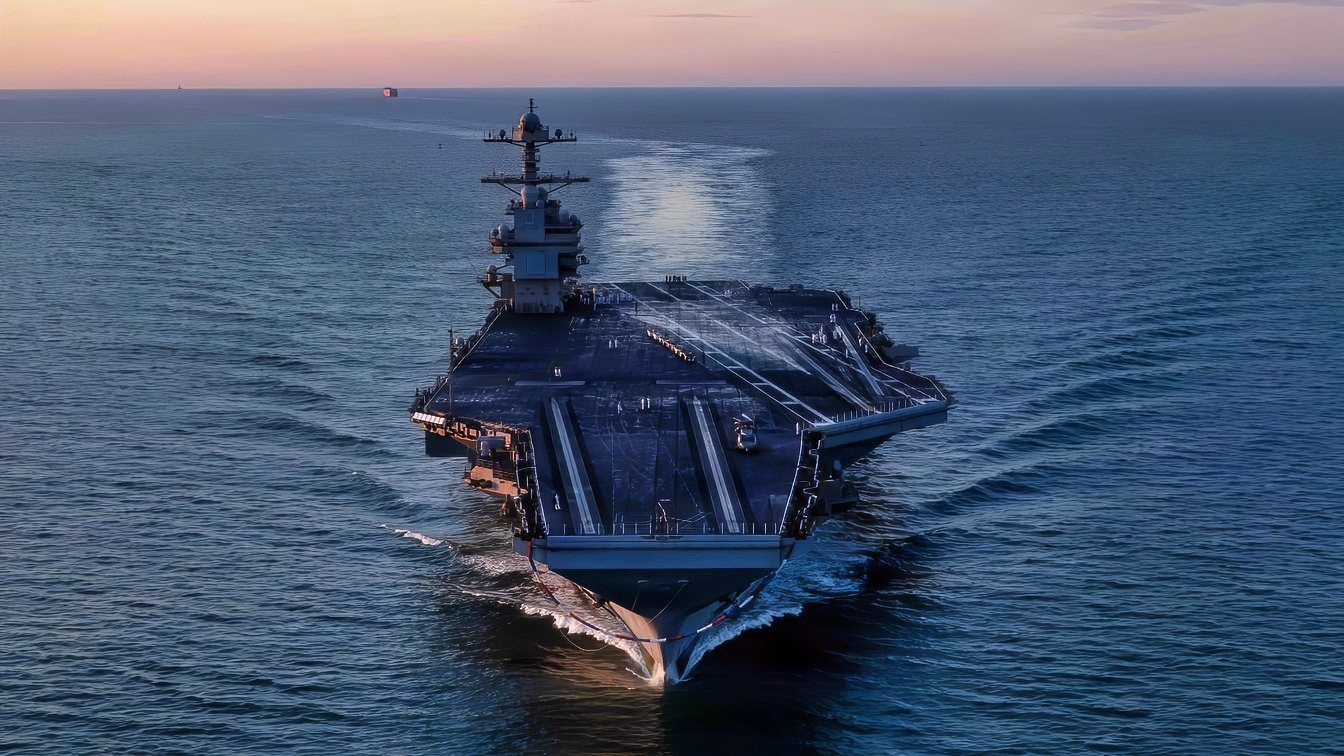
NORFOLK, Va. (May 16, 2026) USS Gerald R. Ford (CVN 78) returned to Naval Station Norfolk, May 16, 2026, following a historic 11-month deployment to U.S. 2nd, 4th, 5th, and 6th Fleets as part of the Gerald R. Ford Carrier Strike Group. Before returning to Norfolk after 326 days, the Gerald R. Ford crew conducted 23 replenishments-at-sea and sailed over 57,713 nautical miles. Embarked Carrier Air Wing 8 logged more than 5,760 flight hours and 12,200 flight launches. (U.S. Navy photo by Mass Communication Specialist 2nd Class Mike Shen)
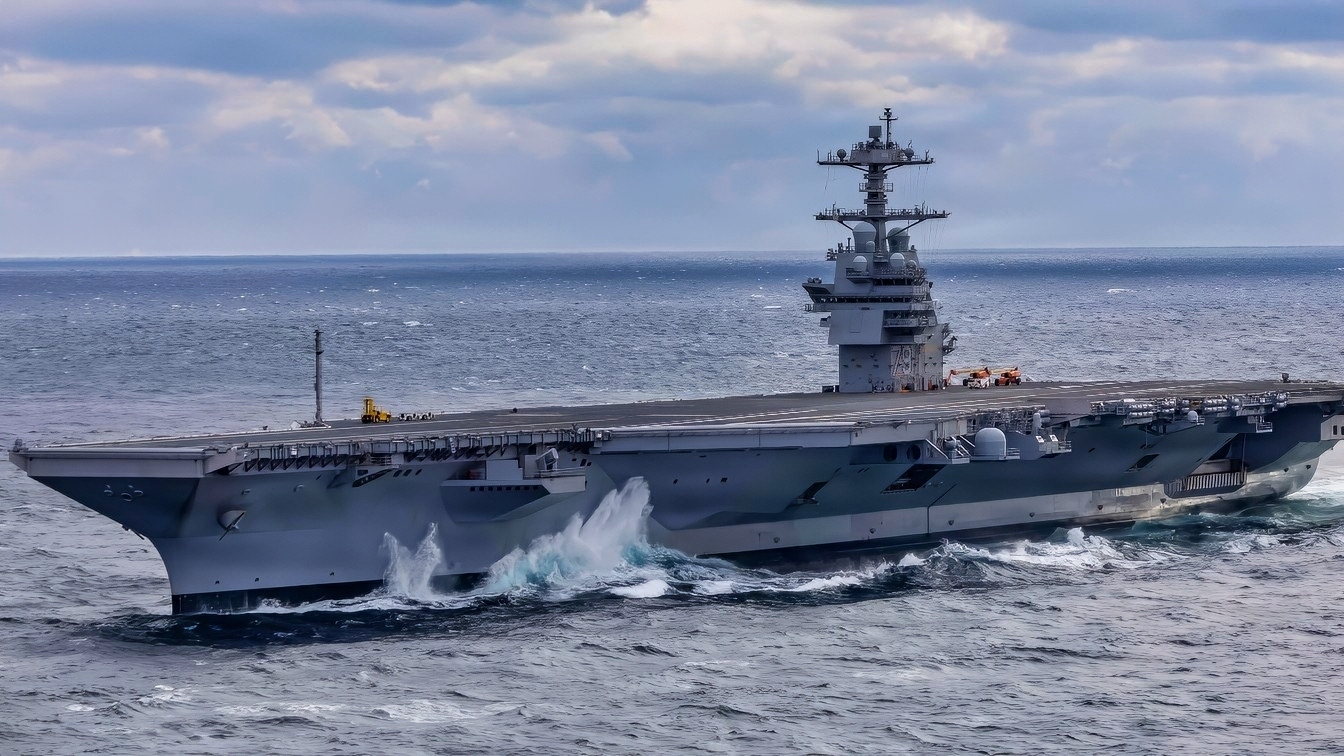
Pre-Commissioning Unit John F. Kennedy (CVN 79) transits the Atlantic Ocean during Builder’s Sea Trials, Jan. 28, 2026. Builder’s Trials provide an opportunity to test ship systems and components at sea for the first time, and make required adjustments prior to additional underway testing. (U.S. Navy photo by Mass Communication Specialist 2nd Class Kaitlin Young)
No meaningful diplomatic proposals or talks have addressed Iran’s uranium enrichment since the expired 60-day window following the June Memorandum of Understanding.
From Nuclear Strikes to a Naval Standoff
The conflict began with a stated aim: deny Iran “all paths to a nuclear weapon.” The initial strikes hit Fordow, Natanz, and Isfahan, and Tehran says its stockpile of enriched uranium, including roughly 440 kilograms enriched to 60 percent, a short technical step from weapons grade, is buried under rubble.
The IAEA has not been able to verify that claim for more than eight months, and its director general has called the loss of visibility a serious proliferation concern.
What followed, though, was a shift in the visible center of gravity. Iran responded to the strikes by threatening and disrupting shipping through Hormuz, the strait through which roughly a fifth of the world’s oil passes.
The U.S. answered with a naval blockade of Iranian ports, redirecting or disabling scores of vessels, an operation the administration dubbed a “wall of steel.”
A brief ceasefire and Memorandum of Understanding in June set a 60-day window to resolve the nuclear issue, with Iran reaffirming it would not pursue a weapon, but the truce has since fractured repeatedly.
Strikes on mine-laying operations, tanker attacks, and retaliatory Iranian action have continued into September, and President Trump has more than once declared the ceasefire “over,” only for lower-level fighting and diplomacy to resume.
Trump has also floated the idea of declaring U.S. control over the Strait itself a kind of American “territory,” and has repeatedly claimed “total control” over the waterway, even as Iran disputes that and commercial shippers remain wary of transiting it.
Did the Nuclear Goal Get Lost?
There is an argument, made by critics including some Democrats in Congress, that the administration’s attention has drifted from denuclearization toward a much narrower and more visible fight over shipping lanes and oil prices.
Their case: months of U.S. statements and military action have centered on tanker traffic, blockade enforcement, and mine clearance, while the actual status of Iran’s uranium stockpile, arguably the more dangerous long-term problem, has gone unverified for the better part of a year.
One member of Congress put it bluntly, arguing that Iran’s leadership now sees control of the strait as more strategically valuable leverage than a bomb, precisely because Washington has treated it as the more urgent battle.
The administration’s response is that the two issues aren’t separate.
Officials argue that a functioning blockade and Hormuz enforcement regime is nonproliferation policy in practice: it denies Iran the oil revenue and economic breathing room it would need to reconstitute a weapons program, while U.S. surveillance assets (including, the administration has said, space-based monitoring) are watching Iran’s known nuclear sites for signs of rebuilding.
On this view, the Strait of Hormuz fight is a means of keeping pressure on Iran, not a distraction from it.
What’s harder to dispute is the evidence gap. Without IAEA inspectors on the ground, U.S. and allied officials are relying on strike-damage assessments and surveillance rather than verified accounting of Iran’s enriched uranium.
That uncertainty predates the Hormuz crisis, but the extended diplomatic and military bandwidth devoted to the Strait has, at a minimum, meant fewer public updates on where the nuclear track actually stands.
What Are Washington’s Options?
Restore inspections first. Reviving IAEA access to declared and suspected sites, even a partial, negotiated arrangement, would resolve the single biggest unknown: whether the 60 percent-enriched stockpile survived the strikes and where it is.
Iran has resisted this, and any deal would likely require sanctions relief or reconstruction aid in return.
Formalize the Hormuz arrangement diplomatically. The unofficial June memorandum, freedom of transit in exchange for lifting the blockade, collapsed amid mutual distrust, but a verified, enforceable version (with third-party monitoring, perhaps involving Oman or Gulf states as brokers) could stabilize shipping without requiring a permanent U.S. naval presence.
Maintain or tighten the blockade and strikes. The administration’s current approach: keep disabling mine-layers and vessels tied to Iranian ports, accept intermittent strikes, and treat any threat to shipping as a trigger for retaliation.
This keeps pressure on Tehran but risks indefinite low-grade conflict, and U.S. officials have themselves noted strain on munitions stockpiles from sustained operations.
Escalate toward further regime pressure. Congressional and administration voices have floated further strikes on remaining military assets or coastal operations to compel Iranian compliance, an option that risks wider conflict and, per polling, is unpopular with a majority of U.S. voters.
De-escalate and rely on deterrence. Scale back naval enforcement, accept a rougher status quo in the strait, and rely on the deterrent effect of the February strikes and continued surveillance to catch any rebuilding effort, trading some short-term uncertainty for reduced military exposure.
None of these paths cleanly separates the nuclear question from the Hormuz fight, which is precisely the critics’ point: as long as verification remains absent, “winning” the strait doesn’t answer whether Iran is any further from, or closer to building a nuclear weapon.
About the Author: Steve Balestrieri
Steve Balestrieri is a National Security Columnist. He served as a US Army Special Forces NCO and Warrant Officer. In addition to writing on defense, he covers the NFL for PatsFans.com and is a member of the Pro Football Writers of America (PFWA). His work was regularly featured in many military publications.


