

The Iran war has cost the United States more than $33.4 billion, a new report from the Pentagon’s independent watchdog says.
Covering the conflict’s first months through Tuesday, 30th June, the report is the first official assessment of the cost of the war’s cost.
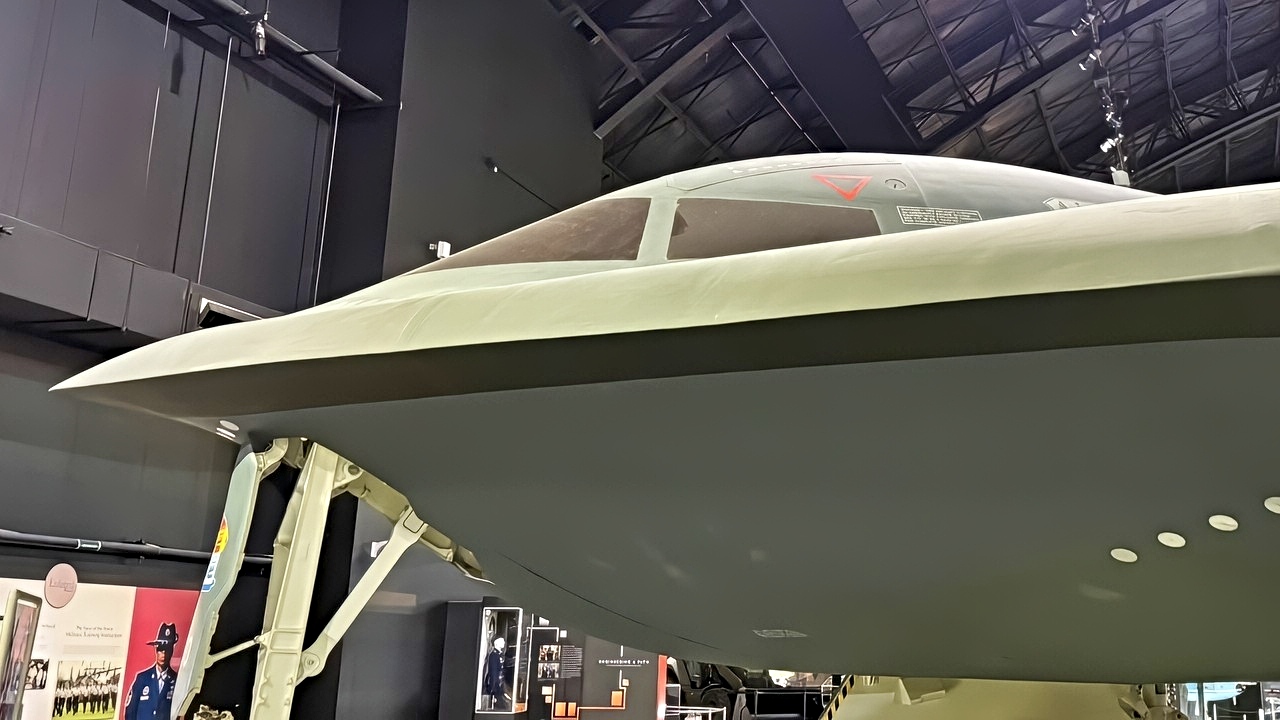
B-2 Bomber Sitting in Museum National Security Journal Photos. All Rights Reserved.

B-2 Stealth Bomber July 2025 National Security Journal Photo.
With almost three months having passed, the true cost is undoubtedly higher. So, what does that mean for U.S. President Donald Trump as the country prepares for November’s midterms?
The Key Details
Although many of the report’s findings have been publicly released throughout the conflict, it marks the first official account of the damage to date.
It detailed the impact on supplies of advanced weapons, while revealing “industrial base bottlenecks for munitions resupply.”
“The most persistent bottlenecks remain in the production of solid rocket motors, the availability of high-grade explosives and propellants, and the recruitment of skilled manufacturing labor,” the report notes, adding that the Defense Department was reallocating funding to “alleviate constraints and chokepoints as they arise.”
It also outlines the conflict’s costs, totaling $33.4 billion up to the end of June.
Of this, $22.3 billion was replacement cost for expanded munitions. Another $3.7 billion was for equipment losses, with £7.4 billion in additional operating costs.
Crucially, the $33.4 billion does not include the cost of repairing damaged U.S. military infrastructure.
On that point, the report says Iranian attacks damaged or destroyed hundreds of buildings and structures at American bases across the Middle East.
It also notes the losses in aircraft, with as many as 30 MQ-9 Reapers – a remotely piloted aircraft used for precision strikes – destroyed during the conflict.
The level of damage inflicted by Tehran is also explained, with the authoritarian regime launching more than 6,000 attack drones and more than 1,500 ballistic missiles towards U.S. and allied forces.
In terms of loss of life, 7 U.S. personnel were killed in action up to the end of June.
Another four were killed in July, and another seven were wounded in non-hostile incidents.
A total of 417 were wounded in action during the first four months of the war.
The damage to embassies by Iranian attacks totaled $184 million – the vast majority taking place in Iraq, where more than 600 strikes were reported on U.S. facilities.
A New Insight
Much of the report outlines information that was already publicly known, such as the loss of U.S. lives and attacks on bases across the Middle East.
The U.S. military said earlier this year that 17 Americans had been killed during the conflict, while U.S. allies have repeatedly launched interceptors towards Iranian projectiles that have targeted military bases.
The headline figure of $33.4 billion also echoes what Defense Secretary Pete Hegseth told Congress in July, when he estimated a cost to that point of $37.5 billion in a fiery hearing with the Senate Appropriations Committee.
However, Monday’s report marks the first assessment from an independent body outside the Trump administration. Alas, it offers a clearer picture of the conflict, free from the partisan nature of U.S. politics.
Unanswered Questions
Because the report only covers through the end of June, it does not account for subsequent costs.
On Tuesday, Defense officials told Congress that the figure had now climbed to more than $42 billion – a $4.5 billion increase on the previous July estimate.
What remains unclear is how high that figure may rise before a permanent end to the conflict can be found.
Iran, through its economic leverage and control over the Strait of Hormuz, is refusing to surrender, and the U.S. President admitted last week that a deal may not be reached until after November’s midterms.
Political Ramifications
The GOP is battling to retain control of Congress this November, but the Iran war is proving unpopular with Americans as living costs continue to rise.
The left-leaning Center for American Progress estimated last month that the conflict had cost each American household at least $1,200 – a figure that will only increase as the war drags on.
Politicians often spin the narrative, and the Iran war has been no different.
However, the new, official report gives credibility to Democrat claims that the war is costing Americans an enormous amount of money, and doubt will be embedded in the minds of swing voters as to whether the conflict is one that is worth continuing.
President Trump, citing Iran’s desire for a nuclear weapon, claims it is. Whether the country agrees with him will become clear this November.
About the Author: Shay Bottomley
Shay Bottomley is a British journalist. He has written for the Western Standard, Business Insider, Maidenhead Advertiser, Slough Express, Windsor Express, Berkshire Live and Southend Echo.