

In its efforts to isolate Iran, including the Operation Economic Outcast effort that was announced last month, the Trump Administration has sought to punish countries that continue to do business with Iran.
One of the biggest challenges of that approach is that Iran gets more help than many believe from a powerful country: China.
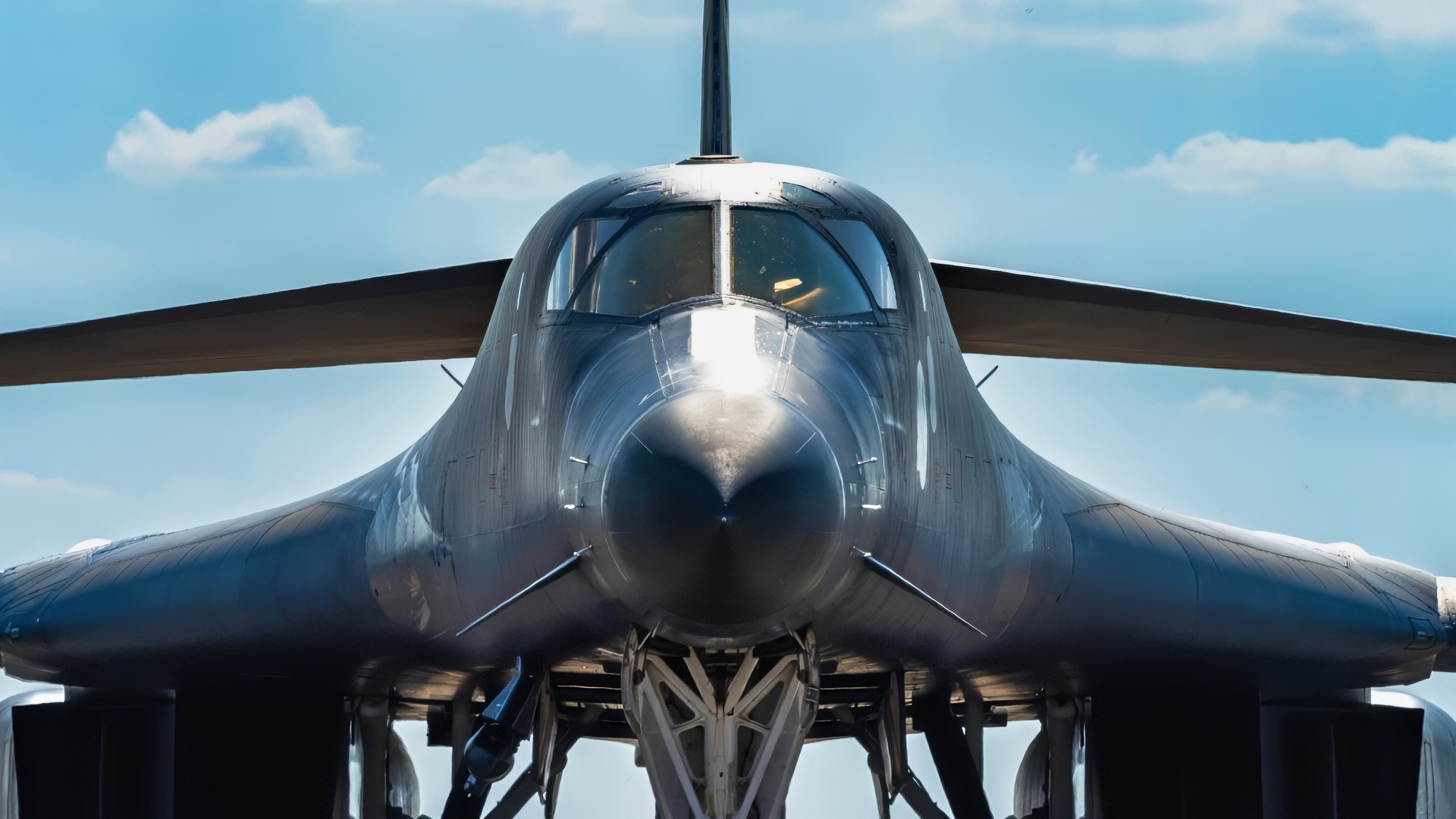
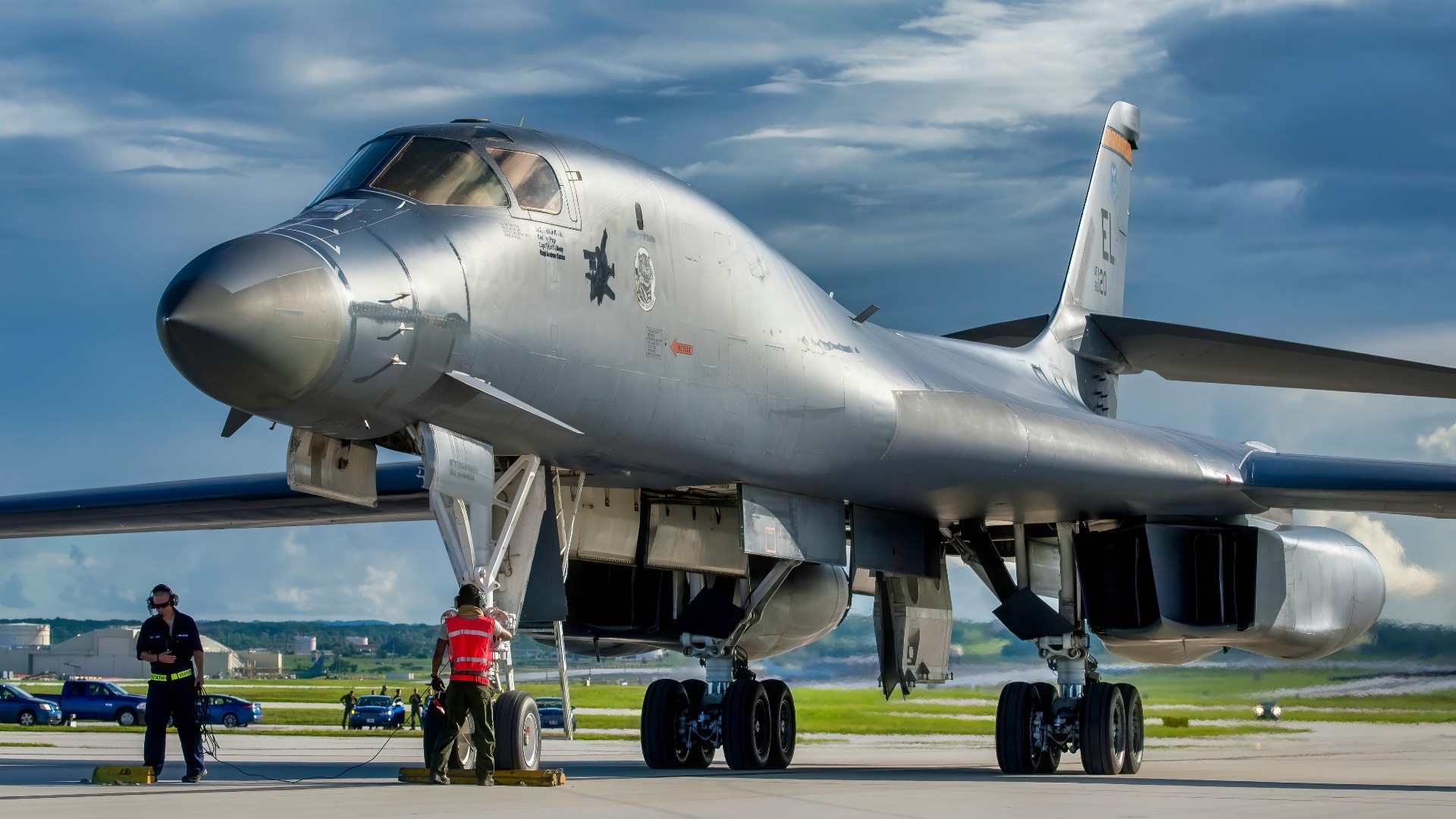
A U.S. Air Force B-1B Lancer assigned to the 345th Expeditionary Bomb Squadron is photographed after landing at Dyess Air Force Base, Texas, Aug. 22, 2025. Three bombers deployed for Bomber Task Force Europe with a total force integration team composed of roughly 30% active-duty and 70% reserve Airmen from the 7th Bomb Wing and 489th Bomb Group. (U.S. Air Force photo by Senior Airman Jade M. Caldwell)

A U.S. Air Force B-1B Lancer assigned to the 345th Expeditionary Bomb Squadron, decends for landing at Ørland Air Base, Norway, during a Bomber Task Force Europe deployment, Aug. 9, 2025. The BTF mission highlights how we deliver effects rapidly across dynamic and contested environments through integrated training. (U.S. Air Force photo by Staff Sgt. Tambri Cason)
The Wall Street Journal reported last week on the extent of the help Iran receives from China.
A Surprise Two-Step
The Journal noted that this summer, when the U.S. and Iran reached the “Memorandum of Understanding” deal that temporarily halted the war, Chinese President Xi Jinping touted China’s role in bringing about the agreement.
However, the same day, a plane arrived in Tehran for Iran’s Ministry of Defense, with “dual-use” electronics components, including some that can be used for missile guidance systems and drones.
According to the Journal’s analysis of customs data, it was one of 1,300 shipments that arrived in Iran from China in the first six months of 2026.
But it’s not just the components, the Journal said.
China remains the last major consumer of Iranian oil, in contravention of Western sanctions on such shipments, while Iran maintains indirect access to China’s financial systems.
The two countries, the Journal said, have established “a complex system aimed at evading U.S. sanctions.”
In addition, Chinese companies have done other things to assist Iran’s war effort, including chemical precursors used in ballistic missiles and satellite imagery that has been used in Iranian strikes.
Reuters reported in late July that China was planning to ship shoulder-launched missile systems to Iran.
Meanwhile, the Foundation for Defense of Democracies reported last month that China was the “last major runway” open to Iran’s airlines that are sanctioned by much of the rest of the world.
A Dilemma for Washington
The Journal had earlier reported, when Operational Economic Outcast launched, that Treasury Secretary Bessent had not specifically mentioned China, or any other country, in his speech.
The Journal noted that the Trump Administration had been reluctant to “seriously confront” China over its support for Iran.
By that point, the U.S. had sanctioned some Chinese entities without pushing against China itself.
According to the Wall Street Journal, this reflects Trump’s desire to improve relations with China.
Last week, when President Xi visited the United States and met with President Trump, Trump warned his counterpart against assisting Iran.
Per Reuters, David Perdue, the U.S. ambassador to China, said after the meeting that Xi had assured the U.S. that China would not support Iran.
“We’ve seen movement … on that already,” Perdue said in a Fox News interview after the sides met.
Trump raised the issue of Iran with Xi after lawmakers urged him to do so.
“Strategic Partnership”
According to the semi-official Tasnim News Agency in Iran, Iran’s Economy Minister Ali Madanizadeh said Wednesday that Iran envisions a “new chapter of strategic partnership” with China through expanded economic cooperation.
In a meeting to mark the 77th anniversary of the founding of the People’s Republic of China, the minister met with Chinese Ambassador to Tehran Cong Peiw, and the two officials celebrated the “historical, civilizational and contemporary ties” between Iran and China.
The meeting also marked the 55th anniversary of the two countries establishing diplomatic relations, and the tenth anniversary of China and Iran establishing a “comprehensive strategic partnership.”
Madanizadeh also thanked the Chinese ambassador for China supporting Iran’s “sovereignty, territorial integrity and national dignity” and also for providing humanitarian aid during what the minister called the “recent US-Israeli war of aggression.”
Also marking the 55th anniversary of Iran and China’s diplomatic relations, Iran’s Parliament Speaker Mohammad Bagher Ghalibaf celebrated the relationship, the Mehr News Agency reported.
Ghalibaf, who is also a “special representative” for Chinese affairs in the Iranian government, said in his remarks that the anniversary is an opportunity not only to “commemorate the past, but also to reflect on the future.”
He added that Iran and China are “two ancient Asian civilizations” with a shared commitment to maintaining their own sovereignty. He said Iran has a “strong political will” to develop relations with China.
About the Author: Stephen Silver
Stephen Silver is an award-winning journalist, essayist, and film critic, and contributor to the Philadelphia Inquirer, the Jewish Telegraphic Agency, Broad Street Review, and Splice Today. The co-founder of the Philadelphia Film Critics Circle, Stephen lives in suburban Philadelphia with his wife and two sons. For over a decade, Stephen has written thousands of articles on politics, national security, technology, and the economy. Follow him on X (formerly Twitter) at @StephenSilver, and subscribe to his Substack newsletter.


