
To state the obvious, it’s in the world’s interest for Russia’s full-scale invasion of Ukraine to end.
Yet the war shows no sign of ending anytime soon.

Tu-22M Bomber from Russian Air Force. Image Credit: Creative Commons.
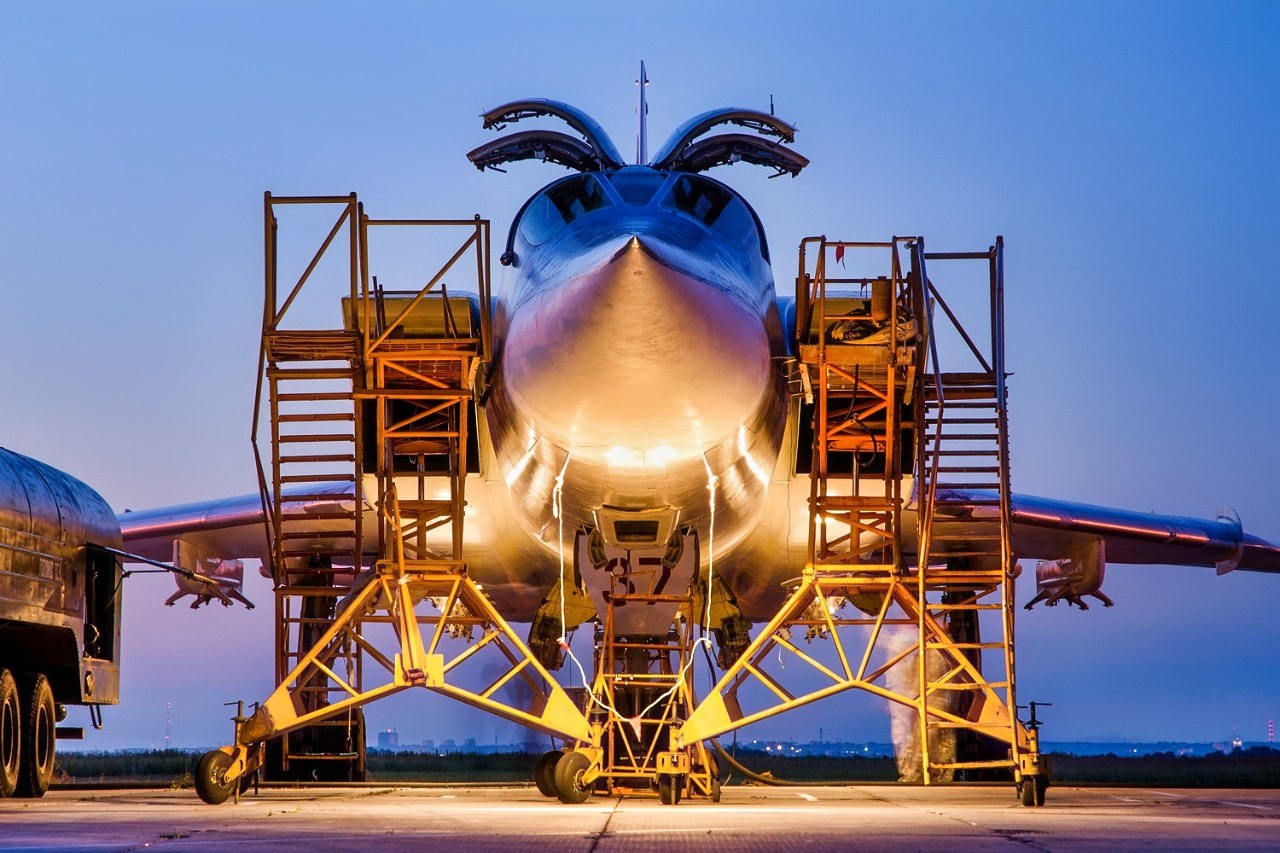
Tu-22M Bomber from Russia. Image Credit: Creative Commons.
Moscow and Kyiv are so far apart that any concessions will be too major for either party to consider.
A lack of consensus among Western allies has done little to help the situation.
A Much-Needed Conclusion
Ukraine, while holding firm across the 750-mile front line, sees almost all of the fighting taking place within its borders – the only exceptions being the Russian infrastructure targeted in nightly drone attacks.
It has lost hundreds of thousands of troops in the conflict, and millions of residents have been displaced.
President Volodymyr Zelensky’s repeated calls for peace echo the thoughts of a population growing tired of living under constant Russian terror.
Russia is also struggling, with its economy becoming ever more military-focused. Fuel shortages and disruption to daily life impact many of the country’s residents who live within range of a Ukrainian drone.

A Swedish Air Force JAS 39 Gripen participating in NATO exercise Ramstein Flag 24 flies over the west coast of Greece, Oct. 4, 2024. Over 130 fighter and enabler aircraft from Greece, Canada, France, Hungary, Italy, Poland, Portugal, Romania, Spain, Sweden, United Kingdom and United States are training side by side to improve tactics and foster more robust integration, demonstrating NATO’s resolve, commitment and ability to deter potential adversaries and defend the Alliance. (U.S. Air Force photo by Tech. Sgt. Emili Koonce)

A Polish F-16 pilot awaits instructions from his crew chief after completion of a Baltic Air Policing sortie at Šiauliai Air Base, Lithuania, Aug. 30, 2017. The Polish air force recently relinquished control of the NATO Baltic Air Policing mission to the U.S. Air Force for the forty-fifth rotation of allied protection of the sovereign skies of the Baltic region since Baltic Air Policing operations began in 2004. (U.S. Air Force photo/ Tech. Sgt. Matthew Plew)
Its losses have been substantial, and its full-scale invasion – designed to prevent an expansion of NATO territory – has seen the alliance expand to the Russian border while becoming ever more vigilant about the threat to peace and stability in Europe.
NATO Divisions
Outside of Ukraine, perhaps the biggest realization has been the fragility of NATO.
The alliance has expanded to include critical allies such as Sweden and Finland, and the four-and-a-half-year conflict in Ukraine has prompted a rethink of the previously low levels of military investment by some nations.
However, NATO’s 32 countries have their differences, and it was only eight months ago when U.S. President Donald Trump was threatening to invade a NATO ally.
The gulf between a United States under an “America First” administration and the remainder of NATO has cast doubt on Washington’s commitment to the alliance.
It’s this division that has hindered pressure on Russia, with the alliance’s biggest funder hesitant to donate weaponry and support for Ukraine.
European members have therefore ramped up their own investment, but only five currently meet the 3.5% of GDP defense spending target. Arguably, Europe’s response to the Russian threat and growing American disinterest has simply been too slow.
U.S. Decisions
The U.S. position has perhaps changed the most during Russia’s full-scale invasion.
Under President Joe Biden, the country took a more united stand with European allies by donating funds and supplies.
However, like the rest of NATO, far too much time was spent debating Russian red lines and whether a donation of certain equipment would be deemed a provocation.
Trump’s return of Trump to the White House has since shifted that direction, with the U.S. willing to discuss the war with Russia rather than completely isolate it.
This approach has led to a slim hope of a permanent resolution, with Russia and Ukraine holding (albeit unsuccessful) face-to-face talks over the past 18 months.
The U.S. approach has been to pursue a compromise, with Ukraine relinquishing control of Donbas in exchange for security guarantees.
For President Zelensky, it’s an impossible proposition.
For a start, hundreds of thousands of troops have lost their lives defending Donbas, and the area is well fortified for those who still fight for it.
Russia has invaded Ukraine twice in the past 12 years; a new seizure of territory simply provides a springboard for a third if the region is conceded.
Where Next?
Therein lies part of the problem.
In the absence of a peace agreement, the war will only end when Russia controls the entire country, or when Moscow can simply no longer afford the prolonged conflict.
A disjointed NATO has not applied enough pressure for the latter to become a reality soon enough, while U.S. efforts for peace seem to only find agreement on prisoner exchanges between Russia and Ukraine.
The European approach, despite gripes from right-wing parties, is clear: support for Ukraine.
However, domestic considerations are at play, and the uncomfortable truth is that America is needed for a formidable, united alliance.
The U.S. approach has changed and will likely do so again if Trump’s successor is a Democrat.
Washington’s efforts to bring both parties to the negotiating table are commendable; yet an unrealistic proposal to split Ukraine and a Russian president unwilling to meet his Ukrainian counterpart face-to-face suggest the mediation efforts have yielded little substance.
Until something changes, the conflict is unlikely to end anytime soon.
About the Author: Shay Bottomley
Shay Bottomley is a British journalist. He has written for the Western Standard, Business Insider, Maidenhead Advertiser, Slough Express, Windsor Express, Berkshire Live and Southend Echo.