

Middle East Oil Exports Beat Pre-War Levels – But Nothing’s Guaranteed – Something remarkable is happening in the Middle East, but it shouldn’t be confused with Iran losing control of the Strait of Hormuz. Despite Iran’s continued efforts to disrupt shipping through the water, which include ongoing strikes, crude oil exports from the region are starting to tick up — and they even briefly exceeded pre-war levels during the final week of September.
But several factors suggest the recovery is fragile and could reverse at a moment’s notice.
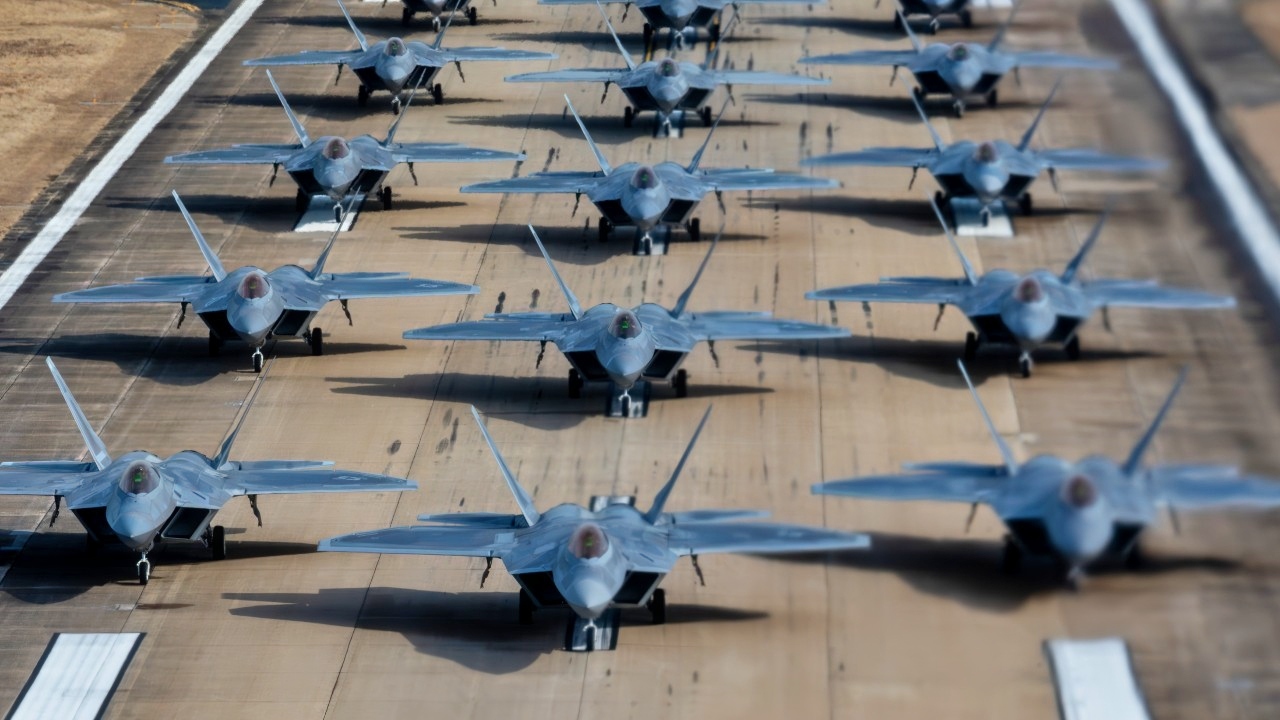
Aircraft from the 1st Fighter Wing conducted an Elephant Walk at Langley Air Force Base, Jan. 31, 2025, showcasing the wing’s readiness and operational agility. This demonstration highlighted the wing’s capability to mobilize forces rapidly in high-stress scenarios. The wing’s fleet includes F-22 Raptors and T-38 Talons. As Air Combat Command’s lead wing, the 1 FW maintains unparalleled combat readiness to ensure national defense at a moment’s notice. (U.S. Air Force photo by SrA Ian Sullens)
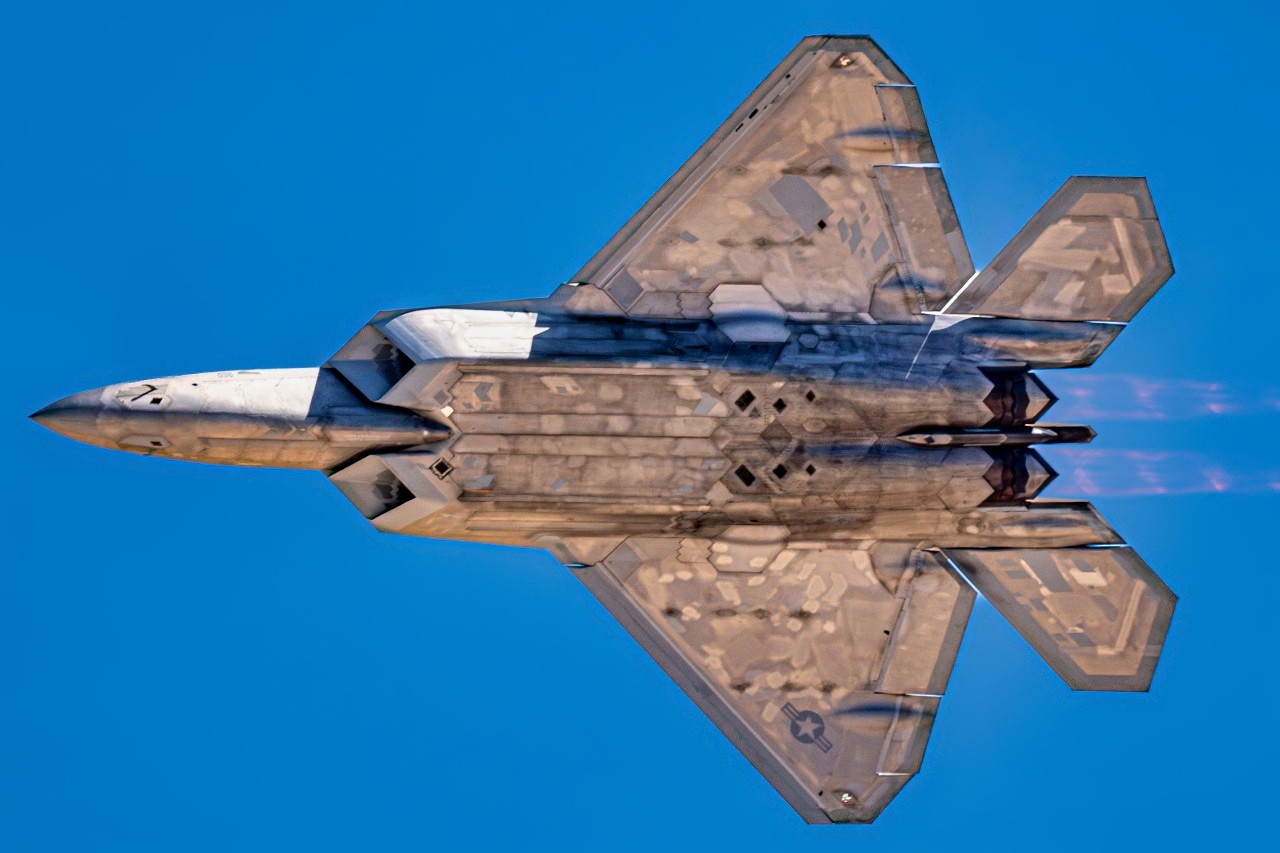
A U.S. Air Force F-22 Raptor performs an aerial demonstration during Aviation Nation 2025 at Nellis Air Force Base, Nevada, April 5, 2025. Aviation Nation is an airshow held at Nellis Air Force Base, showcasing the pride, precision and capabilities of the U.S. Air Force through aerial demonstrations and static displays. The F-22 Raptor performed there to highlight its unmatched agility and air dominance as part of the Air Force’s efforts to inspire, recruit and connect with the public. (U.S. Air Force photo by Staff Sgt. Lauren Cobin)
According to new shipping data published on October 5, Middle Eastern crude exports exceeded the pre-war average on September 24 and between September 27 and 29, reaching between 19.5 million and 22.5 million barrels per day. Before the war started on February 28, exports averaged around 18 million barrels per day between March 2025 and February 2026.
The seven-day moving average also spiked to 18.5 million barrels per day on October 1.
Crucially, though, those figures include oil moving not just through the Strait of Hormuz, but through the Red Sea, from several regional terminals, and via ship-to-ship transfers in the Gulf of Oman.
Gulf States Find New Ways Out
Because Iran has not lost total control of the Strait of Hormuz, oil producers are building a way around the waterway.
And Iran and its proxies and allies continue to strike at those alternative routes.
Saudi Arabia has increased its reliance on the East-West pipeline, which has also been attacked, to move crude to Yanbu on the Red Sea. Other producers are utilizing shuttle tankers and ship-to-ship transfers in the Gulf of Oman. Saudi Arabia has also begun pushing substantially more oil directly through Hormuz again, as it faces attacks by Yemen’s Houthis in the Bab el-Mandeb Strait.
Saudi crude exports through the Strait of Hormuz averaged three million barrels per day in September — the highest level since the war began. That figure is still only about half of the pre-war level.
Overall crude flows through the Strait of Hormuz averaged 14.2 million barrels per day on September 26, about 80% of pre-war levels.
Iran, then, has not lost the ability to disrupt Hormuz. Even without sinking every ship that passes, Iran is still raising the cost of moving oil through the waterway, and Gulf producers are being forced to find alternative ways out.
Tankers Are Still Being Hit
Iran appears to be determined to demonstrate that it can continue to hit oil tankers passing through routes it does not consider official — specifically, those moving through shipping lanes close to the Omani coast and protected by the U.S. Navy.
At least seven recent tanker incidents have been reported around the Strait of Hormuz. On October 1, the Kazimah III, a very large crude carrier operated by Kuwait Oil Tanker Company, was reportedly struck by an unknown projectile, causing a fire. Its crew was evacuated safely.
Another tanker was struck on October 2 as it left the strait. The strike caused a small fire and blackout before the vessel continued its journey. Then, on October 4, another unknown projectile struck the six-week-old Liberian-flagged Lipsi, damaging its engine. The tanker was left disabled and drifting, though its crew was reported safe.
Shipping intelligence firm Marisks warned on October 3 that recent attacks may not involve Iranian forces deliberately selecting individual merchant ships. Marisks believes that, instead, the available intelligence suggests that Iranian forces may now be launching missiles into predetermined engagement areas, or “kill boxes,” where the weapons will be able to lock onto available radar signatures. This method likely responds to U.S. strikes on missile, radar, communications, and monitoring equipment around the Strait of Hormuz, suggesting Iran is struggling to identify, track, and strike specific targets there. In essence, Iran is firing whatever it can and striking whatever targets may be in the way.
The Damage Has Already Been Done
Even if Middle Eastern crude exports remain above pre-war levels for some time, the war’s disruption will not disappear anytime soon.
On October 5, Saudi Aramco CEO Amin Nasser warned that global oil inventories have been depleted so severely that rebuilding them could take as long as two years.
Nasser said the conflict has kept almost three billion barrels of oil from reaching international markets and forced more than one billion barrels to be drawn from inventories.
The threat to recovering exports remains, and the cost of getting oil out of the Gulf region has increased.
Between insurance rates, the rising cost of hiring tankers (now roughly $1 million a day), and the ongoing risk of military strikes in the Strait of Hormuz or other attacks on alternative routes and pipelines, Middle East exports are now more uncertain than they have been in years.
About the Author: Jack Buckby
Jack Buckby is a British researcher and analyst specializing in defense and national security, based in New York. His work focuses on military capability, procurement, and strategic competition, and he produces and edits analysis for policy and defense audiences. He brings extensive editorial experience, with a career output spanning over 1,000 articles at National Security Journal, and has previously authored books and papers on extremism and deradicalization.


