

With summer nearly over, many Ukrainian farmers have harvested much of their crop. Before Russia’s full-scale invasion in 2022, Ukraine was one of the world’s leading exporters of key foodstuffs, including wheat, sunflower seeds and sunflower oil, barley, and other grains. Despite the war, this past summer was productive.
But while the country’s agriculturalists harvested most crops successfully, Ukrainian farmers face a major bottleneck: the closure of Ukraine’s Black Sea port infrastructure, through which most of the country’s food exports must travel. The corking of the Black Sea is the product of a concerted Russian effort to strike Ukraine’s economy where it hurts the most — and is retaliation against the painful punches Ukraine landed against the Russian economy last summer.
Ukraine’s Long-range Strike Campaign
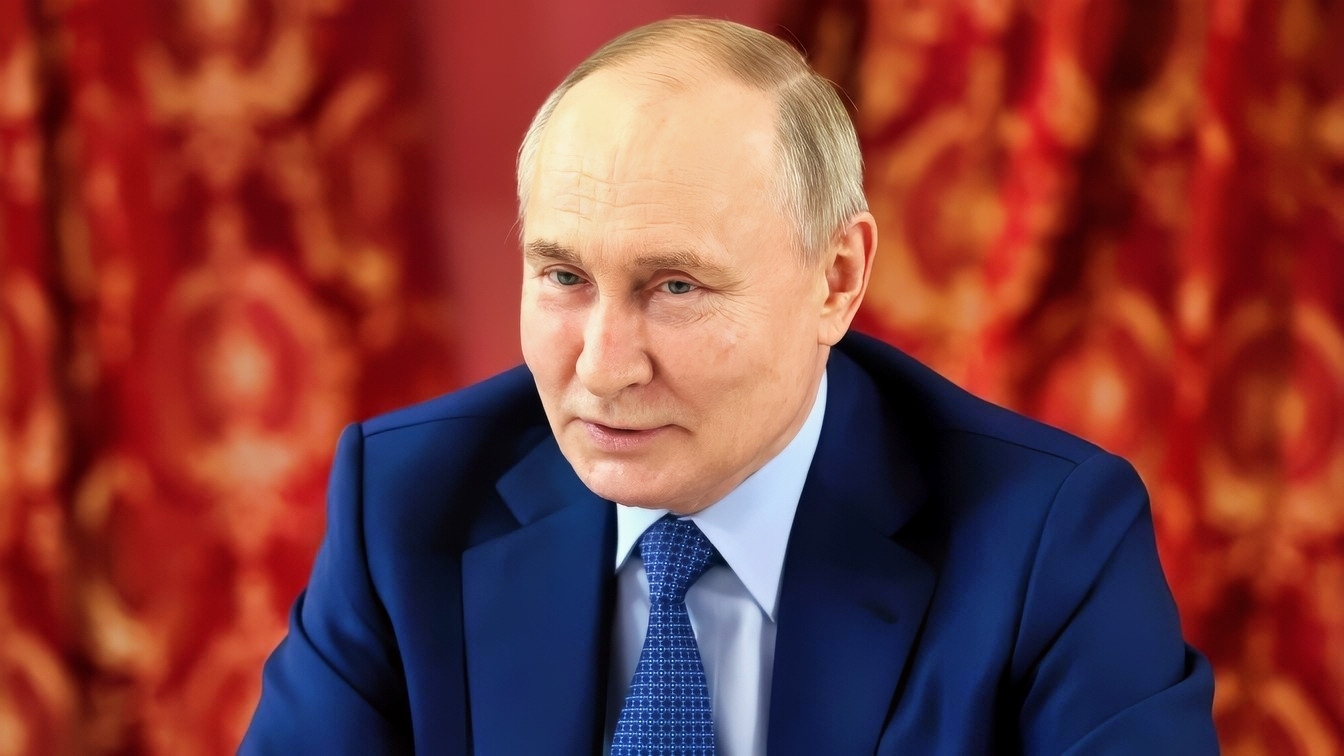
Putin in March of 2024. Russian State Media Photo.
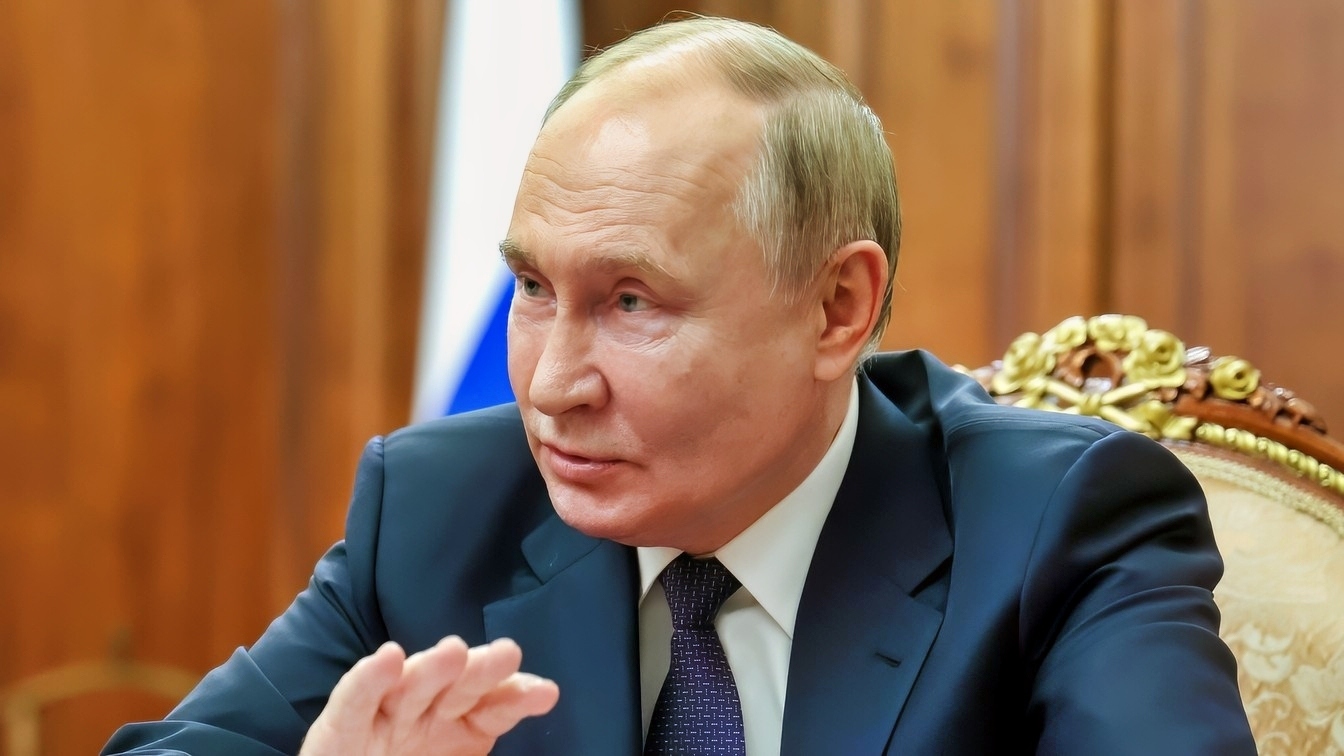
Vladimir Putin Back in 20224 Russian Federation Photo
Russia’s campaign against Ukraine comes on the heels of Ukraine’s long-range strike effort against the single largest source of revenue for the Russian state: the export of energy products to markets and customers abroad. Ukrainian President Volodymyr Zelensky dubbed that strike campaign Kyiv’s “long-range sanctions” regime, and it was as audacious as it was successful.
Leveraging Ukraine’s growing crop of long-range cruise missiles and explosive-laden drones, Kyiv’s forces pummeled Russian oil and gas infrastructure, scoring hits — sometimes multiple days in a row — against facilities as far away as Siberia, thousands of kilometers from Ukraine’s front lines. Russian authorities instituted fuel rationing within Crimea, the Ukrainian peninsula annexed by Russia in 2014, as well as widely thought Russia itself.
They also imposed a temporary ban on diesel exports abroad and relaxed environmental standards, moves meant to prioritize the domestic market and insulate Russian commuters from availability shocks. But long lines outside of fuel stations across Russia nonetheless materialized.
The Russian response to that campaign puts Ukraine’s economy squarely in the Kremlin’s crosshairs: closing the country’s Black Sea ports to commercial shipping.
Russian Blockade on the Black Sea
This is not the first time that the Black Sea has been throttled. The previous blockade, put in place by Russia following Moscow’s full-scale invasion of Ukraine in 2022, was lifted after Ukraine managed to beat back Russia’s naval force, notching several high-profile successes against Russia. In April of 2022, Ukrainian forces sank the flagship of Russia’s Black Sea Fleet, the Moskva, a cruiser, with their own, indigenously made Neptune anti-ship missiles.
The episode was a major embarrassment for Moscow and the largest warship lost in combat since the Second World War.
After Ukraine broke the Russian blockade, Moscow agreed to a United Nations-brokered agreement with Ukraine that reopened many of Ukraine’s Black Sea ports and restored commercial traffic. Although Russia renounced the agreement, called the Black Sea Grain Initiative, in 2023, Ukrainian ports remained open to traffic until this past July.
One of the key differences between the war’s earlier stages and now is that Russia previously relied mainly on sea mines to force commercial shipping out of Ukraine’s Black Sea ports.
As a result, maritime traffic could divert to Ukrainian freshwater port infrastructure on the Danube River. Today, however, Russian tools include explosive-laden attack drones.
Those maneuverable munitions can target not only ships approaching Ukrainian port infrastructure, but also land-based infrastructure used to ferry goods elsewhere: trucks and trains.
A Dearth of Air Defenses
Today’s crop of Russian drones is a far cry from their propeller-driven predecessors seen earlier in the war. Many now run on small jet engines and can outfly Ukraine’s interceptor drones with seeming impunity.
Odesa, Ukraine’s largest port city on the Black Sea, as well as Kyiv, the capital, sound their air raid alarms on a near-daily basis in response to repeated waves of Russian strikes against the two cities.
The strikes on the two cities, currently among Ukraine’s most economically significant locations, reflect a shortage of air defenses that has forced Ukraine to make painful choices about what to defend. American-made Patriot air-defense interceptors are in particular demand.
The munitions are in high demand by Washington’s European allies, by Ukraine, and by countries in the Middle East desperate to defend against Iranian air attacks — but supply is unable to keep up with demand.
Though renowned for their ability to defend against a variety of threats and widely considered some of, if not the most effective air defenses in the world, Patriot interceptors are exquisite, high-tech munitions that are extremely effective, but also painfully slow to manufacture and require 24 to 30 months to build, as measured from when an order is placed to when orders are ultimately delivered.
The World Watches
The stoppage of the Black Sea to commercial traffic is certainly painful for Ukraine, but it could also be acutely felt in that part of the world. Previously one of the world’s leading grain exporters, Ukraine has seen its grain exports slow to a trickle.
One report estimates that 17 percent of the world’s traded grain has been disrupted, with the potential to “materially increase global food prices and, in turn, could drive millions into acute food insecurity.”
The report forecasts the majority of Russia and Ukraine’s grain harvest may languish on shore and never leave port. Ukraine is feeling the squeeze most acutely right now. But in the future, so too could wide swaths of the world.
About the Author: Caleb Larson
Caleb Larson is an American multiformat journalist based in Berlin, Germany. His work covers the intersection of conflict and society, focusing on American foreign policy and European security. He has reported from Germany, Russia, and the United States. Most recently, he covered the war in Ukraine, reporting extensively on the shifting battle lines in Donbas and writing about its civilian and humanitarian toll. Previously, he worked as a Defense Reporter for POLITICO Europe. You can follow his latest work on X.


