
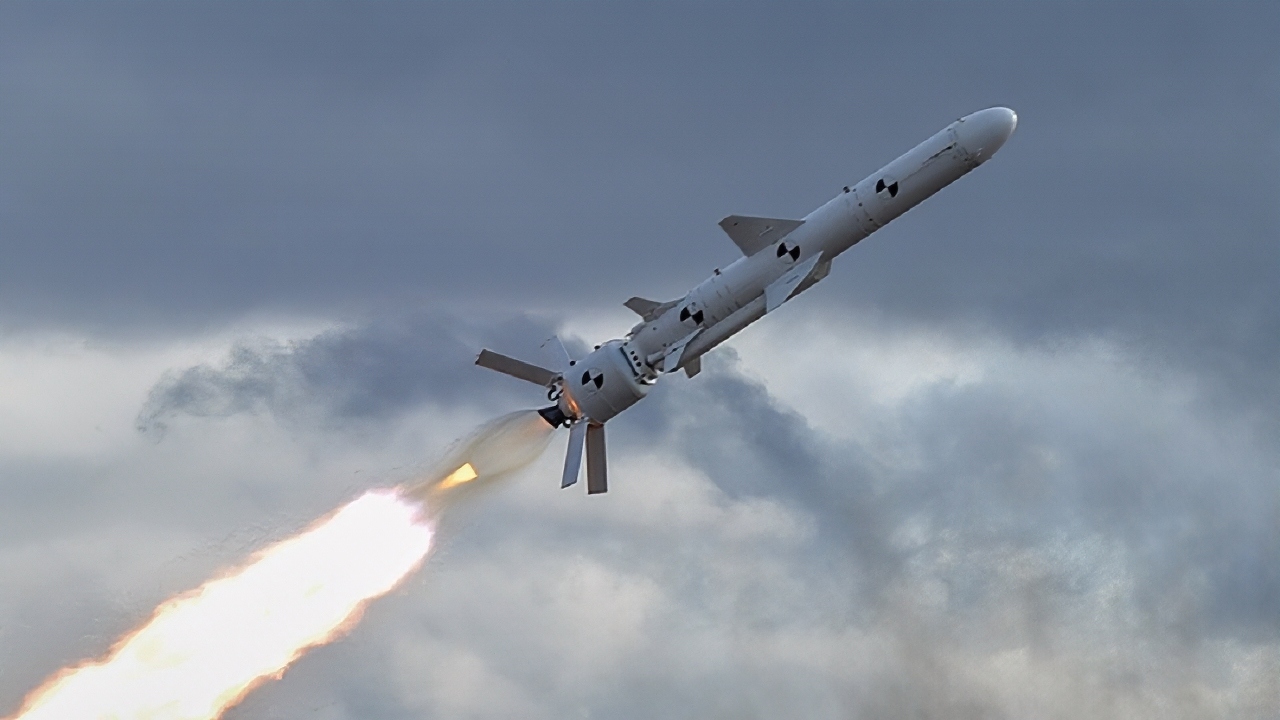
Russia Bombards Ukraine With Jet-Powered Drones – Russia launched another massive drone attack against Ukraine overnight into October 5, and almost a quarter of the 205 drones used in the attack were new jet-powered weapons that are much faster, and therefore more difficult to intercept, than the propeller-driven Shahed drones that once dominated the battlefield.
The Ukrainian Air Force said that Russia launched a total of 205 drones, including decoys, in an assault that began at roughly 6 pm local time on Sunday, October 4. Among them were 49 jet-powered Shahed-type drones adapted by Russian engineers. The attack also launched Gerbera drones, Banderol/Dan-T weapons, and Parodiya decoys from multiple locations in Russia. Some of the strikes originated in Russian-occupied Crimea and Donetsk.
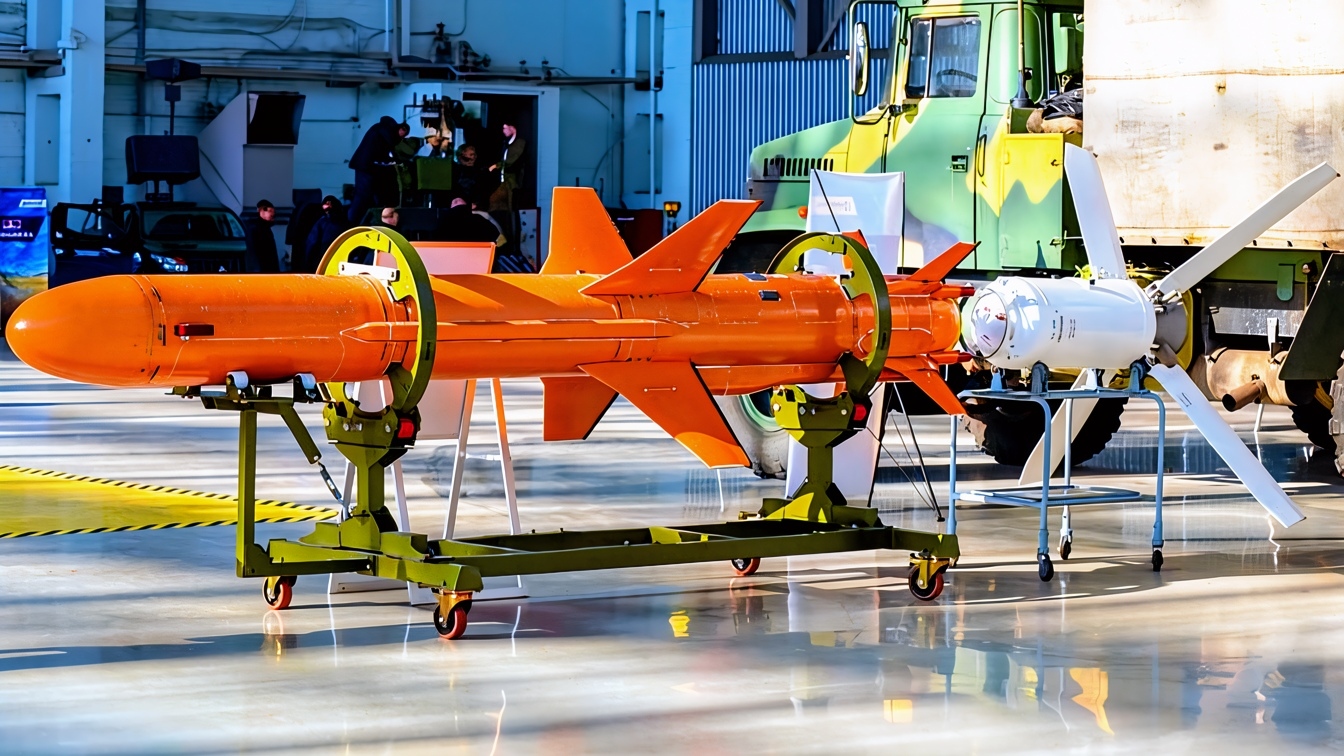
Neptune Cruise Missile Ukraine Government Photo
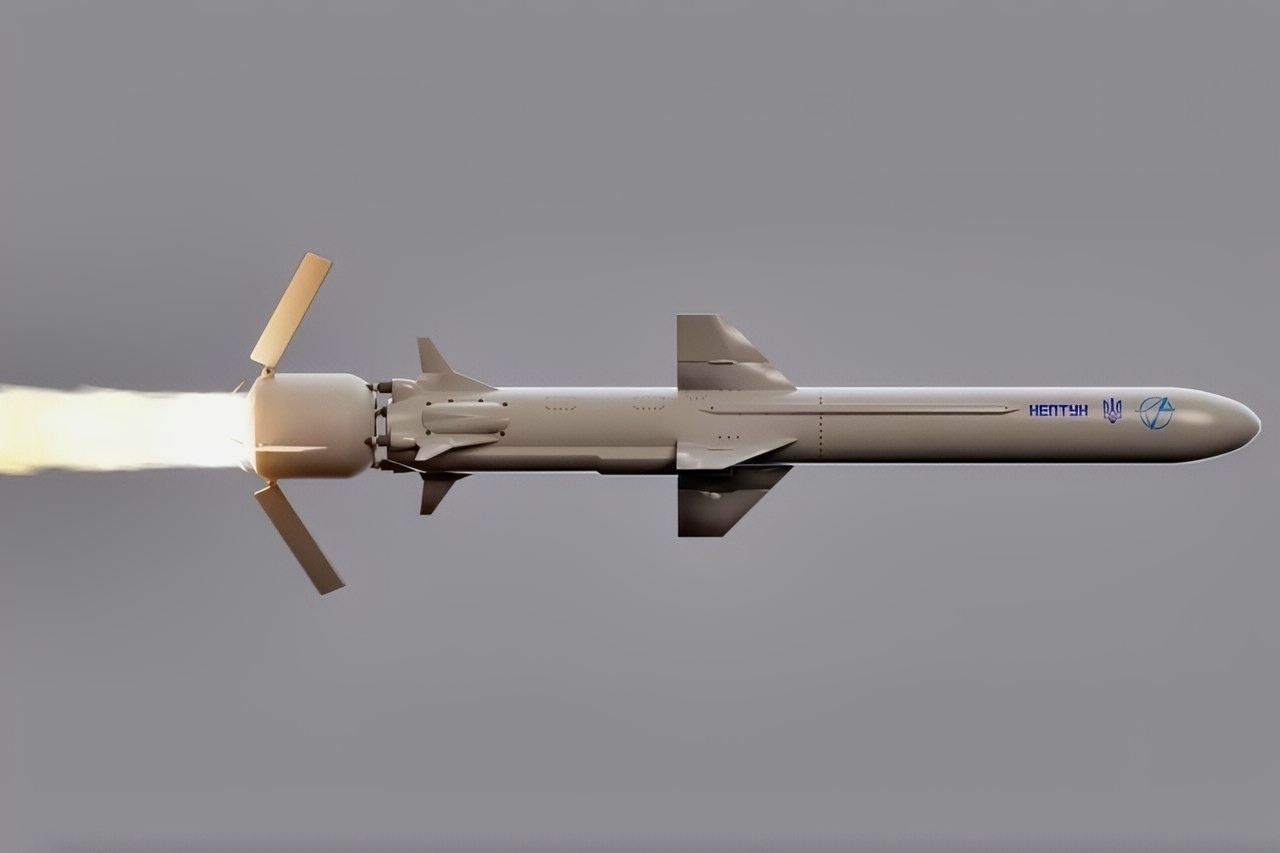
Neptune Missile. Image Credit: Government of Ukraine.
Ukraine says it destroyed or electronically suppressed 172 incoming drones as of 8 am Monday. Despite the efforts, however, Russian weapons still reached 13 locations across Ukraine, and debris from intercepted drones fell in three more.
Around 10 drones were reportedly still airborne when officials released those preliminary figures.
It is just the latest in a string of major Russian drone attacks involving faster jet-powered weapons.
Kharkiv Under Attack
Kharkiv was one of the cities targeted in the overnight attack. Russian Banderol weapons struck the city’s Industrialnyi district late on Sunday night.
Kharkiv regional governor Oleh Syniehubov said that a 42-year-old man was killed and eight people were injured in the attack. The attacks also damaged buildings and vehicles, and fires broke out at an administrative building and an industrial facility.
Kharkiv Mayor Ihor Terekhov also confirmed the strikes, telling Suspilne Kharkiv:
“Three Banderols hit, according to early reports, near residential buildings. Sadly, one person has been killed. Eight people have been injured, one of whom is in a critical condition. Windows have been shattered in five high-rise residential buildings, and roofs have been damaged. Our municipal services are currently working at the scene.”
Banderols are low-cost, jet-powered cruise missiles that Ukraine has used since 2025. Russia also displayed an export version of the weapon in Egypt in September and markets it as having a maximum speed of 500 kilometers per hour and a range of 450 kilometers. It can carry a warhead weighing up to 130 kilograms.
The Banderol’s speed and range, combined with its comparatively low production cost, make it a particular problem for Ukrainian air defenses that are struggling to keep up with constant bombardments of major cities.
Russia Rapidly Expands Jet-Powered Drone Use
Russia is manufacturing and deploying jet-powered drones in greater numbers than ever. The 49 jet-powered Shahed-type drones used overnight are the product of years of engineering, building on drone technologies originally provided by Iran.
Ukrainian Air Force spokesman Yurii Ihnat said on September 29 that the Ukrainians used 2,850 of the weapons in August. In September, that figure increased to at least 3,177.
Kyiv and the surrounding region have been the primary targets, though Kharkiv, Odesa, Mykolaiv, Sumy, Kherson, and Dnipro have also come under sustained attack.
Russian Drone Output
Russia’s manufacturing output is also increasing, with intelligence suggesting it is producing around 3,000 jet-powered drones every month.
Many of the new drones are being manufactured at the Alabuga Special Economic Zone near Yelabuga in Russia’s Tatarstan Republic, around 1,200 kilometers from the border with Ukraine.
The large, sprawling complex was originally used to assemble Russia’s own version of Iranian-designed Shahed drones, but production is beginning to shift toward the jet-powered Geran-4 and Geran-5 variants based on that original design.
The operation also appears to be growing, with satellite imagery from July showing major construction underway across around 340 hectares of Alabuga, with work beginning in May. Subsequent imagery shared online shows additional production buildings and new defensive structures around the facilities.
Ukraine’s military intelligence estimates that Russian factories are now producing roughly 3,000 Geran-4 and Geran-5 drones every month, compared with around 2,800 conventional Geran-2s. Ukraine also says it stopped production of the older Geran-3 variant as Moscow concentrates its resources on building the more capable version.
Ukraine Fights Back
Ukraine is developing ways to counter the new threat, and on October 5, Ihnat revealed that new robotic machine gun turrets have been used to shoot down Russian jet-powered drones, including the Geran-5.
The systems use machine vision and artificial intelligence to track and engage fast-moving objects, though their machine guns have a short effective range.
On October 4, Ukrainian President Volodymyr Zelensky said Ukraine had already installed 12 automated turrets around Kyiv and that more were on their way. Ukraine is also developing its own faster interceptor drones.
About the Author: Jack Buckby
Jack Buckby is a British researcher and analyst specializing in defense and national security, based in New York. His work focuses on military capability, procurement, and strategic competition, and he produces and edits analysis for policy and defense audiences. He brings extensive editorial experience, with a career output spanning over 1,000 articles at 19FortyFive and National Security Journal, and has previously authored books and papers on extremism and deradicalization.


