

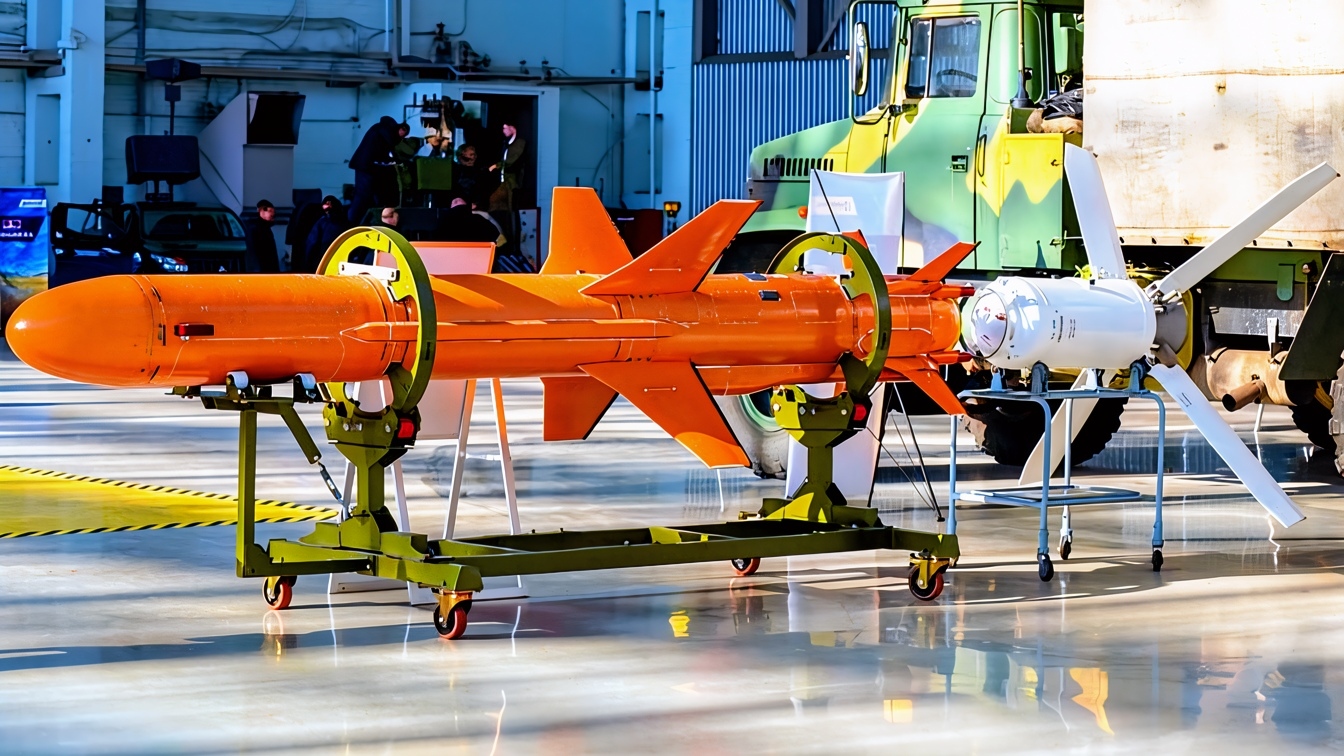
On October 1, President Zelensky announced that Ukraine had passed a major milestone in its domestic defense industry.
In a social media post, he announced that Ukraine, for the first time, used its new FP-7 ballistic missile in combat. “Ukrainian tactical ballistic missile FP-7. First combat use,” he wrote. “Thank you for the result. Next – production.”
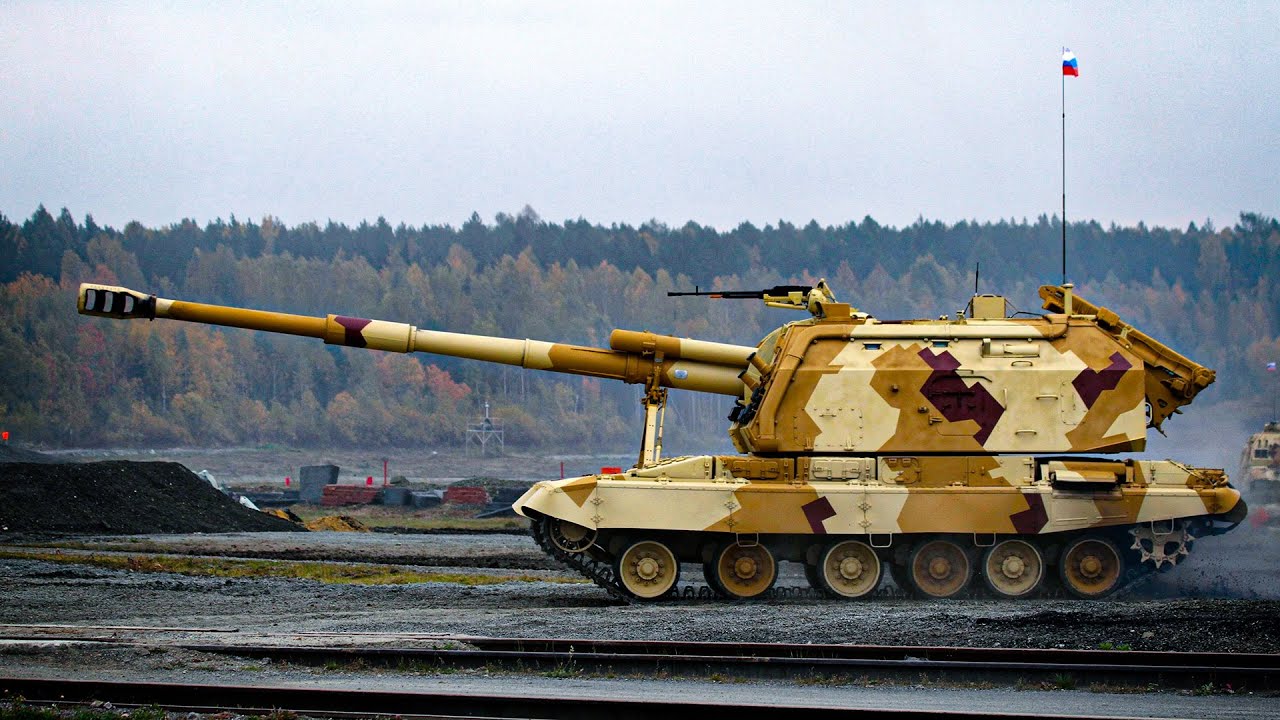
MSTA Russian Artillery Creative Commons Image

Artillery from Ukraine War Creative Commons Image
The FP-7 is critical in Ukraine’s efforts to take the war back to Russia.
Moscow currently possesses the advantage in ballistic missile technology, and with a persistent shortage of Patriot missile interceptors, the Russians have continued to target Ukraine’s backline with near impunity.
The FP-7 is the first step in Kyiv’s effort to bridge that gap and will also serve as a basis for Ukraine’s domestic ballistic missile defense program.
Ukraine’s New Ballistic Missile
Fire Point, Ukraine’s most prominent and controversial drone manufacturer (more on that later), developed the FP-7.
Physically, the FP-7 is a short-range ballistic missile with a range of around 200 kilometers (125 miles).
It travels at about 1,500 meters per second and has an estimated circular error probability of about 14 meters.
The missile carries a 150 kg payload and can be launched from a simple rail guide mounted on a trailer.
This eliminates the need for specialized launch vehicles and makes it easier to transport and hide from Russian ISR.
Overall, the missile is likely comparable in performance to the American ATACMS tactical ballistic missile.
The FP-7 has had a remarkably short development timeline, which should raise a few eyebrows among more cautious observers.
The Missile was first announced in September 2025 at a press conference during the MSPO international exhibition in Poland.
The FP-7 made its first public test launch in February 2026, and it now appears to have made its first combat debut.
Although Zelensky did not specify where the missile was used or what the target was, the FP-7 program’s rapid progress has been nothing short of impressive.
The First Step in Kyiv’s Larger Missile Ambitions
Ukraine is developing the missile alongside the FP-9, which has a longer range of 855 kilometers (531 miles) and an 800 kg payload.
The FP-9 will likely become Ukraine’s next FP-5 Flamingo, letting it strike deeper behind enemy lines.
The FP-7 will also serve as the basis for Ukraine’s Freyja project, which focuses on developing a cost-effective alternative to the American PAC-3 ballistic missile interceptor, which is currently in high demand worldwide and in short supply.
The program is being developed in coordination with multiple European nations, including Denmark, France, Germany, Italy, the Netherlands, Norway, Spain, Sweden, and the United Kingdom.
The program hopes to reach initial operational capability by summer 2027.
The Rise of Ukraine’s Most Controversial Defense Firm
As noted earlier, Fire Point is a highly controversial defense firm in Ukrainian circles.
Undoubtedly, the development of the FP-1 and FP-2 strike UAVs has done wonders for Ukraine’s defense efforts, but the company’s sudden rise to prominence does raise questions.
How did a company founded by people with no defense manufacturing experience before 2022 suddenly earn millions in defense contracts?
These questions prompted the National Anti-Corruption Bureau (NABU) to launch an ongoing investigation into the company.
Investigators are looking into the company because of its ties to Timur Mindich, a close associate of Volodymyr Zelenskyy and allegedly Fire Point’s unofficial beneficiary.
So far, investigators have charged nine suspects, including Mindich himself, ex-Deputy Prime Minister Oleksiy Chernyshov, and former Energy and Justice Minister Herman Halushchenko.
Mindich fled to Israel in November 2025. Despite the reportedly ongoing investigation, Fire Point remains instrumental to Ukraine’s defense industry.
Although Fire Point excels at drone production, its missiles still leave much to be desired.
For example, Ukraine touted the FP-5 Flamingo cruise missile as its next game-changing weapon.
In 2025, the company boasted that it was producing at least one Flamingo missile per day.
However, by April 2026, Ukrainian open-source analysts reported that Ukraine had launched only 26 Flamingo missiles. Of those 26 missiles, only six reached their intended targets, and only two actually hit.
The rest had either missed or were intercepted by Russian air defenses.
From July 1 to August 1, Ukraine launched 10 attacks using Flamingo missiles, totaling roughly 60 missiles. Of those launched, only two hit their targets, for a roughly 96.7% interception rate.
Since then, Ukraine has launched more missile attacks, which have struck some valuable targets, but its success rate remains noticeably low.
A Real Game Changer or Target Practice for Russian Air Defenses?
The Flamingo cruise missile example does not bode well for the FP-7 or the FP-9.
However, if we set aside the concerns with firepoint and assume the missile functions as advertised, Ukraine’s ballistic missiles are still given the herculean task of bypassing Russia’s dense air defense network.
Ukraine has successfully bypassed Russia’s defenses on numerous occasions, but these were with slow, low-flying UAVs.
Systems like the S-400 and S-500 were built specifically to counter ballistic missiles.
Overwhelming these systems isn’t impossible, but it would require many missiles, perhaps more than Ukraine can realistically assemble.
About the Author: Isaac Seitz
Isaac Seitz, a Defense Columnist, graduated from Patrick Henry College’s Strategic Intelligence and National Security program. He has also studied Russian at Middlebury Language Schools and has worked as an Intelligence Analyst in the private sector.


