

At least two people were killed, and another nine were wounded in Moscow after Ukraine launched one of the largest drone attacks of the war against the Moscow region. The Ukrainian attacks ran from Monday night all the way into Tuesday. Hundreds of unmanned aircraft were deployed from Ukraine toward Russia’s historic capital, targeting — among other things — a major fuel-distribution facility.
A Dangerous Pattern in Ukraine War

Tim Murry, a foreign threats compound contractor, drives a T-72 battle tank into position to serve as adversary targets for a joint service exercise, Emerald Flag, at Eglin Air Force Base, Fla., Nov. 30. Emerald Flag is a multi-service exercise aimed to unify information sharing across joint domain platforms. (U.S. Air Force photo/1st Lt Karissa Rodriguez)
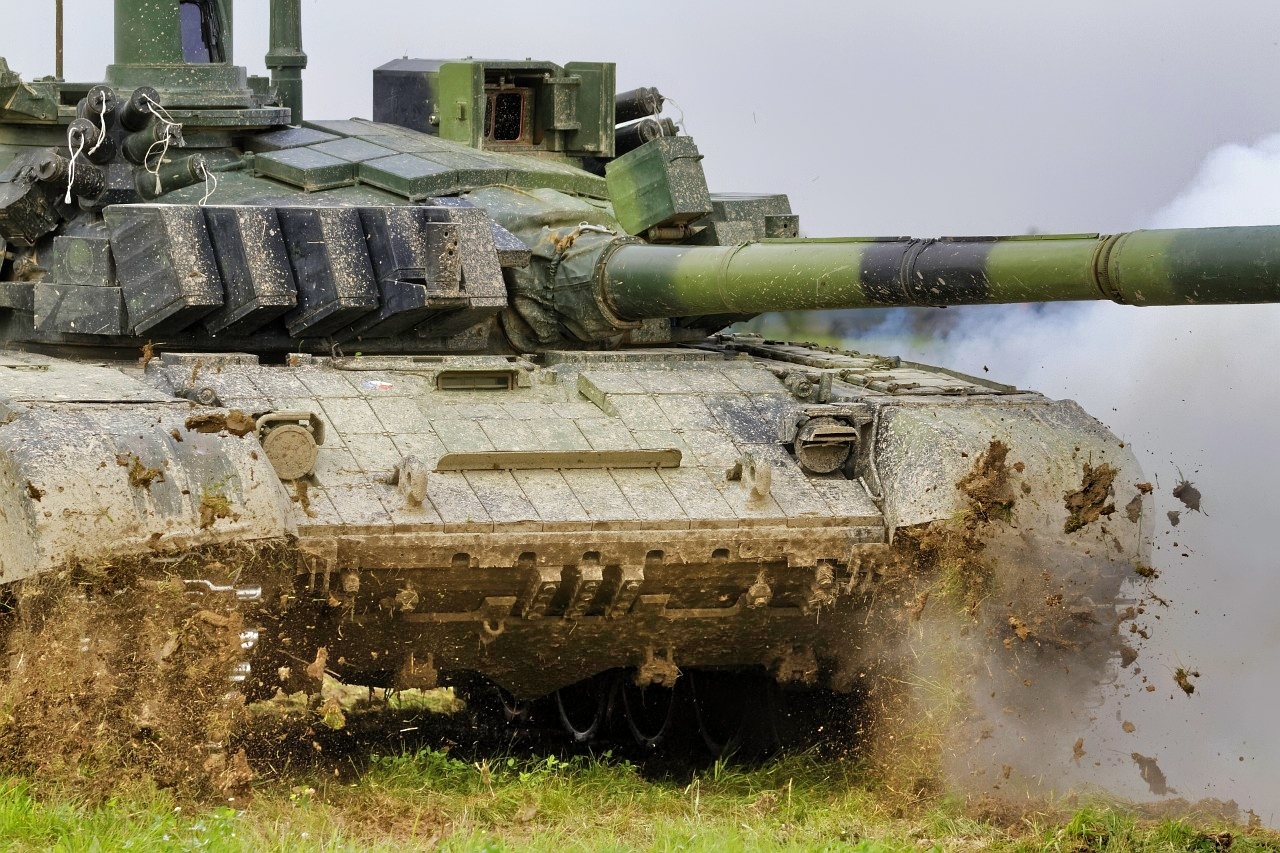
T-72 Tank. Image Credit: Creative Commons.
These attacks are part of a pattern that has seen the Russians attacking critical Ukrainian infrastructure with drones in retaliation for Ukraine attacking key Russian infrastructure with drones, all in response to the Russian invasion of Ukraine itself.
That pattern continues to play out and escalate, as we are witnessing in this most recent round of attacks.
Indeed, many analysts are concerned that Russia is preparing to launch the largest drone and missile strikes against critical Ukrainian energy and transportation infrastructure once the winter hits, ensuring that the Ukrainian population endures maximum discomfort, all part of Moscow’s overarching strategy of breaking the will of Ukraine.
What We Know About the Moscow Attack
According to The Moscow Times, more than 650 Ukrainian drones were launched at Moscow overnight.
Russian authorities claim they intercepted most before they reached their targets. Nearly 185 drones were reported to either have been destroyed or brought down by Moscow air defenses. Meanwhile, Moscow claimed that Russian defenses intercepted nearly 900 Ukrainian drones across Russia, Crimea, and the Sea of Azov.
That last target is key because Ukrainians have made a concerted effort to disrupt shipping in the inland Sea of Azov, a key waterway for moving large stores of Russian grain to the global market (without that grain, much of the Global South is at risk of famine).
Nearly 50 private homes and four apartments in Moscow were damaged by the massive Ukrainian attack.
Three vehicles were also reported damaged. In the hamlet of Domodedovo, just south of Moscow, repair crews worked overnight to restore electricity quickly.
That’s because a major airport operates there.
Hitting Oil Storage & Distribution Facilities
But the Ukrainians’ main target was the Volodarskaya oil storage and distribution facility near Konstantinovo.
A storage tank was allegedly struck by Ukrainian drones, resulting in a major fire.
Neither The Moscow Times nor Reuters could independently verify the video that went viral on social media of the conflagration that erupted as a result of the Ukrainian drone strikes.
This target was the most significant target of Ukraine’s drone swarm attack on Russia last night.
And it is consistent with earlier reporting that the Ukrainians were planning more comprehensive strikes on Russia’s immense energy infrastructure — even in places deep inside the massive country. Volodarskaya is connected to the essential Russian state-controlled Transneft pipeline network.
It handles gasoline, diesel, and aviation fuel. That system is linked to the Moscow and Ryazan refineries. Those refineries supply the capital with critical refined goods.
The facility moves roughly three million metric tons of petroleum products every year.
Russian air defenses prevented drones from damaging the refinery in the attack. But Moscow’s refinery was already hit on September 20. Three people died in that attack, too. During that Ukrainian attack, Russian authorities confirmed that around 450 drones had been deployed toward Moscow.
The real kicker here is that the October 6 Ukrainian drone swarm attack on Moscow caused major disruptions to Moscow’s aviation network. More than 200 flights were delayed or canceled at Moscow-area airports starting around midnight.
Sheremetyevo saw the most schedule changes, while Domodedovo and Vnukovo also saw many affected flights.
The Final Countdown?
Kyiv has stated that its purpose in attacking Russian petroleum infrastructure has been to reduce the fuel available to Russia’s military and damage the oil revenues that help finance Moscow’s war effort.
Then again, many of the products and targets taken offline are for civilian consumption.
Whether intentional or not, just as with the Russian attacks against Ukrainian energy infrastructure, as the two countries move into winter, the pain will not just be felt by the militaries of these two warring nations. It will be felt mostly by civilians.
All this is happening as Russia continues sending forces into Eastern Ukraine, as the battles for the final Ukrainian “Fortress Cities” progress, and the countdown to a frigid winter begins.
About the Author: Brandon J. Weichert
Brandon J. Weichert is the Senior National Security Editor at 19FortyFive.com. He also manages The Weichert Brief on Substack. Weichert also hosts “National Security Talk” on Rumble. He is the author of four bestselling national security books, most recently A Disaster of Our Own Making: How the West Lost Ukraine (Encounter Books). Follow him via Twitter/X @WeTheBrandon.


