

Despite operational setbacks, Russian President Vladimir Putin appears optimistic about his continued attempts to invade Ukraine since Russia’s full-scale attack against the country in February 2022.
Speaking at the Valdai International Discussion Forum in early October, Putin attempted to shift the narrative of the war, pointing to European powers as the aggressors and oppressors instead.

Tu-160M Bombers from Russia. Image Credit: Creative Commons.
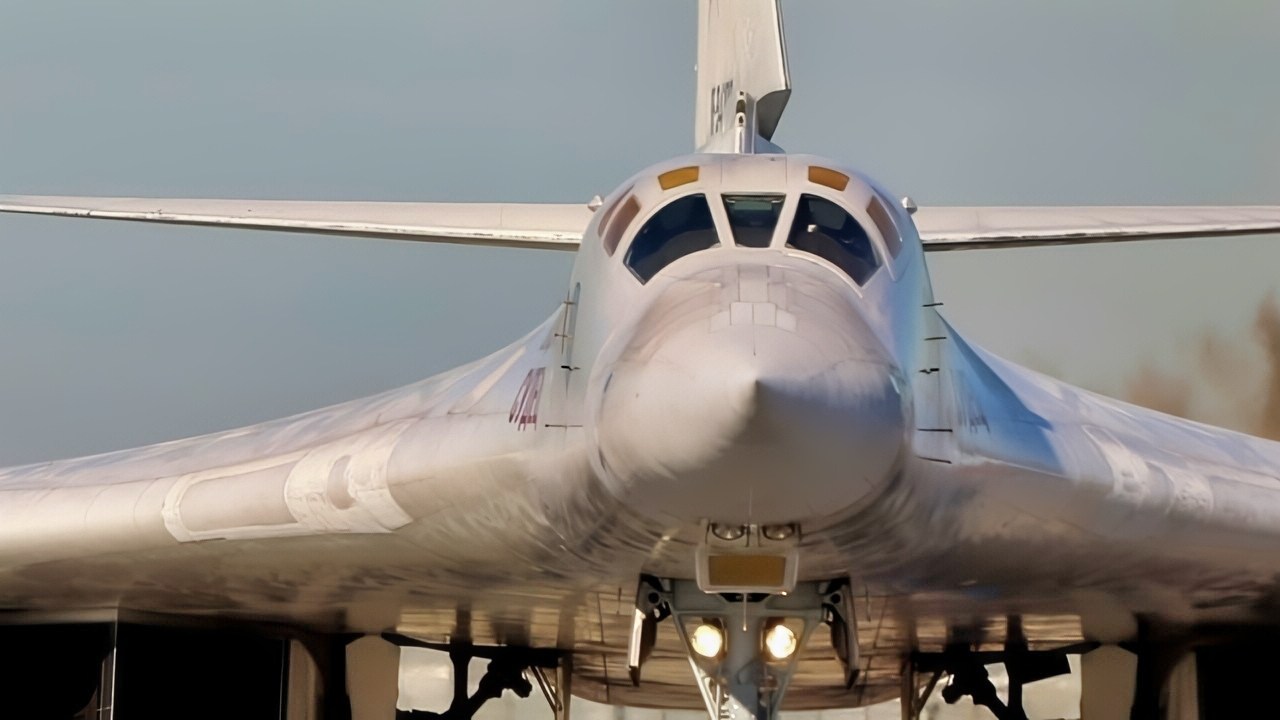
Tu-160 Up Close. Image Credit: Creative Commons.
This is not the first time Putin has made such statements – the Russian head of state and other state officials have made multiple threats over the years against the West for their involvement in its war against Ukraine.
Latest Russia Strike Sees 5 Dead, Children Injured
At least five people were reported dead in a new attack by Russia against the Ukrainian territory of Kharkiv just last October 5. Forty-three others, including a number of children, were among the injured.
Russian military used glide bombs in the attack, according to Kharkiv officials.
Posting on Telegram, Kharkiv Mayor Ihor Terekhov said that “The enemy attacked Kharkiv with at least three glide bombs (KABs), with strikes recorded in the Slobidskyi district.” He added that search and rescue operations were underway as well, after the attacks caused the collapse of a residential building in the area. Many other structures were reportedly on fire.
Analysts Call Putin’s Bluff
Putin has subsequently claimed Russia has managed to claim 1,301 square kilometers in September as it continued its offensive with Ukraine.
However, it may be more bark than bite again for the Russian president as analysts say that Russia actually gave up territory – at least 80.81 square kilometers.
The Institute for the Study of War (ISW) called Putin’s claims “so far from reality as to resemble hallucinations.” In fact, the ISW claims that the territory loss may be as much as 175.18 square kilometers “even when accounting for Russian infiltrations into areas over which Russian forces have not gained control.” Analysts point to a culture of lying and misleading statements that has permeated the Russian military structure to keep the war effort going.
Reports on Russian casualties also suggest the outlook for their offensive may not be as rosy as they make it out to be.
Russian forces reportedly suffered 46,000 casualties in September this year alone.
Tensions With the West, NATO, Continue
Ukraine’s receipt of continuous support from its Western allies, particularly those from Europe, has stayed a sore spot for Moscow, with the latter waging a “shadow war” with a number of European countries it feels pose a bigger threat to its campaign in Ukraine.
Germany’s intelligence service, the Bundesnachrichtendienst (BND), reported that Russia is beginning to stage actual attacks against the country, in the form of cyber attacks, and at least one failed drone strike on Leipzig airport in August.
“The confrontation we are facing with Russia has taken on a new, more dangerous dimension,” BND head Martin Jaeger told members of Germany’s parliament during an intelligence briefing.
Russia is Vulnerable
The success of Operation Vivaldi also points to a vulnerability in Russian defenses, as Ukraine continues to use the unconventional attack methods it is known for.
Ukraine’s Third Army Corps reportedly began the operation in May, utilizing remote-controlled robots and large bomber drones from behind enemy lines as Russian forces attempted to close in and encircle the Fortress Belt.
The attack took the Russians by surprise, causing casualties of up to 2,000.
Ukraine also took 250 prisoners of war in the effort.
Ukraine has repeatedly demonstrated an ability to keep operations like Operation Vivaldi under wraps, as well as wage misinformation campaigns against Russia that keep its military officials guessing and on their toes.
In addition, Ukraine has exceeded NATO estimates in terms of its capability of producing drones and other similarly remotely controlled offensive assets as it grapples to make the most out of its limited resources and whatever help comes from its allies in the West.
A Tough Winter Ahead
Kyiv may also see hostilities ease in the coming months, as winter weather is expected to be among the toughest in recent years – although drone warfare changes that dynamic, with Russia and Ukraine now targeting their respective oil and energy infrastructure using long-range missiles and drones.
The Ukrainian military, through its Third Army Corps, reported the success of “Operation Vivaldi,” an attack on Russian assets using drones armed with bombs and remote-controlled robots. The offensive was meant to derail Moscow’s efforts to capture parts of the “Fortress Belt” of cities in Ukraine. The region is considered critical to Ukraine’s defense.
In September, Russia specifically targeted Slovyansk, Kramatorsk, and Kostyantynivka.
About the Author: Tim Ramos
Tim Ramos has written for various publications, corporations, and organizations, covering finance, politics, travel, entertainment, and sports in Asia and the U.S. for more than 10 years.