

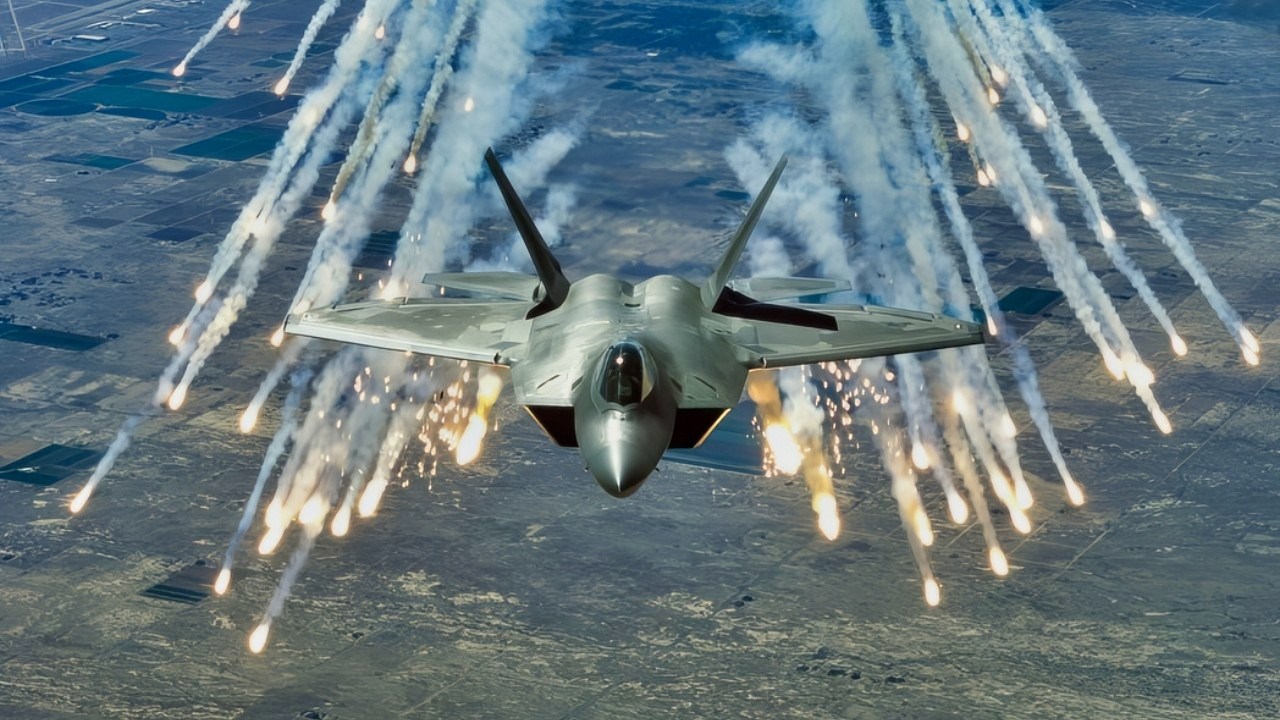
With the ongoing war in Iran in its seventh month, the costs of the conflict have been added up, and the costs have been in the billions — the tens of billions. A recent report by the Department of Defense inspector general has shed light on the expenditures on platforms and munitions incurred during the fighting. One of the report’s most significant conclusions? The United States faces a potentially dangerous munitions shortage.
The Bombs and Missiles Running Low from Iran War
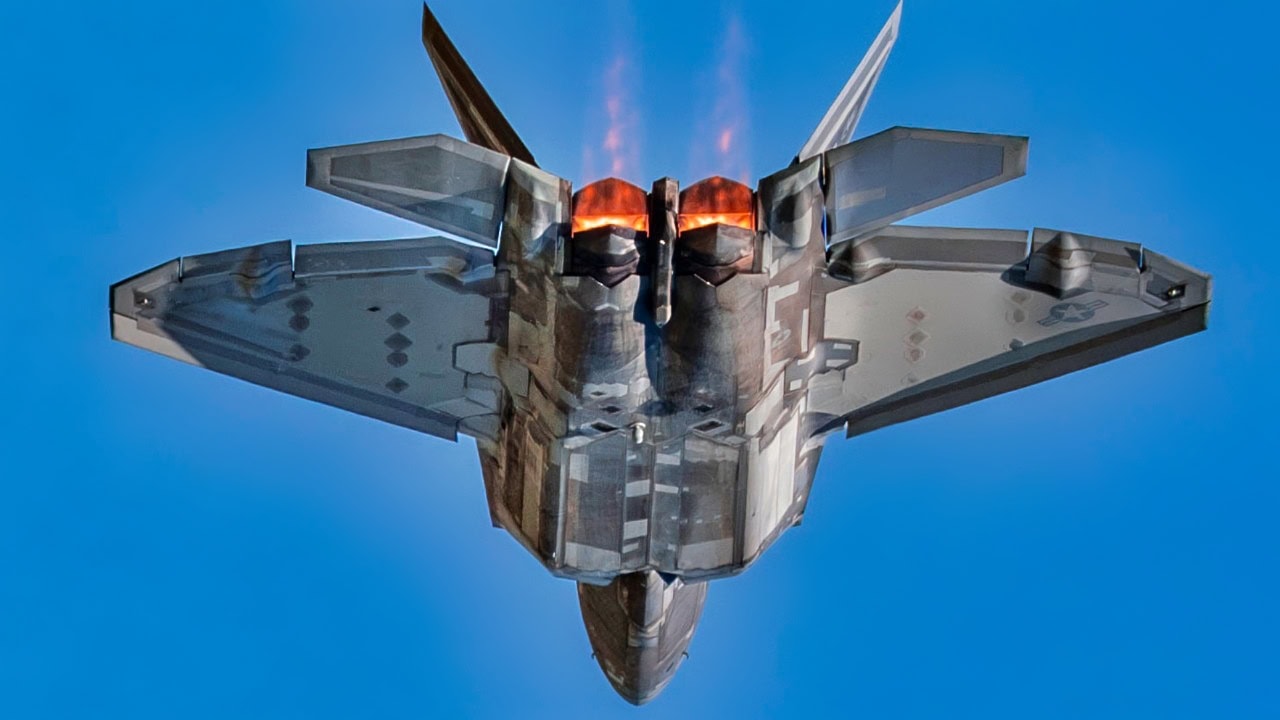
F-22 Raptor Reverse. Image Credit: Creative Commons.

A U.S. Air Force F-22 Raptor assigned to the 422nd Test and Evaluation Squadron at Nellis Air Force Base, Nevada, is seen on the flightline during Weapons System Evaluation Program 25.09 at Tyndall Air Force Base, Florida, Sep. 8, 2025. WSEPs are formal, two-week evaluation exercises designed to test a squadron’s capabilities to conduct live-fire weapons systems during air-to-air combat training missions. (U.S. Air Force photo by Airman 1st Class Zeeshan Naeem)
The report, from September, details that from the opening salvos of the war against Iran, which began February 28th, until June 30th, Operation Epic Fury has cost $33.4 billion, $22.3 billion of which represents expended munitions. The inspector general did not mince his words in the report. ”The munitions expenditure on OEF has resulted in strategic inventory shortfalls and revealed industrial base bottlenecks for munitions resupply,” he wrote.
In addition, a report published by the Congressional Research Service, a nonpartisan research body that compiles informational reports to Congress, detailed some of the aircraft lost during operations against Iran. 81 aircraft are listed in the CRS report, a figure that includes fixed-wing aircraft like the F-15 Strike Eagle (12 of which were destroyed or damaged), unmanned platforms like the MQ-9 Reaper (“at least 45” of which were destroyed), and helicopters like the AH-6 Little Bird light attack helicopters (destroyed by American forces during the rescue of a downed F-15 Strike Eagle crew).
“Some analysts and DOD officials have published varying estimates of the cost to replace lost equipment, including aircraft,” the report said, but added that “in September 2026, the Congressional Budget Office (CBO) estimated the cost of equipment losses as of August 1 at between $1.9 billion and $3.3 billion, depending on DOD plans for replacements.”
According to the report, “U.S. diplomatic facilities in four countries—Iraq, Kuwait, Saudi Arabia, and the United Arab Emirates—suffered physical damage from Iranian strikes. The estimated cost of the damages is approximately $184 million.”
No End in Sight
In the meantime, the United States’ Commander in Chief, American President Donald Trump, is reportedly mulling another round of fighting, seemingly intent on resuming operations against Iran. Soon, three United States Navy aircraft carriers will be in the Middle East—a formidable assemblage of American military might—nearly a third of all United States aircraft carriers.
With the American midterm election on the horizon, the Republican Party’s political position is precarious. High energy costs, despite a recent stabilization relative to this spring’s spike after the opening stages of Operation Epic Fury, are a key issue for voters, as are overall costs of goods. Fuel at the pump remains higher than pre-war, despite Gulf countries resuming oil flows.
While the Pentagon has assembled a variety of options for the president to choose from, should he give the go-ahead for a resumption of strikes against Iran, Trump has thus far demurred, preferring to wait.
According to recent reporting, strike options would be brief, at just three days, but intense, and would focus on hitting either Iran proper or the Houthis, the Tehran-backed rebel group in Yemen. Both groups’ missile and drone capabilities would reportedly be among the primary targets. Still, Washington could also put the Islamic Revolutionary Guard Corps and energy-related infrastructure in its crosshairs.
Oil is Moving — but for How Long?
Oil flows from the Gulf have surged in recent weeks and are now believed to be more than eighty percent of their prewar levels. Saudi Arabia’s East-West Pipeline, which delivers about 5.8 million barrels of oil per day to Riyadh’s Yanbu port on the Red Sea, bypasses the Strait of Hormuz entirely. But a significant amount of ship-borne oil is also making the Hormuz gauntlet via small ships that offload past the Strait to larger tanker ships waiting in the offing.
Though this two-pronged strategy has managed to break the energy and economic leverage Tehran enjoyed at the start of the conflict, its sustainability remains speculative. The smaller ships used to shuttle fuel must contend with higher freight and insurance costs and are unavailable for other uses.
The G7 countries’ recent decision to collectively release 100 million barrels of oil, a measure taken to temper hot oil prices, has indeed injected some certainty into an uncertain market. But their future ability — indeed, flexibility — to respond to other, future crises through the same mechanism is reduced. Whether further releases can, or should, be coordinated remains an open question.
About the Author: Caleb Larson
Caleb Larson is an American multiformat journalist based in Berlin, Germany. His work covers the intersection of conflict and society, focusing on American foreign policy and European security. He has reported from Germany, Russia, and the United States. Most recently, he covered the war in Ukraine, reporting extensively on the war’s shifting battle lines from Donbas and writing on the war’s civilian and humanitarian toll. Previously, he worked as a Defense Reporter for POLITICO Europe. You can follow his latest work on X.


