
Oil exports from the Persian Gulf have recovered sharply in recent weeks after months of steep declines. Still, prices remain high, and Gulf conditions suggest they will stay high for an extended period.
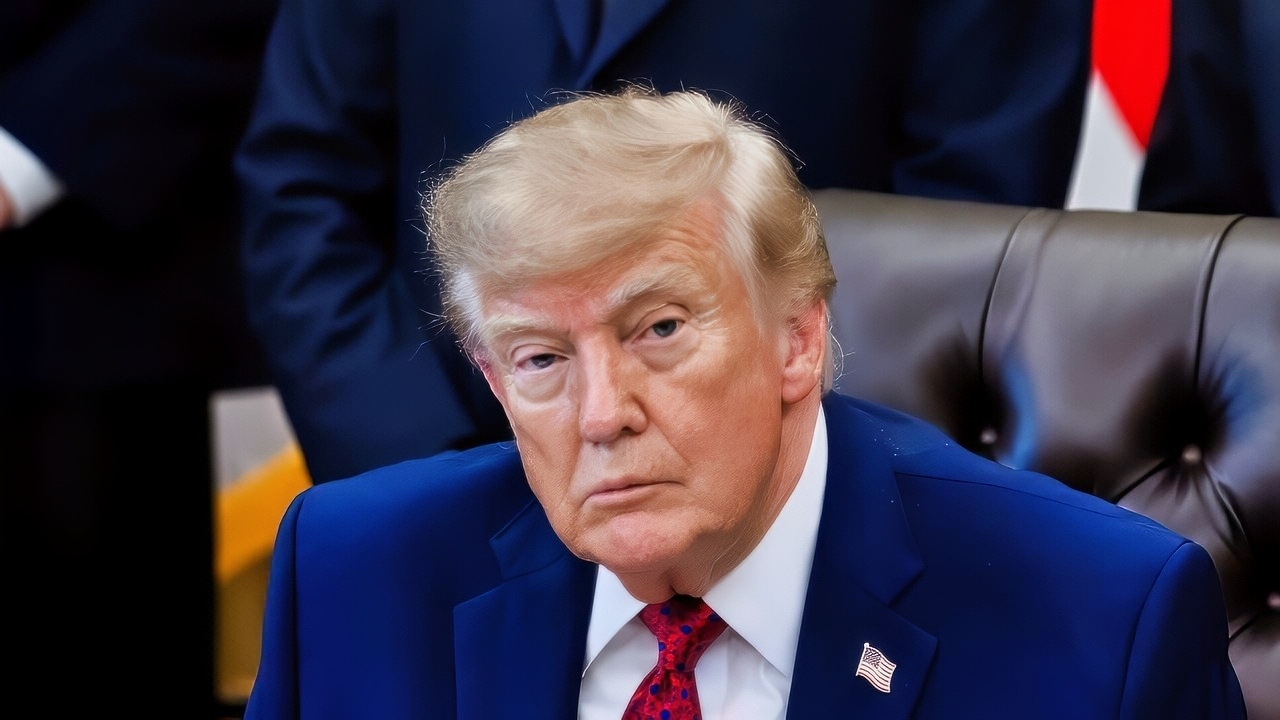
U.S. President Donald Trump, however, still publicly insists that fuel prices will collapse once the war ends.

U.S. Air Force Capt. Nick “Laz” Le Tourneau, F-22 Raptor Aerial Demonstration Team commander, performs an aerial maneuver during the Hyundai Air and Sea show at Miami, Florida, May 25, 2025. The F-22 Aerial Demonstration Team highlights cutting-edge airpower, precision, skill, all while reinforcing public confidence in the Air Force’s ability to protect and defend. (U.S. Air Force photo by Staff Sgt. Lauren Cobin)

(Sept. 16, 2023) – The U.S. Air Force F-22 Raptor Demonstration Team performs during the 2023 NAS Oceana Air Show. The NAS Oceana Air Show is a chance for the Navy to give back to the community, showcasing Naval aviation to visitors from across the country and around the world. (U.S. Navy photo by Mass Communication Specialist 2nd Class Megan Wollam)
The national average gasoline price is $4.36 per gallon, and diesel prices are near all-time highs.
The problem is no longer that oil simply cannot get through the Strait of Hormuz, but that the cost of transporting, insuring, refining, and distributing petroleum products has risen dramatically across the board. Other international crises are worsening the situation.
Gulf Traffic Returns to Pre-War Levels
Ships are still coming under attack in the Strait of Hormuz, and Tehran could still escalate.
Still, Middle Eastern oil producers have largely restored their export capacity after months of disruption.
Maritime intelligence firm Kpler notes that crude exports from major regional producers reached 16.328 million barrels per day in September – the highest monthly level since the war began.
By the final week of September, regional exports were approaching, and by some measures even exceeding, the pre-war averages.
But that recovery doesn’t mean that the Strait of Hormuz has returned to normal. Far from it, in fact.
Much of the additional oil leaving the region is moving through alternative pipelines.
When it does pass through Hormuz, it uses a complex shipping system that lets companies minimize exposure to potential Iranian attacks.
Reports indicate that about 40% of regional crude exports now bypass Hormuz entirely, up from 17% before the war.
Refined petroleum products have also recovered far less successfully than crude exports, with diesel shipments through the strait still far below their pre-war levels.
Restoring crude oil exports, then, does not mean consumers have regained access to gasoline and diesel.
Iranian Attacks Drive Up Shipping and Insurance Costs
As oil exports recover, the cost of moving the oil continues to rise – meaning even an abundance of crude moving out of the Gulf can’t immediately solve this problem.
Hiring a Very Large Crude Carrier (VLCC) to transport oil from the Persian Gulf to China cost approximately 30,000-60,000 per day as recently as last year. Today, that figure has reached an astonishing $1.4 million per day.
Insurance premiums are surging, too, because of the heightened risk.
Oil producers now reportedly pay between $30 million and $40 million for a round-trip voyage through the Strait of Hormuz.
Shipping companies are also reportedly offering sailors bonuses of up to $25,000 per voyage to compensate for the risk.
Despite U.S. forces degrading Iranian missile stocks, the strikes continued, and commercial shipping vessels are still being targeted.
On Friday, October 9, Iran’s Islamic Revolutionary Guard Corps claimed responsibility for striking a vessel attempting to use an unauthorized route through Hormuz.
Tehran also warned it would escalate, suggesting it could pursue and attack ships throughout the wider region, not just inside the strait.
Shuttles
Producers in the region have responded by using shuttle tankers to move crude through Hormuz, then transferring cargo to other vessels outside the strait, including near Fujairah in the UAE and Sohar in Oman.
Those additional transfers reduce risk for tankers waiting outside of the strait but raise operating costs.
According to Gulf Oil adviser Tom Kloza, the cost of getting crude out of the Persian Gulf has now risen from approximately $2 per barrel to $33. Those costs are now being passed on to consumers.
Refining Problems and Other Conflicts
Meanwhile, the global refining industry is struggling to produce sufficient gasoline and diesel. And it’s not just a Middle East problem.
On October 5, Associated Press reported that Ukraine claims its strikes had disabled 51% of Russia’s refining capacity – though the figure remains unverified.
According to figures cited in the International Energy Agency report, Russian diesel production has fallen about 30%.
Russia has also restricted fuel exports to protect domestic supplies, so overseas customers now compete in the global market.
China also previously curbed its own fuel exports.
Meanwhile, the Houthis are attacking ships in the Red Sea, disrupting another major shipping route and again increasing transportation costs.
American refineries are also entering seasonal maintenance, further reducing domestic production. And, with emergency oil reserves and commercial inventories depleted after months of disruption, the market has fewer buffers against additional shortages.
Opening the Strait of Hormuz changes none of those problems – and thus, the price of physical crude remains high, with North Sea Dated Brent reaching $135.74 per barrel on Thursday, substantially higher than the Brent futures trading at around $103.
About the Author: Jack Buckby
Jack Buckby is a British researcher and analyst specializing in defense and national security, based in New York. His work focuses on military capability, procurement, and strategic competition, and he produces and edits analysis for policy and defense audiences. He brings extensive editorial experience, with a career output spanning over 1,000 articles at 19FortyFive and National Security Journal, and has previously authored books and papers on extremism and deradicalization.


