

The Iran War’s High Cost: Video obtained by CBS News shows the aftermath of an Iranian strike on a U.S. military base, Camp Buehring, in Kuwait. According to CBS, citing service members who were at the base during the Iranian attack, Camp Buehring was struck by drones, ballistic missiles — and, incredibly, by Iranian F-5 fighter jets too.
According to the service members who spoke to CBS News — on the condition of anonymity, given the extremely tight restrictions placed on service members’ ability to speak to the press — the base experienced a shortage of .50 caliber ammunition, and the base’s supply of Patriot air defense interceptors may have dipped to low levels as well.
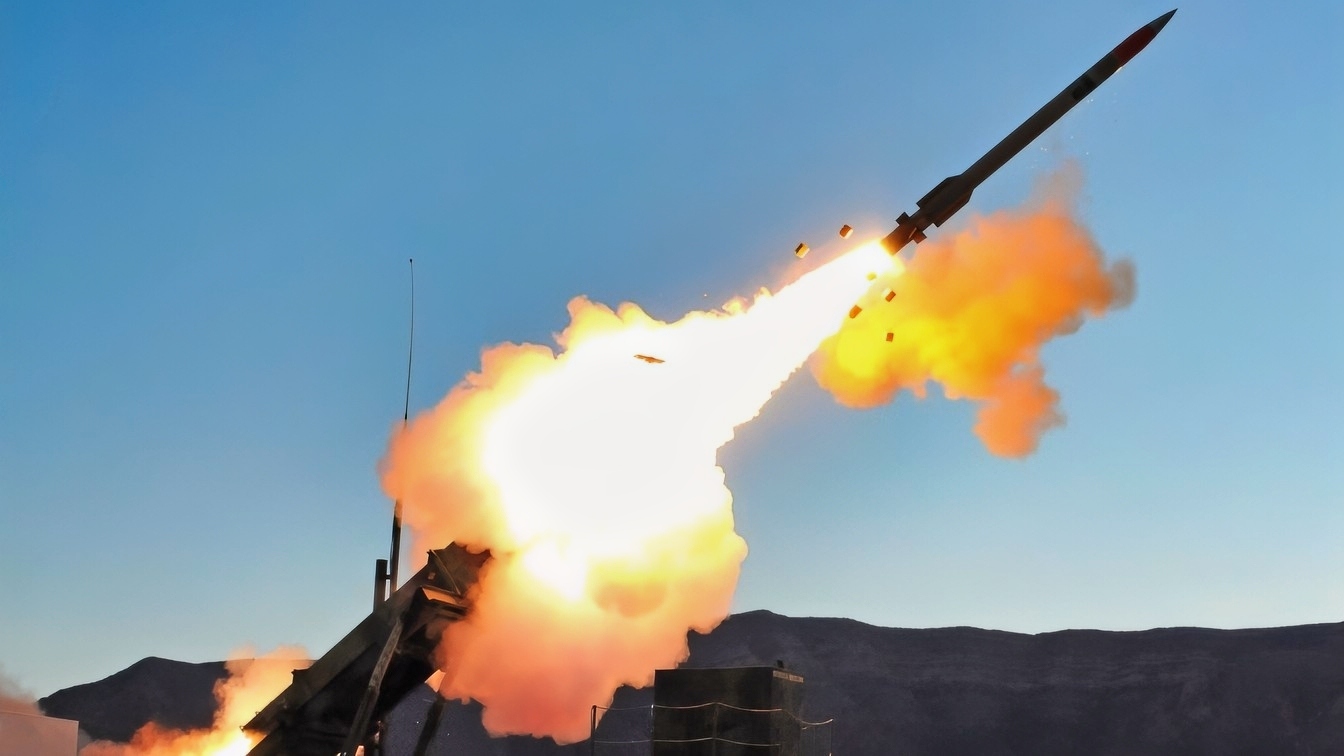
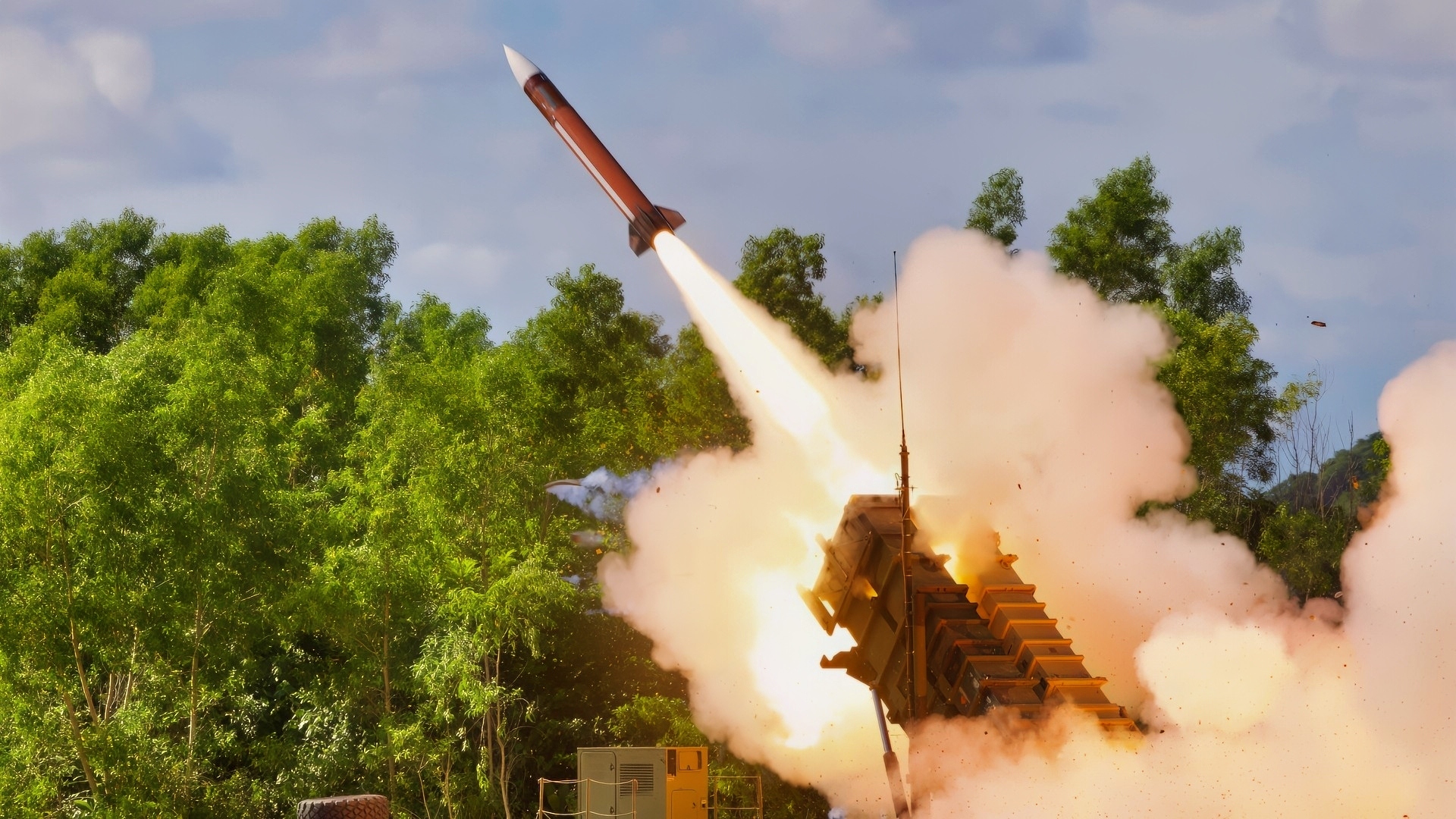
The Army test fires a Patriot missile in a recent test. The Patriot missile system is a ground-based, mobile missile defense interceptor deployed by the United States to detect, track and engage unmanned aerial vehicles, cruise missiles, and short-range and tactical ballistic missiles. Patriot, along with other missile defense systems, are included in the Army Air and Missile Defense 2028, which provides the Army’s overarching vision for the AMD force, describes how the AMD force is postured to support the Army and joint forces, and articulates what must be accomplished to achieve the 2028 desired end state of preventing and defeating adversary air and missile attacks through a combination of deterrence, active and passive defense, and support to attack operations. (U.S. Army photo)
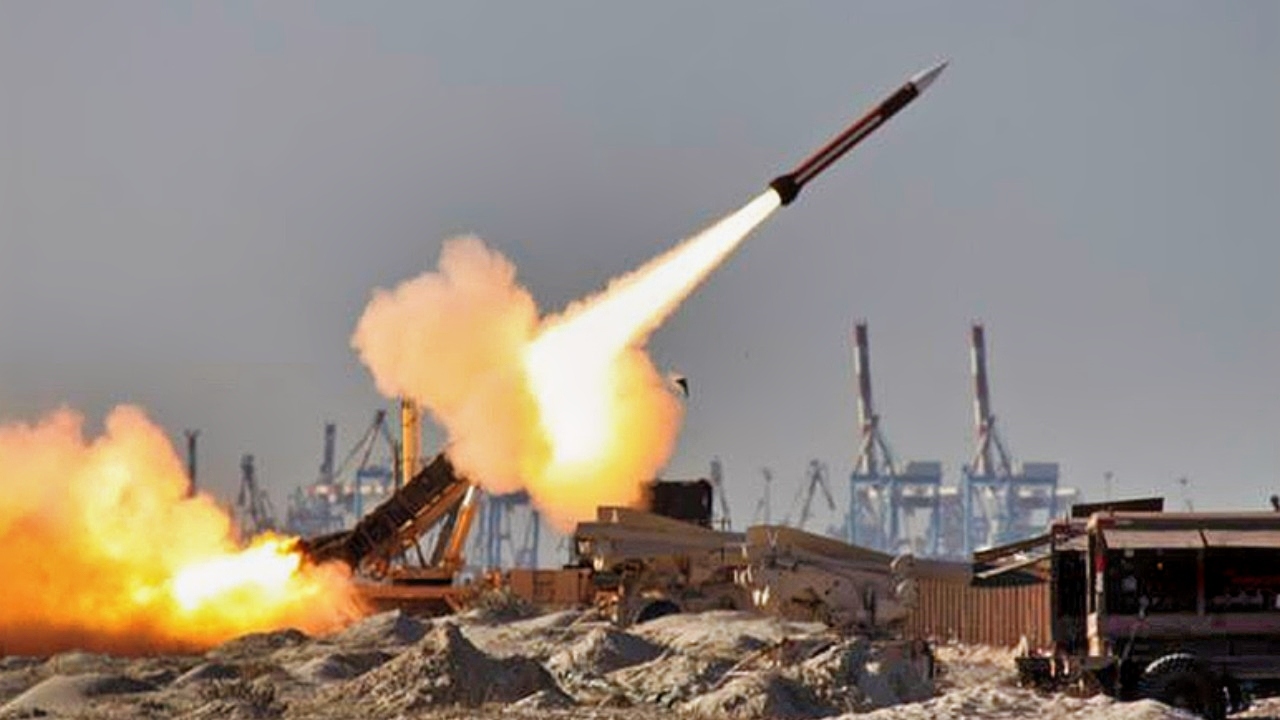
Patriot Missile Interceptor Test. Image Credit: Creative Commons.
Leave Nobody Behind?
In March, shortly after the beginning of Operation Epic Fury, American Secretary of Defense Pete Hegseth acknowledged the threat Iran posed to American service members within the region.
During a press briefing held with the Chairman of the Joint Chiefs of Staff, Hegseth said that the Pentagon has “from the start, put the protection of our troops ahead of everything else. Before we publicly built up offensive combat power, we quietly ensured our defensive posture and power were in place.
“And as we built up offensive combat power, we moved the vast majority of American troops, over 90 percent of Americans that were on our bases, what we say off the X, out of the range of Iranian fire,” the defense secretary added. But the ongoing war with Iran has been far from free of American casualties.
While the Pentagon tallies wounded and killed in a public database that breaks down numbers by service branch as well as by other metrics, the numbers there have been readjusted several times, leading to some speculation that the data had been massaged in order to present fewer losses.
Injuries Reported
While CBS News reports that nobody was killed in the Iranian attack on Camp Buehring, there were injuries — and not all from enemy fire. During what was described as a sandstorm in the desert, two soldiers were apparently injured by lightning, with one suffering from burns and another from a ruptured eardrum.
Other Combat Losses
Last month, the Department of Defense inspector general issued a report that took a clear-eyed view of the United States’ equipment losses. According to that report, from February 28th to June 30th of this year, Operation Epic Fury cost $33.4 billion, of which $22.3 billion represented expended munitions. The report did not mince its words about the implications of the expenditure.
“The munitions expenditure on OEF has resulted in strategic inventory shortfalls and revealed industrial base bottlenecks for munitions resupply,” the report stated. It also said that Iran had managed to land strikes on a number of American military sites throughout the Middle East, including in Bahrain, Iraq, Jordan, Kuwait, Oman, Qatar, Saudi Arabia, and the UAE.
In May, the Congressional Research Service, a nonpartisan group that compiles reports for the U.S. Congress, released a report on aircraft losses the United States incurred up to that point.
The report said 81 aircraft were damaged or destroyed, including helicopters, fixed-wing aircraft, and unmanned systems.
Potential Conflicts Ahead: MIM-104 Patriot Problems
The current administration has strongly dismissed the shortage of critical munitions like Patriot air defense interceptors.
While many experts believe the United States military has enough air-to-air, ground-to-air, and ground-to-ground munitions to fight a war against Iran, it may not have enough for future contingencies.
It is of particular concern to Ukraine. As winter approaches, Russia has made clear its intention to bombard the country’s energy and heating infrastructure. While Russia’s Geran attack drones have become significantly more sophisticated since they made their debut in Ukrainian skies nearly five years ago, Kyiv has been forced to contend with a global air defense squeeze.
The Patriot air defense system is in high demand.
It is one of the most battle-tested and combat-effective air defense interceptors in existence today—and everyone wants it. Fearing an expansion of the war in Ukraine, America’s NATO allies are hesitant to let their own stocks dip too low. So too are American friends in the Middle East, who must defend from Iranian munitions.
The crux of the issue is the missile’s production, which takes 24 to 30 months, depending on the Patriot interceptor variant. Scaling up production is neither fast nor easy—and the need is acute now. Should a potential conflagration erupt elsewhere in the world in the future, Patriot availability could easily become even more stretched, potentially leading to more service member casualties.
About the Author: Caleb Larson
Caleb Larson is an American multiformat journalist based in Berlin, Germany. His work covers the intersection of conflict and society, focusing on American foreign policy and European security. He has reported from Germany, Russia, and the United States. Most recently, he covered the war in Ukraine, reporting extensively on the shifting battle lines in Donbas and the war’s civilian and humanitarian toll. Previously, he worked as a Defense Reporter for POLITICO Europe. You can follow his latest work on X.


