

Seafarers are being offered eye-watering bonuses to transit through the Strait of Hormuz, with some captains netting more than $100,000 a month.
The salary hikes come as exporters seek to keep oil flowing steadily from the Middle East amid increased Iranian attacks on commercial shipping.
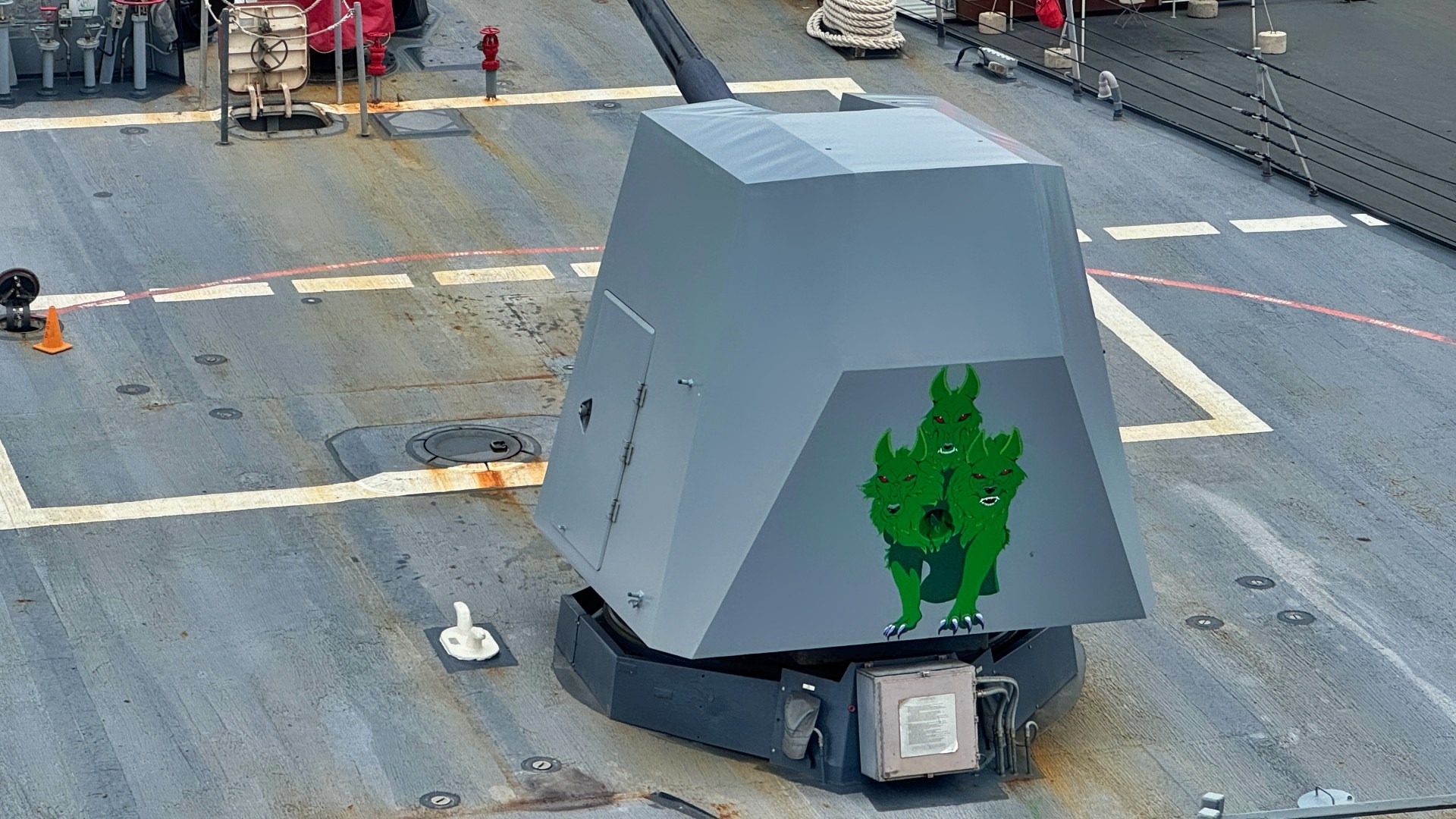
USS Lassen Deck Gun U.S. Navy. Image Credit: Stephen Silver/National Security Journal.
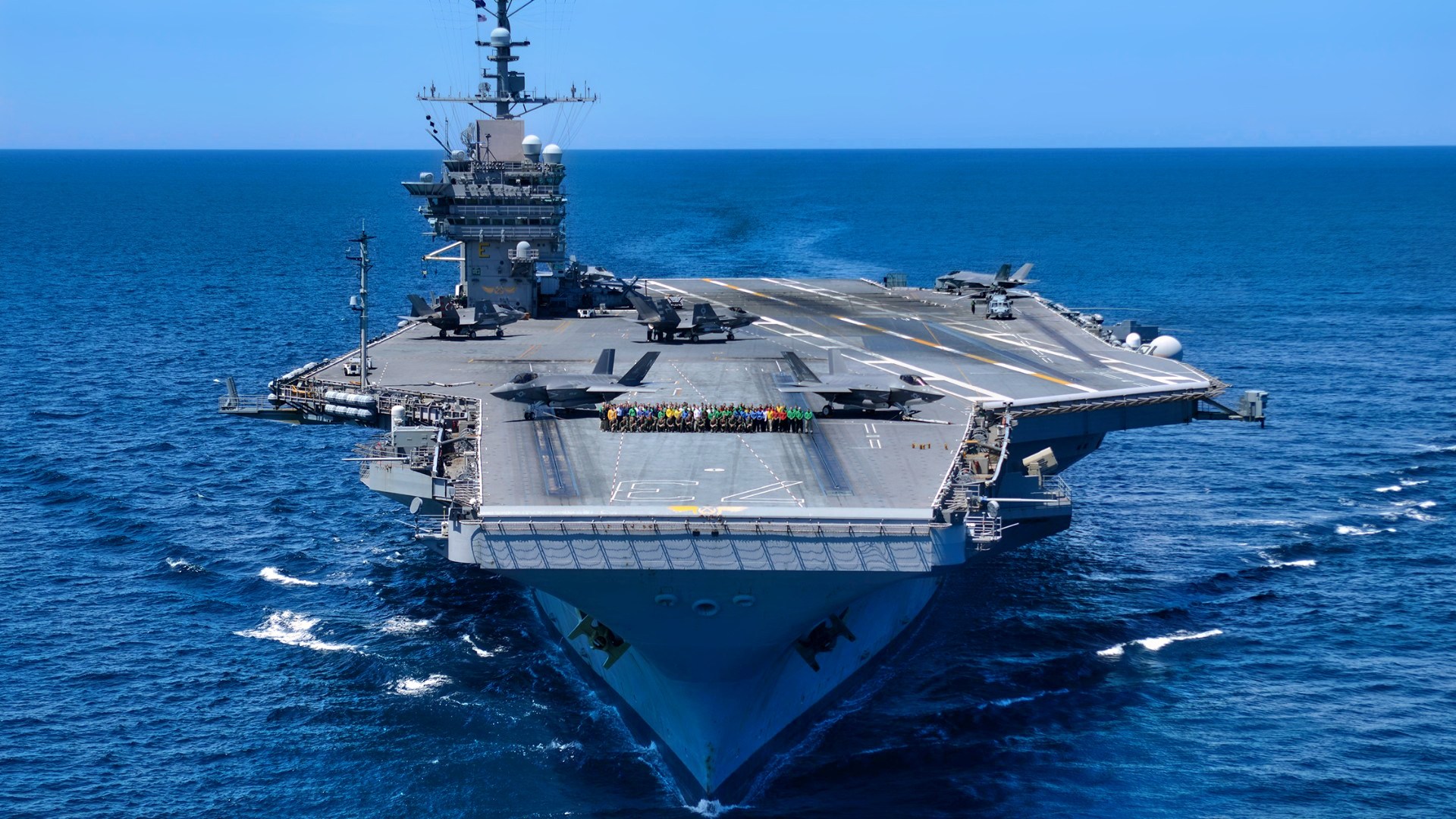
ATLANTIC OCEAN (Aug. 16, 2016) Sailors assigned to the Grim Reapers of Strike Fighter Squadron (VFA) 101, the Navy’s F-35C Fleet replacement squadron, pose on the flight deck of the aircraft carrier USS George Washington (CVN 73) during an aerial photo exercise. VFA-101 aircraft and pilots are conducting initial qualifications aboard George Washington in the Atlantic Ocean. The F-35C is expected to be Fleet operational in 2018. (U.S. Navy photo by Mass Communication Specialist Seaman Apprentice Krystofer Belknap)
Traffic through the strait has fallen in recent weeks, with captains and shipowners reluctant to risk lives and damage to vessels and cargoes, amid the ongoing conflict in the Middle East.
Seven Months in the Strait
The Strait of Hormuz – a key waterway for shipping oil exports from the Middle East – has remained closed by Iran ever since the United States and Israel launched a huge attack at the end of February.
Part of the strait, 24 miles wide at its narrowest point, lies under Iranian waters.
Still, the Islamic Revolutionary Guard Corps (IRGC) can strike any vessel with relative ease even if it is sailing through the Omani side.
Iran’s closure of a passageway many consider international waters goes beyond military decision-making.
As part of a wider economic strategy to minimize support for the U.S.-Israeli campaign, Iran has been able to utilize a chokehold on the strait, thereby limiting exports from the Gulf states.
It’s not a declaration of war per se, but rather a tactic used to raise living costs across the world and limit global support for U.S.-Israeli operations.
The closure has seen traffic through the Strait of Hormuz drop well below pre-war levels, while Gulf exports have largely returned to pre-war levels because oil pipelines direct exports into the Red Sea or the Gulf of Oman.
However, the strait remains vital for countries such as Qatar, Kuwait, and Bahrain, none of which can bypass the Iranian closure.
Instead, they rely on covert measures to avoid detection by Iran, including ship-to-ship cargo transfers that allow smaller vessels to transport oil where larger ones cannot.
Growing Risks
Of course, the crews of these smaller vessels take precautions. Conducting “shuttle runs” at night, under U.S. Navy protection, and sailing as close to Oman as possible help minimize risk.
Nevertheless, a tremendous risk remains, with 93 vessels struck since the end of February, leading to the deaths of 24 sailors.
Such was the success, however, of ship-to-ship transfers and “shuttle runs” that 477 non-Iranian vessels passed through the Strait of Hormuz in September, with 246 eastbound journeys and 231 in the other direction.
This prompted Tehran to retaliate by ramping up attacks on commercial shipping.
As many as 14 vessels have been struck so far in October, according to Iranian media, with another six warned to turn around. Western reports have a lower estimate of nine.
Nevertheless, the increased risk has seen traffic through the Strait of Hormuz fall to its lowest levels in months.
High Risk, High Reward
To incentivize shipowners, captains, and crew to complete the life-threatening journey, financial rewards are escalating to unprecedented levels.
For example, tanker captains willing to transit the Strait of Hormuz can earn $100,000 per month, plus a $50,000 bonus per journey.
That’s a hazard-pay increase of at least $85,000 per month.
Sailors can also reap the rewards.
Most will earn little more than $1,500 per month, but those willing to make the trip can earn up to $9,000 per month.
Their journey is so dangerous that one source to the Financial Times described those brave enough to stay onboard as “almost being viewed as mercenaries.”
On a smaller scale, double pay is being offered to those willing to transit the Red Sea and sail in the Gulf of Oman.
The former has seen Saudi Arabian shipping targeted following a renewed offensive by the Houthi rebels in Yemen last month.
Meanwhile, the latter is the second ship-to-ship transfer after the shuttle run through the Strait of Hormuz.
A Rush for Jobs
These eye-watering bonuses are increasing demand for jobs, with those who refuse to make the trip through the strait easily replaced.
Many seafarers come from poorer communities such as the Philippines, India, and Indonesia, and the temptation of a monthly salary that some might not earn in a year back home is huge.
“Seafarers are losing from everywhere,” said Manoj Yadav, Secretary General of the Forward Seamen’s Union of India. “If they won’t agree, they may lose their job. If they agree, they may lose their life.”
About the Author: Shay Bottomley
Shay Bottomley is a British journalist. He has written for the Western Standard, Business Insider, Maidenhead Advertiser, Slough Express, Windsor Express, Berkshire Live and Southend Echo.