
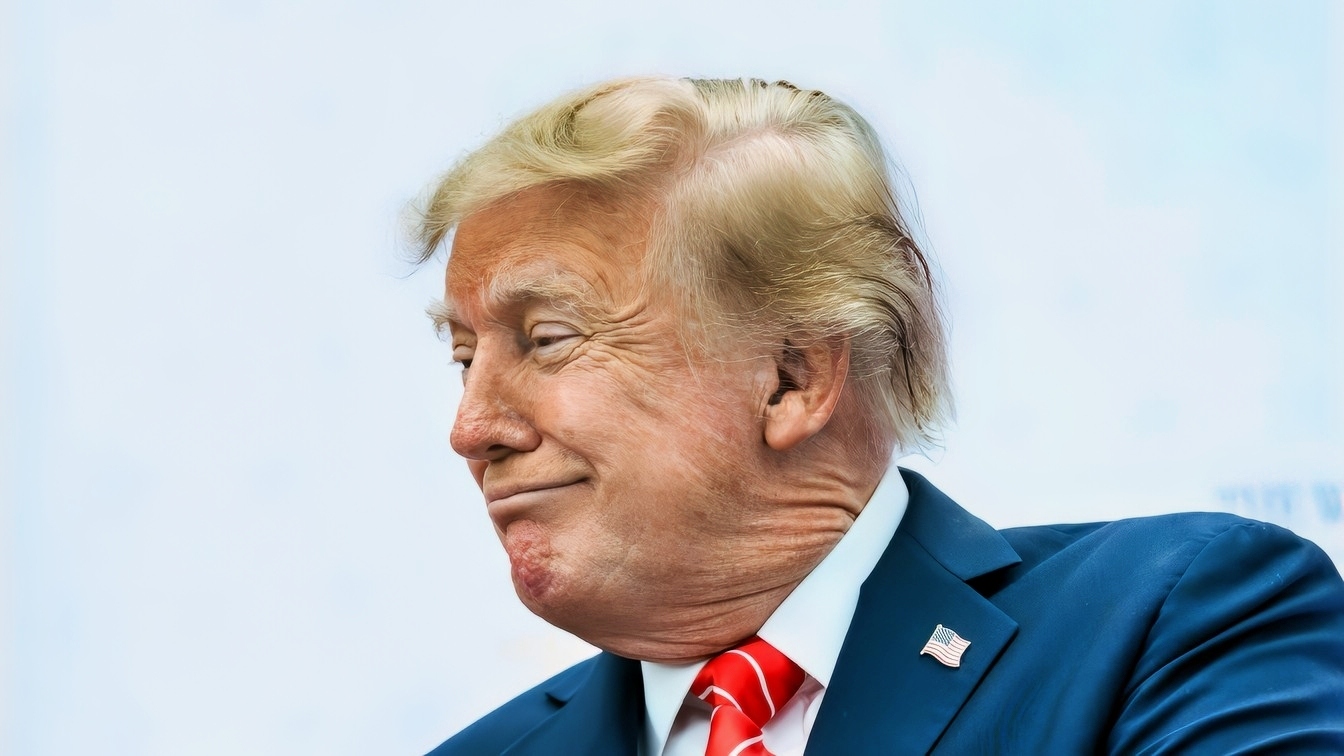
Should Trump Attack Iran Before the Midterms? – President Donald Trump is facing real pressure to launch another round of major military strikes against Iran, with new intelligence suggesting that Tehran is preparing to assassinate American officials overseas and Iranian security officials now threatening to expand their attacks against American interests across the Middle East. The escalating conflict comes as Washington and Israel reportedly prepare for another major offensive that most analysts believe will take place after the November 3 midterm elections.
On Friday, October 23, Reuters reported that Iranian officials had developed detailed plans to begin attacking undersea communications cables in the Persian Gulf if the United States and Israel resume their strikes.

F-16 Fighting Falcons from the 35th and 80th Fighter Squadrons of the 8th Fighter Wing, Kunsan Air Base, Republic of Korea; the 421st Expeditionary Fighter Squadron of the 388th FW at Hill Air Force Base, Utah; the 55th EFS from the 20th FW at Shaw Air Force Base, S.C.; and from the 38th Fighter Group of the ROK Air Force, demonstrate an “Elephant Walk” as they taxi down a runway, during an exercise at Kunsan Air Base, Republic of Korea, March 2, 2012. The exercise showcased Kunsan Air Base aircrews’ capability to quickly and safely prepare an aircraft for a wartime mission. Image Credit: Creative Commons.

F-16 Fighting Falcons from both the 35th and 80th Fighter Squadrons of the 8th Fighter Wing, as well as from the 466th Fighter Squadron of the 419th Fighter Wing at Hill Air Force Base, Utah, demonstrate an elephant walk formation as they taxi down a runway during an exercise at Kunsan Air Base, Republic of Korea Dec. 2, 2011. The exercise showcased Kunsan AB aircrews’ capability to quickly and safely prepare an aircraft for a wartime mission. (U.S. Air Force photo by Staff Sgt. Rasheen Douglas/Released)
Iran has also threatened to broaden its campaign if the United States continues to protect convoys of commercial ships moving through the Strait of Hormuz.
American intelligence agencies have also assessed that Iranian assassination plots against U.S. personnel have reached advanced stages.
The increasingly serious developments in the Middle East raise an important question for President Trump: should he wait until after the midterms to attack Iran, as most observers expect he will, or should he take advantage of Tehran’s apparent belief that it has a window of opportunity to keep escalating without facing another immediate major American offensive?
Iran Prepares for Wider Attacks
According to reports, two senior Iranian security officials have confirmed that Tehran has developed plans to strike undersea telecommunications infrastructure in the Persian Gulf if the conflict escalates again. Damaging that infrastructure would be hugely costly, disrupting regional financial transactions, cloud computing services, communications, and more, and the cables may not be repairable until the military conflict ends.
The latest Iranian threats also extend to American-linked data centers and energy infrastructure throughout the region.
On Saturday, October 24, Axios also reported that U.S. intelligence agencies had warned Secretary of State Marco Rubio about Iranian assassination plots against American citizens living abroad, including diplomatic officials.
Some of those plots were reportedly at an advanced stage.
Trump Prepares Next Offensive
Meanwhile, American and Israeli military officials continue to prepare for renewed strikes against Iranian nuclear infrastructure and facilities, weapons stockpiles, and other economically important infrastructure.
Two Israeli sources also told ABC News, according to an October 22 report, that the strikes would almost certainly begin after the November midterm elections.
The report described how the Trump administration is reluctant to destabilize global energy markets in the final days before Americans turn out to vote — and with gasoline and diesel prices already elevated because of the conflict, another round of strikes could send them even higher and further hurt the Republicans’ chances of holding on to at least one chamber of Congress.
The Pentagon is also continuing its military buildup in the Middle East, with three American aircraft carrier strike groups expected to be in place by the end of this month.
Trump Left Door Open to Earlier Strikes
Despite repeated indications that the attack will take place only after the midterms, President Donald Trump has also publicly hinted at launching pre-emptive strikes sooner.
Speaking to reporters on Wednesday, October 21, the president said that negotiations with Tehran were going nowhere and that a major new development was in sight.
When he was asked if negotiations were over, Trump said, “No, I think we’re not negotiating with…we are going to have something one way or the other that’ll happen fairly soon.”
“Most people seem to think it’s after the election, and we’re going to see what happens,” he said.
The comments seem to suggest that the president may be willing to launch a strike sooner rather than later, and subsequent reporting suggests that the president may still be considering a pre-emptive strike as soon as possible. The uncertainty may be deliberate, though, as it leaves Tehran unsure whether it can rely on Washington to delay its next offensive for another two weeks.
Should Trump Do It? The Case For Attacking Early
Waiting until after the midterms makes political sense; if Iran responds to another American offensive with major attacks against Gulf energy infrastructure, kills American citizens, or escalates in a different way, the resulting economic consequences could devastate Republican candidates.
That said, the polls already unanimously suggest Republicans are headed toward a massive defeat. Trump has historically distrusted polling, with some justification, so he may think holding out for now is enough to fend off a total defeat—but polling methods have improved since 2016. Pollsters can now better account for Trump voters and Republicans than they could ten years ago, and these polls are likely right.
So if the Republicans are going to lose anyway, what does Trump gain by waiting?
Tehran believes it has a final two weeks to continue escalating without facing another major American offensive. That’s two more weeks for Tehran to prepare its defenses for an eventual strike.
An earlier Trump strike could exploit that assumption and catch Iran less prepared. At the same time, the risks of retaliation remain enormous, and only President Trump has access to the intelligence needed to determine the right next step. But if he strikes, doing so before the midterms may make little difference to the Republicans’ chances on November 3.
About the Author: Jack Buckby
Jack Buckby is a British researcher and analyst specializing in defense and national security, based in New York. His work focuses on military capability, procurement, and strategic competition, and he produces and edits analysis for policy and defense audiences. He brings extensive editorial experience, with a career output spanning over 1,000 articles at National Security Journal, and has previously authored books and papers on extremism and deradicalization.


