


Money can buy a lot of things in the Persian Gulf. It can’t buy peace. The New York Times ran a piece this week arguing that Saudi Arabia, the UAE, and their neighbors desperately need their economies to return to normal.
It’s hard to argue with the premise.
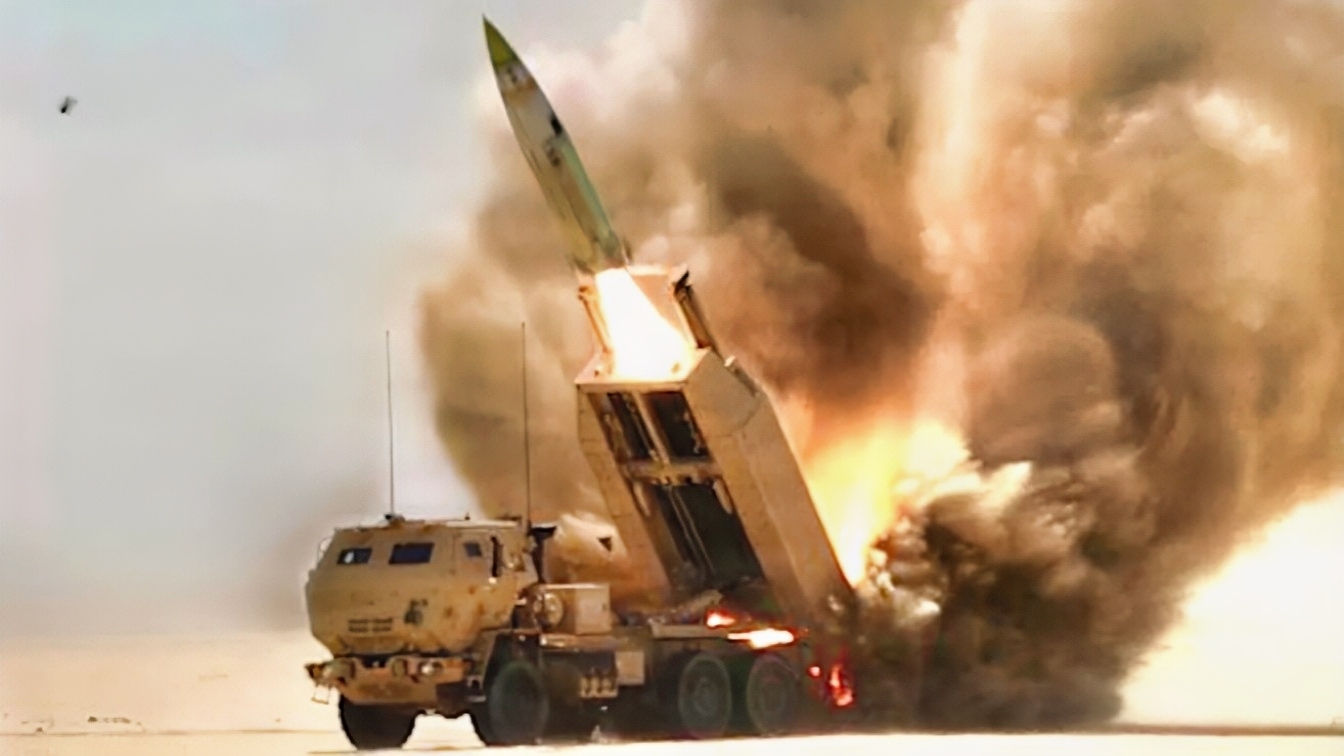
ATACMS Like Used in Ukraine Creative Commons
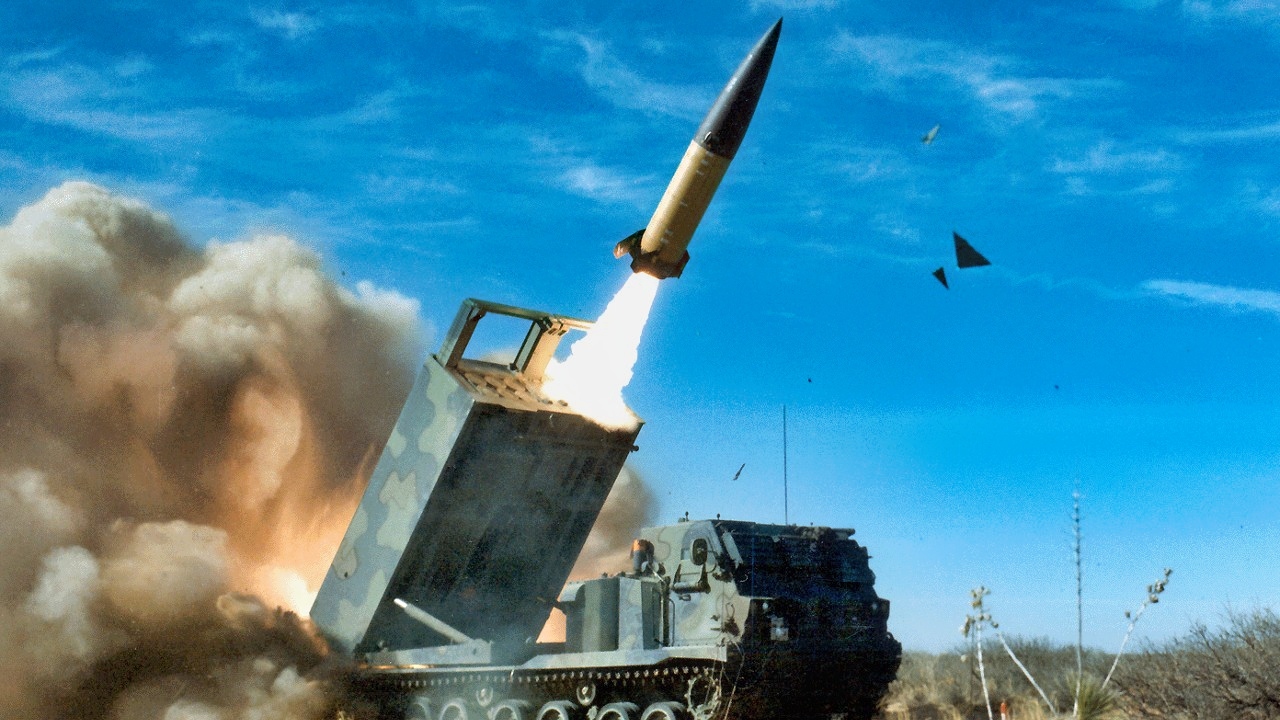
An ATACMS missile being launched from an M270 MLRS.
Nine months into the conflict with Iran, the economic numbers coming out of Riyadh and Abu Dhabi are ugly. But the more interesting question buried in the Times story is whether “normal” is still on the table.
It isn’t. At least not the version of normalcy the Gulf spent the last decade selling to the world.
The Numbers Are Worse Than The Headlines
The International Monetary Fund now expects economic output across the Gulf Cooperation Council to fall 5 percent this year.
Kuwait, Bahrain, and Qatar are facing double-digit contractions because nearly everything they sell must pass through the Strait of Hormuz.
Iran has made that trip very expensive due to the rise in insurance costs from the IRGC’s attacks on shipping in the Gulf.
Saudi Arabia announced on Sunday that its economy shrank 3.8 percent year over year in the third quarter, dragged down by a 20.4 percent collapse in oil activity.
That followed a 4.8 percent contraction in the second quarter, when oil activity fell roughly 25 percent. That’s back-to-back quarters of contraction for the Arab world’s largest economy.
The anecdotes are worse.
Riyadh Air, the kingdom’s would-be luxury carrier, is busing international passengers four and a half hours to an alternate airport because Iranian and Houthi strikes damaged its hub.
Iranian and Houthi strikes hit Aramco’s headquarters and a critical East-West pipeline.
The pipeline, which normally carries 5 to 7 million barrels of oil per day, was shut down in late September due to drone strikes, facilitated by Russian satellite imagery shared with Iran.
A marquee Saudi investment conference got pushed to next year.
And Exxon Mobil CEO Darren Woods reportedly skipped ADIPEC, the big energy conference in Abu Dhabi this week, over security concerns.
When Exxon and Chevron’s CEOs won’t fly into Abu Dhabi for an oil conference, it speaks volumes about the situation.
The Pipelines Bought Time, Nothing More
It could be worse, and the reason it isn’t is the steel in the ground. Saudi Arabia’s East-West pipeline lets crude bypass Hormuz to the Red Sea, and Aramco ramped it to 7 million barrels per day in eight days, keeping roughly 60 percent of prewar exports moving.
The UAE’s Habshan-Fujairah line has been running at full capacity since the war began, pushing about 1.5 to 1.8 million barrels a day to the Gulf of Oman.
Add an extensive U.S. military operation escorting tankers through the strait, and the oil kept flowing, albeit at a reduced clip.
Abu Dhabi’s second West-East line is now nearly 50 percent complete and is designed to double that bypass capacity by 2027. Treasury Secretary Scott Bessent even predicted the Strait will become “a worthless piece of water” within two years.
That take by the Secretary should be taken with a large grain of salt. Iran has already shown it can reach a Saudi pipeline via its Houthi proxies.
A pipeline is just a longer target.
However, it does show that the Gulf countries are, in fact, looking at alternate means of bypassing the Strait.
Diversification Is The Real Casualty
Say what you will about oil prices.
The Gulf states have known for years that crude wouldn’t carry them forever, which is why Riyadh and Abu Dhabi poured hundreds of billions into tourism, aviation, real estate and technology.
The entire pitch rested on one idea: we’re the safe neighborhood in a rough part of town.
That pitch is now taking fire.
Traffic at Dubai International, the world’s busiest international hub, is still running below last year.
Moody’s told the Times that tourism, hospitality and real estate have absorbed a confidence shock, and that a permanently higher risk perception could damage economic models built on safety and stability.
The artificial intelligence push is a perfect example.
Qatar, Saudi Arabia, and the UAE announced roughly $120 billion in A.I.-related investment plans last year and courted Silicon Valley to build desert data centers.
However, Iranian drone swarms struck data centers in the Emirates and Bahrain early in the war. Now there is talk of dispersing future sites and building some underground.
Hardened facilities are a military answer to a commercial problem. They’re also very expensive.
The Money Is Still Flowing…For Now
To be fair, big investors haven’t fled. Apollo Global Management just took a 10 percent stake in Mubadala Capital. Advent set up shop in Abu Dhabi last month.
Sam Altman signed four agreements with Abu Dhabi firms at ADIPEC, including one with ADNOC.
The UAE, with nearly $3 trillion in sovereign assets, has vowed to drive its dependence on Hormuz to zero. That will take time…and money.
The IMF is also forecasting a sharp snapback in 2027, with 7.9 percent growth in Saudi Arabia and 18.8 percent in Qatar.
However, that rosy number assumes hostilities taper off enough for the energy sector to return to prewar conditions next year.
Reuters Breakingviews points out the bounceback could be even stronger if Washington strikes a durable deal with Tehran after the midterms.
That’s a significant big if.
The lone bright spot is Oman, which sits on the Arabian Sea, doesn’t need the Strait of Hormuz, and is on track for growth above 4 percent this year.
Geography still matters.
So Does “Normal” Come Back?
The IMF’s regional director, Jihad Azour, has already warned the region won’t return to its prewar trajectory in the medium term, citing a “scarring impact on various sectors” and the cost of building resilience.
Tim Callen, a former IMF official in Saudi Arabia now at the Arab Gulf States Institute, told the Times that “the short- versus long-term question is the crux of the issue.”
He’s on point.
The short-term problem is solvable with money, steel and time, and the Gulf has plenty of all three.
The long-term problem isn’t.
Fellows at the Middle East Institute note that the region has little expectation of a return to the prewar equilibrium.
Budgets are already shifting toward rerouted pipelines and higher defense spending. Every dollar spent on a bunker is a dollar not spent on a resort and the tourism trade.
Investors price risk. Once a missile has hit Aramco’s headquarters, that risk premium doesn’t evaporate the day someone signs a ceasefire.
Money can buy pipelines, bunkers and underground data centers. It still can’t buy quiet. And it won’t buy peace as long as the regime in Tehran remains in place.
About the Author: Steve Balestrieri
Steve Balestrieri is a National Security Columnist. He served as a US Army Special Forces NCO and Warrant Officer. In addition to writing on defense, he covers the NFL for PatsFans.com and is a member of the Pro Football Writers of America (PFWA). His work was regularly featured in many military publications.


