

A US deal with Iran won’t change the neighborhood or the players. That’s the core of a detailed analysis in Haaretz this morning, which argues that even if President Trump reaches an agreement with Tehran and the Strait of Hormuz reopens, the danger to the Gulf states remains. Reopening the strait doesn’t disarm the Iran-backed militias in Iraq.
It doesn’t disarm Hezbollah. It doesn’t disarm the Houthis.
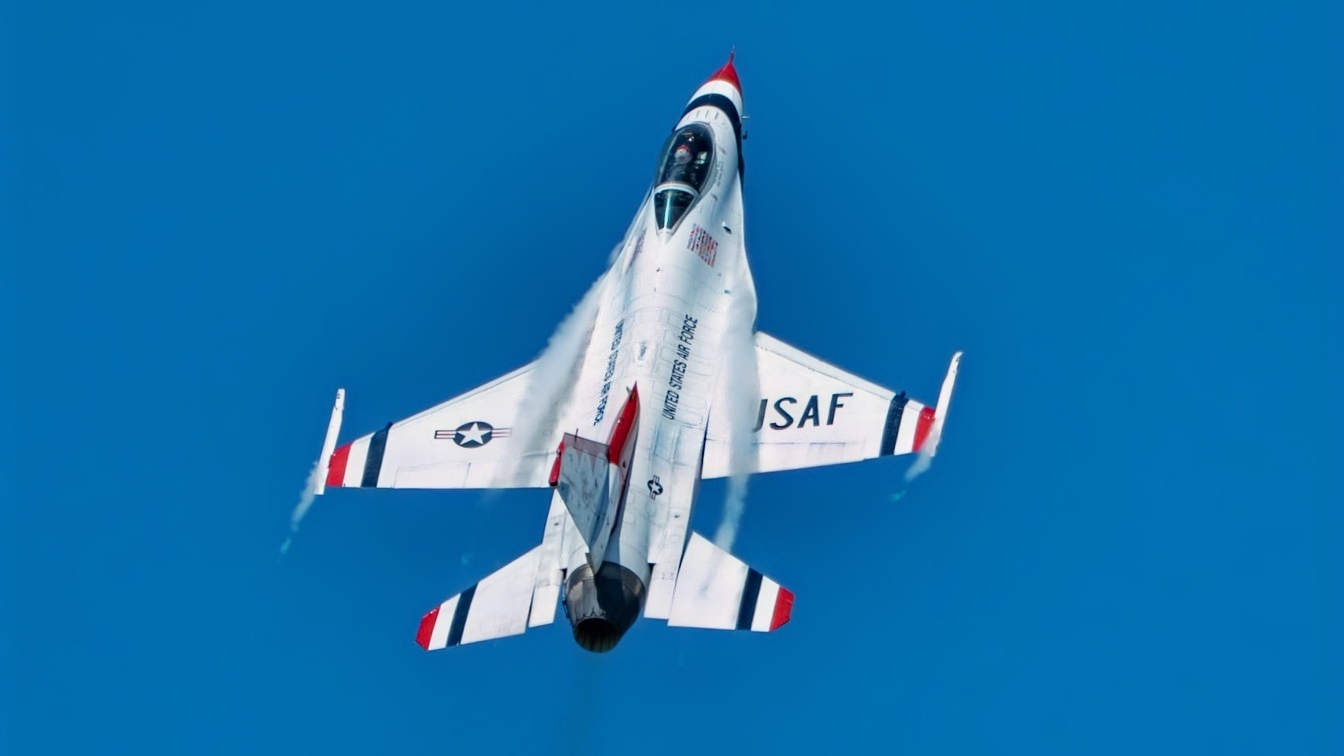
A U.S. Air Force F-16 Fighting Falcon assigned to the United States Air Force Air Demonstration Squadron “Thunderbirds” performs during the 2026 Sioux Falls AirShow: Power on the Prairie at Joe Foss Field, Sioux Falls, South Dakota, July 17, 2026. The Thunderbirds’ demonstration featured close-formation flying and solo routines showcasing the precision and performance of the F-16 Fighting Falcon. (U.S. Air National Guard photo by Master Sgt. Luke Olson)
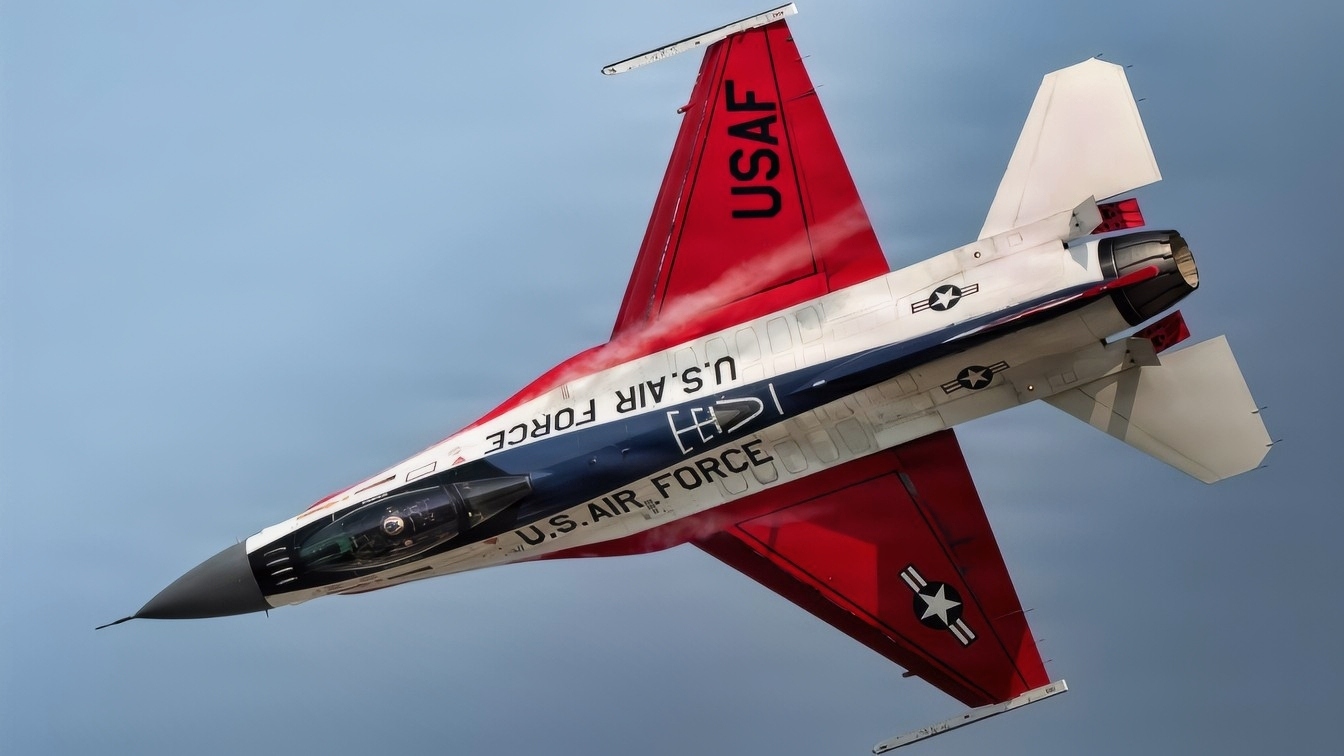
U.S. Air Force Maj. Taylor “FEMA” Hiester, F-16 Viper Demonstration Team commander and pilot, performs aerial maneuvers in a U.S. Air Force F-16C Fighting Falcon during AirVenture at Oshkosh, Wisconsin, July 24, 2026. The F-16, a multi-role fighter aircraft capable of both air-to-air and air-to-ground combat, demonstrates its versatility through dynamic aerial demonstrations across the U.S. and abroad. (U.S. Air Force photo by Staff Sgt. Steven Cardo)
The Gulf monarchies are left facing a much harder question about what comes after the shooting stops.
Haaretz also asks the question nobody in Washington, Riyadh, or Tehran has answered. What does Trump actually want?
It is a fair question as the administration keeps moving the goalposts. In about ten days, the administration reportedly briefed Gulf allies to prepare for a short, intense round of strikes the day after the midterms.
Then Trump raised doubts about following through and said a deal could happen. By Sunday, he was calling a new offensive “highly unlikely” if talks on Iran’s nuclear program and Hormuz make progress.
Defense professionals and planners in Abu Dhabi or Kuwait City are in the dark. You’re planning for three different wars and one peace, all at once.
However, the bigger issue isn’t Trump’s leanings on any given Sunday. It’s who sits at the table and who doesn’t.
The Proxies Don’t Sign Anything
Our US Army Special Forces work by, with, and through surrogate forces, which is the core of the mission. Tehran’s Quds Force has been running the same playbook for forty years, and they’re very good at it.
From Iran’s point of view, the beauty of a proxy is the plausible deniability. A proxy militia commander in Iraq won’t sign any deal.
Neither will a Houthi launch crew in Hodeidah.
This year’s track record makes the point. According to the Stimson Center, Iran-aligned Iraqi militias launched drones and rockets at Saudi Arabia, Bahrain, Kuwait, Jordan, and other Gulf states.
Kuwait’s only civilian airport was hit. Bahrain said Iraq-based groups kept sending drones at the kingdom even after a ceasefire was announced.
Gulf officials, Stimson notes, worry that proxy war out of Iraq may continue even if the U.S. and Iran never trade direct blows again.
It gets worse. Regional officials told the AP that the Houthis helped Iraqi militias plan and execute a two-day drone swarm against Saudi oil facilities, a new level of coordination between the two. Baghdad ordered the militias to disarm.
The powerful ones refused.
The Houthis also have a longer reach than many people realize. Gulf News reports they hit a Saudi tanker in the northern Red Sea, roughly 1,000 kilometers from Houthi territory, after it left Yanbu headed for Suez.
That is significant because Yanbu is Saudi Arabia’s workaround for a closed Hormuz.
Iran’s proxies can squeeze the back door Gulf nations use to bypass the Strait.
Then there’s Hezbollah, battered by Israel but still armed, which has rejected the Lebanon agreement requiring its disarmament and could violently resist any attempt to force it.
Sanctions Relief Is Iran’s First Goal
So what does Iran get out of a deal? Right now, Tehran is demanding sanctions relief, an end to the U.S. naval blockade, and the release of frozen funds, with Qatar mediating.
Compare that with what the Gulf states asked for back in March.
Gulf sources told Reuters that any agreement had to permanently curb Iran’s missile and drone capabilities and guarantee that energy supplies are never weaponized again. Those two lists don’t line up.
The Soufan Center has flagged the obvious risk.
There’s widespread concern that economic concessions will go straight into rebuilding Hezbollah, the Houthis, and the Iraqi militias after years of degradation.
Money is fungible.
Unfreeze a few billion dollars, and they’ll use it to buy drones and ballistic missiles.
That’s how this has always worked.
The Gulf Is Hedging Its Bets
The Gulf states see all of this, and they’re not waiting on Washington.
An earlier Haaretz piece reported that Gulf air defenses are depleted, the U.S. isn’t providing backup, and Qatar is already offering Tehran a non-aggression pact.
At the same time, some Arab states reportedly warned Iran they could retaliate individually or collectively if their infrastructure is hit.
That’s what hedging looks like.
Talk to Tehran, drill your airports, and don’t count on anyone else. One analyst put it bluntly, saying the Gulf states are facing blackmail from both Iran and the United States. Harsh, but hard to argue with.
Meanwhile, Tehran keeps widening the map.
A statement cited by Euronews attributed orders to Mojtaba Khamenei to update Iran’s “target bank,” with an Iranian lawmaker warning that bases in Europe used against Iran would be fair game. That’s not a regime planning to stand down.
What Comes After
Many argue that a deal is still better than another round of open war. Fewer tankers burning in the Gulf is good. However, nobody in the region should mistake a signature for a solution.
About the Author: Steve Balestrieri
Steve Balestrieri is a National Security Columnist. He served as a US Army Special Forces NCO and Warrant Officer. In addition to writing on defense, he covers the NFL for PatsFans.com and is a member of the Pro Football Writers of America (PFWA). His work was regularly featured in many military publications.


