
The number of liquefied natural gas (LNG) tankers leaving the Strait of Hormuz reached its highest monthly total since the Iran war began in October.
31 LNG carriers left the Persian Gulf, according to S&P Global Energy tracking data cited by Reuters, marking an increase of eight from September’s tally.
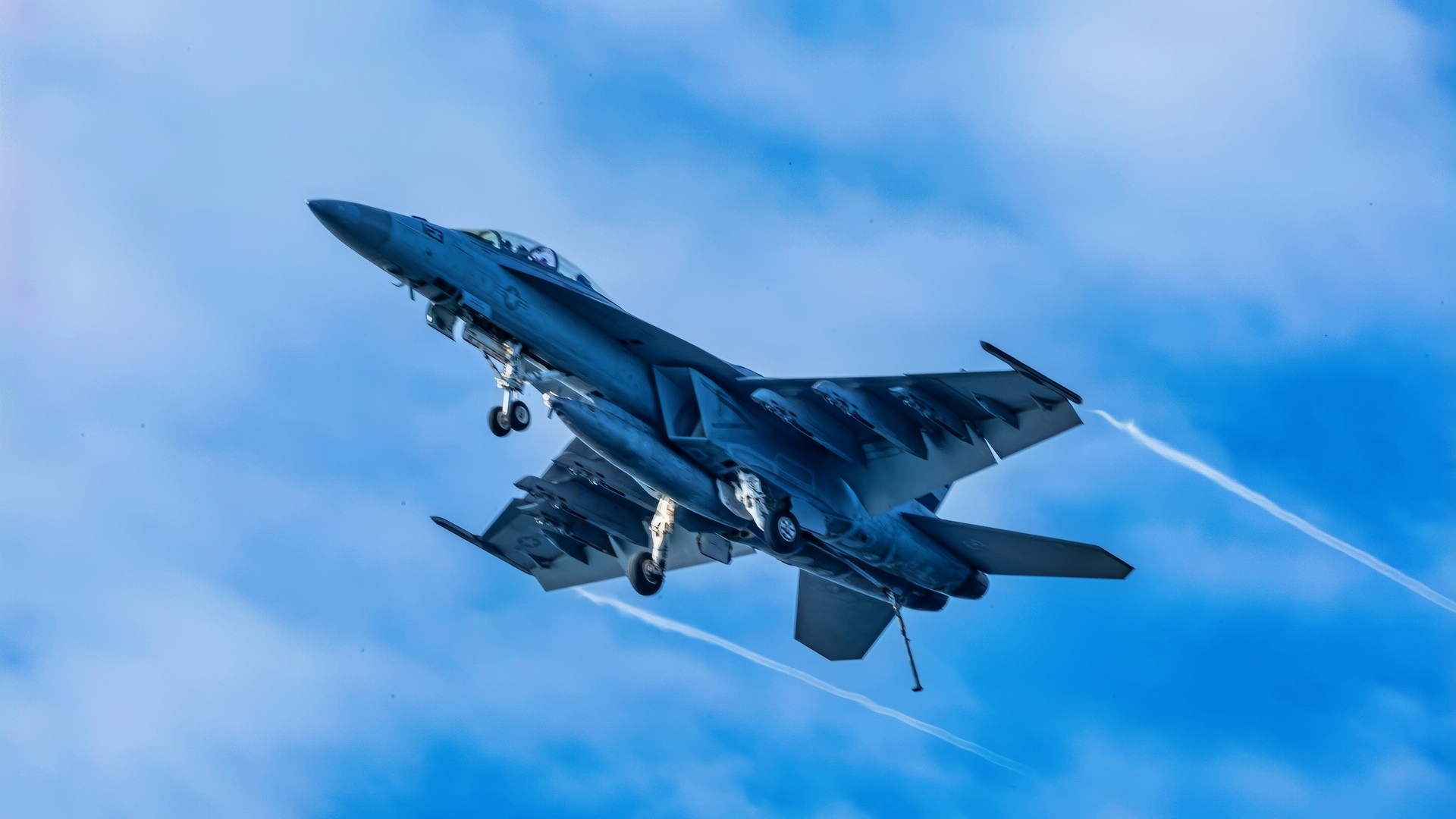
An F/A-18F Super Hornet, attached to the “Salty Dogs” of Air Test and Evaluation Squadron (VX) 23, prepares to land on the flight deck of Pre-Commissioning Unit John F. Kennedy (CVN 79) during flight operations in the Atlantic Ocean, Oct. 15, 2026. John F. Kennedy is underway conducting Aircraft Compatibility Testing, which assesses the operational capabilities of the ship’s aircraft launch and recovery equipment with U.S. Navy aircraft. (U.S. Navy photo by Mass Communication Specialist Seaman Jayden Howard)
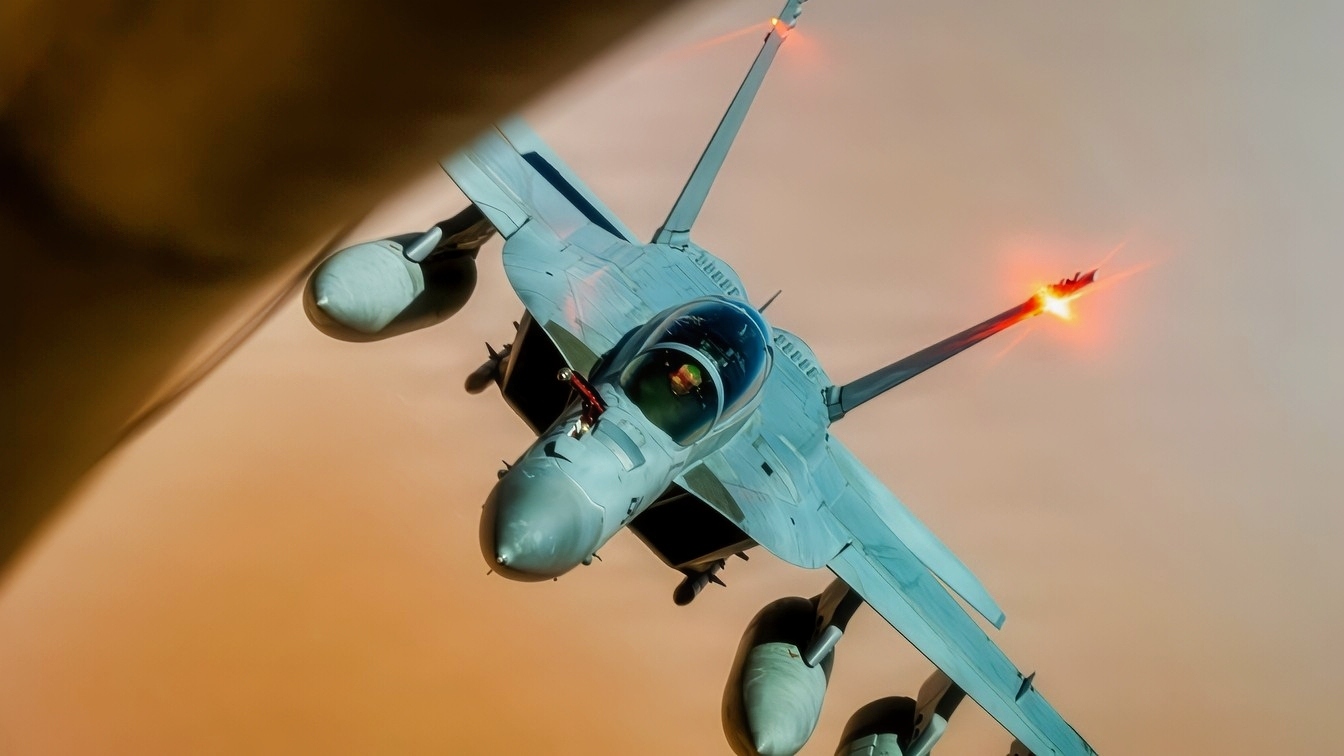
A U.S. Navy F/A-18 Super Hornet approaches a U.S. Air Force KC-135 Stratotanker to refuel in the U.S. Central Command area of responsibility Aug. 3, 2026. (U.S. Air Force photo by Senior Airman Adriana Jordan-Alcaniz)
The news comes after a month in which Iran’s Islamic Revolutionary Guard Corps (IRGC) increasingly targeted vessels transiting through the Strait of Hormuz.
Wartime High for LNG Exports
October’s exports of LNG were the highest since February, when the war began.
Of the 31 LNG tankers that passed through the Strait of Hormuz, 23 were loaded at Ras Laffan in Qatar, and another eight at Das Island in the United Arab Emirates.
According to Eric Yep, senior principal analyst at S&P Global Energy, the UAE returned to pre-war transit levels, with Qatar at more than 30% of pre-war transits through the Strait of Hormuz.
Data from tracking firm Kpler revealed that 42 LNG cargoes were loaded in October, an increase of 15 from September. 35 loadings took place at Ras Laffan, surpassing 2.7 million metric tons — the highest since the conflict began. However, that figure is still well below Qatar’s pre-war exports of almost 6.2 million metric tons in February.
Hormuz Access Remains Restricted
When the conflict began, Iran immediately closed the Strait of Hormuz to commercial shipping, threatening to strike any vessel that passed through what it claims to be a waterway under its jurisdiction.
The strait remains a key sticking point in negotiations between Washington and Tehran, with the latter refusing to reopen the waterway until its demands are met.
While exports from the Middle East have remained well below pre-war levels throughout the conflict, some Gulf states, including the UAE and Saudi Arabia, used alternative pipelines to bypass the Strait of Hormuz entirely.
For exporters without such a luxury, such as Qatar and Bahrain, an increased reliance on ship-to-ship transfers allowed smaller vessels to transit the strait. These have often been conducted under cover of darkness, with trackers turned off, and transiting vessels staying close to the Omani coast, protected by U.S. forces in the area.
As a result, crude oil exports returned to pre-war levels at the end of September.
Increased Activity Fails to Deter Shipowners
With its key leverage in the conflict under threat, the IRGC increased strikes on transiting vessels in early October. By October 22, there had been 27 attacks on commercial vessels, marking the highest number in a calendar month since March, when 22 were struck.
On the same day, the IRGC claimed that seven tankers had been attacked in the Strait of Hormuz — the highest single-day tally of the conflict so far.
Despite the increased risk, commercial vessels have continued to pass through the strait.
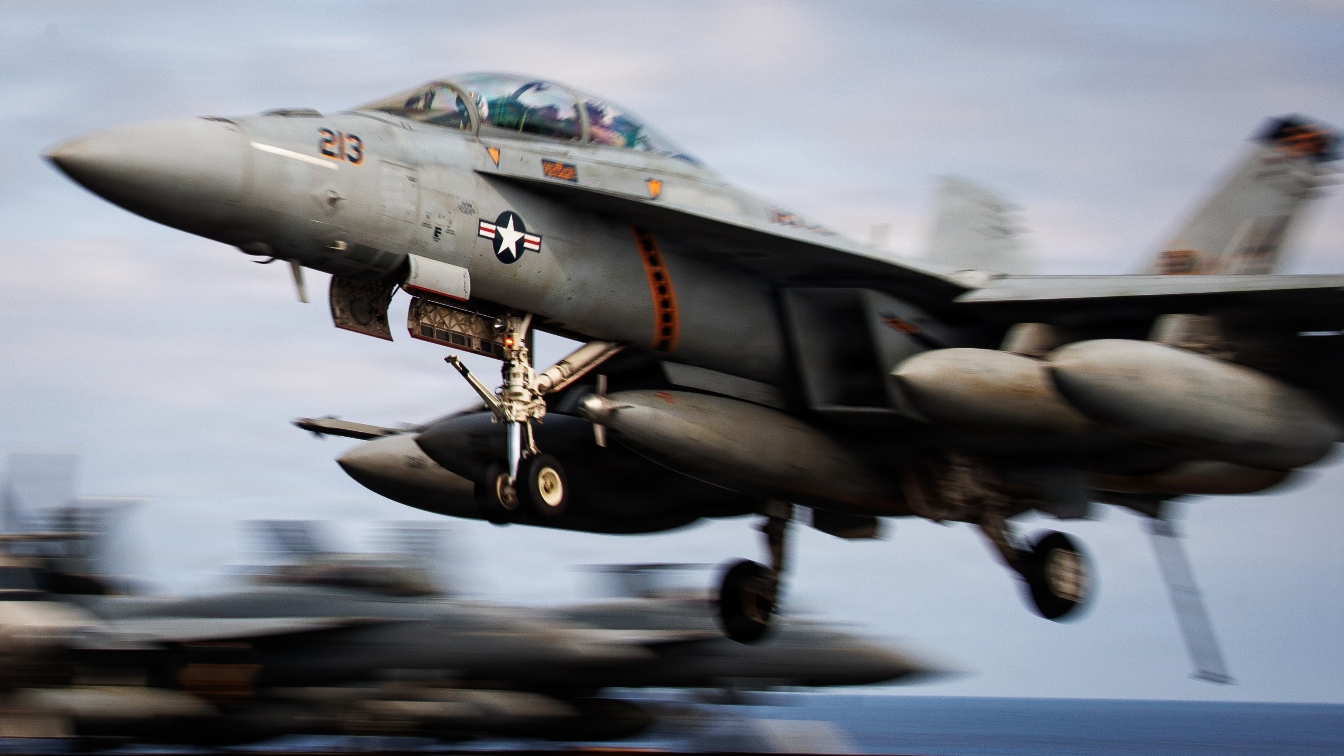
An F/A-18F Super Hornet, attached to Strike Fighter Squadron 213, lands on the flight deck of the world’s largest aircraft carrier, USS Gerald R. Ford (CVN 78), while underway in the Mediterranean Sea, April 11, 2026. Gerald R. Ford is on a scheduled deployment in the U.S. 6th Fleet area of operations to support the warfighting effectiveness, lethality and readiness of U.S. Naval Forces Europe-Africa, and defend U.S., Allied and partner interests in the region. (U.S. Navy photo by Mass Communication Specialist 2nd Class Tajh Payne)
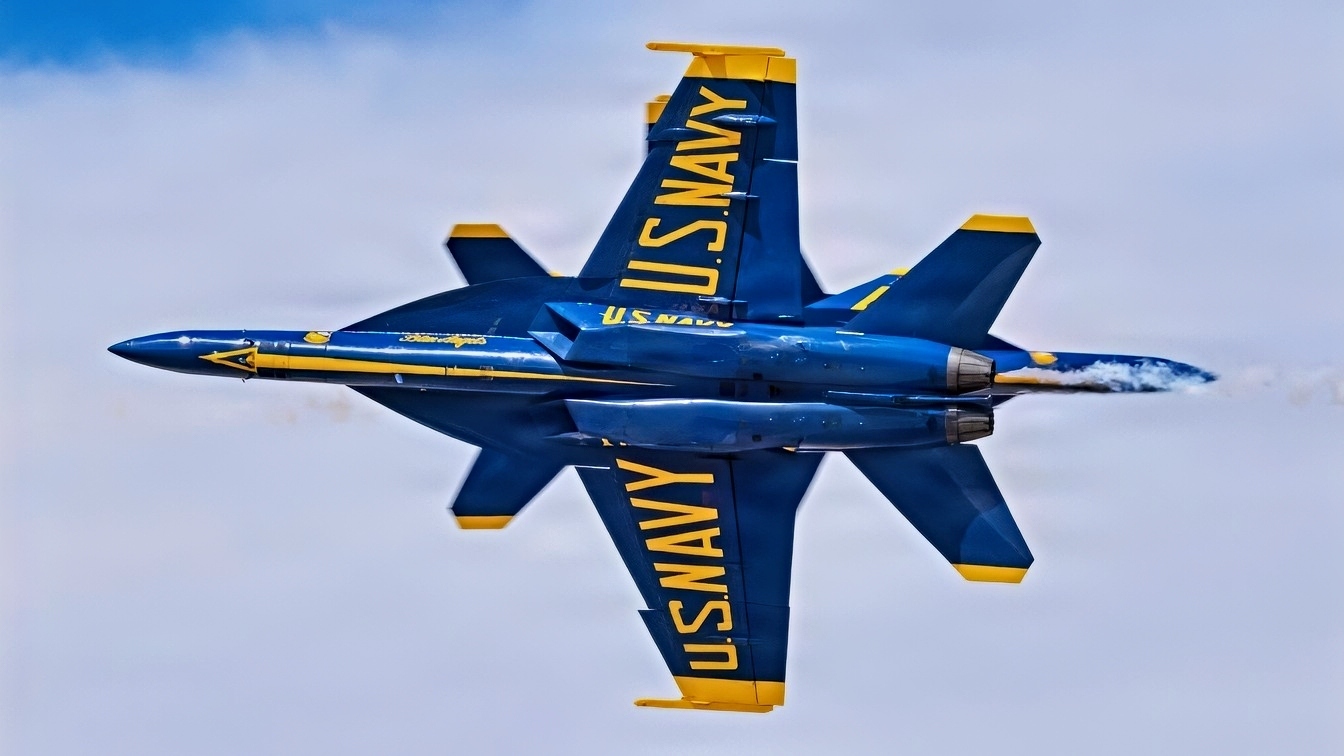
U.S. Navy Blue Angels 5 and 6 fly past each other in an opposing knife edge pass during the Luke Days 2026 airshow, March 22, 2026, at Luke Air Force Base, Arizona. Events like Luke Days 2026 provide insight into the training, preparation and teamwork that enable the joint force to respond quickly and effectively when needed. anytime and anywhere. The U.S. Navy Blue Angels demonstrate the precision, speed and discipline required to operate the F/A-18 Super Hornet, one of the Navy’s frontline carrier-based fighter aircraft. (U.S. Air National Guard photo by Tech. Sgt. Hampton Stramler)
Although the seven-day average remains well below pre-war levels at seven per day as of Tuesday, November 10, it does not account for vessels that navigate the Strait of Hormuz with their transponders switched off, meaning some will be sailing through undetected until a later date.
Hopes of Regional Stability Growing
Qatari Prime Minister Sheik Mohammed bin Abdulrahman bin Jassim Al Thani met with U.S. President Donald Trump on Monday for talks at the White House.
Qatar has played a key role in mediation efforts in the absence of face-to-face discussions between Washington and Tehran.
Following the meeting, Trump hosted an impromptu press conference where he told reporters that “Iran, militarily, is effectively over,” and that there is “positive momentum” behind ongoing discussions to end a conflict that is now into its ninth month.
“We’re just keeping it the status quo,” the president said. “And we’re doing that really at the behest of countries that are their neighbors.”
While a renewed military offensive against Iran remains “highly unlikely,” Trump said the U.S. was “locked and loaded” should further strikes be required.

An F/A-18F Super Hornet Strike Fighter Squadron 103 is parked on the flight deck of the aircraft carrier USS Dwight D. Eisenhower (CVN 69) as the ship operates in the Arabian Sea on Dec. 5, 2006. The Eisenhower is in the Arabian Sea in support of maritime security operations.
As a result, Brent crude, the global benchmark for oil prices, fell to $89.66 during morning trading on Tuesday, according to The Guardian.
That followed a nearly 6% drop the previous day and marked the first time Brent has been below $90 per barrel since the end of August.
Iran insists that the Strait of Hormuz remains closed until its conditions, which include an end to the U.S. naval blockade, the lifting of sanctions and the conclusion of the war on all fronts, are met.
About the Author: Shay Bottomley
Shay Bottomley is a British journalist. He has written for the Western Standard, Business Insider, Maidenhead Advertiser, Slough Express, Windsor Express, Berkshire Live and Southend Echo.