

Armies run on fuel. Ukraine has spent most of 2026 proving it can take that fuel away from Russia, one refinery at a time. In his Nov. 15 evening address, President Volodymyr Zelenskyy said Ukraine’s long-range strikes have now knocked out more than half of Moscow’s refining base.
“In total, we have already neutralized more than 55 percent of Russia’s oil refining capacity,” he said, as reported by the Kyiv Independent.
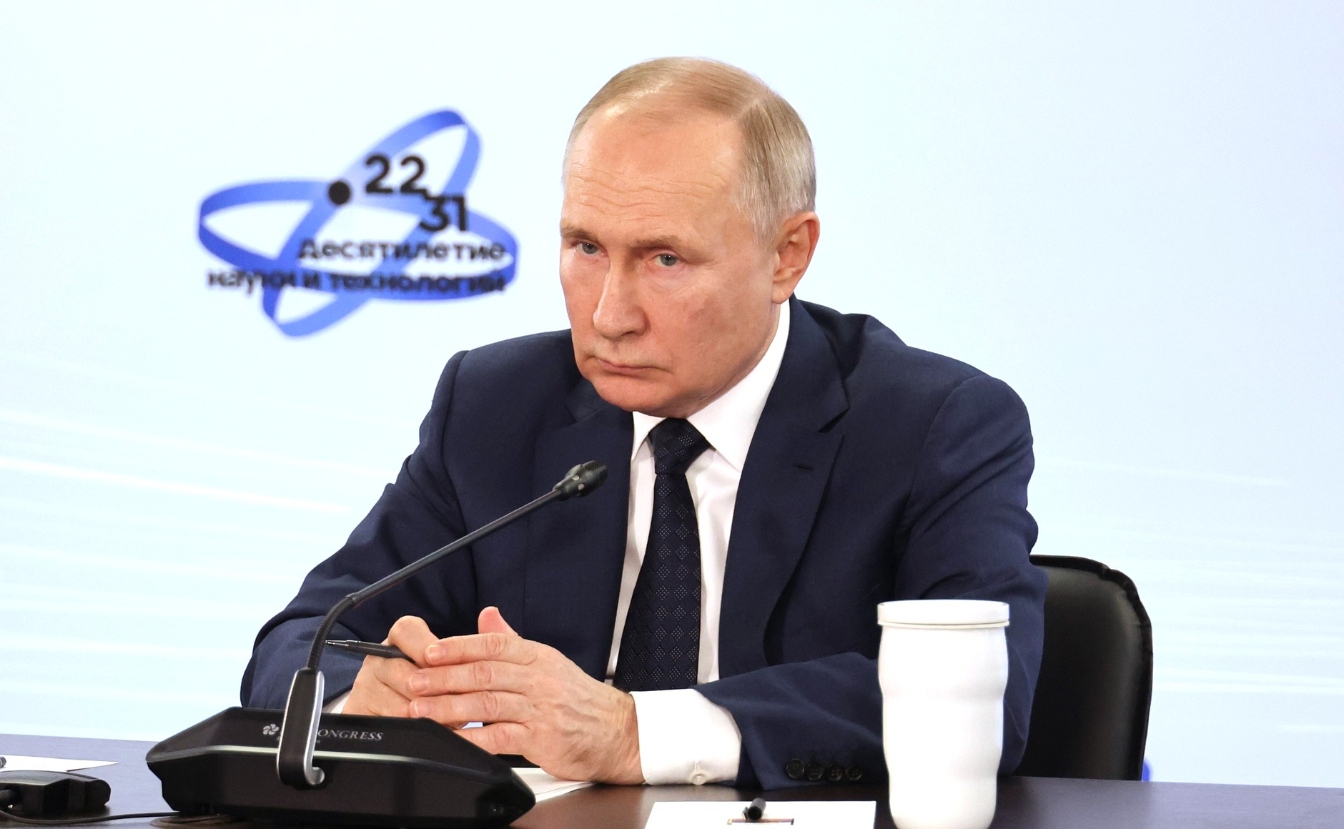
Putin at November 2023 Science Fair Russian Government Photo
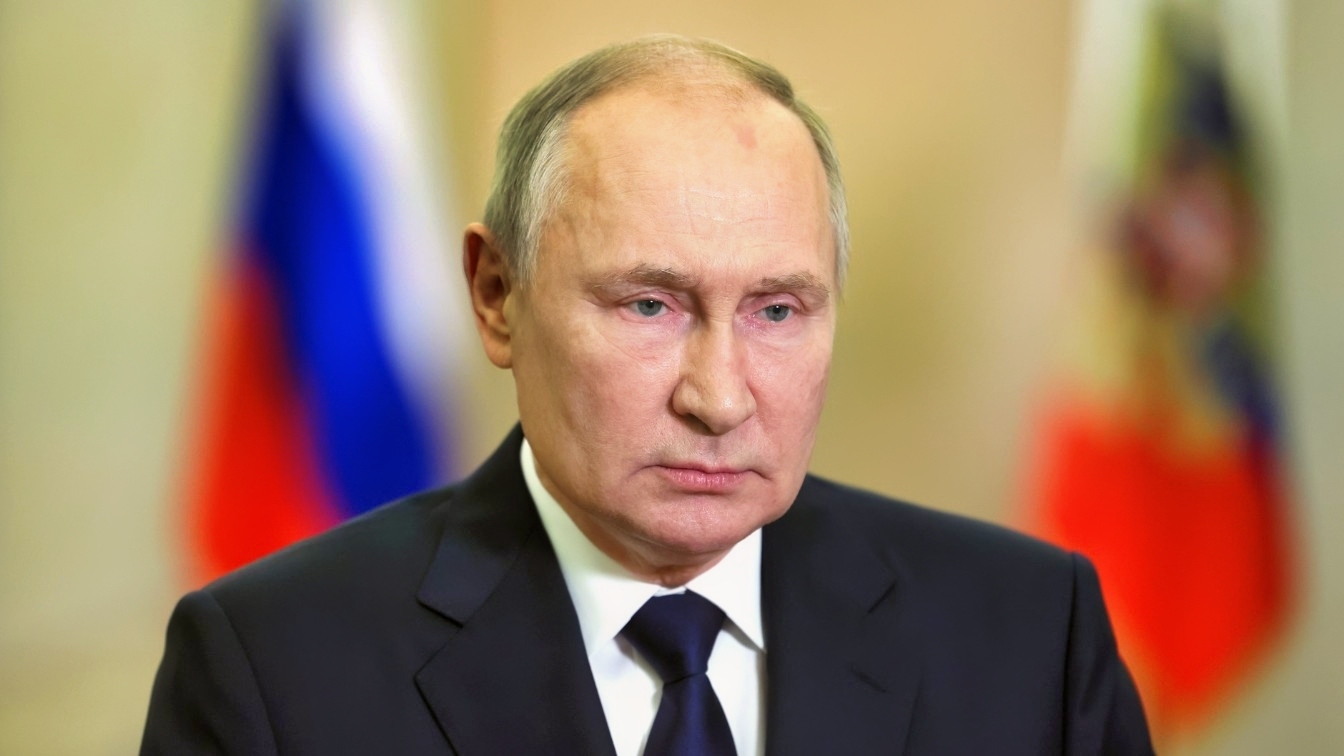
Russian President Putin in 2024 Russian Federation Photo
Zelenskyy was citing a report from Commander-in-Chief Maj. Gen. Mykhailo Drapatyi, and he called the campaign “a fitting response to Russia’s refusal to de-escalate and to their strikes against our energy infrastructure.”
That is a big number. It’s also the latest point on a curve that has been climbing all year. On June 1, Zelenskyy said Ukrainian forces had struck 15 Russian refineries between January and May and that nearly 40 percent of Russia’s primary refining capacity was offline.
By Sept. 21, Ukraine’s General Staff put the figure at 45 percent. On Oct. 4, the Defense Ministry said more than 51 percent had been disabled.
That’s a 15-point jump in about five and a half months, but context matters.
The Reach Is The Real Story
The headline percentage gets the attention. However, the target list from the past week tells you more about where this campaign is headed.
According to the Kyiv Independent, Ukrainian long-range drones hit a key oil facility in Samara Oblast, a major refinery in Volgograd, and Russia’s largest refinery, located some 2,500 kilometers (about 1,550 miles) from Ukraine’s border.
That last one is the Omsk refinery in western Siberia, which came under drone fire for more than eight hours on Nov. 11, and produces roughly one out of every six liters of Russian gasoline and diesel.
Ukraine has now hit it three times this year. After a July strike, industry sources told Reuters the plant had halted operations.
Think about that from the perspective of a Russian air defense planner. Russia is the largest country on earth, and it can’t park a Pantsir battery next to every distillation column from Krasnodar to Siberia.
Every system pulled back to guard a refinery is one that isn’t covering a supply depot or a command post closer to the front.
Moscow’s own numbers hint at the scale. The night after Zelenskyy’s address, Russia’s Defense Ministry claimed it downed 1,336 Ukrainian fixed-wing drones over 15 regions, occupied Crimea and two seas.
The ministry only reports what it says it shot down. It never says how many it missed. Road traffic on the Crimean Bridge was shut down that same morning after a reported strike.
Why Refineries Make Such Good Targets
One invaluable tool during target analysis is the use of the CARVER matrix: Criticality, Accessibility, Recuperability, Vulnerability, Effect, and Recognizability.
Refineries score high across the board.
They’re critical to both the war machine and the Kremlin’s budget. They’re big, they’re easy to identify from the air, and they’re packed with volatile product.
Recuperability is where it gets interesting.
Western sanctions have made it harder for Russia to source specialized refining equipment, so damage to primary processing units takes longer to fix.
Reuters reported in June that the Moscow refinery in Kapotnya would need at least six months of repairs after two Ukrainian strikes.
That’s half a year of capacity sitting idle in the Russian capital.
The Context Is Key Here
Say what you will about the strategy. The number itself deserves some scrutiny, and I’d be doing readers a disservice if I didn’t point that out. Here’s my thinking:
“Neutralized capacity” and “lost production” are two different things.
A year ago, Reuters found that Ukrainian strikes had taken about 20 percent of Russia’s refining capacity offline at the peak of the August to October 2025 campaign.
However, actual refining output dropped only about 6 percent during that stretch, because Russian refineries had been running well below nameplate capacity and could restart idle units at other plants.
The 55 percent figure is Kyiv’s own; however, no refinery-by-refinery breakdown has been published. It can’t be independently verified. Units also come back online after repairs, so any percentage is a snapshot of a moving target.
None of this makes Ukraine’s campaign a failure.
It means the spare capacity cushion is real, and Ukraine has spent this year targeting it.
At 20 percent offline, Russia can shuffle production around. At 55 percent, there’s a lot less room to shuffle.
The Timing Of Zelenskyy’s Announcement Is No Accident
Zelenskyy didn’t make this announcement in a vacuum. Russia has stepped up its own campaign against Ukraine’s power grid, using what he described as a tactic of singling out one region at a time.
The Dnipro region alone has absorbed 131 strikes on energy sites since September.
On the night of Nov. 10-11, Russia hit six major substations across four oblasts, and on Nov. 9 it struck the Trypillia Thermal Power Plant in Kyiv Oblast.
With another cold winter coming, Zelenskyy is asking allies for more help, with missiles for Patriot and NASAMS air defense systems at the top of his list.
The European Commission has pledged emergency energy support, including generators. Kyiv has also made it clear it will only stop hitting Russian oil as part of a reciprocal energy ceasefire.
So the 55 percent figure is doing two jobs.
It’s a battle-damage report aimed at Moscow, and a sales pitch aimed at Washington and Brussels.
The message is simple.
Ukraine is producing strategic results with its own weapons, and it needs the air defense to survive the winter while it keeps doing so.
The refinery campaign has arguably become Ukraine’s most effective strategic lever of the war.
It costs Kyiv relatively little, it hits Russia where it hurts financially, and it forces Moscow to stretch its air defenses across eleven time zones. Armies run on fuel. Russia still has some. Just a lot less than it did in January.
About the Author: Steve Balestrieri
Steve Balestrieri is a National Security Columnist. He served as a US Army Special Forces NCO and Warrant Officer. In addition to writing on defense, he covers the NFL for PatsFans.com and is a member of the Pro Football Writers of America (PFWA). His work was regularly featured in many military publications.


