
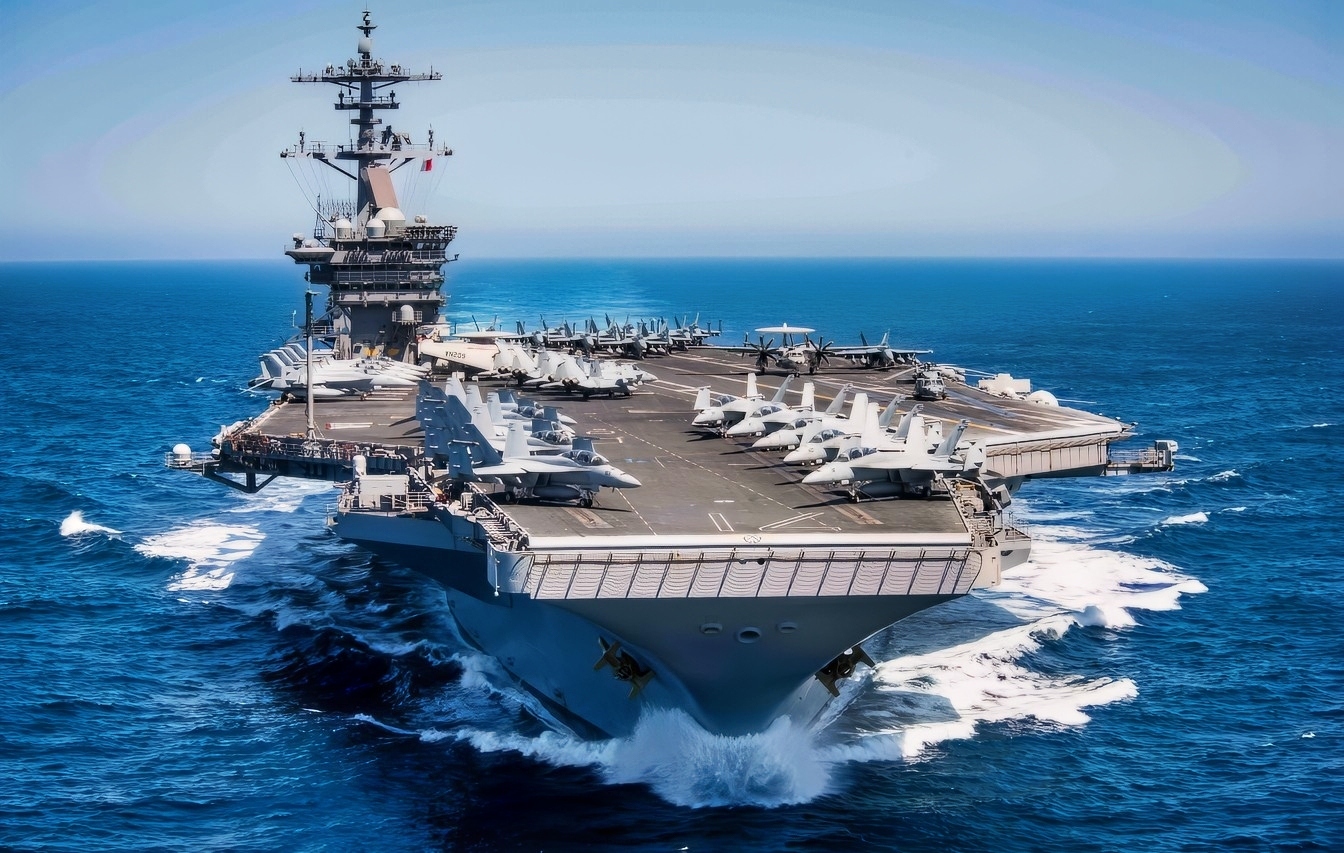
Iran Still Has Thousands of Missiles: The latest U.S. intelligence assessments have indicated that Iran still possesses thousands of ballistic missiles even after months of U.S. and Israeli airstrikes. The findings come as tensions between Tehran and Washington escalate further, with Iran launching new attacks against U.S. military installations and a third U.S. aircraft carrier arriving in the Middle East.
The Wall Street Journal reported on Saturday, November 14, that U.S. intelligence agencies believe that Iran could have anywhere between 1,500 and 2,500 missiles. The assessment challenges claims made by President Donald Trump and U.S. Defense Secretary Pete Hegseth that the country’s missile-production capabilities and its military more broadly have been effectively destroyed. While the president and the defense secretary are quick to tout the destruction of the Iranian air force and navy, the country’s missile arsenal is well-stocked, and the regime continues to manufacture dozens of new ballistic missiles every month.
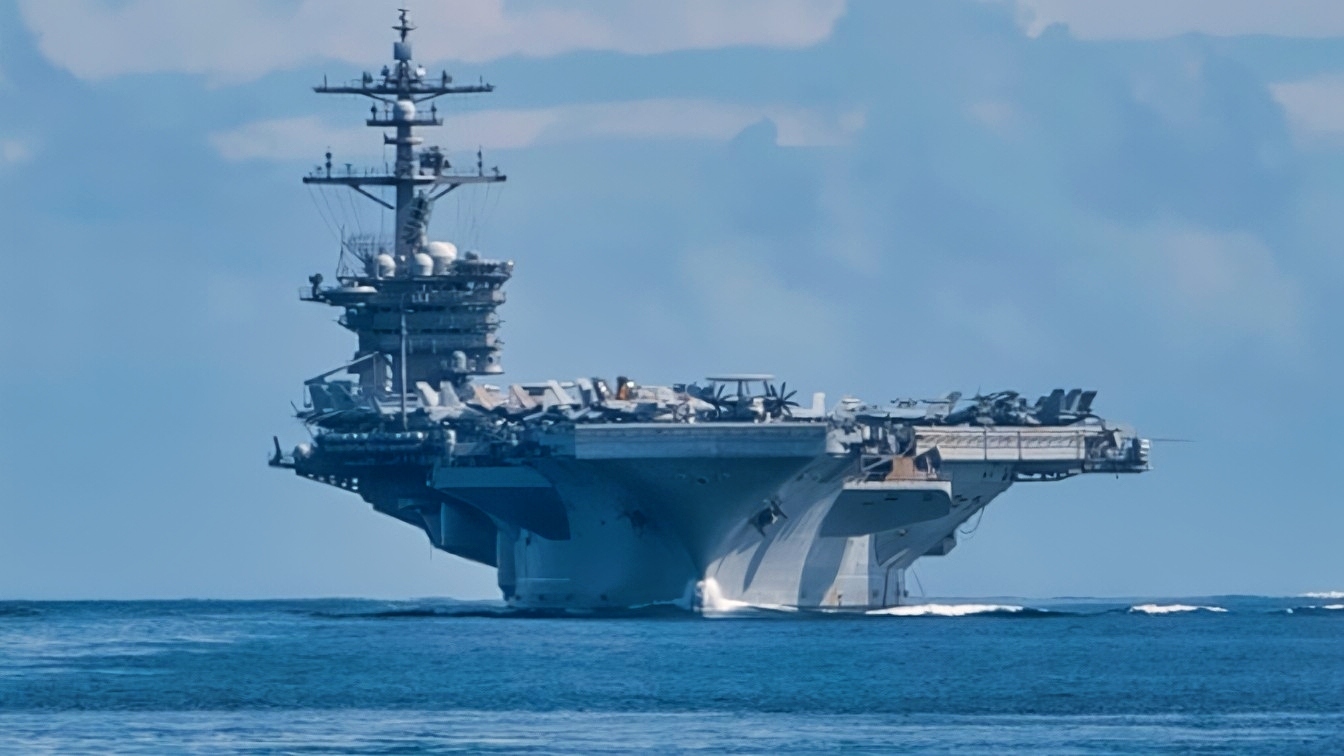
SIBUTU PASSAGE (Feb. 6, 2025) – The Nimitz-class aircraft carrier USS Carl Vinson (CVN 70), left, and the Ticonderoga-class guided-missile cruiser USS Princeton (CG 59) transit the Sibutu Passage Feb. 6, 2025. The Carl Vinson Carrier Strike Group is underway conducting routine operations in the U.S. 7th Fleet area of operations. (U.S. Navy photo by Mass Communication Specialist 3rd Class Brianna Walker)
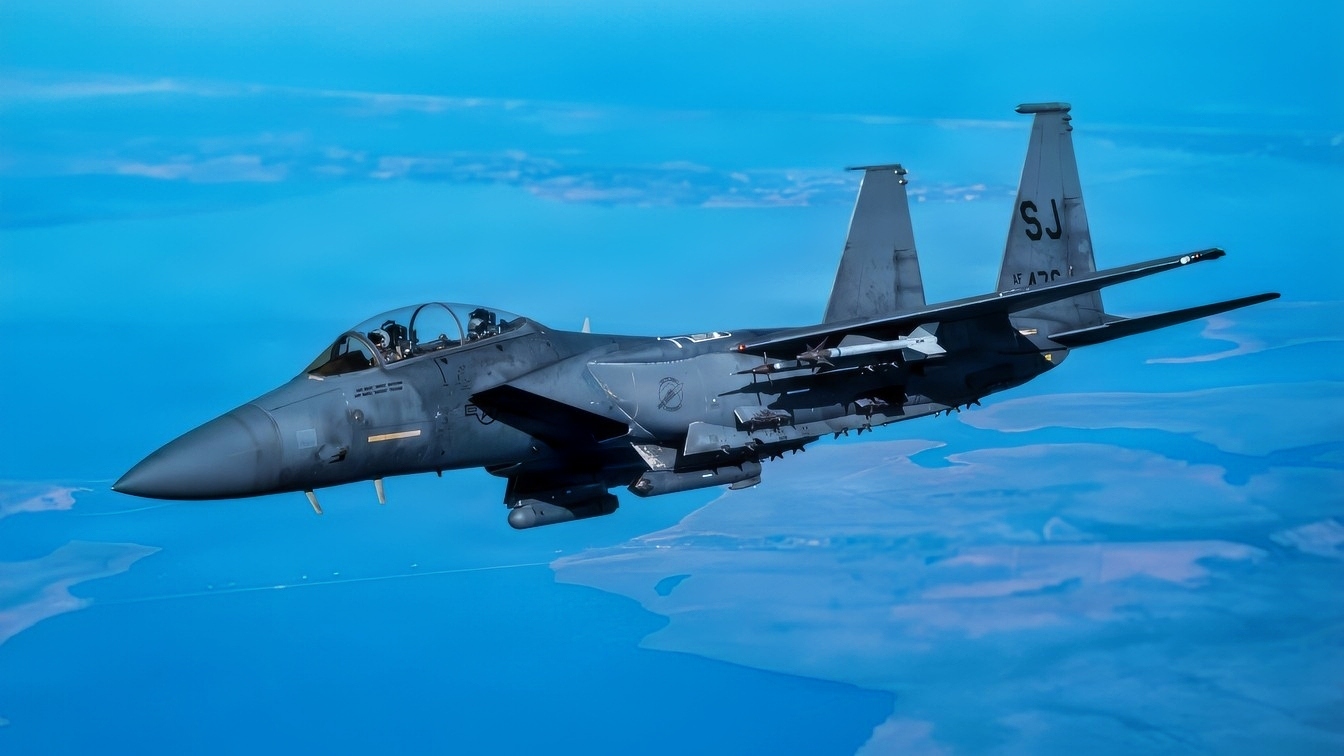
An F-15E Strike Eagle with the 4th Fighter Wing approaches a KC-135 Stratotanker from the 121st Air Refueling Wing to be refueled over the skies of North Carolina, Jan. 21, 2026. The F-15E is a versatile fighter jet built to handle both air-to-air and air-to-ground missions, equipped with advanced avionics and electronics that enable it to operate effectively at low altitudes, day or night, and in any weather. (U.S. Air National Guard photo by Airman Samir Harris)
Up to 2,500 Missiles
According to the Journal’s reporting, which cited U.S. officials familiar with the intelligence, Iran has been rebuilding its missile inventory using components that it kept in storage before the war began in February. However, the assessment also carries a low degree of confidence, with intelligence agencies still unable to fully establish how many missiles are operational and how many are being kept underground. The intelligence also cannot determine how quickly weapons can be assembled.
Nonetheless, the assessment matches that of Israeli military officials, who indicate Iran retains more than 1,500 ballistic missiles.
That massive reported stockpile would give Tehran sufficient weapons to not only conduct another substantial missile campaign against U.S. military facilities in the region and potentially further afield, but also force the United States to expend large numbers of its own dwindling Patriot interceptors and precision-guided weapons.
Speaking to the outlet, former Pentagon official Simone Ledeen said the lower estimate suggests Iran has replenished more than half of its prewar inventory.
The findings could explain, in part, why President Trump has so far refrained from launching a new strike against Iran, with such a large inventory of missiles complicating U.S. efforts to cripple Iran’s ability to respond. Any such attack would almost certainly be met with a barrage of Iranian retaliatory strikes.
50 New Ballistic Missiles Per Month
Not only has Iran preserved much of its initial arsenal of missiles, but a report by Bloomberg published on November 10 found that Iran continues to manufacture as many as 50 ballistic missiles every month. The report cited a Western intelligence assessment and noted that production is still operating at roughly half its prewar capacity because of damage to factories. That assessment estimated that Iran had at least 1,700 ballistic missiles remaining in its stockpile, which is, again, broadly consistent with other findings.
On November 10, footage was also published by the Islamic Revolutionary Guard Corps that appeared to show an underground missile facility that was described as a new missile “city.”
Reports also suggest that Iran has retained thousands of Shahed-type attack drones.
Iran Launches Attacks On U.S. Military Facilities
The reports come as Iran begins striking U.S.-linked military facilities. On Sunday, November 15, the IRGC claimed responsibility for a strike involving six drones against an American radar installation at the Al Riffa Air Base. Bahrain’s military confirmed the strikes, saying air defense systems intercepted a number of incoming aerial threats.
The attack also came after another Iranian drone attack on November 13, which saw American forces intercepting two drones that were headed toward Bahrain.
The Critical Threats Project and the Institute for the Study of War noted in a November 15 assessment that Iran appeared to have begun targeting radar installations to weaken the United States’ early-warning capabilities. The systems coming under attack are important for protecting both military installations and commercial shipping, meaning recent Iranian strikes are likely paving the way for future strikes intended to damage U.S. military sites and to weaken the U.S. Navy’s ability to protect commercial shipping in the Strait of Hormuz.
Third Aircraft Carrier Arrives
The United States is increasing its military presence in the Middle East, with the USS Theodore Roosevelt arriving in the region on November 16 after spending weeks moving to the conflict zone. The aircraft carrier joins the USS George H. W. Bush and USS George Washington, bringing three American aircraft carriers to the region. While the deployment of three carriers in the region is expected to be temporary, Washington has not announced when one of the vessels will depart.
The presence of three aircraft carriers significantly improves the United States Navy’s ability to strike and protect critical regional infrastructure, suggesting that new strikes, should they occur, could happen before one of the three carriers departs.
About the Author: Jack Buckby
Jack Buckby is a British researcher and analyst specializing in defense and national security, based in New York. His work focuses on military capability, procurement, and strategic competition, and he produces and edits analysis for policy and defense audiences. He brings extensive editorial experience, with a career output spanning over 1,000 articles at National Security Journal, and has previously authored books and papers on extremism and deradicalization.


