

Iran’s economy is on the ropes, and Washington wants everyone to know it. Treasury Secretary Scott Bessent has spent the fall making the rounds on FOX, and the message hasn’t changed much.
In a sit-down with Brian Kilmeade published by FOX Business on Oct. 26, Bessent said flatly, “I think that the Iranians are panicked. I think the economy is collapsing.” He estimated Iran’s GDP could fall 20 to 25 percent and laid out an eight-week Treasury push called Operation Economic Outcast.
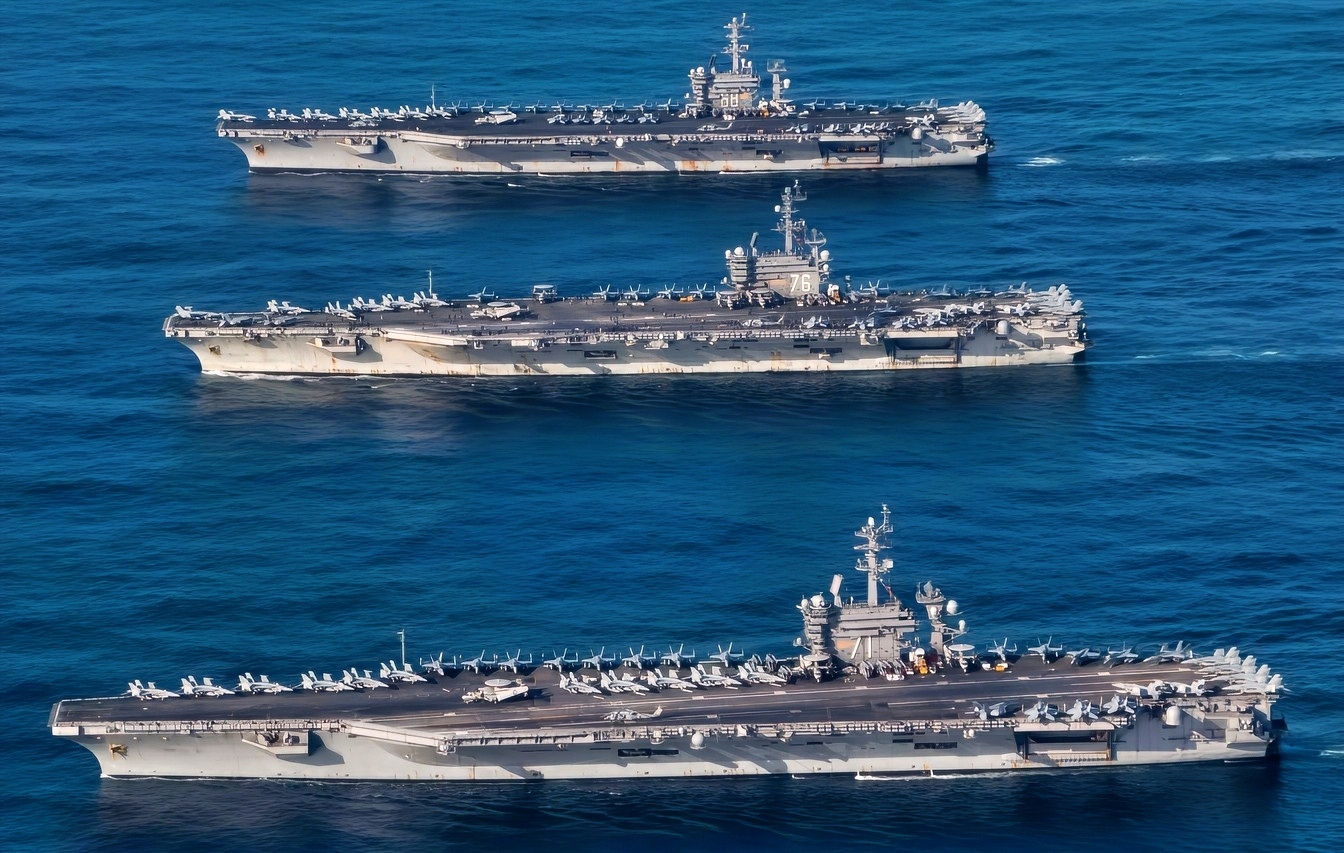
The U.S. Navy aircraft carriers USS Nimitz (CVN-68), USS Theodore Roosevelt (CVN-71) and USS Ronald Reagan (CVN-76) underway in the Western Pacific on 12 November 2017. The strike groups were underway and conducting operations in international waters as part of a three-carrier strike force exercise. This was the first time since August 2007 that three U.S. Navy carriers operated together. In 2007, USS Kitty Hawk (CV-63), USS Nimitz (CVN-68) and USS John C. Stennis (CVN-74) participated in exercise “Valiant Shield”.
It sits on top of the U.S. naval blockade and goes after the banks and front companies that keep Tehran plugged into the world.
He doubled down this past Sunday. Speaking with Fox News and Iran International, Bessent called it one of the fastest economic collapses in history, projecting a contraction of more than 25 percent between March 2026 and March 2027.
That’s worse than the Soviet Union’s 22 percent decline, which took three years. He also told ordinary Iranians to stock up on fuel.
That’s a bold claim.
Is it possible?
Is it probable?
And even if the economy goes off a cliff, does the regime go with it?
The Numbers Mostly Back Him Up
Say what you will about Bessent’s talent for the dramatic. But he’s right on one count. The data is ugly.
The rial was trading early this year at roughly 1.4 million to the dollar. By late August it broke 2 million.
In early October it hit about 2.69 million, forcing the central bank to dump up to $2 billion in foreign currency to prop it up. Bessent now says it may have blown past 3 million.
That’s a currency that has lost more than half its value in less than a year.
Inflation is following the rial down the drain.
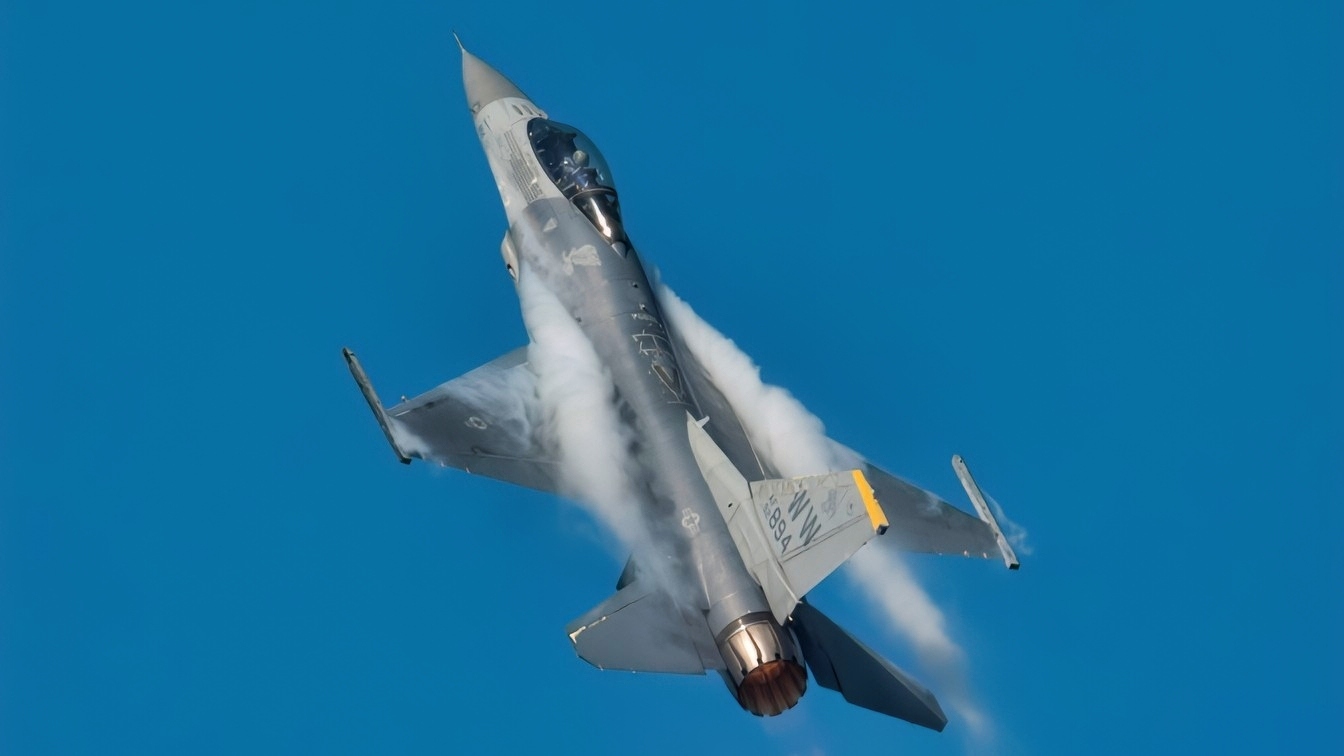
F-16 Fighting Falcon Demo Team pilot, Capt. Jacob “Primo” Impellizzeri, the Pacific Air Forces F-16 Fighting Falcon Demonstration Team performs at Komatsu Air Base, Japan, Sept. 16, 2019.
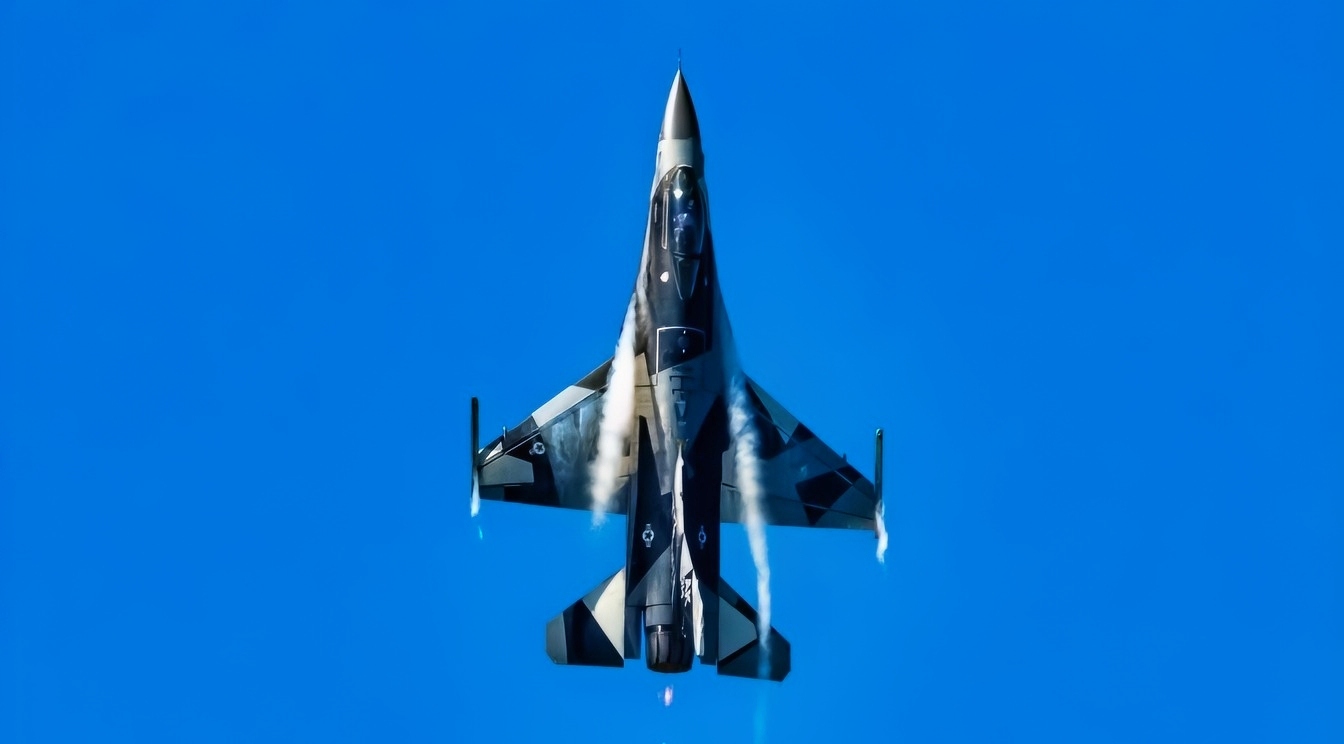
U.S. Air Force Capt. Ethan Smith, Pacific Air Forces F-16 Demonstration Team commander, performs aerial demonstrations during the Arctic Thunder Open House airshow July 21, 2024, at Joint Base Elmendorf-Richardson, Alaska. The demonstration team primarily travels across the Pacific Air Forces area of responsibility, inspiring goodwill and promoting positive relations between the U.S. and partner nations throughout the U.S. Indo-Pacific region. (U.S. Air Force photo by Staff Sgt. Peter Reft)
The Statistical Center of Iran put consumer prices for late May through June 88.6 percent higher than a year earlier. Bessent has pointed to inflation above 100 percent, hours-long gas lines and a government that can’t make payroll for its troops.
However, the number that matters most is oil. According to The Economist, Iran’s oil loadings dropped to zero, something that hasn’t happened since 1979.
Iran is a petro-state. No oil, no hard currency.
No hard currency, no way to pay the men with the guns.
Treasury has gone after the plumbing, too.
Bessent said Treasury hit banking operations tied to Egypt, Turkey, and Russia, including an Egyptian bank whose Dubai branches processed more than $1.8 billion in transactions potentially tied to Iranian networks.
Earlier this year, he said the U.S. had seized about $1 billion in Iranian cryptocurrency. “Just outright grabbed the wallets.”
Possible? Yes. Probable? Define Collapse
Iran’s economy has already collapsed by any reasonable definition. State media estimated war damage at roughly $270 billion back in April.
Oil exports have fallen to zero. Inflation is at levels the country hasn’t seen since World War II. A 25 percent contraction isn’t much of a forecast at that point. It’s arithmetic.
However, an economy collapsing and a regime collapsing are two very different things.
Iran’s central bank governor, Abdolnasser Hemmati, understands that.
Asked about predictions of imminent collapse, he answered with a Persian proverb: the chickens are counted at the end of autumn. Autumn ends December 21.
There’s a tell in Tehran’s own reaction.
An adviser to Hemmati blamed part of the rial’s slide on U.S. officials predicting Iran’s economy would collapse.
That’s an admission that Bessent’s television appearances are moving the currency market.
Some would call that a weapon.
And for once, the US is using the media against Iran, instead of the other way around.
The Regime Has Weathered This Before
Here’s the problem. The Islamic Republic has been “on the verge” since about 1980. It survived eight years of war with Iraq, the 2009 Green Movement, the 2019 fuel protests, and the Mahsa Amini uprising in 2022.
It survived the protests that began Dec. 28, 2025, over the collapsing rial and spread to all 31 provinces.
The regime’s answer in January was to kill. Iran analyst Alireza Nader says Tehran massacred thousands of unarmed protesters, and he’s skeptical that squeezing civilians will produce a revolt.
He also argues the war disrupted the Woman, Life, Freedom movement, which he saw as the best shot at toppling the mullahs.
Opportunity Lost During The Protests
Unconventional warfare teaches one lesson early. Angry crowds don’t topple a regime. Security forces that refuse to fire do.
Hungry people with cell phones don’t beat a Basij unit with rifles.
The violent crackdown in January, where thousands of people were killed during protests, strengthened the IRGC’s position, rather than weakened it.
Anyone with even a hint of disloyalty to the regime was eliminated. This is where US and Israeli hopes for regime change failed.
The regime survived because none of the protesters were armed. This is where the CIA and Mossad should have been funneling arms into the factions that want the regime out. It was an opportunity lost to put the IRGC in a reactive position, against a proxy force, something they constantly use, and put the US in a reactive mode.
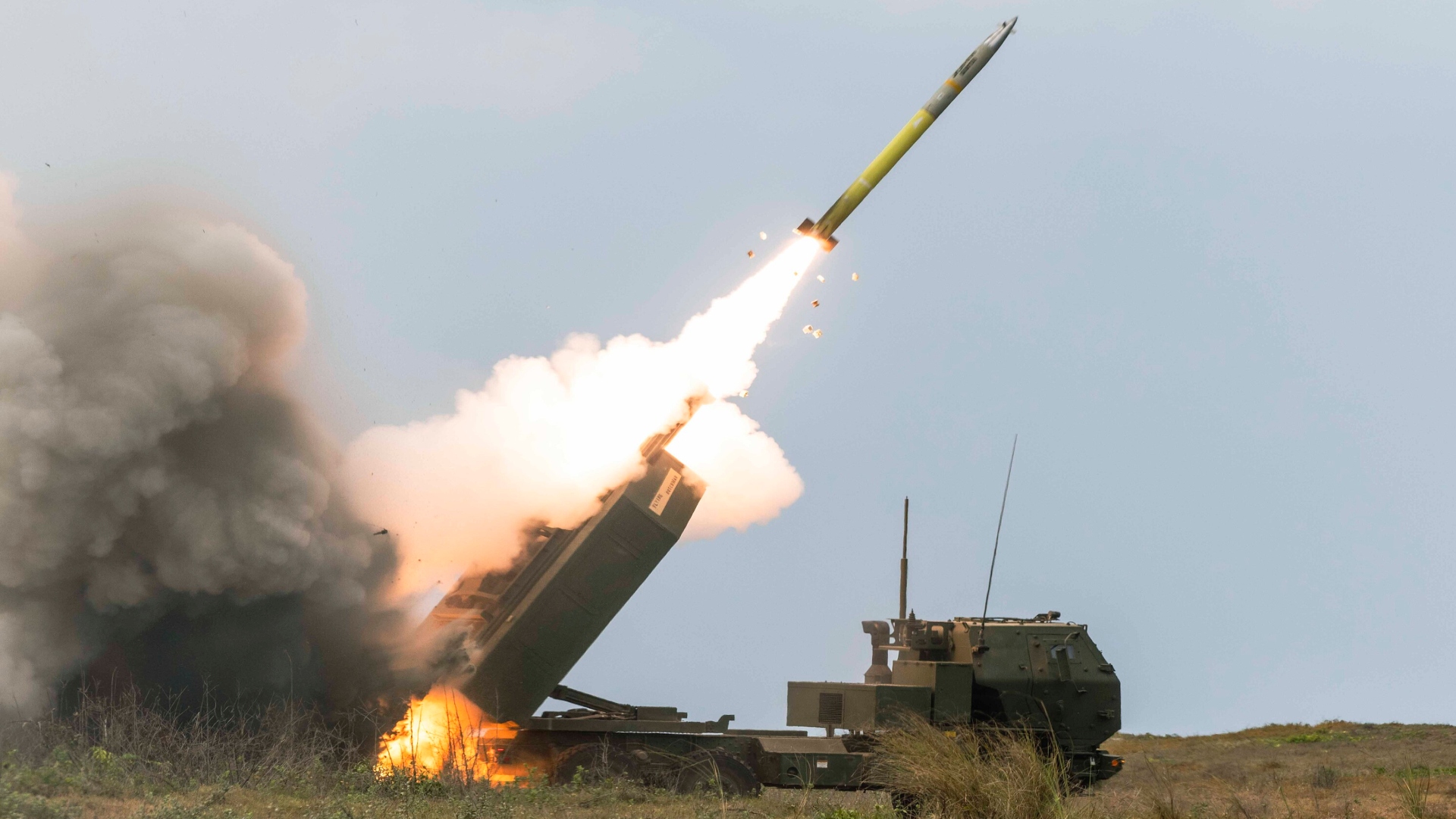
HIMARS Attack. Image Credit: Creative Commons.
Proxies doing the fighting for the US means that no American service members are getting put in harm’s way.
Iran has used Hezbollah, Hamas, the Houthis, and the Iraqi militias to do their bidding for years, and the US has failed to learn the lessons of proxy warfare.
“The IRGC is not just a military force. It is a parallel state. It spans Iran’s security services, dominates key sectors of the economy, and drives foreign policy through its regional networks.”
Where The Cracks Could Come
However, a patronage machine only runs as long as there’s money to hand out. That’s the real target of Operation Economic Outcast.
Bessent claimed some military personnel are going unpaid and some police aren’t reporting for duty.
Beni Sabti of Israel’s INSS points to protests by pensioners and unpaid workers, along with unconfirmed rumors that lower-ranking soldiers haven’t been paid. If that’s true, that’s the crack worth watching. Not the bazaar. The barracks.
A Ynetnews analysis makes the same point: collapse becomes realistic only once regime insiders start doubting that staying loyal is their safest bet.
Jason Brodsky of United Against Nuclear Iran adds a warning.
The regime’s desperation may be climbing right alongside its risk appetite.
A cornered regime with missiles, proxies, and a chokehold on the Strait of Hormuz is not a safe regime.
The Bottom Line
So is Bessent right? On the economy, yes. Iran’s economy is collapsing, and the numbers say it’s collapsing fast.
What happens next? Tehran has shown time and again that it will let its people go hungry before it lets go of power. Possible? Certainly. Probable in the next few months? Don’t bet the farm on it.
About the Author: Steve Balestrieri
Steve Balestrieri is a National Security Columnist. He served as a US Army Special Forces NCO and Warrant Officer. In addition to writing on defense, he covers the NFL for PatsFans.com and is a member of the Pro Football Writers of America (PFWA). His work was regularly featured in many military publications.


