

Iran is about to have a very cold winter. The country holds the second-largest proven natural gas reserves on the planet, trailing only Russia. Yet its government is telling citizens to turn down the thermostat, put on a sweater, and hope for the best.
Al Jazeera reported this week that Tehran is forecasting a peak-demand deficit of roughly 430 million cubic meters per day this winter.

A United States Air Force B-2 Spirit Bomber from Whiteman Air Force Base, Missouri, undertook a hot pit refueling operation at Lajes Field, on September 12, 2023. The B-2 Spirit Bomber stop at Lajes highlights the readiness and capability of the men and women of the 65th Air Base Group to support global operations when called upon. (U.S. Air Force photo by Cristina Oliveira)

Airman 1st Class Tommy Day (left), Senior Airman Phillip Ruiz (center) and Tech. Sgt. Dwayne Bolles prepare to load a BDU-56 bomb on a B-2 Spirit bomber at Andersen Air Force Base, Guam, on April 11, 2005. The airmen are Air Force weapons specialists deployed from the 509th Aircraft Maintenance Squadron, Whiteman Air Force Base, Mo.
(DoD photo by Master Sgt. Val Gempis, U.S. Air Force. (Released))
That shortfall will hit homes and industry alike.
That number by itself doesn’t mean much, so here’s a comparison.
Government spokesperson Fatemeh Mohajerani put last winter’s shortage at 300 million cubic meters per day, according to Reuters.
That’s a jump of more than 40 percent in one year.
Two winters ago, before a single bomb fell, gas shortages shuttered schools and government offices across nearly two-thirds of Iran’s provinces. The baseline was already bad, and now it’s worse.
The Conflict Turned A Chronic Problem Into An Acute One
Iran’s gas woes are nothing new.
For years, the regime’s energy sector has suffered from underinvestment, sanctions that choked off financing and equipment, heavily subsidized prices, and some of the region’s worst energy efficiency.
Back in 2024, Iran’s own Parliament Research Center warned that the winter deficit could reach 300 million cubic meters per day.
The regime knew this was coming.
It did very little about it.
However, the conflict changed the math.
The fighting began on February 28 with US and Israeli strikes that killed Supreme Leader Ayatollah Ali Khamenei.
On March 18, according to National Iranian Gas Company head Saeed Tavakoli, strikes hit six refineries and knocked out 28 percent of the country’s gas production capacity.
The ISW put the number between 20 and 25 percent.
About 100 million cubic meters per day of processing capacity has since been restored. Tavakoli says the remaining 130 million could take until 2028 to bring back online.
Targeting an adversary’s energy infrastructure is one of the oldest plays in the book. It’s slow, it isn’t glamorous, and the effects don’t show up on the evening news for months. However, they do show up eventually. Usually when the temperature drops, and industry and military operations get curtailed.
Eighteen Degrees And A Sweater
Tehran’s answer, for now, is conservation by decree. Government-affiliated executive bodies have been ordered to cut gas use by 20 percent.
Office thermostats are set at about 18°C (64°F), and households are being told to stay between 18 and 21°C (64 to 70°F).
Offices have to shut the heat off entirely on holidays.

A U.S. Air Force B-2 Spirit, assigned to the 509th Bomb Wing, Whiteman Air Force Base, Mo., is flanked by two U.S. Air Force F-22 Raptors, assigned to the 1st Fighter Wing, Joint Base Langley-Eustis, Va., while conducting a flyover over the White House in Washington, D.C., July 4, 2025. The B-2 provides penetrating flexibility and effectiveness inherent in manned bombers. (U.S. Air Force photo by Airman 1st Class Geneva Nguyen)
Inspectors have already cut off gas to the Education Ministry building and five other government buildings in Tehran for not complying.
First Vice President Mohammad Reza Aref said officials must be honest that people “need to save on gas.” That’s a remarkable admission from a regime that rarely admits anything.
It isn’t the first time Iranians have been told to bundle up. In 2022, then-Oil Minister Javad Owji suggested people wear warm clothes inside their homes. It didn’t keep the gas flowing in Tehran then, either.
Gasoline is getting the same treatment.
Gas prices have gone up twice in less than a year, and monthly quotas for private vehicles have been cut sharply.
An October directive requires eligible civil servants to work from home at least two days a week and leave their cars parked one day a week.
This summer, Al Jazeera reported that Iran was importing fuel because demand outstripped what its damaged refineries could produce.
The pattern repeats from season to season.
Industry Takes The First Hit
Natural gas makes up 73 percent of Iran’s energy mix.
There is no backup system waiting in the wings.
When gas runs short, the power plants go to mazut, a heavy fuel oil that turns the air over Iranian cities into something you can almost chew.
The Russians used to burn mazut in their failed aircraft carriers.
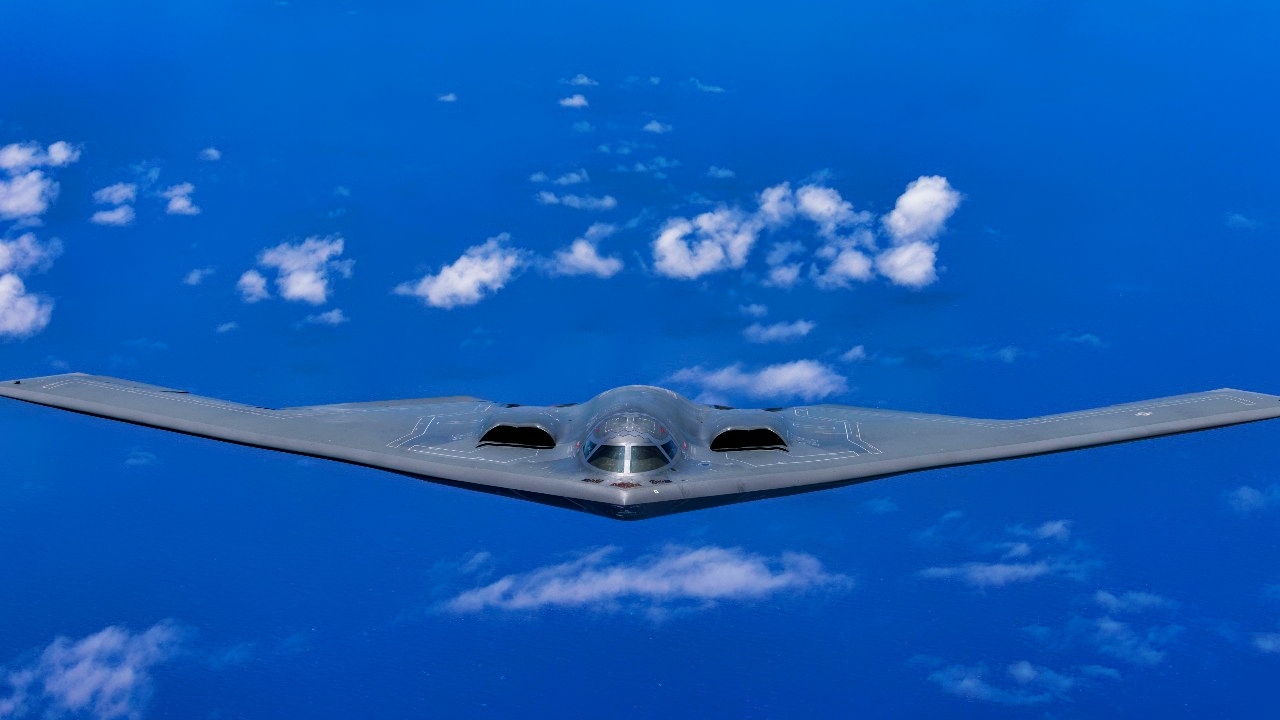
A U.S. Air Force B-2 Spirit bomber flies over the North Pacific Ocean, June 13, 2024. The speed, flexibility, and readiness of the Air Force’s strategic bombers plays a critical role in deterring potential adversaries and signaling unwavering support to allies and partners. Counter-maritime missions provide valuable training opportunities to improve interoperability and demonstrate that Air Force forces are capable of operating anywhere, anytime, to meet any challenge decisively. (U.S. Marine Corps photo by Sgt. Jose Angeles)
Mazut is thick and high in sulfur, requiring thorough preheating before entering combustion chambers. Improper preheating or injection calibration leads to unburned fuel and thick black smoke.
Iran’s Deputy Energy Minister Mostafa Rajabi Mashhadi has already said mazut burning will continue this year.
David Jalilvand of the Berlin-based consultancy Orient Matters expects industry to absorb most of the shortfall, since households get priority.
That process has already started. Zagros Petrochemical in Asaluyeh shut down a methanol unit until further notice on orders from the national gas company.
However, Jalilvand warns that putting homes first doesn’t guarantee they’ll stay warm if things get worse.
Eleven of Iran’s 31 provinces are considered highly vulnerable, especially in the north: Mazandaran, Golestan, and North Khorasan.
Mohajerani has warned that cutoffs could happen nationwide, Tehran included. She also noted that once gas is cut, restoring it takes a long time.
That’s a polite way of saying a pipeline that loses pressure in January may not be restored until spring.
Imports won’t save them. Hashem Oraee of the Iranian Energy Associations Union says the country can’t count on imported gas to close the gap.
Reuters reports that Tehran is talking with Moscow about imports, but with Iranian ports under blockade, it’s hard to see where the volume would come from in time.
What Are The Options For Tehran?
So what does Tehran do?
The regime has two bad options.
It can cut gas to industry, which kills jobs and export revenue in an economy that’s already bleeding.
Or it can cut gas to homes and risk the kind of anger that put people in the streets last winter, before security forces crushed the protests.
Economist Saeed Leylaz called it “the most severe siege imposed on us since the revolution.” Domestic intelligence services are on alert.
One senior official compared the public mood to a fire smoldering under the ashes.
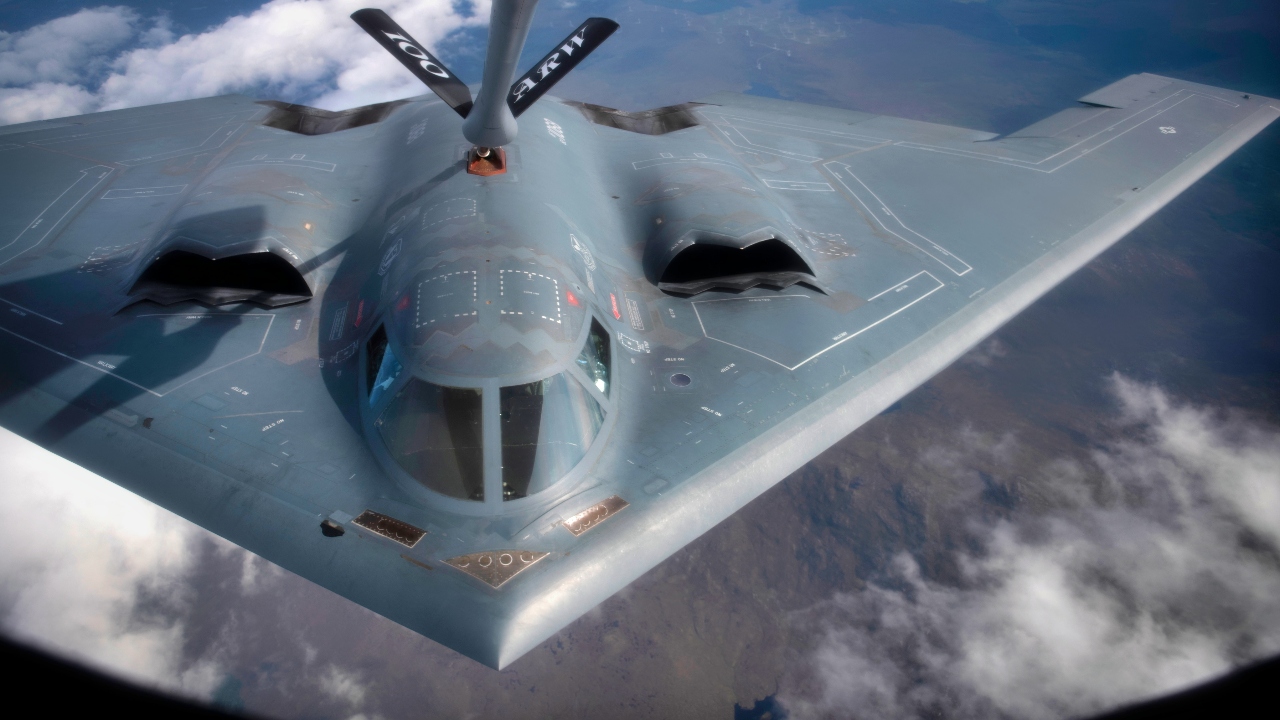
A U.S. Air Force B-2 Spirit assigned to the 509th Bomb Wing, Whiteman Air Force Base, Missouri, is refueled by a KC-135 Stratotanker assigned to the 351st Aerial Refueling Squadron, RAF Mildenhall, during the Bomber Task Force training exercise over England, Aug. 29, 2019. Training with partners, allied nations and other U.S. Air Force units contributes to global readiness and enables the strengthening of enduring and strategic relationships throughout the theater. (U.S. Air Force photo by Tech. Sgt. Emerson Nuñez)
Say what you will about the regime’s resilience. The long-term fix runs through South Pars, the world’s largest offshore gas field, which Iran shares with Qatar.
Jalilvand says sustaining output there increasingly depends on foreign investment and technology.
In early 2025, then-Oil Minister Mohsen Paknejad said Iran needed $45 billion in investment to fix its winter shortages.
That was before the current conflict.
Under blockade and sanctions, nobody is lining up to write that check.
This is where the war’s real cost to Tehran shows up.
About the Author: Steve Balestrieri
Steve Balestrieri is a National Security Columnist. He served as a US Army Special Forces NCO and Warrant Officer. In addition to writing on defense, he covers the NFL for PatsFans.com and is a member of the Pro Football Writers of America (PFWA).


