


Tehran just redrew its target list, aiming at lights and water. On Tuesday, Iran threatened to hit civilian infrastructure located near US or Israeli military bases if Washington or Jerusalem goes after similar sites inside the Islamic Republic, Bloomberg reported.
The messenger was Mohammad Bagher Ghalibaf, the speaker of Iran’s parliament and, not coincidentally, Tehran’s lead negotiator with the United States. He laid it out on X in a single line: “New rule: Any dam, port, or power plant near a US or Israeli base is dual-use.”

USAF Maj. Samuel “RaZZ” Larson, F-22 Raptor Aerial Demonstration Team pilot and commander, performs at the 75th Annual Toronto Air Show. The F-22 Raptor Demo Team performed alongside the RCAF CF-18 Demo Team, RCAF Snowbirds, and RAF Red Arrows.
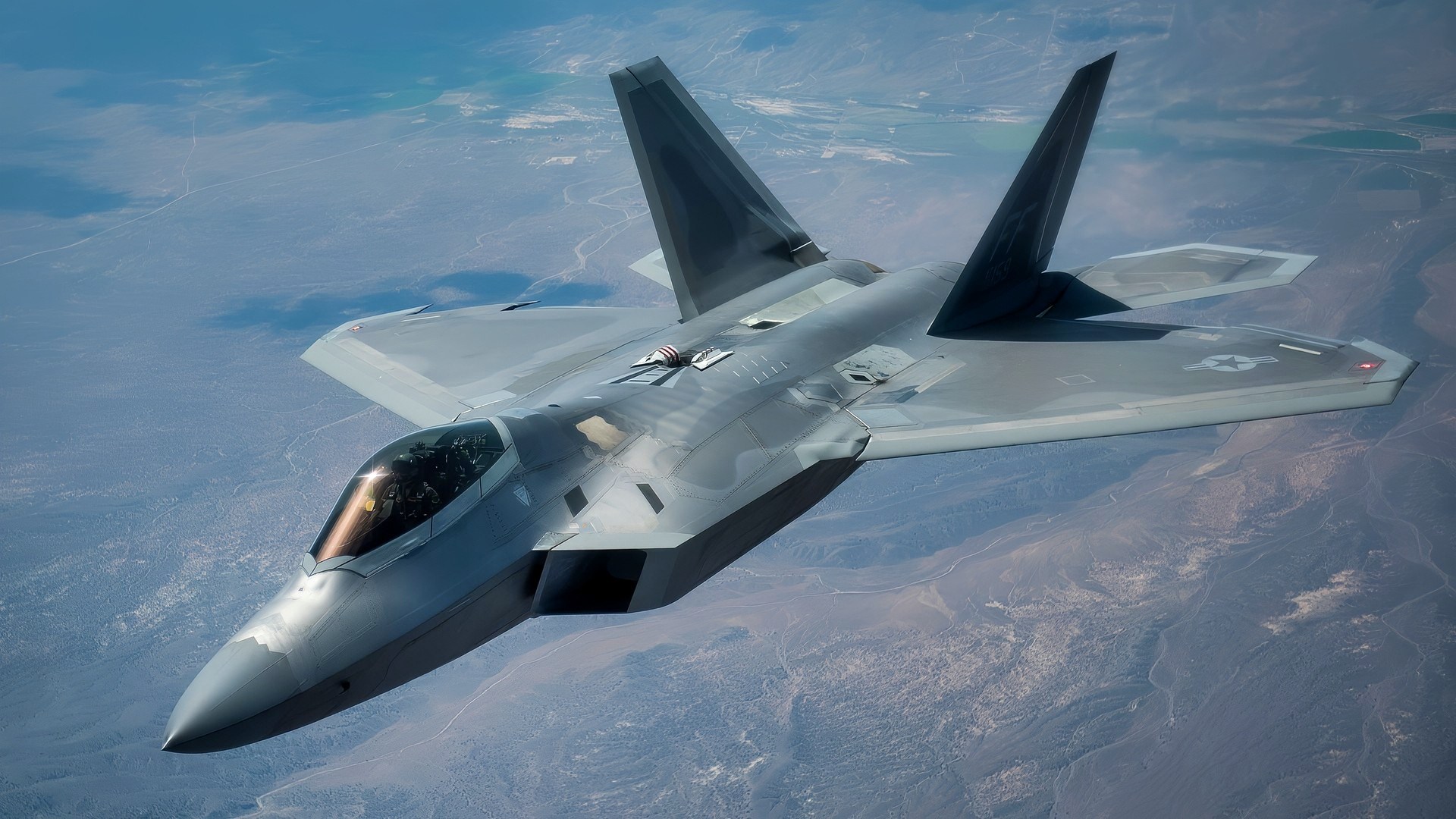
An F-22 Raptor from Langely Air Force Base, V.a. flies by after receiving fuel from a KC-135 Stratotanker from McConnell Air Force Base, Kans., July 27, 2016 during exercise Red Flag, hosted by Nellis Air Force Base, Nev. Red Flag 16-3 is aimed at teaching service members how to integrate air, space and cyberspace elements. (U.S. Air Force photo/Tech. Sgt. David Salanitri)
Read that again. Then pull up a map of the Gulf and look at where American troops live.
What Set Ghalibaf Off
The trigger wasn’t a strike.
It was a newspaper story.
The New York Times reported that some analysts suspect Iran’s sprawling network of dams, pipelines, and water-transfer tunnels was built, at least in part, to feed water and power to its hardened underground missile complexes.
Nima Shokri, a water security researcher at Hamburg University of Technology, and his team had counted at least 533 dams in Iran, a huge number for the region.
When he saw a map of this year’s US and Israeli strikes on suspected missile sites, the pattern closely matched his map of dams.
Ghalibaf called the reporting “prepping the next round on civilian infra” and said Iran would apply the same dual-use logic evenly across the board. However, as the Bloomberg piece points out, the Times never said the US or Israel was considering blowing up Iranian dams.
Iran’s own Foreign Ministry spokesman, Esmaeil Baghaei, dismissed the report as “baseless” propaganda.
So Tehran is threatening retaliation for an attack nobody announced, based on a story its own government calls false. That’s the tell.
Iran Has Played This Card Before
This conflict started on February 28, when US and Israeli strikes hit Iran. Both sides hit non-military targets early, and a shaky ceasefire took hold in April.
That same month, after President Trump threatened to destroy Iran’s civilian infrastructure to force open Gulf shipping, Iran’s Khatam al-Anbiya Central Headquarters warned of “much more devastating” retaliation if civilian sites were struck again.
However, the water issue isn’t purely theoretical.
In June, US strikes near the Strait of Hormuz damaged a drinking-water facility in the village of Bemani that served more than 20,000 people.
CENTCOM acknowledged the damage reports but never said whether the reservoirs were the intended target.
Tehran hasn’t forgotten it, and Ghalibaf’s new rule rests on that grievance as much as on the Times story.
Bahrain Is The Proving Ground
The rhetoric would mean less if the drones weren’t already flying. Iran has gone after Bahrain three times in less than a week.
On November 13, the IRGC claimed it destroyed a US early-warning radar in retaliation for a US strike on a telecommunications tower in Sirik.
It was the first claimed attack on American assets in a Gulf country since early September, and the Pentagon rejected it.
Two days later, the Guards said they launched six drones at an air-defense radar at Riffa. Bahrain said its air defenses knocked them down.
Tuesday was round three.
The IRGC said it fired drones at the radar at Sheik Isa Air Base, blamed US drones for violating Iranian airspace, and warned Bahrain against cooperating with any American attack.
Central Command said nobody was hurt and nothing was damaged.
Iran is cheaply probing the sensor network of radars and early warning nodes that make Patriot and THAAD batteries effective.
A drone costs a fraction of the interceptor that kills it.
That’s Tehran’s real message from Bahrain, and the dual-use threat is the political wrapper around it.
Why “Near A Base” Is The Whole Game
US bases in the Gulf are all located near large civilian ports and cities. Naval Support Activity Bahrain sits in Manama.
Al Udeid in Qatar, Ali Al Salem and Camp Arifjan in Kuwait, and Al Dhafra in the UAE all rely on the host nation’s power grid, desalination plants, and commercial ports. Fuel, food, and repair parts come through civilian harbors.
Ghalibaf knows it too. By making “near a US base” the standard, Iran has effectively declared the civilian backbone of half the Gulf Cooperation Council fair game.
The water those plants produce doesn’t just go to the base. It goes to hundreds of thousands of Bahrainis, Kuwaitis, Qataris, and Emiratis who have zero say in targeting decisions made in Washington.
Say what you will about the wisdom of striking Iranian infrastructure.
Under the law of armed conflict, whoever pulls the trigger has to show military necessity and proportionality.
You can’t turn a desalination plant into a military objective by drawing a circle around a flight line. Iran’s new rule is a hostage-taking doctrine dressed up as legal reciprocity.
However, it would be foolish to dismiss it as pure bluster.
Gulf states demanded last week that Tehran pay full compensation for the damage from thousands of missiles and drones fired at them during this war.
Bahrain alone had intercepted 125 missiles and 211 drones through June.
Iran has shown it will hit Gulf soil.
Its top security official also warned on November 11 that any US base in Europe used to launch strikes on Iran would become a target. The map keeps getting bigger.
Washington’s Hand Is On The Throttle
The timing is ugly. A third US carrier strike group arrived in the region on Monday.
Trump has played down talk of renewed attacks while saying the military is ready if he gives the order.
Meanwhile, CNN reported that US intelligence indicates Iran is developing plans to target senior administration officials in Washington with a dirty bomb or chemical weapon.
Speaking in Manila, Trump said the US is looking into it and warned that Iran would pay a price unlike any country before it.
The White House followed up by saying there are no credible threats to the homeland right now.
Diplomacy isn’t dead.
Qatar, the main mediator, planned to meet Iranian representatives Tuesday to find an off-ramp, and Foreign Minister Abbas Araghchi sat down with Oman’s Sultan Haitham bin Tariq.
However, the talks remain deadlocked, and the low-level shooting hasn’t stopped. Oil traders noticed. Brent crude climbed toward $94 a barrel, still up more than 50 percent for the year.
The Slippery Slope Of Hitting Dams
American planners face some issues.
If the Times reporting holds up and some Iranian dams really do power missile complexes, they become genuinely tempting targets.
Cut the water and electricity to an underground launch complex, and you can degrade it without putting a bunker buster on every tunnel entrance.
However, hitting dams in a country stuck in a years-long drought, where most of Tehran’s water comes from dams, hands Iran exactly the propaganda win it’s fishing for.
It also gives Ghalibaf his pretext to go after Gulf desalination, and our partners would pay the bill in thirst.
That’s a trade I wouldn’t make, and I suspect the Gulf capitals are telling Washington the same thing in private.
It would be best to keep the targeting focused on the launchers, the command nodes, and the IRGC’s drone production lines, and leave the dams alone unless there’s ironclad intelligence tying a specific site to a specific missile base.
Precision is the strategy. Tehran wants every family in Manama and Kuwait City to look at their faucets and light switches and think about Washington. That’s the point of the new rule. It’s aimed at the lights and the water.
About the Author: Steve Balestrieri
Steve Balestrieri is a National Security Columnist. He served as a US Army Special Forces NCO and Warrant Officer. In addition to writing on defense, he covers the NFL for PatsFans.com and is a member of the Pro Football Writers of America (PFWA). His work was regularly featured in many military publications.


