
Oil prices rocketed above $100 per barrel on Wednesday, September 9, as fighting in the Middle East escalated.
Shipping through the Strait of Hormuz was disrupted again, but so were some alternative routes and infrastructure that have helped keep oil moving over the last six months of conflict.

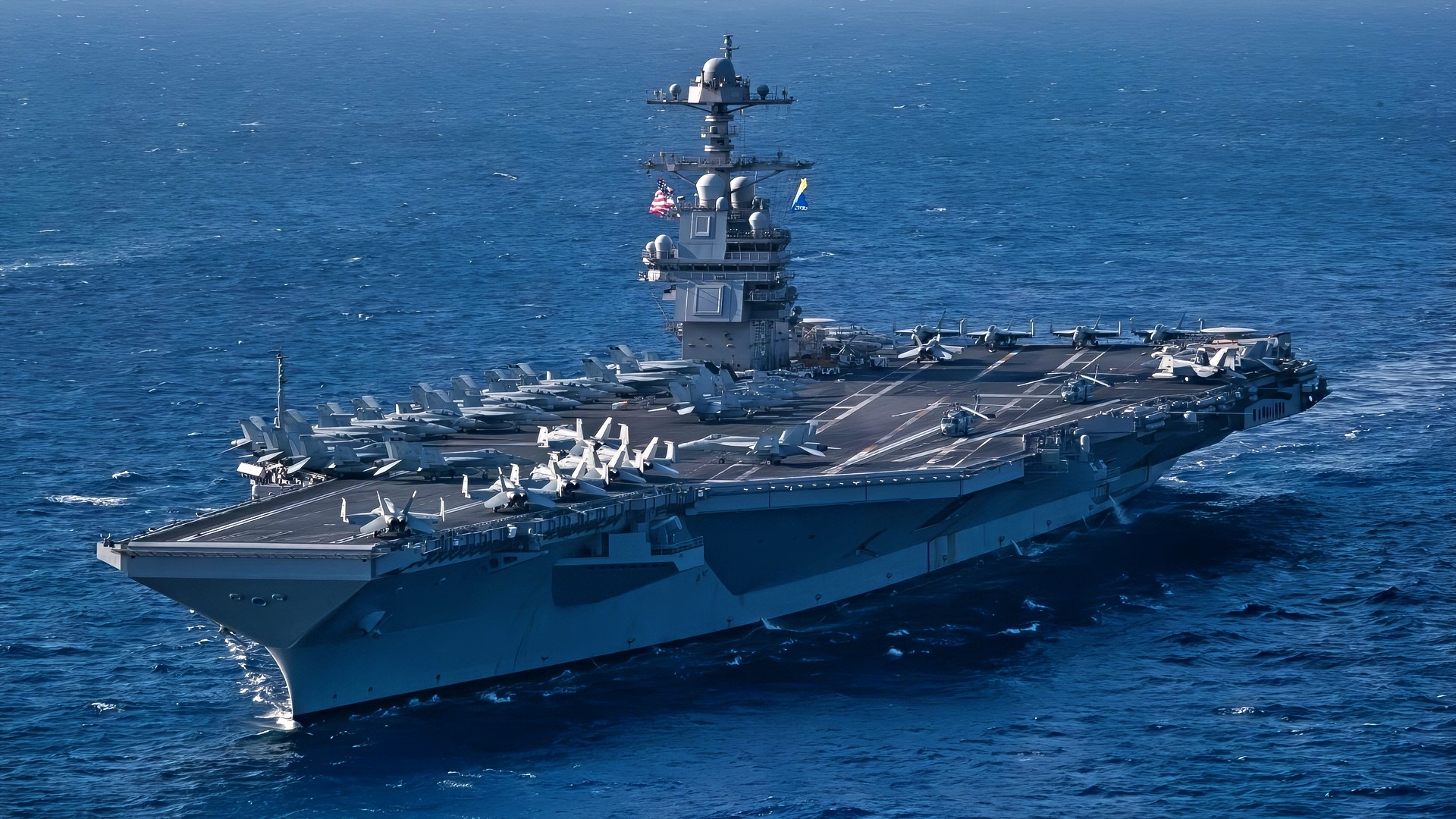
Aircraft Carrier. Image Credit: Creative Commons.
Brent crude surpassed $101 during trading on Wednesday, building on a rally that has increased the international benchmark by around 25% since August.
This time, the increase was caused by U.S. strikes that destroyed five Iranian oil tankers, and Iranian claims that it had hit back by striking vessels around Hormuz.
A major Houthi assault against Saudi Arabia also targeted critical energy infrastructure, further complicating the process of moving Gulf oil onto the international market.
The escalation poses a major problem for the global oil market, right as it was showing signs of moderate – though clearly unsustainable – recovery.
Since the war began in February, producers and shippers have used various creative and sophisticated methods to keep moving crude despite Iranian restrictions and threats in and around Hormuz.
But the fighting now appears to be moving beyond the strait, threatening the infrastructure that is keeping the global economy just about afloat.
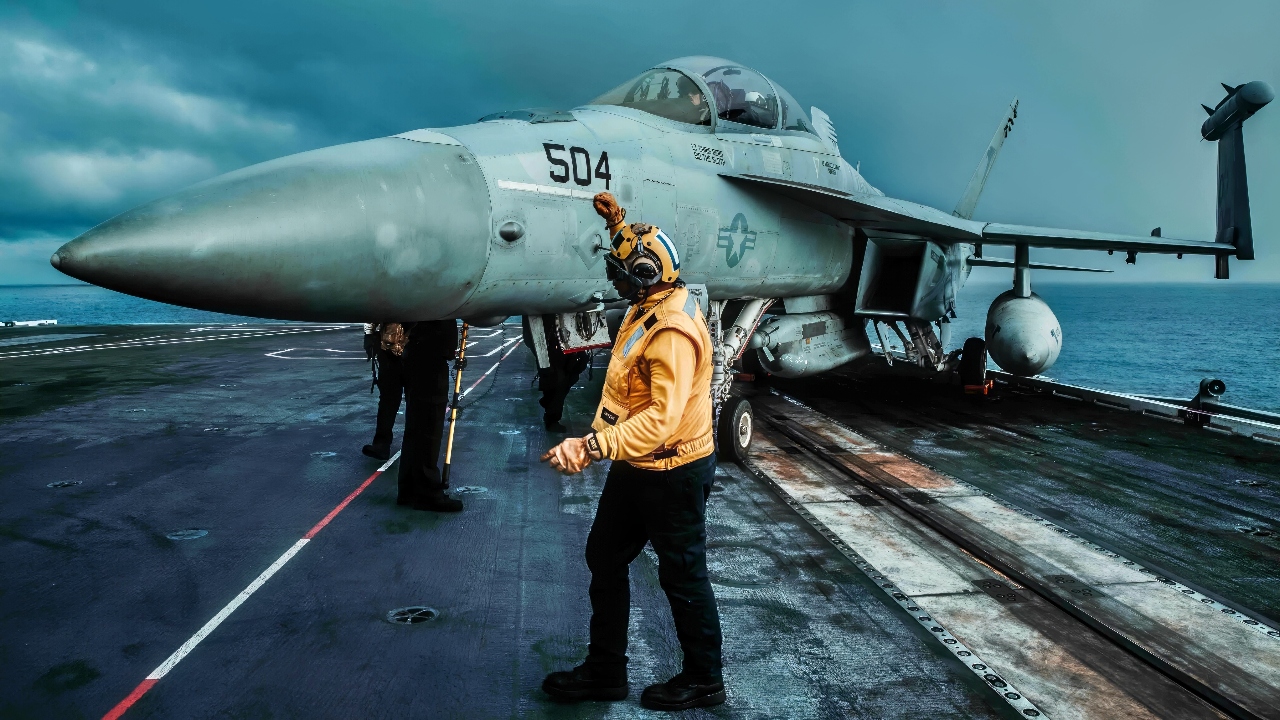
An E/A-18G Growler, attached to Electronic Attack Squadron (VAQ) 141, taxis on the flight deck of Nimitz-class aircraft carrier USS George Washington (CVN 73), while underway in the Indian Ocean, July 24, 2025. The USS George Washington Carrier Strike Group (GWA CSG) is conducting routine operations in the U.S. 7th Fleet area of operations. George Washington is the U.S. Navy’s premier forward-deployed aircraft carrier, a long-standing symbol of the United States’ commitment to maintaining a free and open Indo-Pacific region, while operating alongside allies and partners across the U.S. Navy’s largest numbered fleet. (U.S. Navy photo by Mass Communication Specialist Seaman Nicolas Quezada)
How the World Survived a Partially Closed Hormuz
To understand the threat now, one must first understand how the world has avoided the kind of oil shock that analysts warned should have happened by now.
To avoid being targeted by Iranian drones while transiting the Strait of Hormuz, many tankers have crossed the waterway with their transponders switched off, making them difficult to track using conventional vessel-tracking systems.
U.S. forces have also been moving vessels through a route closer to Omani waters in a convoy on a nightly, and recently, daily, basis.
On Wednesday, Reuters reported that Gulf oil exports had reached roughly 15 to 16 million barrels per day when accounting for alternative routes and crossings made by ships with their transponders switched off.
But it isn’t all good news: roughly $40 billion worth of oil has been prevented from moving through the waterway over the last three months alone.
U.S. Energy Secretary Chris Wright has been optimistic about progress recently, noting that a massive 17 million barrels moved through the waterway on August 31, and claiming that Gulf exports were even higher than the average pre-war day when accounting for crude moved through alternative pipeline routes that bypass Hormuz entirely.
But those days have been few and far between recently, with most days showing massive reductions compared to the pre-war average of 20 million barrels per day.
Now the Alternative Routes Are Under Attack
Avoiding the Strait of Hormuz was never a sustainable or long-term plan, and the events of the last few days have proven it.
On Tuesday, September 8, the United States struck five Iranian oil tankers, four of which were hit in the Gulf of Oman and another near Kharg Island, Iran’s most important oil export hub.
Then, on Wednesday, Iran claimed to have attacked 10 ships around the Strait of Hormuz, including two U.S. vessels and eight tankers.
The Islamic Revolutionary Guard Corps followed up by threatening vessels in ports in Kuwait and Bahrain, citing cooperation with the United States and indicating that the disruption could soon move well beyond Hormuz itself.
Even when Gulf oil moves through alternative pipelines, it still needs to reach terminals, and tankers are necessary.
So, those threats to vessels in Kuwait and Bahrain are a real problem. The infrastructure that allowed producers to adapt to the original crisis is now vulnerable as the war expands.
Saudi Arabia’s Route Under Threat
The threat also extends to Saudi Arabia, courtesy of the blockade announced by Yemen’s Houthis – a key ally of Iran.
On Tuesday, Houthi forces launched missiles and drones against four cities in southern Saudi Arabia, injuring more than 70 people.
The targets largely included Saudi Aramco facilities. A fire was also reported at the Jazan refinery on the Red Sea coast, which refines around 400,000 barrels of oil per day.
Saudi Arabia’s western infrastructure matters because the East-West pipeline lets crude oil produced near the Persian Gulf move across the country to the Red Sea, avoiding the Strait of Hormuz.
But that route is not infallible.
Ships leaving Saudi Arabia’s western coast must still travel through the Red Sea, where Houthi attacks are now disrupting commercial shipping around Yemen and in the Bab el-Mandeb Strait.
Bypassing Hormuz is just not enough, and we’re seeing that problem unfold in real time now.
This week’s attacks appear to be indicative of where this conflict is moving, with Tehran still refusing to concede and hardliners promising to continue fighting for generations or until the United States meets its enormous demands, including a full withdrawal of U.S. troops from the region and hundreds of billions of dollars in reparations.
About the Author: Jack Buckby
Jack Buckby is a British researcher and analyst specializing in defense and national security, based in New York. His work focuses on military capability, procurement, and strategic competition, producing and editing analysis for policy and defense audiences. He brings extensive editorial experience, with a career output spanning over 1,000 articles at 19FortyFive and National Security Journal, and has previously authored books and papers on extremism and deradicalization.


