

A formidable amount of American military forces are arrayed around Iran, seemingly poised to move forward with fresh strikes should the president order them to. Tensions in the Middle East over Iran are mounting, and it remains to be seen if a pressure relief valve is found via diplomatic means, or if the conflagration reerupts into strikes by the United States or Iran untempered by the possibility of a way out.
Though the USS George Washington recently left the Middle East following the arrival of the USS Theodore Roosevelt, the USS George H.W. Bush remains under the auspices of United States Central Command, and the pair of carriers are complemented by over a dozen destroyers, cruisers, and an Amphibious Ready Group, the USS Boxer. It is one of the most significant buildups of American military power in the region in the post-9/11 era.
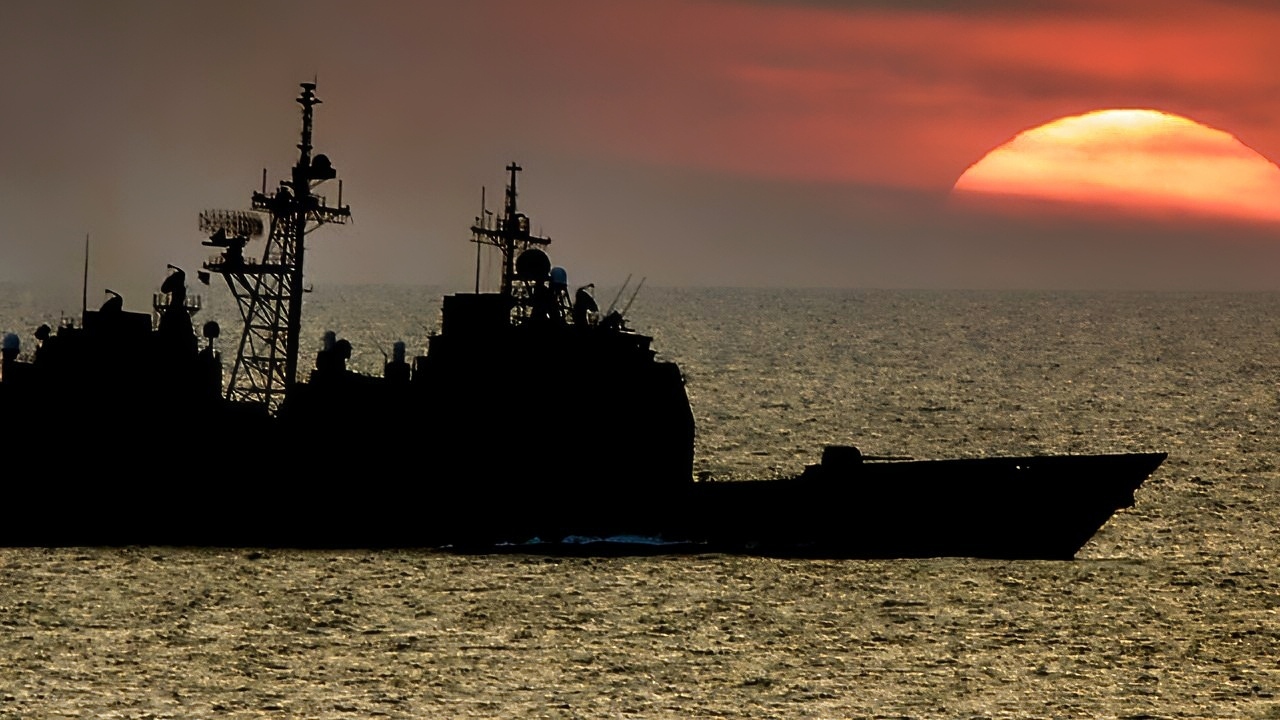
The Ticonderoga Class Cruiser USS Normandy (CG 60) steams at sunset in the Atlantic Ocean while operating with the USS George Washington battle group on May 18, 2000. The Normandy, homeported in Norfolk, Va., is participating in a Joint Task Force Exercise with the battle group. (DoD photo by Petty Officer 2nd Class Shane McCoy, U.S. Navy. (Released))
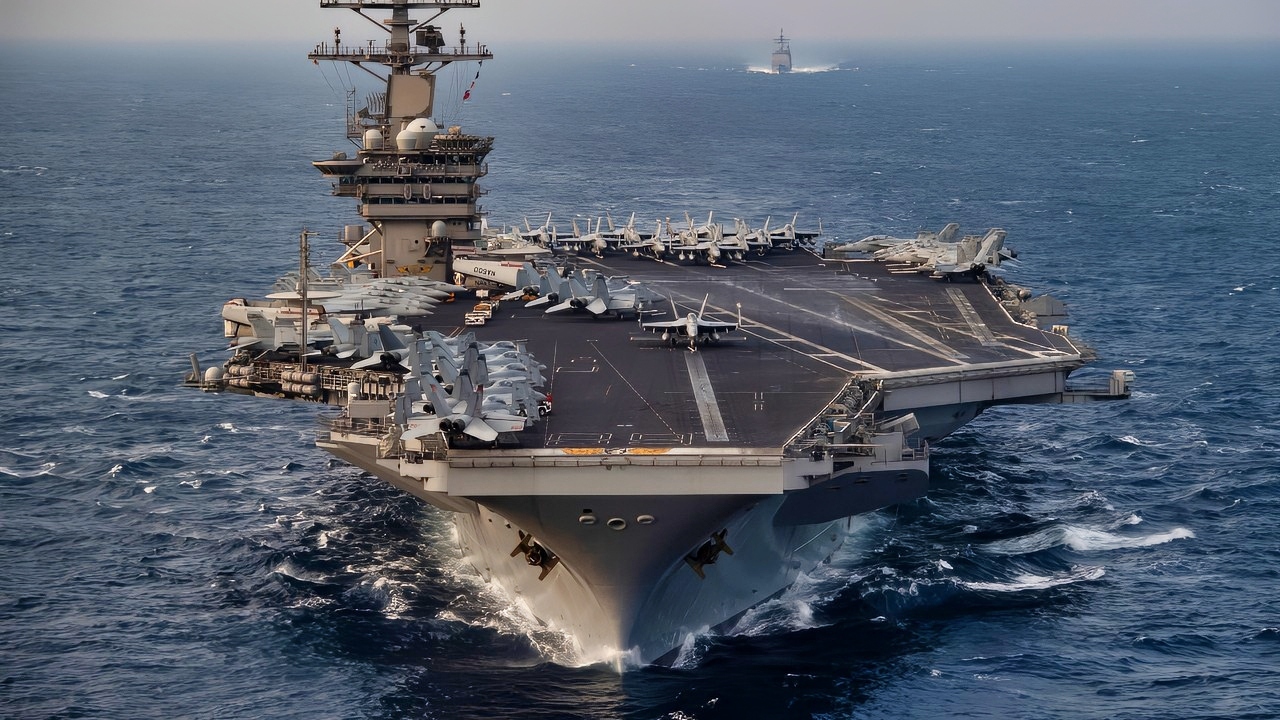
(Nov. 17, 2020) The aircraft carrier USS Nimitz (CVN 68) steams ahead of the guided-missile cruiser USS Princeton (CG 59) while participating in Malabar 2020 in the North Arabian Sea. Malabar 2020 is the latest in a continuing series of exercises that has grown in scope and complexity over the years to address the variety of shared threats to maritime security in the Indo-Asia Pacific where the U.S. Navy has patrolled for more than 70 years promoting regional peace and security. Nimitz Carrier Strike Group is currently deployed to the 7th Fleet area of operations in support of a free and open Indo-Pacific. (U.S. Navy photo by Mass Communication Specialist 3rd Class Elliot Schaudt/Released)
Peace or War? Donald Trump Needs to Make a Call
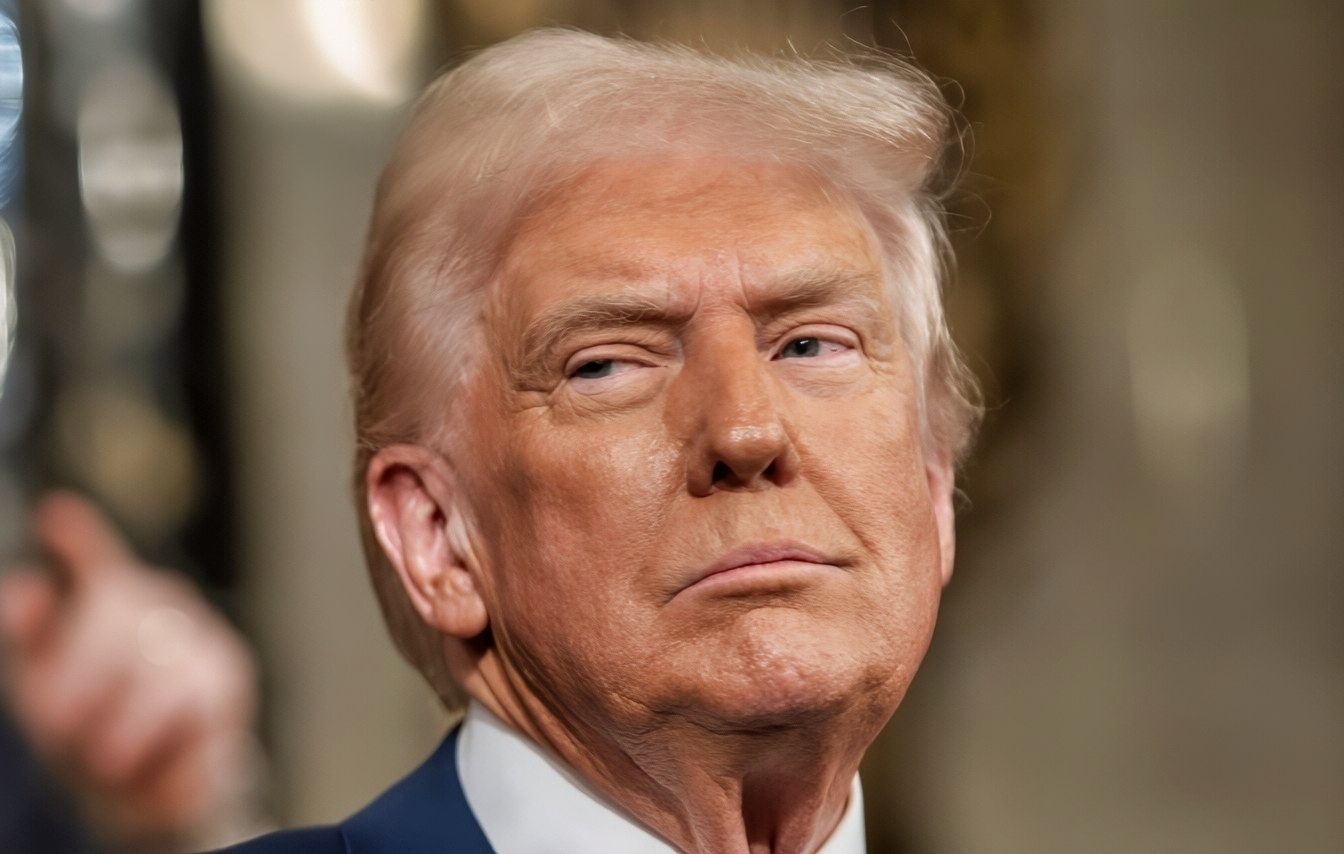
American President Donald Trump has appeared to waffle on the question of renewed strikes against Iran. At times, the president has declared the American military machine ready and prepared to strike Iran decisively.
On other occasions, however, President Trump has demurred on renewed hostilities, waving off the possibility and saying the war has essentially concluded in America’s favor.
The war’s deep unpopularity among American voters was on full display during the American midterm elections earlier this month, an election cycle that proved to be brutal for the president’s incumbent Republican Party.
Pundits declared in the aftermath of the tallies across the United States that the nation had witnessed a blue wave of enthusiasm harnessed by the democrats, anger at the ballot box that many chalked up to elevated prices at the pump. But skepticism about the war’s trajectory—and a lack of confidence that the United States is not stumbling into another open-ended war in the Middle East—also contributed to the punishing election results.
American forces have carried out limited strikes during the run-up to the midterm elections. However, the Pentagon often characterized those actions as defensive and modest compared to the war’s opening salvoes.
Still, earlier this week, the United States Navy struck Iran’s Qeshm Island located within the Strait of Hormuz.
Iran has also managed to tally some remarkable strikes on its neighbors. On Thursday, the skyscraper that houses Saudi Arabia’s sovereign wealth fund came under Iranian attack and suffered some damage. Other explosions were reported elsewhere in the Kingdom.
Moving Forward — but Where to?
The military options available to the American Commander-in-Chief are, if formidable, far from risk-free. Strikes on Iran on a grand scale — strikes that would be significantly more intense than the limited strikes carried out since the end of major hostilities earlier this year — would bear potentially great hazard for America’s allies in the region.
Iran would be all but certain to launch counterattacks against its neighbors in the region. After previous rounds of fighting, Iran has issued thinly veiled threats against expanding the war to include strikes against data centers, ports and transportation, and underwater communication cables that lie on the sea floor. If even a fraction of those counterstrike targets are hit, the consequences could be deadly.
Should the United States ultimately withdraw from the region sans agreement or deal with Tehran, control over the Strait of Hormuz would, in essence, be ceded back to Iran.
Thanks to efforts by the United States Navy to pry open the strait from Iran, oil flows from the region briefly surpassed pre-war levels last month, though they have since dipped. Iran retains a limited ability to strike shipping transiting that crucial maritime bottleneck and hit about one ship per day. But oil prices remain elevated, in large part thanks to higher insurance premiums and shipping costs—costs that consumers ultimately shoulder much of at the pump.
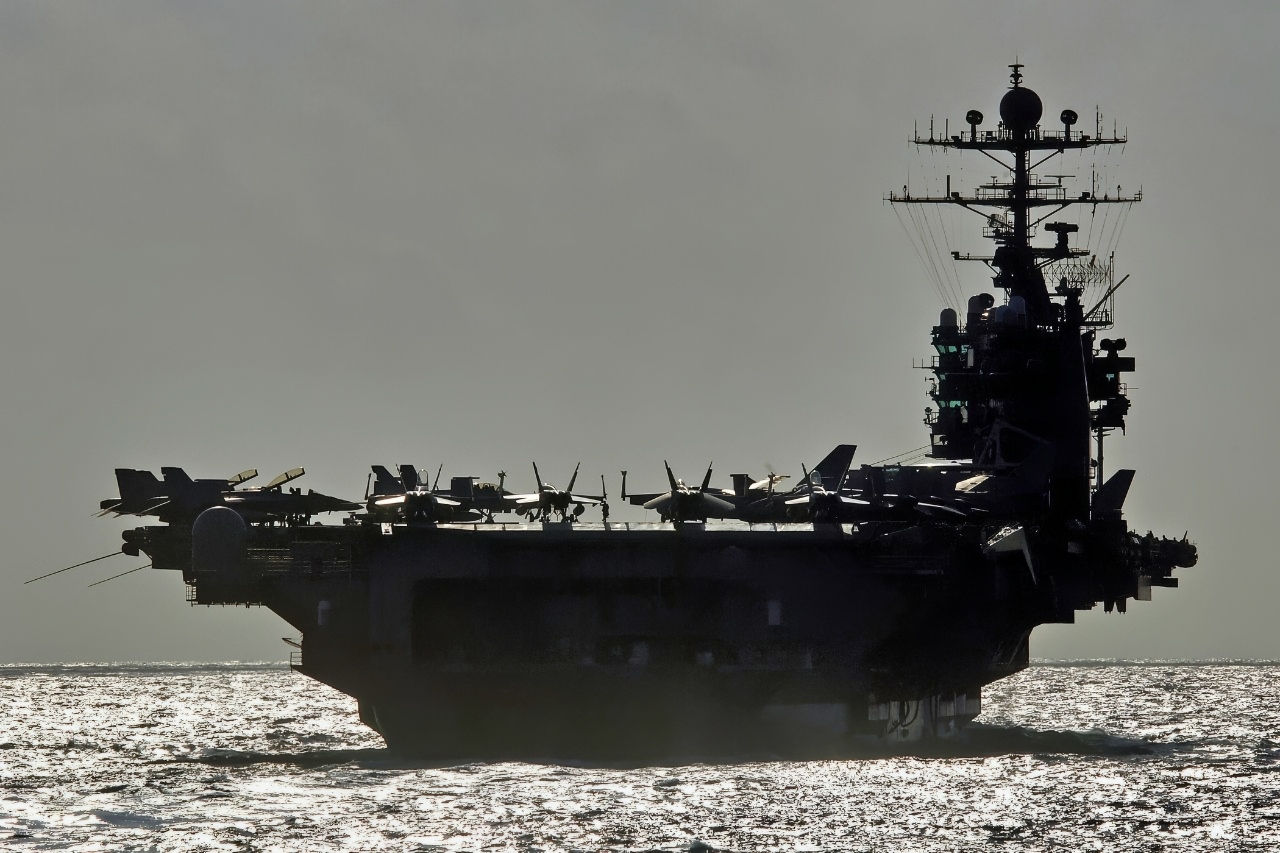
The aircraft carrier USS George Washington (CVN 73) prepares to conduct a refueling at sea with the guided missile cruiser USS Monterey (CG 61) as the two ships operate in the Caribbean Sea on April 20, 2006. The George Washington Carrier Strike group is participating in Partnership of the Americas, a maritime training and readiness deployment of U.S. Naval Forces along with navies of Caribbean and Latin American countries for enhanced maritime security. (DoD photo by Petty Officer 3rd Class Michael D. Blackwell II, U.S. Navy. (Released))
In the meantime, Iran is experiencing a crippling economic squeeze, one that has caused inflation to soar and the Iranian Rial to Depreciate precipitously. Any serious movement toward an agreement between Tehran and Washington would likely hinge on several factors, but of high importance to the notionally theocratic regime ensconced in Iran would be lifting sanctions, unfreezing Iranian assets, and lifting the American naval blockade.
The United States would be unlikely to budge if Iran’s nuclear program and the country’s nuclear ambitions more broadly are not on the table.
The path forward out of this conflict is turbid. What the next move is — and who makes it — is highly uncertain.
About the Author: Caleb Larson
Caleb Larson is an American multiformat journalist based in Berlin, Germany. His work covers the intersection of conflict and society, focusing on American foreign policy and European security. He has reported from Germany, Russia, and the United States. Most recently, he covered the war in Ukraine, reporting extensively on shifting battle lines in Donbas and writing about the war’s civilian and humanitarian toll. Previously, he worked as a Defense Reporter for POLITICO Europe. You can follow his latest work on X.


