

As Washington predicts Iran’s imminent economic collapse, the U.S. blockade is increasing pressure on domestic consumers by restricting oil exports and contributing to rapidly rising inflation.
U.S. Central Command issued new warnings on Wednesday, putting further pressure on businesses attempting to move Iranian goods via transshipment, as most crude oil exports have come to a standstill.

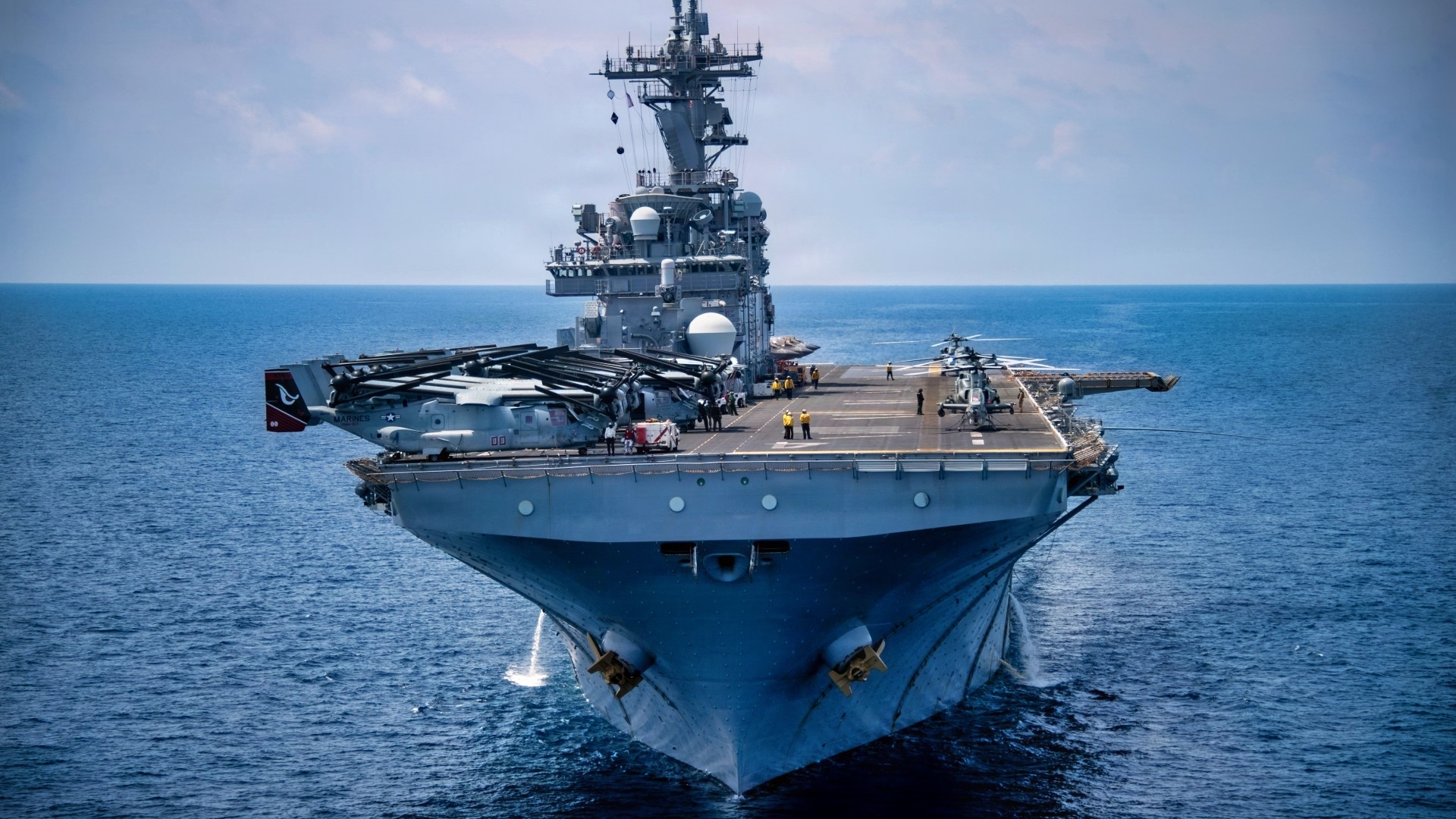
USS Blue Ridge (LCC-19). Image Credit: U.S. Navy.

A U.S. Navy F/A-18E Super Hornet aircraft assigned to Strike Fighter Squadron (VFA) 14 participates in an air power demonstration near the aircraft carrier USS John C. Stennis (CVN 74) April 24, 2013, in the Pacific Ocean. The John C. Stennis Carrier Strike Group was returning from an eight-month deployment to the U.S. 5th Fleet and U.S. 7th Fleet areas of responsibility. (U.S. Navy photo by Mass Communication Specialist Seaman Apprentice Ignacio D. Perez/Released)
U.S. Increases Pressure
Vessels that carry goods from ships subject to the blockade risk being classified as evading it, even if they do not enter Iranian waters, a statement said.
They may be “stopped, boarded, diverted, captured,” CENTCOM noted in a maritime advisory issued on November 18. Vessels that defy lawful instructions risk measures “including the use of force consistent with applicable law.”
The blockade was reinstated on July 14 after a brief understanding between the failed June memorandum of understanding broke down.
While shipments of jet fuel and liquefied petroleum gas have been sighted, crude oil exports are at a virtual standstill.
And with exports now severely limited, Tehran’s access to foreign currency, which it needs to fund its war and sustain its economy, has also been significantly impeded.
The U.S. military is maintaining a significant presence in the region, too. After a third American aircraft carrier arrived in the Middle East this week, USS George Washington left the region as of Wednesday. The vessel was “conducting routine operations” in the Asia-Pacific region, Cmdr. Katie Koenig, a spokesperson for the U.S. Pacific Fleet, said on Wednesday.
Bessent Predicts 25 Percent Collapse
In an October 26 interview with Iran International, Treasury Secretary Scott Bessent described how Iran’s economy could shrink “more than 25 percent” between March 2026 and March 2027.
He also warned that the administration’s economic campaign would become “even more intense,” adding, “There have been no loadings at Kharg Island.”
However, this remains speculative.
In October, the International Monetary Fund said Iran’s economy would shrink by 7.6% in 2026.
Iran’s Statistical Center reported that GDP contracted by 10.1% year over year in the quarter ending June 20.
In August, Bessent said that Iran would receive “the toughest sanctions in history” and claimed that “we are going to collapse this regime.” Iran’s Foreign Ministry has slammed U.S. action as “economic terrorism,” Reuters reported in August.
Inflation Pressures Domestic Consumers
The latest official figures show that inflation in Iran averaged 76.8% over the last year, ending October 22. When comparing October 2025 and October 2026 point-to-point, prices jumped 88.7% from last year.
The cost of foodstuffs, drinks and tobacco products rose by 113.4%.
Inflationary issues could heavily impact “parallel markets like foreign currencies, gold, the stock market and housing,” Peyman Molavi, an Iranian economist, recently told Al Jazeera. Molavi also warned that, if current trends continue, inflation could reach an average of 85% annually.
An Iranian trader previously told Reuters that delayed funding meant “a shipment arrives later and dearer [more expensive].”
Mahnaz, 34, told Reuters in September: “We are getting poorer every day.”
At Tehran’s Grand Bazaar, one seller told Al Jazeera he was now selling only three or four items for every 10 previously sold.
“I don’t see the market being near collapse, but there’s less business,” he said.
Tehran Denies Predictions
Abdolnaser Hemmati, governor of the Central Bank of Iran, claimed that the bank had secured $30 billion in foreign currency to allow essential goods to be imported, Al Jazeera reports.
But he warned Bessent to “still count his chickens at the end of autumn before moving to winter” — a common saying in Iran that warns against making predictions too early.
On Sunday, Iran’s Economy Minister Ali Madanizadeh also denied Washington’s predictions of impending economic collapse.
He insisted nearly all land trade routes were still open despite U.S. attempts to isolate Tehran economically. Last month, Iraq closed a major crossing with Iran for “security” reasons.
Rial Declines
However, the U.S. Treasury said in a report seen by Axios that as the value of the rial has declined, purchasing power has decreased.
Border delays have made land trade extraordinarily difficult for Iran, and that problem is only set to worsen.
The U.S. continues to demand that Iran reopen the Strait of Hormuz and limit its nuclear program. Iran, however, insists that unless Washington lifts the economic pressure, it will not budge.
About the Author: Georgia Gilholy
Georgia Gilholy is a journalist based in the United Kingdom who has been published in Newsweek, The Times of Israel, and the Spectator. Gilholy writes about international politics, culture, and education.


