

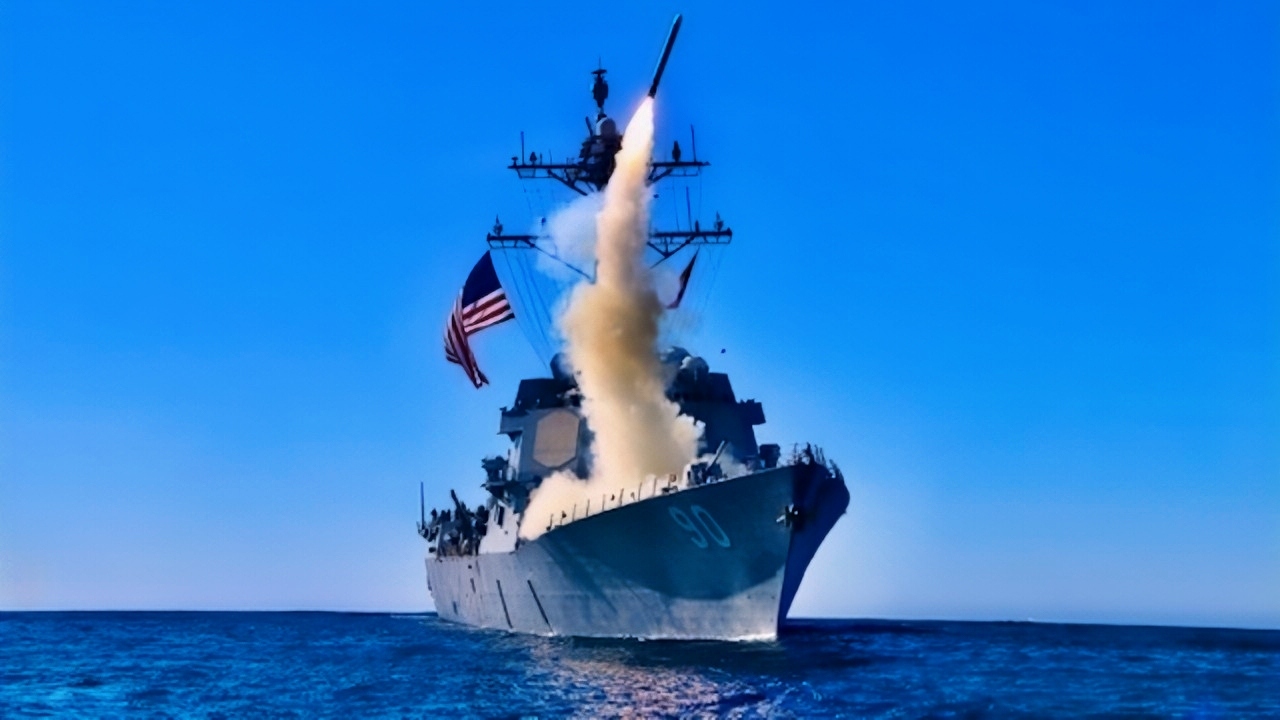
Despite ongoing attacks on tankers in the Strait of Hormuz, the oil market has not reacted as Iran’s government may have hoped, with data showing that global oil appears to be “rebalancing.”
“We want to impose a cost on the Americans that makes attacking Iran too expensive, and that serves as a deterrent,” Mohsen Rezaei, the hardline secretary of Iran’s Supreme National Security Council, said in remarks cited by CNN on November 19.
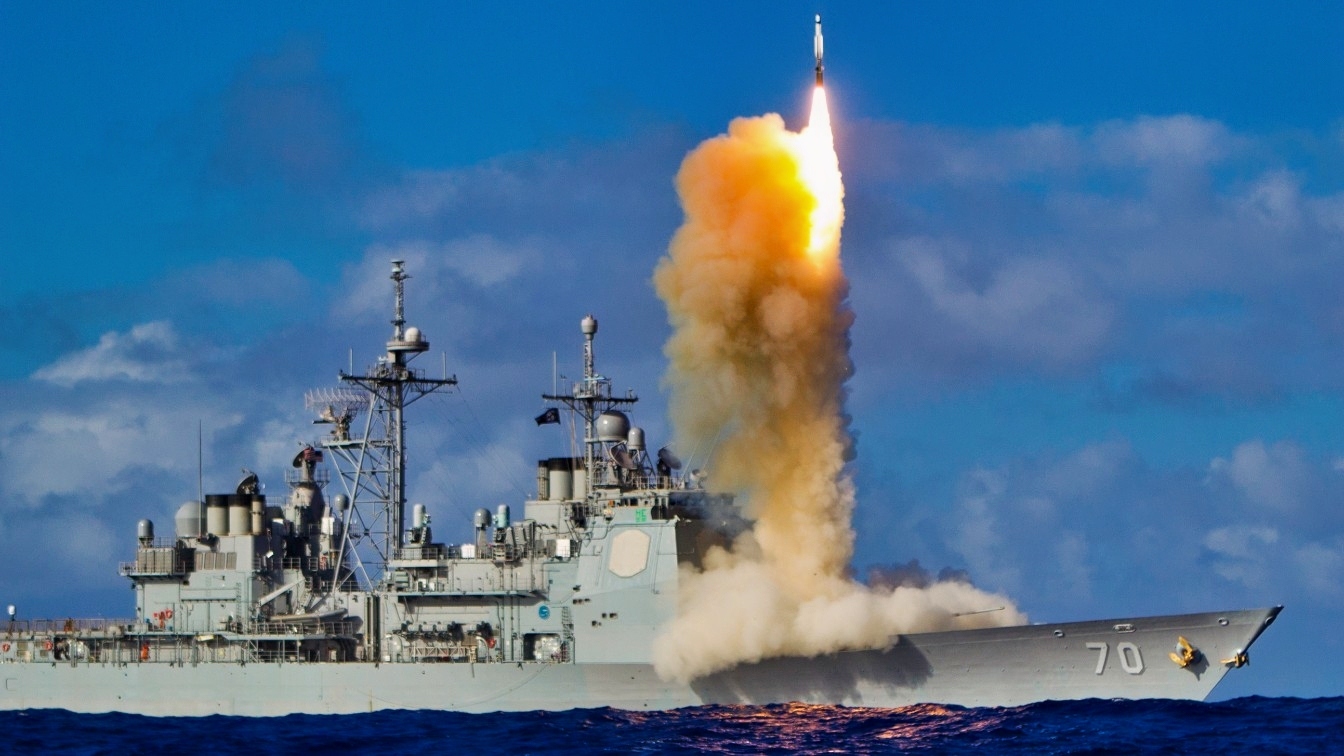
A Standard Missile-3 (SM-3) Block 1B interceptor missile is launched from the guided-missile cruiser USS Lake Erie (CG 70) during a Missile Defense Agency and U.S. Navy test in the mid-Pacific. The SM-3 Block 1B successfully intercepted a target missile that had been launched from the Pacific Missile Range Facility at Barking Sands in Kauai, Hawaii. Lake Erie detected and tracked the target with its on board AN/SPY-1 radar. The event was the third consecutive successful intercept test of the SM-3 Block IB missile. (U.S. Navy photo/Released)
Rezaei himself remains subject to an Interpol Red Notice, due to his alleged links to the 1994 bombing of a Jewish community center.
Global Oil ‘Rebalancing’ Despite Blockade
Global oil supply rose to 105.4 million barrels per day in October, with Gulf exports (excluding Oman) reaching 18.4 million barrels per day, according to the International Energy Agency’s November 13 report.
The agency reported “tentative signs of rebalancing” and expected oversupply in the fourth quarter.
Prices on North Sea Dated crude have dropped from $136 per barrel in early October to around $93. At the time of publication, Brent crude was trading at $92.19, Reuters reports.
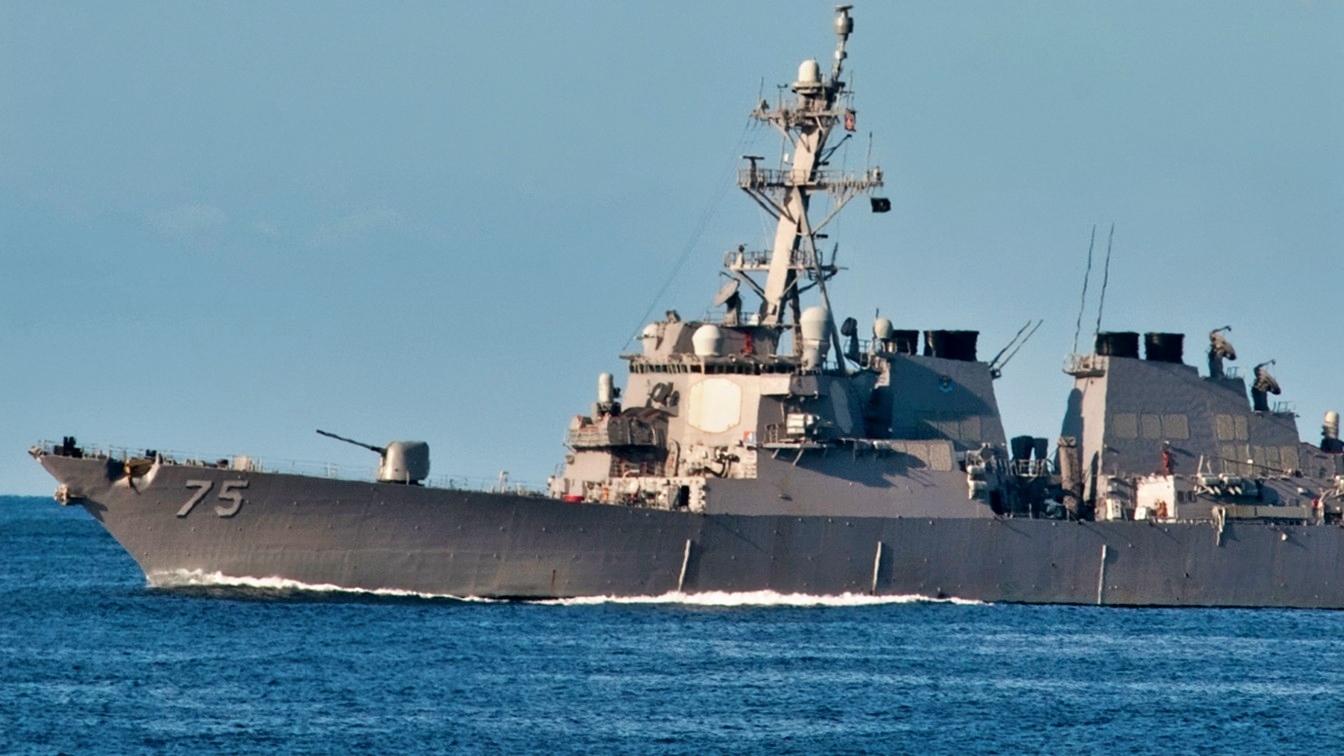
Arleigh Burke Class guided-missile destroyer USS Donald Cook is underway for a scheduled deployment in the U.S. Navy’s 5th and 6th fleet areas of responsibility. Donald Cook departed Naval Station Norfolk Monday, September 19th. (U.S. Navy photo by Petty Officer 3rd Class Scott Pittman)
Danny Citrinowicz of the Institute for National Security Studies in Israel told CNN that if prices keep falling despite Iranian attacks, “an important part of that strategy becomes less effective.”
However, David Oxley, an economist at Capital Economics, said that “navigability in the strait is still far short of pre-crisis norms.”
Recovery Incomplete
New data suggests that supply is far from returning to normal levels, however.
Crude oil shipments through the Strait of Hormuz dropped to an estimated 8.5 million barrels per day through Monday, in November, according to Kpler data reported by AP on Thursday.
Total oil exports from the region, including bypass pipelines, are around 15 million barrels per day. Those shipments amounted to roughly 64% of prewar regional export flows, down from 97% in October.
The data are preliminary and could be revised upward.
Iran’s Islamic Revolutionary Guard Corps (IRGC), a terror group, claimed that two supertankers hit mines on an “unauthorized route.” However, these claims have not been independently confirmed.
In its November 18 advisory, the Joint Maritime Information Center maintained its regional maritime security threat level at “SEVERE,” warning that further deliberate hostile activity was likely.
Washington Expands Economic Pressure
The U.S. is increasing economic pressure on Iran and has not yet confirmed plans to launch a fresh round of strikes.
In a November 18 advisory, U.S. Central Command warned that ships receiving Iranian-loaded cargo through ship-to-ship transfers could be treated as attempting to evade the U.S. naval blockade, even if they had not entered Iranian ports.

SOUDA BAY, Greece (March 27, 2022) The Ohio-class ballistic-missile submarine USS Georgia (SSGN 729) near Souda Bay, Greece, during training with U.S. Marines from Task Force 61/2 (TF-61/2), conducting launch and recovery training with their combat rubber raiding craft, March 27, 2022. TF-61/2 will temporarily provide command and control support to the commander of U.S. 6th Fleet, to synchronize Navy and Marine Corps units and capabilities already in theater, in support of regional Allies and Partners and U.S. national security interests. (U.S. Marine Corps photo by Sgt. Dylan Chagnon)
These vessels could be “stopped, boarded, diverted, captured,” according to U.S. naval authorities.
At a November 2 press conference in Tehran, Iranian Foreign Ministry spokesman Esmaeil Baghaei stated that, “The Strait of Hormuz cannot reopen unless the blockade ends and Iran’s demands are met,” according to the Tasnim news agency.
The U.S. briefly had three aircraft carriers in the region after the arrival of the USS Theodore Roosevelt. Still, only two remain, with the USS George Washington leaving, AP confirmed on Wednesday.
Iran launched drone attacks on U.S. radar facilities in Bahrain on multiple occasions over the past five days. Washington said no damage was sustained.
The IRGC warned that alleged violations of Iranian airspace “will not go unanswered,” AP reported.
Qatar criticized the attacks, saying they “undermine diplomatic efforts.”
Sascha Bruchmann, a defense analyst, told AP following Iran’s November 17 attack on the U.S. radar system that merely attacking ships was “not effective enough to change the strategic equation.”
The escalation risk is growing. The Saudi-led coalition accused Iran-backed Houthi rebels in Yemen of launching missile attacks on Riyadh. A witness reported damage in the financial district of the city.
‘Full-Scale War Unlikely’
Hamidreza Azizi, an analyst at the International Crisis Group, told CNN that markets increasingly assume “a return to full-scale war is unlikely.”
Azizi added: “But that assumption could change quickly if Iran decides to intensify the confrontation,” warning of the risk of renewed fighting.
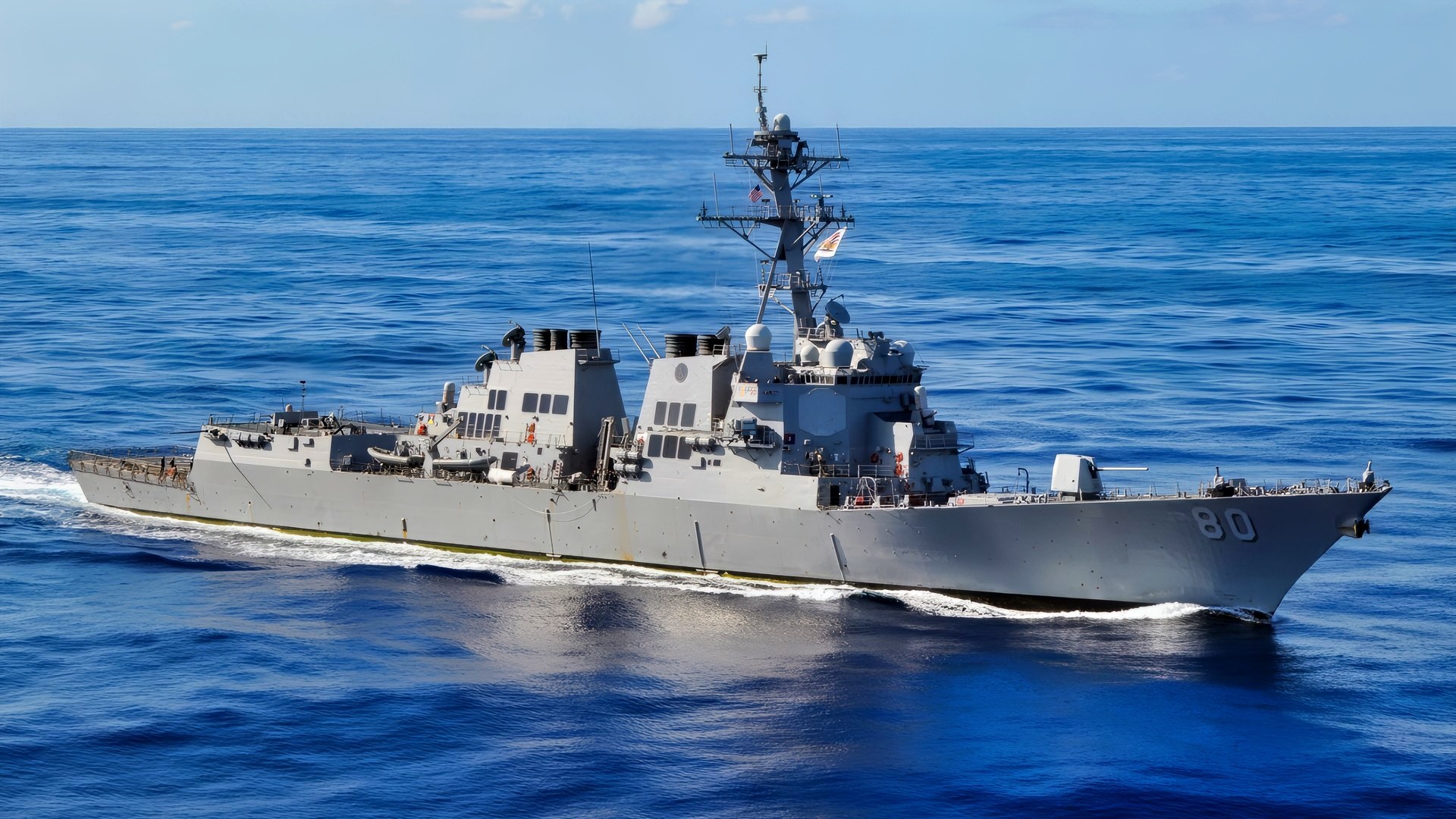
ATLANTIC OCEAN (Sept. 06, 2008) – The guided-missile destroyer USS Roosevelt (DDG 80) steams through the Atlantic Ocean. Roosevelt is deployed as part of the Iwo Jima Expeditionary Strike Group (ESG) in support of maritime security operations in the Navy’s 5th and 6th fleet areas of responsibility. The Iwo Jima ESG is made up of Roosevelt, homeported at Mayport, Fla.; the amphibious assault ship USS Iwo Jima (LHD 7); the amphibious dock landing ship USS San Antonio (LPD 17); the amphibious transport dock ship USS Carter Hall (LSD 50); the guided-missile cruiser USS Vella Gulf (CG 72); the guided-missile destroyer USS Ramage (DDG 61); all homeported at Norfolk, Va.; and the fast attack submarine USS Hartford (SSN 768), homeported at Groton, Conn. U.S. Navy photo by Mass Communication Specialist 2nd Class Jason R. Zalasky (Released)
Sparta Commodities senior analyst Abhishek Kumar noted on Wednesday that recent attacks “highlight the fragility of this recovery.”
Trita Parsi from the Quincy Institute, a think tank often critical of foreign intervention, also told CNN that another option for resolving the deadlock may be to give Trump a “symbolic” win that would be “ego-soothing and face-saving.”
However, given Tehran’s unwillingness to make such a gesture, escalation remains a possibility.
About the Author: Georgia Gilholy
Georgia Gilholy is a journalist based in the United Kingdom who has been published in Newsweek, The Times of Israel, and the Spectator. Gilholy writes about international politics, culture, and education.


