


It may be the case that the United States and Israel are planning to launch fresh strikes against Iran sometime in the coming days. This comes according to CBS News reporting, citing Israeli sources.
Israel and America: Getting Ready to Attack Iran?
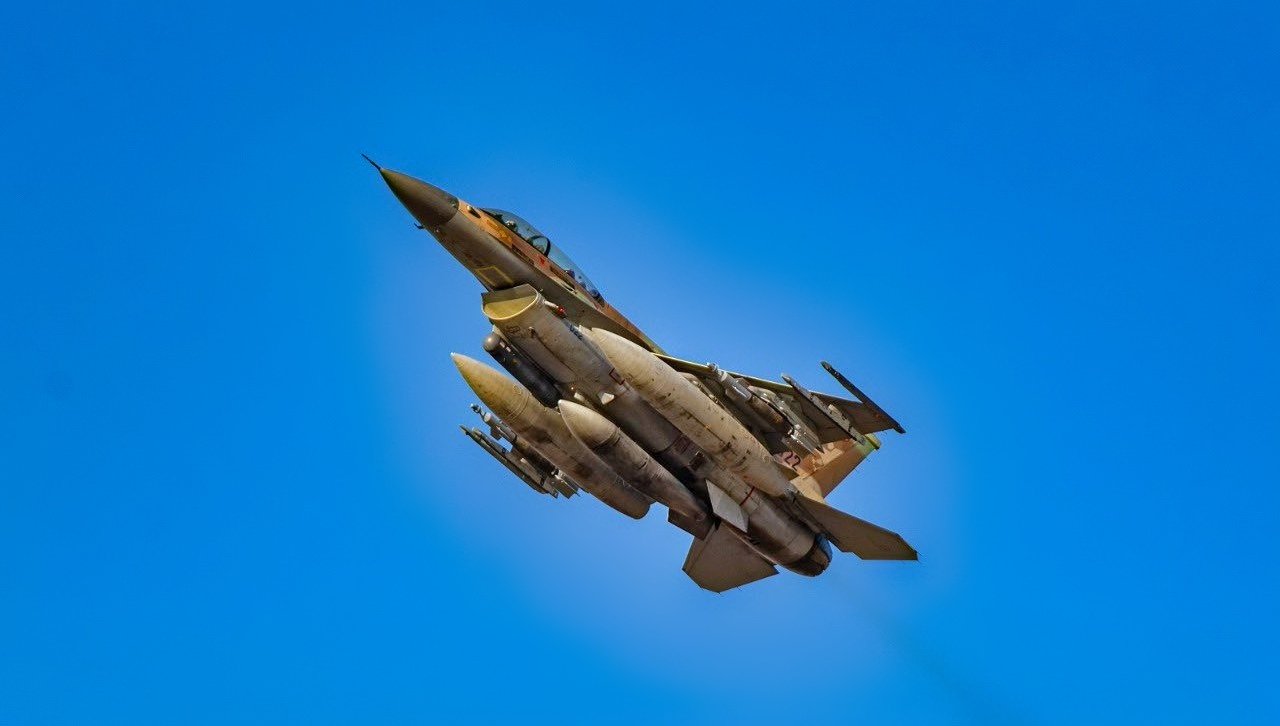
F-16I from Israeli Air Force. Image Credit: Creative Commons.

F-16I Sufa Fighter. Image Credit: Creative Commons.
The Israeli Prime Minister, Benjamin Netanyahu, and his administration are reportedly eyeing Iran’s ballistic missile capacity with great trepidation. While the United States and Iran have traded strikes, the kind of large-scale air strikes witnessed during the opening stages of the war have not been the norm for the last several months.
But Iran’s hardline leaders are reportedly using the lull in the fighting to move some of their missile and drone assets underground, a decision aimed at protecting those weapons from airstrikes. While Iran’s clandestine nuclear program, most of which is also underground, is relatively well-reported on, the country’s subterranean drones and missile program is less so.
Earlier this week, a potential Iranian threat against the American capital also came to light. American officials denied that the threat was realistic, describing it as one of opportunity rather than a plan already set in motion. The threat was described, however, in stark terms, and characterized as a dirty bomb, a type of weapon that uses conventional explosives to spread radioactive material widely. Crucially, however, the explosive is non-nuclear.
The State of Play in the Iran Crisis: America Doesn’t Like the War
The recent midterm elections delivered a resounding defeat to the president’s Republican Party. While several factors coalesced to deliver that defeat, one of the main driving factors that powered the wave of discontent was the war in Iran. Deeply unpopular, the war in Iran has the potential to become the kind of forever war in the Middle East that both President Trump and Vice President JD Vance campaigned on avoiding. But with no end in sight, the conflict there is threatening to become an embroilment of long proportions.
The Israeli leader is reportedly interested in launching fresh strikes on Iran in coordination with the United States — and there are formidable American military assets within the region. United States Central Command, the command overseeing the prosecution of the war against Iran, has two aircraft carriers within its area of operations: the newly arrived USS Theodore Roosevelt and the USS George H. W. Bush. In addition, over a dozen destroyers and other warships are in the region, including the USS Boxer, which carries a Marine Amphibious Ready Group as well as aircraft of its own.
The USS George Washington, another of the United States Navy’s all-nuclear aircraft carrier force, recently departed the Middle East following the arrival of the USS Theodore Roosevelt — remarkably, there was for a time three aircraft carriers at Central Command’s disposal — but even with a pair of aircraft carriers, there is still formidable firepower within the region.
What Would Get Bombed?
It is unclear what exactly could be targeted in a future Israeli-American campaign against Iran. But the aforementioned underground facilities housing Iran’s nuclear program would likely be high on a list of targets within the country. In particular, Iran’s Pickaxe Mountain as well as Natanz are both believed to contain substantial parts of Iran’s nuclear program.
The components of such a strike would likely include B-2 Spirit stealth bombers as well as massive bunker-busting munitions, both leveraged earlier in the conflict against deeply buried Iranian infrastructure. Still, it is unclear if the United States would launch fresh strikes like those seen earlier in the conflict. President Trump has waffled on the question of renewed hostilities, at times describing the United States military as “locked and loaded,” ready to launch devastating strikes at a moment’s notice, but on other occasions has signaled disinterest in the war, saying that the United States had already won it.

A US. Air Force B-2 Spirit assigned to the 509th Bomb Wing, Whiteman Air Force Base receives fuel from a U.S. Air Force KC-135 assigned to the 185th Air Refueling Wing, Iowa Air National Guard in the sky over northwest Missouri on August 29, 2018. U.S. Air National Guard photo by Senior Master Sgt. Vincent De Groot
Nuclear Material and What Iran Could Do in Response
Iran is believed to have around 900 kilograms, or nearly 2,000 pounds, of enriched uranium buried underground. Though not enriched to the degree needed to build a nuclear weapon — highly enriched, bomb-grade uranium needs to be ninety percent pure — the nuclear material the country is believed to possess could relatively quickly be enriched to bomb-grade.
Should the conflagration in Iran reerupt on a large scale, the notionally Islamic theocracy would have military options of its own with which to respond to an attack. In addition to the country’s array of drones and missiles with which it has lashed out at its neighbors in the region, Iran could also move to hit water treatment facilities, travel and logistics hubs, or underwater communications cables that criss-cross the region. The damage from such strikes could be formidable. But what the future holds for Tehran and Washington is, for now, anybody’s guess.
About the Author: Caleb Larson
Caleb Larson is an American multiformat journalist based in Berlin, Germany. His work covers the intersection of conflict and society, focusing on American foreign policy and European security. He has reported from Germany, Russia, and the United States. Most recently, he covered the war in Ukraine, reporting extensively on shifting battle lines in Donbas and writing about the war’s civilian and humanitarian toll. Previously, he worked as a Defense Reporter for POLITICO Europe. You can follow his latest work on X.


