

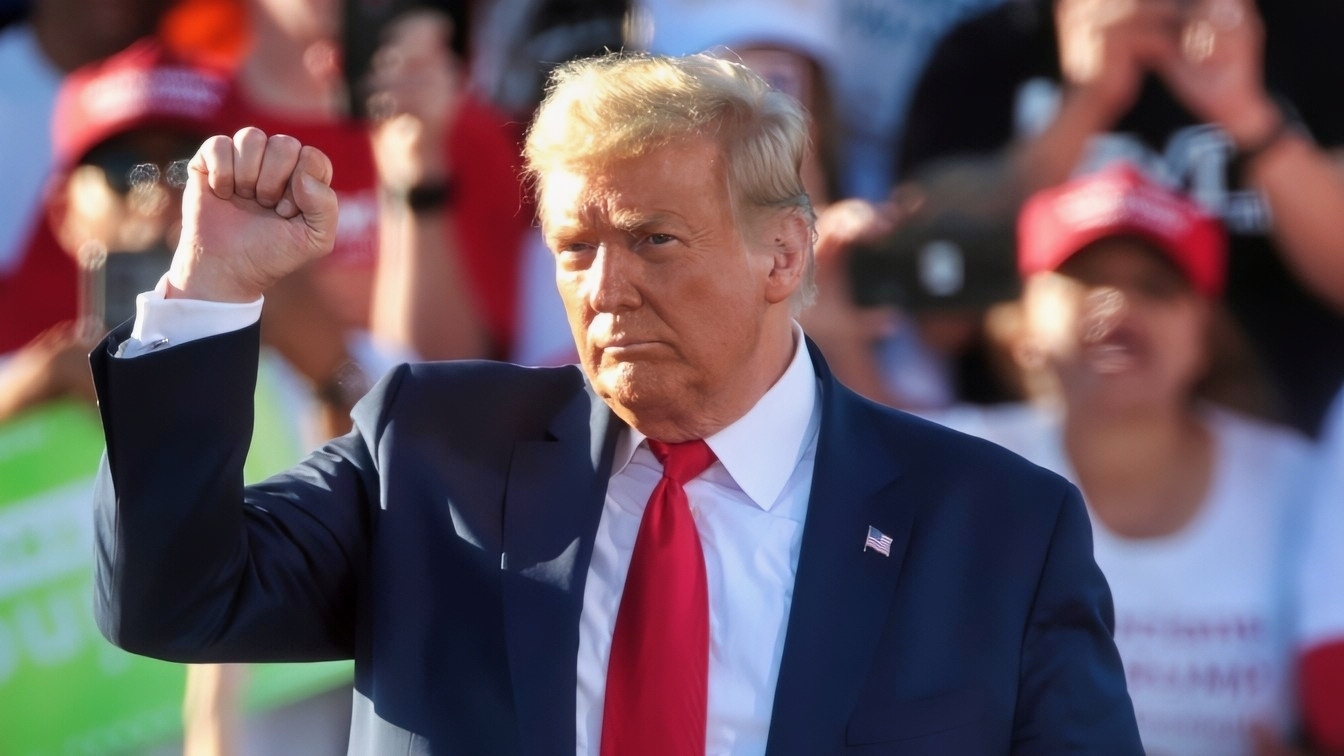
U.S. President Donald Trump has indicated that he may delay any new large-scale strikes on Iran until next year, but Israel’s spy chief has urged the U.S. to strike in alliance with Israel.
Israel has warned that Iran is taking advantage of the pause to strengthen its military infrastructure.

NAVAL AIR STATION NORTH ISLAND, Calif. (July 10, 2024) USS George Washington (CVN 73) arrives at Naval Air Station North Island, July 10, 2024. USS George Washington and crew are in the process of completing a homeport change, replacing USS Ronald Reagan (CVN 76) as the forward-deployed U.S. Naval Forces Japan aircraft carrier at Fleet Activities Yokosuka, Japan.(U.S. Navy photo by Mass Communication Specialist 1st Class Keenan Daniels)
However, international atomic inspectors have been barred from entering nuclear sites in Iran that were bombed last year.
Trump: ‘We’ve Got Time’
“We’ve got time,” Trump told Reuters as he flew back to the U.S. from China on November 19.
In a separate interview with Axios, Trump said, “I am not rushing into any decision,” and added, “We will see what happens after the beginning of the year.”
On November 9, Trump told a White House press conference that he was delaying action after meeting the prime minister of Qatar.
He told reporters he believed the war “militarily is effectively over.” Qatar has been facilitating indirect talks between Washington and Tehran.
On November 18, a White House official told Reuters that Trump sees the economic pressure as so devastating that “major combat operations” are currently unnecessary for the U.S.
The Senate rejected a House-passed resolution requiring Trump to end U.S. hostilities with Iran or obtain congressional approval to continue.
The measure failed 51-48 on November 19, in the first Senate vote on the issue since Democrats won control of both chambers in the midterm elections. Republicans retain control of the current Congress until January.
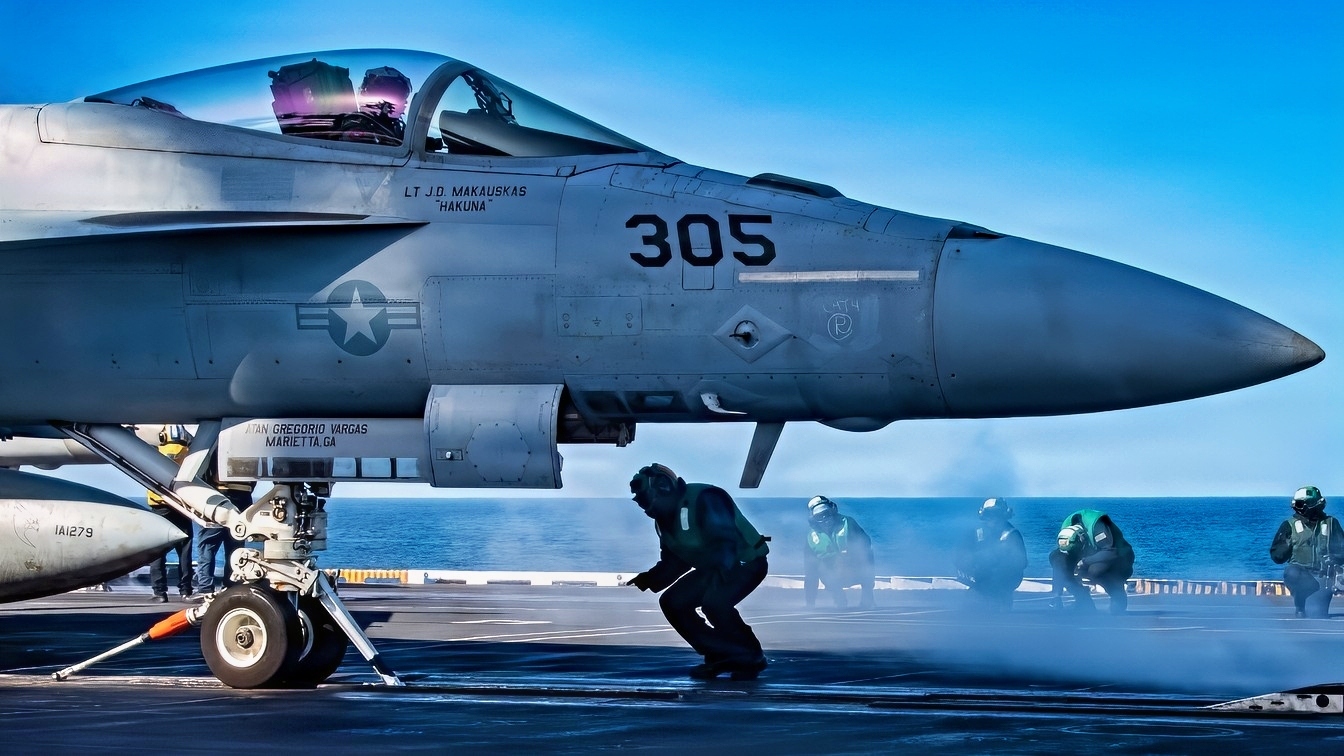
An F/A-18E Super Hornet, attached to the “Kestrels” of Strike Fighter Squadron (VFA) 137, prepares to launch from the flight deck of the Nimitz-class aircraft carrier USS Nimitz (CVN 68) in the Pacific Ocean, April 22, 2026. Nimitz is deployed as part of Southern Seas 2026 which seeks to enhance capability, improve interoperability, and strengthen maritime partnerships with countries throughout the region through joint, multinational and interagency exchanges and cooperation.
Israel Urges Joint Strike
During his visit to Washington last week, Mossad Director Roman Gofman briefed U.S. officials, including CIA Director John Ratcliffe, on Israeli intelligence concerning Iran’s nuclear program.
Axios separately reported that Israeli officials had raised allegations concerning chemical-weapons development.
Gofman had also urged renewed strikes, The Wall Street Journal reported, citing sources close to the talks.
According to an analysis published by Ynet on November 20, Iran has been relocating some nuclear and missile production infrastructure to more secure facilities.
The extent of Iran’s nuclear rebuilding remains difficult to establish because inspectors lack access. U.S. Central Command chief Adm. Brad Cooper met Gofman and Israeli military chief Lt. Gen. Eyal Zamir in Tel Aviv on November 18.
In a separate discussion, Cooper and Zamir discussed “regional developments and shared security challenges” with commanders, the Israeli military said.
Inspectors Still Banned from Iranian Sites
Three nuclear sites in Iran were severely damaged or destroyed in U.S. and Israeli attacks in June 2025. However, it is currently uncertain where Iran’s previously verified stockpiles of highly enriched uranium can be found.
During the most recently reported quarter, inspectors have only been able to enter the undamaged Bushehr nuclear power plant in Iran, International Atomic Energy Agency (IAEA) Director General Rafael Grossi told a meeting of the agency’s board in Vienna this week.
However, Iran has been accused of stonewalling by the U.S., Britain, France and Germany.
The nations expressed “increasing concern” in line with Grossi’s findings, particularly about the lack of access to a fourth declared enrichment site.
They quoted Grossi as saying the inability to confirm nuclear material was “a matter of serious proliferation concern.”
Iran’s mission in Vienna cited security concerns and objective difficulties caused by the attacks. However, Ambassador Reza Najafi said in a statement to the board on November 18 that Tehran would “definitively reconsider the quality of access and the conditions applicable in each individual case.” Iran’s mission stated that inspections could begin again once the threat of further attacks had been permanently removed.
Gulf Nations Skittish About Further Strikes
Although the U.S. and Iran agreed to a ceasefire in April, the arrangement subsequently deteriorated, and fighting has continued intermittently.
On November 18, Iran attacked a base used by U.S. forces in Kuwait and carried out multiple attacks on Bahrain, following the U.S. strike on Qeshm Island on November 17. Kuwait’s Foreign Ministry called the repeated attacks “criminal,” while Saudi Arabia has issued strong criticism of the attacks on Kuwait and Bahrain.
To prevent a larger conflict, Gulf states, along with Pakistan and Turkey, have increased engagement with U.S. officials, four officials in the region told the AP.
Separately, a source involved in diplomatic efforts told Reuters on November 18 that Gulf leaders had urged Trump not to attack Iran, fearing retaliation against their countries.
About the Author: Georgia Gilholy
Georgia Gilholy is a journalist based in the United Kingdom who has been published in Newsweek, The Times of Israel, and the Spectator. Gilholy writes about international politics, culture, and education


