

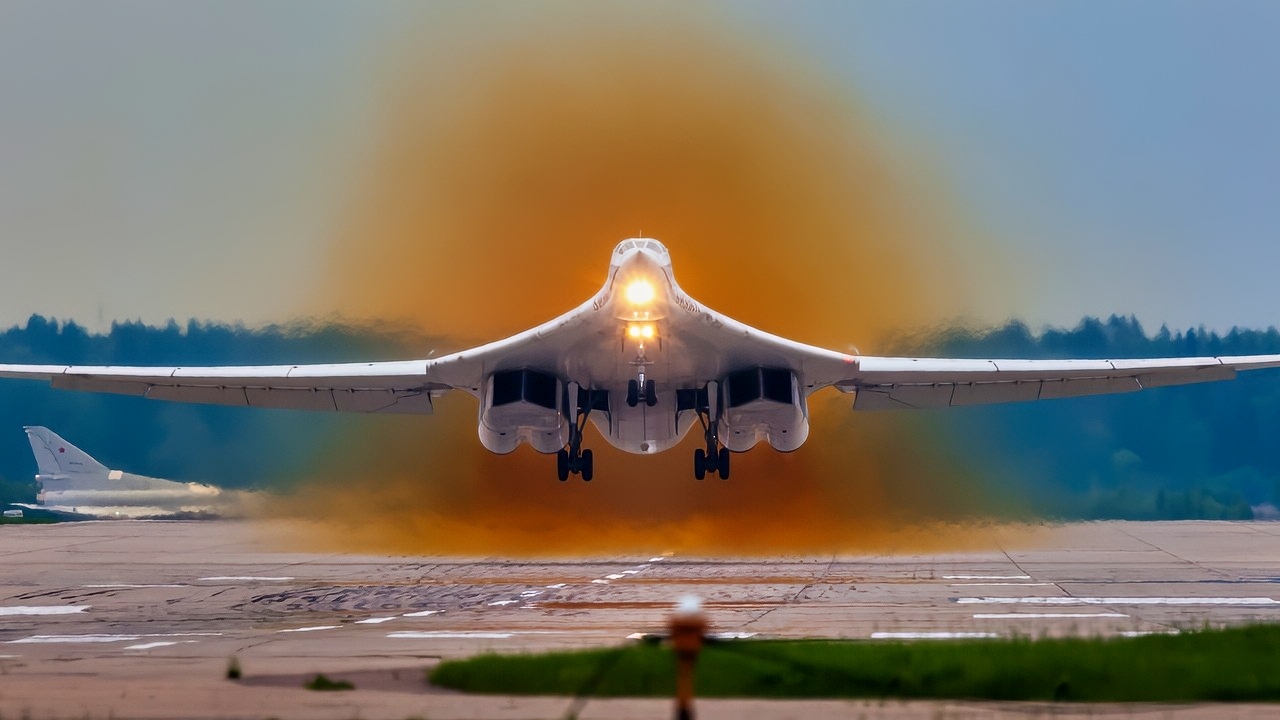
The former President of Russia, now deputy chairman of Russia’s Security Council, Dmitry Medvedev, recently stated that Ukraine and NATO have given Russia ample cause to use a nuclear weapon in the war in Ukraine.
Medvedev also stated that transferring nuclear weapons to Kyiv, directly or indirectly, would result in a nuclear strike from Moscow.
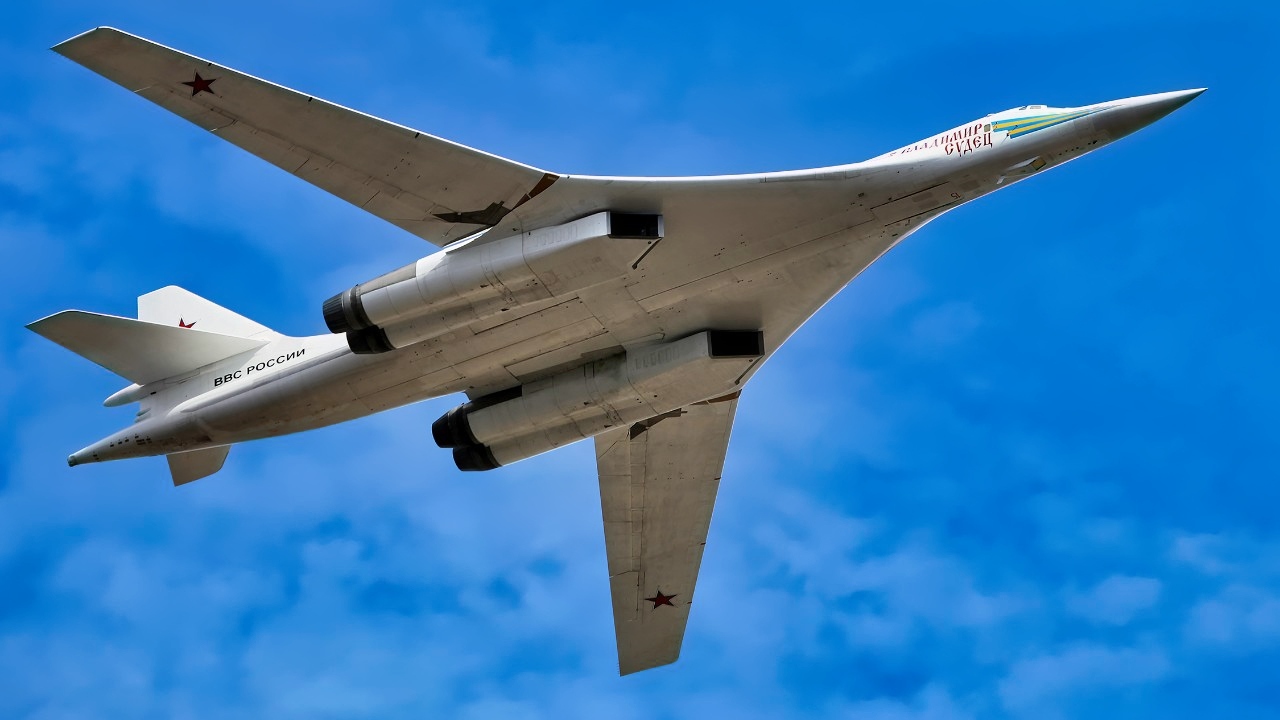
Tu-160 Bomber from Russia. Image Credit: Creative Commons

Tu-160 Bomber Russian Air Force. Image Credit: Russian State Media.
The former president’s statements were highlighted by the Russian state news outlet TASS on November 23, following several Ukrainian drone attacks, including an attack on the Russian corvette “Merkury” while it was moored off the coast of Benghazi.
Medvedev and other Russian officials have made numerous nuclear threats since 2022, most of which have thus far gone unheeded.
However, as the war in Ukraine continues to escalate, Russia’s nuclear arsenal should not be completely ignored.
The War in Ukraine and Russia’s Nuclear Threshold
The statements highlighted by TASS first appeared in an article Medvedev wrote for the Moscow Journal of International Law, first published on September 27.
The full article, which has not been fully translated into English, covers numerous topics, including the history of state sovereignty, nuclear proliferation, the implications of the ongoing conflict between Iran and the U.S., and clarifications of certain aspects of Russia’s nuclear doctrine.
In it, Medvedev claims that Ukraine and its Western allies have “already created situations in which Russia allows it to launch a nuclear attack.” While he did not specify exactly what Ukraine has done to prompt nuclear retaliation, the former president clarified that the situation with NATO and Kyiv has not yet developed to the point of warranting the use of nuclear weapons.
Medvedev notes that the final decision to launch a nuclear attack ultimately lies with the President of Russia, Vladimir Putin.
He writes that, under international law and under the Russian Constitution and nuclear doctrine, Russia has the right to launch a preventive nuclear attack against Ukraine.
The President is “guided by a comprehensive analysis of all factors, the proportionality between the actual harm caused and the response measures.” When the situation calls for it, the President has “not only the right, but the obligation to use nuclear weapons.” This, however, raises the question of when the Kremlin must authorize a nuclear strike.
Russian Nuclear Doctrine: When Can Russia Legally Launch a Nuclear Attack?
Russia’s nuclear doctrine is intentionally ambiguous to give the President flexibility and to deter any potential aggression.
One example Medvedev gives that would warrant an immediate preemptive strike is if NATO were to transfer nuclear weapons to Kyiv, secretly or otherwise.
Officially, Russian nuclear doctrine states that, should Russia or Belarus face a “critical threat” to their sovereignty or territorial integrity, the Kremlin has the right to launch a nuclear strike.
Another example Medvedev gives is if a hostile state causes “unacceptable damage” to Russia through the repeated use of non-nuclear weapons.
Again, however, the phrase “unacceptable damage” is left ambiguous. Clearly, Russia does not consider the repeated Ukrainian attacks on its oil refineries or the attacks against the Crimean Bridge to be unacceptable.
Evidently, only Putin can decide what constitutes sufficient damage to warrant a nuclear retaliation.
Under Russia’s current nuclear doctrine, Russia has significant grounds to launch a nuclear strike against Ukraine.
Ukrainian attacks have caused significant damage to Russia’s oil infrastructure and other critical infrastructure, such as the aforementioned Crimean Bridge.
Additionally, Ukraine has launched numerous attacks against Russian strategic aviation, which, under Russia’s nuclear doctrine, constitute attacks against its nuclear triad and permit a nuclear response.
Why has Russia not launched a nuclear attack against Ukraine?
The simple answer is that Vladimir Putin does not want to.
However, as Medvedev points out, there is a threshold at which the President of Russia must retaliate. That threshold is left intentionally vague to deter potential aggression.
Are Russia’s Nuclear Threats Worth Listening To?
Dmitry Medvedev is an extremely controversial figure in the West, even among other Kremlin officials. Known for his fiery, occasionally unhinged rhetoric, he is sometimes compared to Trump because his social media posts often lack the professionalism befitting a senior government official.
However, Medvedev is also the deputy chairman of Russia’s Security Council, a position that carries significant authority.
This means his words, however provocative, do carry some weight.
His words should not be diminished entirely, but should be taken with a grain of salt.
Since 2022, Medvedev and other Russian officials, including Putin himself, have warned of the consequences of ignoring Russia’s nuclear arsenal.
Thus far, the Kremlin has not deemed it necessary to launch a nuclear attack, but the specter of Russian nuclear weapons remains.
Recently, the war in Ukraine has been escalating at a dangerous pace.
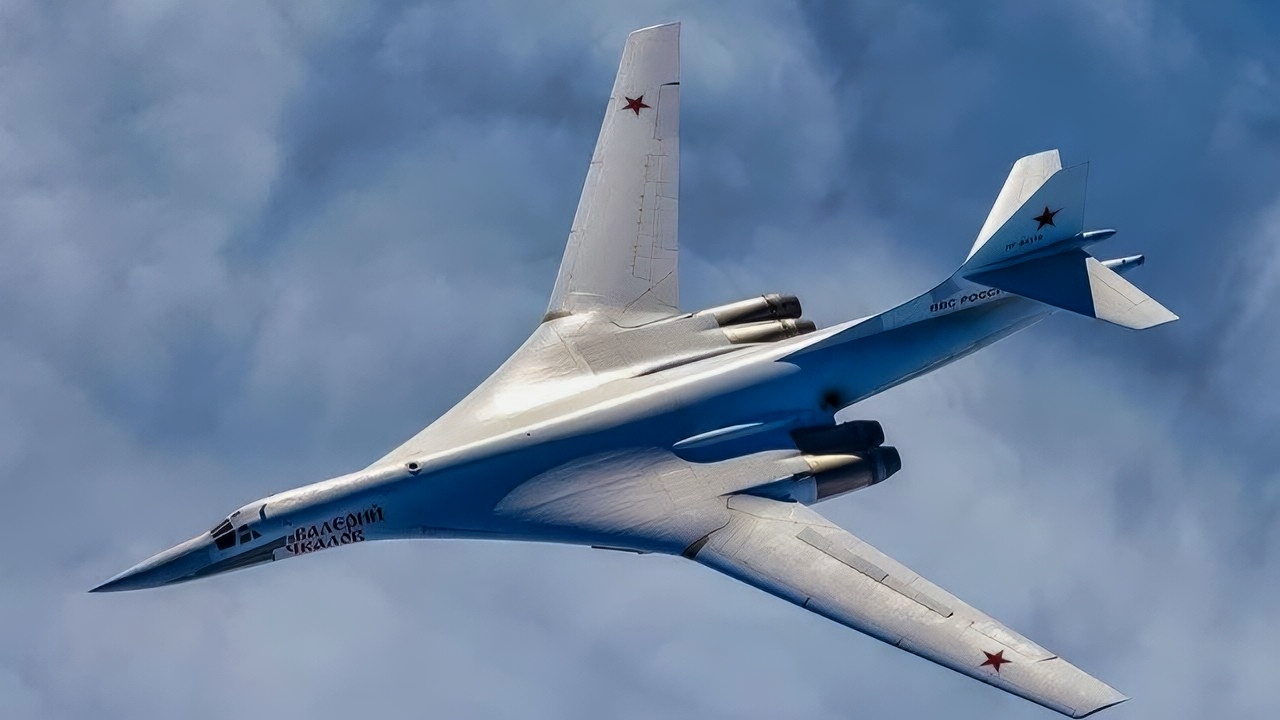
Tu-160 Bomber from Russia. Image Credit: Creative Commons.
Ukraine struck a Russian warship while it was moored in a neutral country’s waters, which some argue could be considered a war crime.
It has also launched an attack against a Russian cargo ship while it was sailing through international waters.
Likewise, Moscow has been probing NATO’s red lines.
It has struck numerous cargo ships operating in Bulgarian and international waters, while its strike munitions occasionally wander into Polish airspace.
These are significant escalations and threaten to expand the war beyond Ukraine’s borders.
While the war has not yet prompted a nuclear response from Russia, direct military action by NATO almost certainly will.
About the Author: Isaac Seitz
Isaac Seitz, a Defense Columnist, graduated from Patrick Henry College’s Strategic Intelligence and National Security program. He has also studied Russian at Middlebury Language Schools and has worked as an intelligence Analyst in the private sector.


