
Suspected drone attacks this weekend targeted Russian ships far from the Black Sea region, where Russia’s war and Ukraine’s naval pushback have played out since 2022. After a cargo vessel in the Baltic Sea was reportedly struck on November 21, satellite images showed a Steregushchiy-class corvette partially underwater off the coast of Libya, according to the Wall Street Journal.
The damage was apparently not limited to the Russian warship. Associated Press reports added that the strike caused a fire at Benghazi Naval Base.

Sea Baby Drone Ukraine. Image Credit: Creative Commons.
Regional conflicts intertwine
Ukraine has now claimed credit for the attack, and it would clearly show how the four-year war continues to spill over, well beyond Ukraine and Russia’s immediate region and, in this case, falling along lines of conflict elsewhere. Libya has been divided since a NATO-backed uprising toppled dictator Muammar Gaddafi, who was killed. Libya has been a site of conflict among local forces ever since, and by proxy a focus of competition between Russia and the West.
The ship had docked at Benghazi’s naval base for refueling and supplies, which it may do as part of an agreement between Russia and the eastern Libya-based government, according to CBS News. Officials added that at least four drones were intercepted and destroyed, while two hit the corvette, The Guardian reported.
Ukraine flipped the seas
The attack, again shows how effective Ukrainian forces have been in maritime warfare. When Russia launched its full-scale invasion in February 2022, Kyiv barely commanded any navy at all, a condition that presumably left Russia in control of the Black Sea and rendered Ukraine’s ports vulnerable to unimpeded attack and blockade.
That is not how it turned out. Ukraine has survived thanks to a combination of poor Russian strategy, external military and intelligence support, and its own fast-moving innovation, and that combination is perhaps most visible at sea.

Switchblade Drone. Image Credit: Industry Handout.
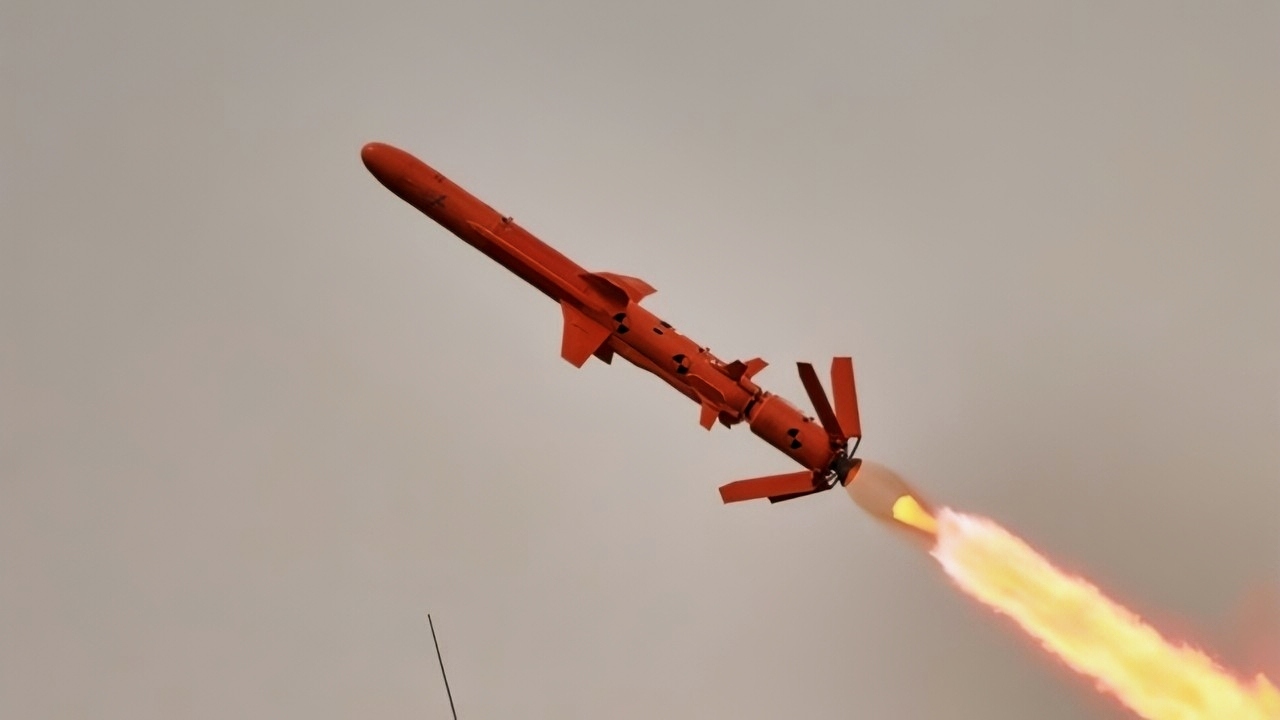
Ukraine’s maritime campaign scored its first notable success when Kyiv’s forces struck the guided-missile cruiser Moskva, the flagship of Russia’s Black Sea Fleet, with anti-ship missiles that sent her to the bottom of the Black Sea. In the months and years since, Ukraine repurposed unmanned surface vehicles to carry out attacks on Black Sea Fleet assets as part of a campaign that also targeted Russian infrastructure supporting its fleet. Russia’s navy was denied effective use of the Black Sea, and its assets retreated from forward bases on the Crimean peninsula.
Spillover from north to south
The separate reports of strikes on Russian ships over the weekend now show the maritime war spreading to the north and the south. Finnish Defense Minister Petteri Orpo, referring to a Ukrainian drone striking the sanctioned Russian cargo ship Sparta II on Saturday in the Gulf of Finland, said, “War is spilling over into our immediate vicinity.” The Finnish Defense Forces identified the Sparta II as the stricken ship, according to The Guardian, and Orpo added that Ukraine has the right to strike its aggressor.
The war continues to unfold right across from NATO’s eastern borders, and there are indications it may be closing in more tightly on Europe and compelling leaders in other countries toweight how they should respond.
Overnight Nov. 19-20, two Russian cruise missiles and a drone hit areas in south-eastern Poland, one 50 kilometers from Ukraine’s border. Nobody was killed. Polish Prime Minister Donald Tusk characterized the incident as a deliberate Russian provocation that happened to occur as Poland hosted military exercises involving personnel from the countries comprising the “Coalition of the Willing” that supports Ukraine. As described by EUObserver, it was the first major exercise by the Multinational Force – Ukraine. This non-NATO military force, led by France and the United Kingdom, is meant to deploy to Ukraine after a cease-fire is announced.
Russian intent in the incursions cannot be easily established, but the event, along with Ukraine’s maritime attacks over the weekend, shows how the effects of the war have metastasized beyond Ukraine and Russia.
“Common sense suggests there are no coincidences in such incidents. I think it was some kind of incident linked to our presence here,” Dariusz Mendrala, a major general in the Polish Armed Forces, told reporters, EUObserver wrote. “It won’t stop us from preparing to carry out our mission. For us, for the Polish state, for the Polish Armed Forces, these things have not been entirely exceptional for some time now.”
About the Author: Joel Weickgenant
Joel Weickgenant is a journalist, writer, and editor who has served as an editor and managing editor for RealClearWorld and previously worked as an editor at Stratfor.