

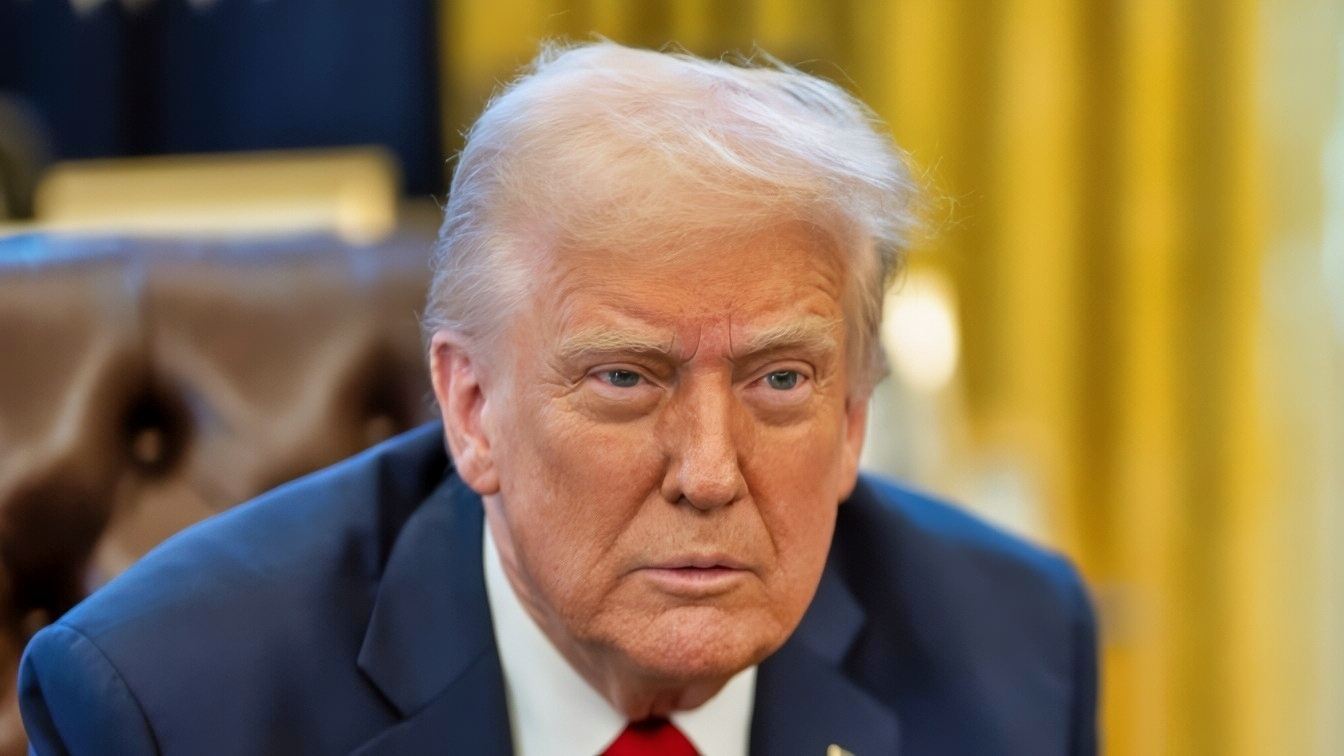
Although the defeat of the Republican Party in the 2026 Midterms has clearly broken the height of the war fever in President Donald Trump’s mind, he is still not fully cured of the war mania with Iran.
But he is starting to sound a bit more reasonable, especially as the year closes out.
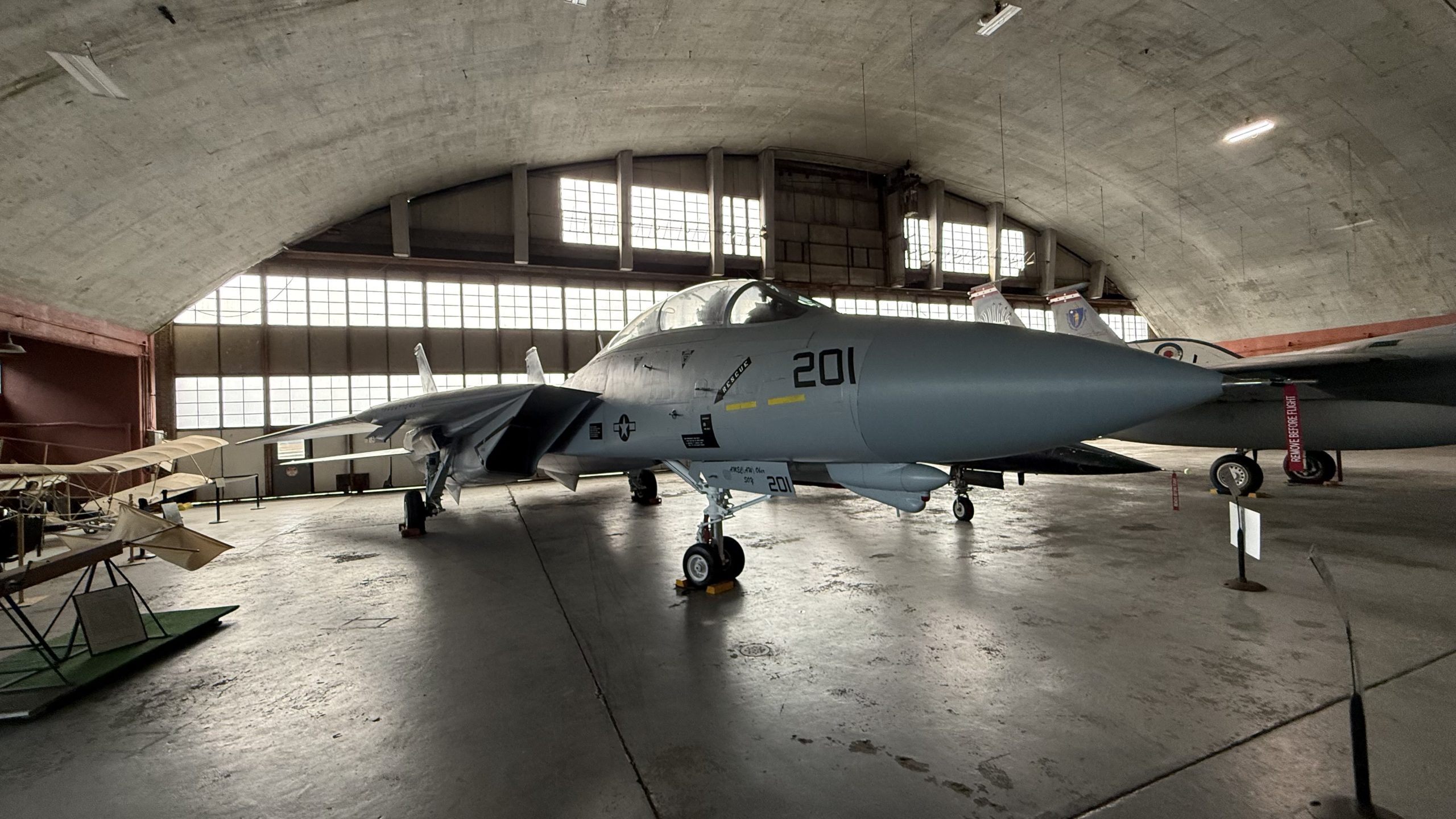
F-14 Tomcat like flown by Iran. 19FortyFive.com photo taken by staff.

Iran’s Drones That Russia Is Using. Image Credit: Creative Commons.
You see, even if President Trump wanted to restart the conflict, every delay works in the favor of those who are opposed to war.
That’s because of the budgetary constraints Congress imposed on him.
Trump himself acknowledged this reality recently when he admitted that the US military campaign against Iran was only funded through the end of January 2027, thereby limiting his ability to engage in the kind of sweeping air campaign (or something worse) that he had originally engaged in at the start of this year with Iran.
A Sea Change On Capitol Hill
Once the Democrats take Congress this January, his ability to wage seemingly limitless war in Iran will be heavily constrained as the Democratic-controlled Congress works overtime to prevent Trump from committing the United States to another long war.
Whatever Trump is planning to do, it would have to be short, sharp, and intense. But even that kind of limited campaign carries multiple risks.
For starters, the American people overwhelmingly rejected Trump’s war of choice in Iran.
That’s why voters turned out in massive numbers to ensure Trump’s party suffered a historic defeat.
Trump’s approval ratings are at an all-time low.
If he were to restart hostilities, after the drubbing his party received because of the American people’s opposition to this war, then his already low approval rating will plummet from the 30 percent range to the 20 percent range–and there’s no bottom to that floor, if Trump behaves as the arrogant obstructionist he seems intent on being (hence the elevation of Stephen Miller as Trump’s new White House Chief of Staff).
The new Democratic-controlled Congress is set to be sworn in on January 3 of next year.
At that point, the new Congress can (and likely will) restrict offensive operations against Iran.
Such restrictions would not be easy to impose, even with the staggering majorities the Democrats will have.
Yet Congress has the constitutional authority to restrain the president’s war powers, notably by controlling funding for any such conflict.
If Trump pushes too hard and too far, as it seems he might, Democrats in Congress could cobble together veto-proof majorities on certain bills (such as war powers).
Trump Knows the Iran War Is Unpopular
In the wake of the stunning Midterm defeat, President Trump agreed with his vice president that the Republican losses in the election stemmed from the unpopularity of the Iran War.
However, Trump seemed to walk that back shortly thereafter.
Still, the fact that Trump has repeatedly indicated an unwillingness to resume the war before the new year highlights the way in which his political calculations, such as they are, have been stymied by the generational defeat the Republican Party just endured at the hands of the Democrats in the Midterms.
Interestingly, Trump’s recent statements that he’d not likely restart the war before the new year were followed by comments that his war objectives were distinct from those of the Israelis.
Specifically, Trump made plain that he wanted to ensure that Iran did not have a nuclear weapons capability.
Toward that end, though, the president could have ended his war–or avoided it entirely–if he had just stuck to his original claims at the end of the 12-Day War last year that he had “obliterated” the Iranian nuclear threat. Despite that, the war still occurred.
Now, however, it is different. Trump seems visibly hesitant to restart the conflict, given how severe the blowback would be for both the country and his presidency.
Administration officials are divided over whether the war should resume and if the resumption of hostilities would have the desired consequences for the Islamic Republic or if it would simply result in another round of uncontrolled escalation.
Negotiations between Washington and Tehran remain stalled despite the two warring powers signing a Memorandum of Understanding (MOU) in June.
At the time of the signing, Trump fretted over the harmful consequences of his policies, saying he did not want to be “Herbert Hoover.”
If he restarts the war, that is precisely what he will be.
The Next Herbert Hoover?
A resumed bombing campaign might eventuate in Iran’s massive retaliation that leads to the destruction of the Gulf Arab energy infrastructure, further blockade of critical goods for the world economy that could easily lead to a major global economic crisis, and could lead to the strategic defeat of the United States and its allies, because Iran currently possesses the means to destroy whatever remains of the American military basing infrastructure throughout the region.
Trump has said that major military operations would be unlikely so long as the diplomatic negotiations produced an acceptable agreement that included curbs on the development of nuclear weapons in Iran and no fees imposed on shipping passing through the contested Strait of Hormuz (SoH). Iran has refused these things.
Hence, there’s a diplomatic impasse.
It remains to be seen whether this war can be negotiated away or whether the two sides will return to conflict. If they restart the war, Trump will have a very limited window to wage it because funding will run out under current legislative conditions by the end of January.
There is little chance that Trump could successfully achieve his strategic goals of denuclearizing Iran in that time–certainly not without suffering massive retaliation and escalation from the Iranians.
About the Author: Brandon J. Weichert
Brandon J. Weichert is the Senior National Security Editor. He also manages The Weichert Brief on Substack. Weichert is the co-host of The Mario Nawfal Show on Twitter/X. He is the author of four bestselling national security books, most recently A Disaster of Our Own Making: How the West Lost Ukraine (Encounter Books). His next book, Fortress Americas: A New Monroe Doctrine (Tucker Carlson Books), is due out December 8. Follow him via Twitter/X @WeTheBrandon.


