


Key Points – The US Navy will extend its Virginia-class attack submarine production to a previously unplanned Block VIII, delaying the start of the next-generation SSN(X) submarine production until Fiscal Year 2031, pushing SSN(X) service entry well into the 2040s.
-The SSN(X) is ambitiously designed to combine the Seawolf’s speed and payload with Virginia’s sensors and quietness, and the Columbia’s service life, marking a return to a blue-water, peer-competitor focus.
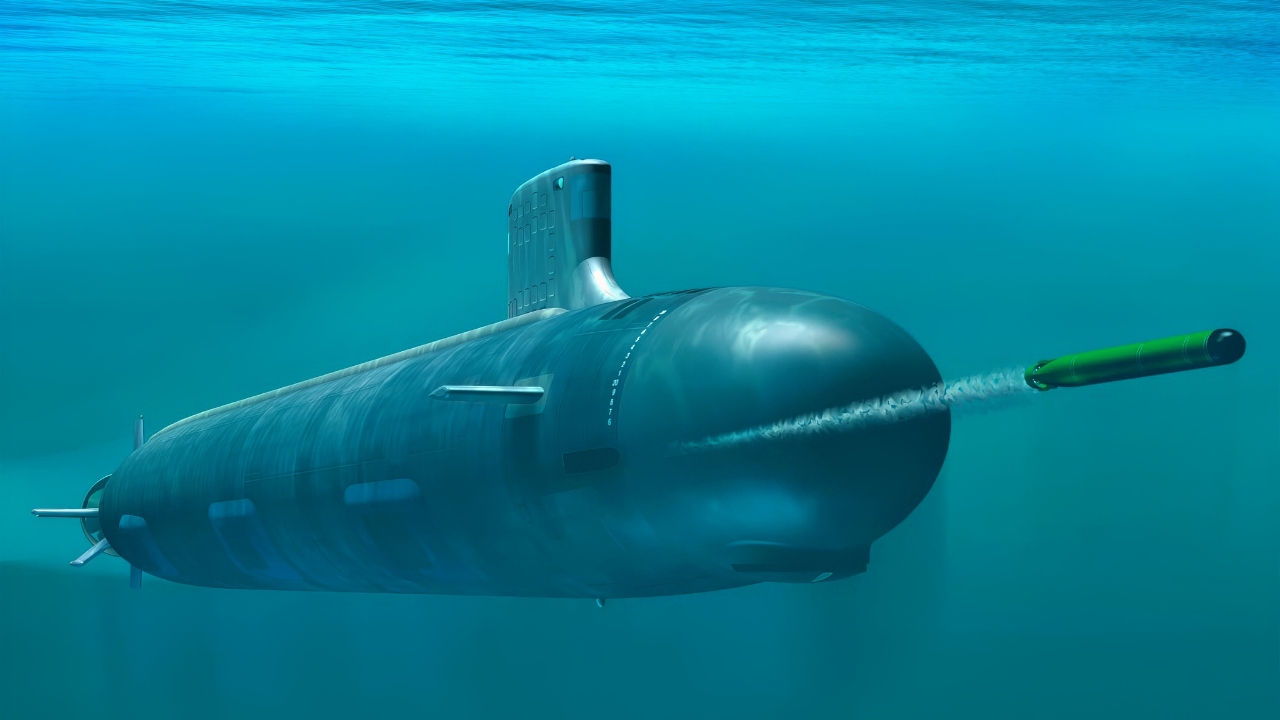
SSN 774 Virginia Class Submarine Artist Rendering from U.S. Navy.
-This delay is symptomatic of broader US Navy procurement challenges affecting other major programs like the DDG(X) destroyer and the F/A-XX next-generation fighter.
The Navy’s Virginia-Class Submarine Is Amazing and Keeps Getting Upgraded
The Virginia-Class Blocks v the New SSN(X): A Series of Delays – As of the end of 2024, the US Navy (USN) have decided that the current program of Virginia-class attack submarines will be extended to an eighth block of production before the USN transitions to a new generation SSN(X) design.
This announcement originally came during the November 2024 Naval Submarine League annual symposium, delivered by Adm. Bill Houston. According to his briefing the Navy are planning for a previously-unprogrammed Block VIII of the Virginia-class submarines, extending that program into the 2040s.
“If you look at us as a Navy, we have said that we’re going to continue to build Virginia … We’re looking to go to a Block VIII. We are proceeding on with SSN(X) in after that,” Houston said at the event.“We are also looking at maintaining that large hull platform of the Columbia class. And to be clear, the nuclear posture says at least 12 Columbia [must be in service]. “And I think if you look at the threats around the world, there may be a need for more Columbias.”
Virginia-Class Submarine in 4 Words: They Won’t Go Away
The Navy had been expected to transition from the Virginia-class boats to the SSN(X) far earlier. But the new program schedule now has SSN(X) initiating production only during Fiscal Year 2031. Accordingly, the first boats of this new class will likely not arrive until sometime in the 2040s.
The SSN(X) design is being described as a return to previous-generation operational concepts for an attack submarine. That means the boat will be geared towards more blue water missions. This, in turn, means a weapons load like that of the old Seawolf-class (SSN-21) submarines.
Navy officials had previously stated that the SSN(X) should also be capable of the same speed and performance of the Seawolf, which is a considerably heavier boat, and combine that with the acoustic quietness and sensors of the Virginia-class design, and the operational availability and service life of the Columbia-class.
All those requirements rolled into one submarine means a final SSN(X) configuration that is considerably larger than the Virginia-class design. That boat has a submerged displacement of around 7,800 tons. SSN(X) is likely not only to be heavier and larger than the Virginia-class, but also possibly even larger than the original Seawolf-class, which weighs in at 9,138 tons.
Changing Mission Profiles
The Virginia-class was a significant downsizing from the Seawolf, largely due to a dramatic change in the mission requirements from the Cold War and moving into the post-Cold War era.
Seawolf had been designed to operate at greater depths, move at faster speeds and its priority mission was to hunt for Soviet ballistic missile submarines like the Typhoon-class.
The transition from Seawolf to Virginia designs happened in part because of the need to create a less expensive boat that instead supported special operations and signals intelligence missions.
There is now a “back-to-basics” shift with the SSN(X), but the delays of this program are symbolic of the problems that the service has been facing for some time now.
The US Navy as a service, explained a retired senior naval officer speaking to me, “has three major constituencies – submarines, major surface combatants and naval aviation – with each one seeing itself as the proverbial ‘first among equals’”.
Those constituencies have all suffered from delays for one reason or another. The final design for a next era of destroyers, the DDG(X), has gone through one set of revisions after another, with the most recent proposed version calling for the deletion of the signature 5-inch gun that current guided-missile ships are armed with.
On the naval aviation side, the US Air Force has now announced that Boeing will build the 6th-generation F-47 fighter jet. Meanwhile, the Navy has yet to reveal which contractor will be building the F/A-XX fighter that will replace the Boeing F/A-18E/F Super Hornet.
The Navy had wanted to announce an F/A-XX selection since this past March, but concerns over inadequate funding, production capacity and engineering manpower now has the Pentagon discussing delaying a decision on that program for up to another three years.
About the Author
Reuben F. Johnson is a survivor of the February 2022 Russian invasion of Ukraine and is an Expert on Foreign Military Affairs with the Fundacja im. Kazimierza Pułaskiego in Warsaw. He has been a consultant to the Pentagon, several NATO governments and the Australian government in the fields of defense technology and weapon systems design. Over the past 30 years he has resided in and reported from Russia, Ukraine, Poland, Brazil, the People’s Republic of China and Australia.
What Are Europe’s Best Weapons of War?


Pingback: The US Navy’s Seawolf-Class Submarine Has an ‘Unfixable Problem’ - National Security Journal
Pingback: Video Shows BBC Team Flee from Drone Attack in Ukraine - National Security Journal
Pingback: Russia Launches Yasen-M Submarine Armed with 'Zircon' Hypersonic Missiles - National Security Journal
Pingback: The Navy's New Block VI Virginia-Class Submarine Is Built to Fight Russia - National Security Journal
Pingback: 75 B-2 Stealth Bombers: That's What The Air Force Wanted - National Security Journal