
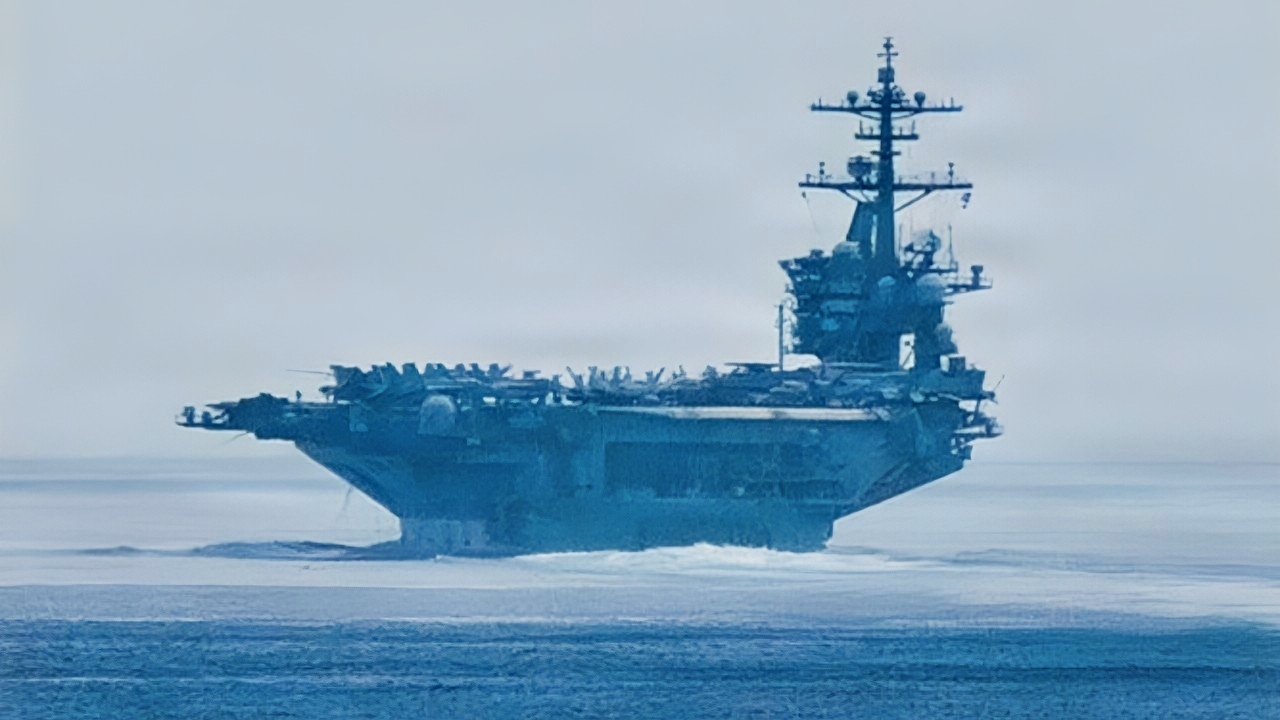
Washington Is Arming the USS George Washington – The U.S. Navy is preparing for another round of major military strikes against Iran, with American warships located in the Arabian Sea receiving new supplies of bunker-buster bombs and long-range missiles. Reports of U.S. warships, including the USS George Washington aircraft carrier, being rearmed come as President Donald Trump weighs resuming his military campaign against Tehran, and as Israel works with the Pentagon to finalize plans for an intensive offensive against Iranian nuclear facilities and weapons stockpiles.
On Saturday, October 24, The Wall Street Journal reported that American sailors aboard the USS George Washington and its accompanying guided-missile destroyer were preparing for another escalation in the war, with journalists visiting the vessels observing aircraft operations and the delivery of large quantities of new munitions.
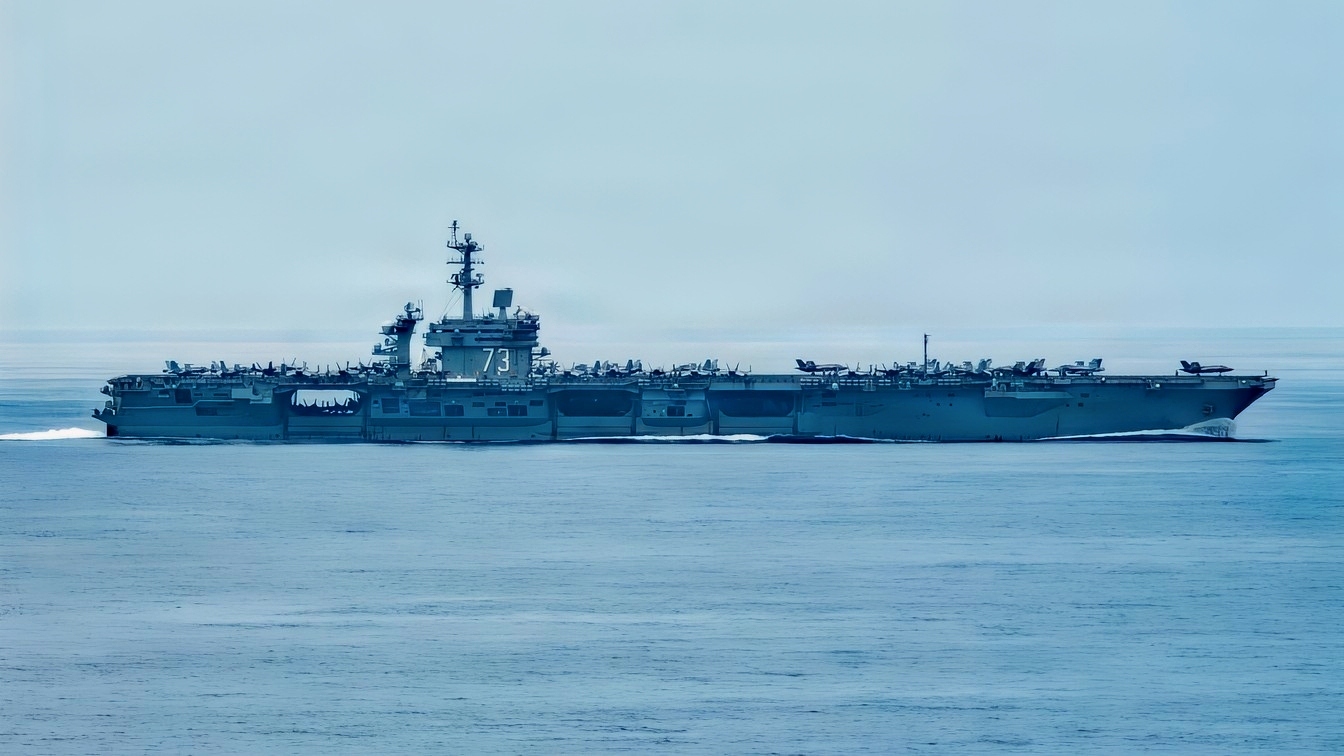
Nimitz-class aircraft carrier USS George Washington (CVN 73) conducts routine operations while underway in the South China sea July 23, 2026. The George Washington Carrier Strike Group is operating in the U.S. 7th Fleet area of operations. George Washington is the U.S. Navy’s premiere forward-deployed aircraft carrier, a long-standing symbol of the United States’ commitment to maintaining a free and open Indo-Pacific, while operating alongside allies and partners across the U.S. Navy’s largest numbered fleet. (U.S. Navy photo by Mass Communication Specialist Seaman Andrew Novak)
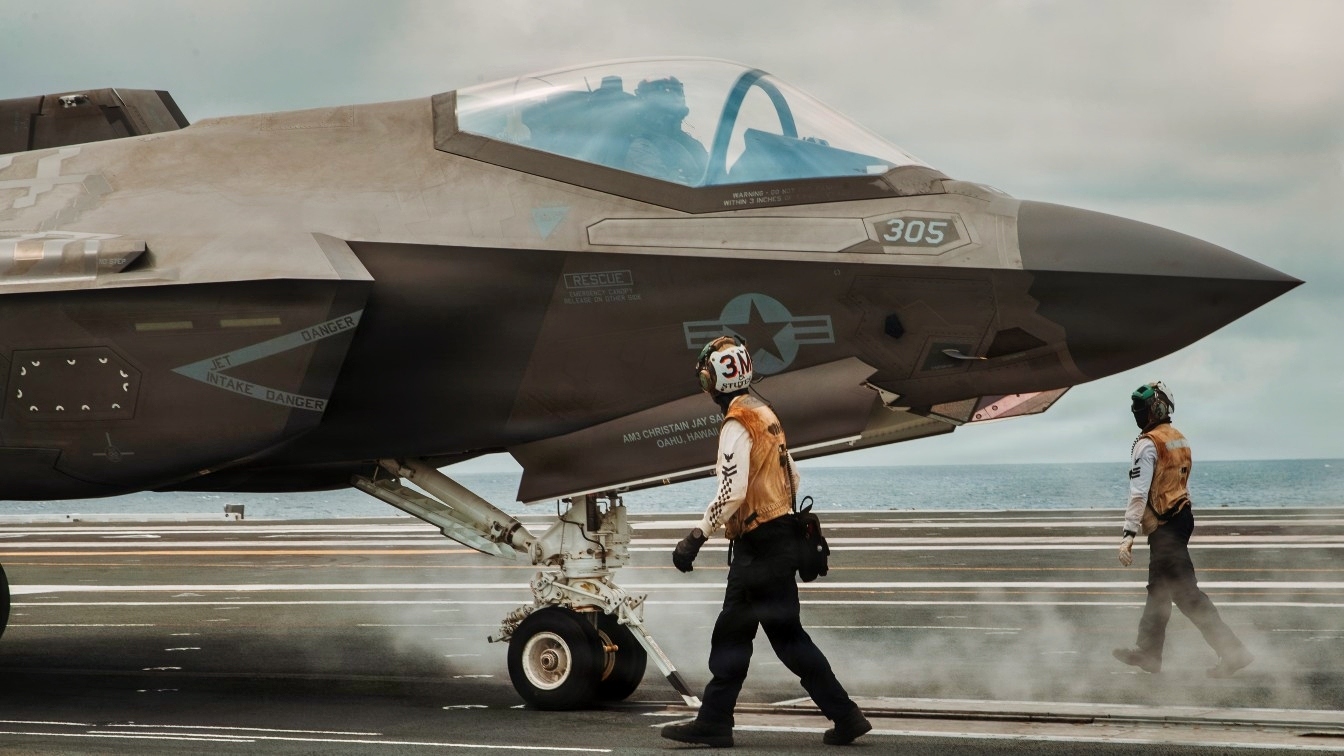
An F-35C Lighting II, attached to Strike Fighter Squadron (VFA) 147, prepares to take off from flight deck of Nimitz-class aircraft carrier USS George Washington (CVN 73) while underway in the Philippine Sea, May 25, 2026. The George Washington Carrier Strike Group (GWACSG) is operating in the U.S. 7th Fleet area of operations. George Washington is the U.S. Navy’s premiere forward-deployed aircraft carrier, a long-standing symbol of the United States’ commitment to maintaining a free and open Indo-Pacific, while operating alongside allies and partners across the U.S. Navy’s largest numbered fleet. (U.S. Navy photo by Mass Communication Specialist Seaman Estrella Velarde)
The news comes only days after the White House confirmed that President Trump would not order new strikes against Iran before the November 3 midterm elections. Israeli officials, however, have indicated that military operations are likely to resume shortly after Americans turn out to vote.
USS George Washington Rearms
The USS George Washington is a Nimitz-class nuclear-powered aircraft carrier. The ship was deployed from Japan to the Middle East in August and replaced the USS Abraham Lincoln after an extended deployment in the region.
While Wall Street Journal reporters were visiting, American personnel were seen conducting flight operations and replenishing the carrier strike group’s supplies and weapons stockpile. The report said the aircraft carrier received standoff land-attack missiles—weapons that let American forces strike targets from long distances. The report also said it delivered so-called bunker-buster bombs designed to penetrate hardened structures.
The weapons are expected to play a major role in the next offensive against Iran, which is widely expected to focus on knocking out Iran’s remaining nuclear infrastructure — particularly facilities built underground to protect them from conventional airstrikes.
The Wall Street Journal reported that unnamed U.S. officials familiar with the preparations confirmed that American warships in the Middle East are being positioned for an escalation should President Trump authorize another round of attacks against Iran in the coming weeks. Those officials did not, however, indicate that they have decided to resume strikes. The preparations suggest, however, that the Pentagon is ensuring its forces in the region have the weapons and supplies necessary to conduct another offensive if necessary.
The Next Campaign
The USS George Washington operates with Carrier Air Wing Five, which includes F-35C stealth fighters, F/A-18E/F Super Hornets, and EA-18G Growler electronic warfare aircraft. With those capabilities, American forces can strike Iranian military targets while disrupting enemy radar and air defense systems.
During the first wave of U.S. strikes against Iran on February 28, the U.S. deployed F-35C and F/A-18E/F fighters from the USS Abraham Lincoln.
The accompanying American warships also fired Tomahawk cruise missiles at Iranian targets. A similar operation using the USS George Washington could see its aircraft striking targets including missile launchers and air defenses, nuclear infrastructure, and related sites.
U.S. and Israel Prepare New Offensive
The New York Times reported on October 22 that U.S. and Israeli military officials had drawn up plans for a short new campaign against Iran, which is expected to be more intensive than previous campaigns. The report said exercises were already underway over Iraqi airspace.
Among the likely targets for the new campaign is Pickaxe Mountain, the heavily fortified underground nuclear facility that U.S. and Israeli officials believe remains a significant threat and could be used to hide highly enriched uranium.
ABC News said two Israeli sources familiar with the planning expect the strikes to begin some time after the November 3 midterm elections, although neither source confirmed the operation had even been approved.
On October 22, White House spokesperson Anna Kelly said Washington would not launch new attacks before the midterms. As this outlet has noted, consistent polling suggesting Republicans are on track to lose control of Congress could be enough to convince the president to launch pre-emptive strikes ahead of the midterms anyway.
Iran Threatens Wider War
Iranian officials, meanwhile, are warning America to avoid another round of major military strikes, promising a much broader response that could see strikes against a wider range of U.S.-linked targets across the Middle East.
Earlier this week, Iranian officials said that plans had been drawn up to attack undersea communications cables in the Persian Gulf if the United States and Israel resume their offensive.
Reports have also described how Iran is preparing strikes against U.S.-linked targets in the Middle East if the U.S. Navy continues to provide protection to commercial ships moving through what Tehran calls “illegal” routes in the Strait of Hormuz.
About the Author: Jack Buckby
Jack Buckby is a British researcher and analyst specializing in defense and national security, based in New York. His work focuses on military capability, procurement, and strategic competition, and he produces and edits analysis for policy and defense audiences. He brings extensive editorial experience, with a career output spanning over 1,000 articles at National Security Journal, and has previously authored books and papers on extremism and deradicalization.


