

With the war against Iran intensifying, it seems fitting to take a step back and examine the damage so far on Iran’s side.
Despite Operation Epic Fury lasting only a month, the U.S. and Israel have inflicted significant damage on the IRGC.
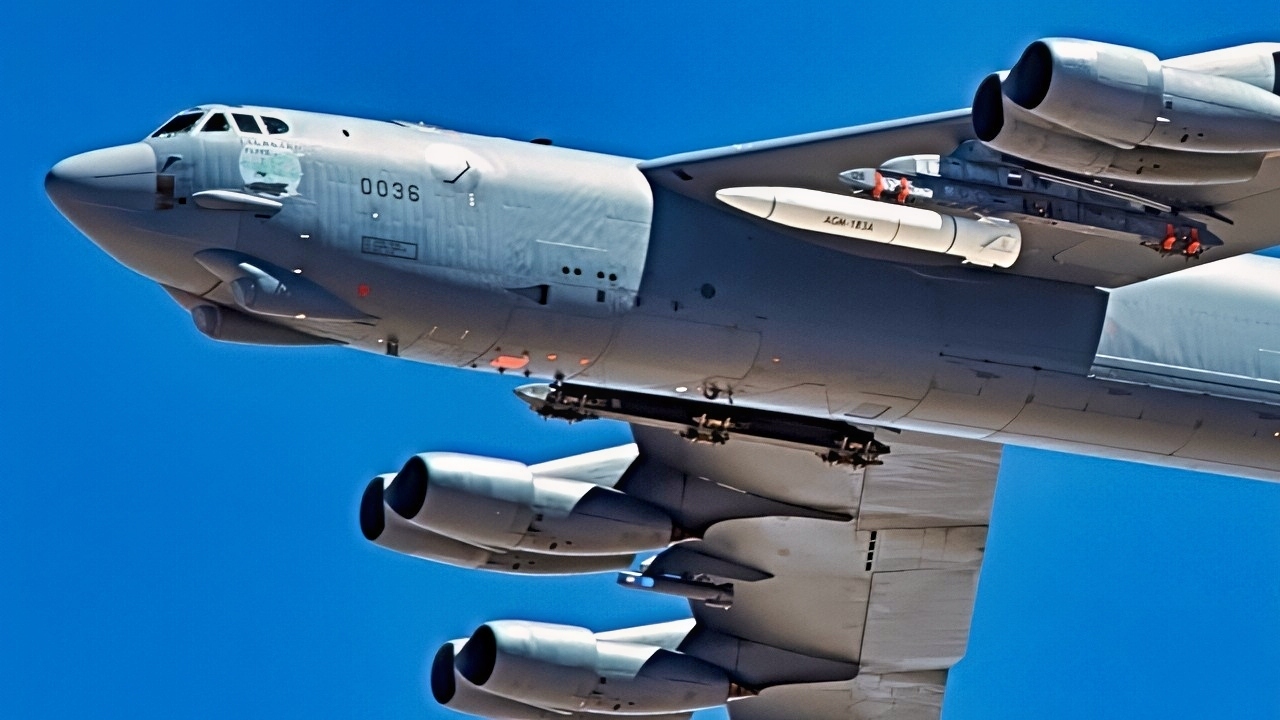
EDWARDS AIR FORCE BASE, Calif. (June 12, 2019) B-52 out of EDW carries ARRW IMV asset for its first captive carry flight over Edwards Air Force Base. (U.S. Air Force photo by Christopher Okula)

U.S. Airmen assigned to the 96th Expeditionary Bomber Generation Squadron salute the crew of a B-52H Stratofortress aircraft as they begin to taxi at Morón Air Base, Spain, Nov. 19, 2025, as part of Bomber Task Force Europe 26-1. The ability of U.S. forces and equipment to operate in conjunction with those of our Allies and partners is critical to bolstering an extended network of capabilities to decisively meet the challenges of today and tomorrow. (U.S. Air Force photo by Tech. Sgt. Codie Trimble)
American airstrikes have not only targeted senior personnel but also military infrastructure and equipment like fighter jets and naval vessels.
The damage has also extended to the Iranian economy, which has also suffered significantly under the weight of American sanctions, and now due to damage to the country’s civilian infrastructure.
Despite this, Iran has somehow managed to weather the damage and continues to demonstrate its fighting spirit.
However, the rate of attrition is unsustainable for Iran, and sooner or later, the economic impacts are bound to catch up to the regime.
Casualties in the IRGC
Estimates of Iranian military fatalities range from roughly 1,800 to as high as 7,650 personnel killed, while civilian deaths are often estimated between approximately 1,700 and 3,600.
Other estimates, especially from earlier in the conflict, suggest a lower casualty figure, somewhere around 1,444 deaths combined.
Now that the conflict has heated up again, these estimates are incomplete as they do not reflect the current state of the war.
Verifying the true number of casualties in this war is a difficult undertaking. For one, the Iranian government has not been very transparent about its losses.
Additionally, the vast majority of strikes have been against underground facilities and hardened military bunkers, making it difficult to assess the true number of dead and wounded.

B-52 Stratofortress, 40th Expeditionary Bomb Squadron, loaded with 12 Joint Direct Attack Munitions (JDAM) heads toward Iraq with it’s new mission directive. The bomber’s mission is to provide close air support for coalition troops stabilizing the country of Iraq, April 15, 2003. Operation Iraqi Freedom is the multi-national coalition effort to liberate the Iraqi people, eliminate Iraq’s weapons of mass destruction, and end the regime of Saddam Hussein. (U.S. Air Force photo by Tech. Sgt. Richard Freeland) (Released)
One of the main targets of American air strikes has been senior officers and high-ranking officials of the IRGC.
Approximately 48 to 52 senior commanders, including high-ranking officers in the IRGC and other branches, have been killed in strikes targeting command structures, according to CENTCOM.
In addition, the killing of Iran’s Supreme Leader and other top political and military figures during the opening phase of the war created a sudden and unprecedented disruption in the country’s leadership hierarchy.
These losses had significant short-term effects on Iran’s military, although the IRGC moved more quickly than anticipated to fill the vacant positions and maintain operational readiness.
Attrition Across Iran’s Military Forces
The war has had a profound impact on Iran’s military capabilities. U.S. and Israeli forces targeted not only personnel but also infrastructure, including airbases, missile systems, naval facilities, and logistical networks.
These operations were designed to degrade Iran’s ability to project power and defend itself against further attacks.
According to some sources, Iran has lost dozens of aircraft, including combat and transport planes, as well as significant portions of its naval fleet.
Some estimates indicate that around 55 aircraft were destroyed and 28 naval vessels were damaged or sunk.
Such losses have undoubtedly reduced Iran’s offensive and defensive capabilities, although its ballistic missile production remains mostly intact.
Despite the losses, the IRGC has proven to be surprisingly resilient in the face of overwhelming American military might.
Despite high material losses, Iran’s air force is somehow still flying and continues to maintain a continuous presence in its skies.
Likewise, despite its navy being largely wiped out, Iran still possesses a stranglehold over the Strait of Hormuz, which has prevented the U.S. Navy from seizing control and resuming tanker traffic. The U.S. likely presumed that the IRGC would fold after preliminary strikes against senior leadership, much like Venezuela did.
However, the Iranian military has instead shown unexpected resolve despite being at a significant military disadvantage.
Economic Impacts: Business and Industry Impacts?
The conflict has also had devastating effects on Iran’s economy as well.
The country has been under extensive U.S. sanctions for decades, the pressure of which has only been exacerbated by the current war.
Sanctions now target key sectors such as oil exports, shipping, and finance, all of which are critical to state revenue generation.
Additional measures in the past months have focused on disrupting networks that enable Iran to sell oil covertly, aiming to cut off funding for the military and the IRGC.
The closure of the Strait of Hormuz has greatly affected the global economy but has also become a double-edged sword for Iran.
Repeated attacks and blockades effectively halted commercial traffic through the strait, creating widespread economic repercussions both inside and outside Iran.
For Iran, this has meant reduced export capacity and increased difficulty in obtaining foreign currency, even as global oil prices rose sharply due to the disruption. Although higher prices could theoretically boost revenue, sanctions and logistical constraints limit Iran’s ability to fully capitalize on these changes.
The Iranian economy was already under strain before the war, with persistent inflation and currency depreciation long before the first bombs dropped.
Sanctions in previous years had already caused contractions in economic output and reduced living standards, and the conflict has only intensified these strains.
War-related damage to infrastructure and the diversion of resources to military needs have placed additional pressure on the state’s finances.
At the same time, Iran has demonstrated resilience through informal economic mechanisms, such as clandestine oil exports, ship-to-ship transfers, and alternative trade networks, which help sustain revenue despite sanctions.
These measures, however, cannot fully compensate for the damage that the nation’s economy continues to experience.
In time, the economic reality of the Situation is bound to catch up to the regime.
Iran has always maintained a policy of self-sustainability and independence, but with the economic crisis looming ever larger, the regime may need to rethink this policy if it wants to survive.
Russia and China currently maintain close economic ties with Iran, but to ensure the state’s survival, Iran may need to double down on these partnerships and seek additional partners to help cushion the fall.
About the Author: Isaac Seitz
Isaac Seitz, a Defense Columnist, graduated from Patrick Henry College’s Strategic Intelligence and National Security program. He has also studied Russian at Middlebury Language Schools and has worked as an intelligence Analyst in the private sector.


Fred Adams
June 13, 2026 at 1:41 pm
I venture to say that any Iranian aircraft that comes out of hiding will fly only with tolerance by the US and Israel. Like the Iranian Navy, the Iranian Airforce is no longer an important factor, if indeed they ever were.
All signals point down for Iran and Iranians. Is that necessarily true for the IRGC? They need only wrest comfort and sustenance from the remaining population and resources, something that their arms superiority seems likely to ensure, at least in the short term. While that doesn’t negate your thesis, it may imply later rather than sooner.
The other huge question is “How much real organization and control does the IRGC maintain, after the beheadings of the last 6 months?” I think they cannot be well off in that regard.
With a weakening Iran, it is good that Russia’s ability/desire to advance their Great Game must be to some significant extent curbed in the near term by the Ukraine debacle. Turkey does lurk in the offing, a respectable force in the region, and hungry.