

Ukraine Keeps Embarrassing Russia: It’s hard to ignore Ukraine’s newfound confidence in the war. Its long-range drone campaigns are hammering Russia and bringing the fight back across the border, and they’re serving two purposes at once: degrading Moscow’s ability to sustain the war while publicly exposing vulnerabilities the Kremlin would also rather keep hidden. Recent Ukrainian strikes have targeted oil facilities and defense manufacturers, causing major disruption to the Russian economy and often occurring at moments of particular political significance.
The recent St. Petersburg International Economic Forum (SPIEF), for example, was disrupted by Ukrainian strikes. The gathering is meant to showcase Russia’s economic resilience in the face of the conflict and attract foreign investment despite years of sanctions and international isolation – but instead, delegates arrived in a city that was overshadowed by reports of Ukrainian drone activity. The aftermath of strikes on nearby energy infrastructure was also visible.

T-64 Tank. Image Credit: Creative Commons.
For Kyiv, the strikes are symbolic but also designed to inflict maximum pain and embarrassment on Moscow at a time when it is becoming increasingly obvious it has lost control of the war.
Smoke Over St. Petersburg: Putin’s Hometown
The 2026 SPIEF, held between June 3 and June 6, is Russia’s premier business and economic event and is often described as Russia’s answer to the World Economic Forum in Davos. The event attracts thousands of government and business officials and gives President Vladimir Putin an opportunity to portray Russia as economically resilient despite years of sanctions.
But when attendees arrived in St. Petersburg this year under the shadow of one of the biggest Ukrainian long-range attacks of the war, it was hard to ignore the pressure Russia is under today. Ukrainian forces struck the St. Petersburg Oil Terminal, one of the largest petroleum export facilities in the Baltic Sea, located roughly 1,100 kilometers from Ukraine’s border.
It’s exactly the kind of strike Western leaders spent months, even years, trying to prevent Ukraine from successfully executing. Kyiv also claimed responsibility for attacks that targeted the Kronstadt naval base and a weapons manufacturing facility in the Tambov region of Russia.
Footage recorded by eyewitnesses and shared online appeared to show thick black smoke rising over the city as emergency workers battled the blaze at the oil terminal. Satellite imagery later confirmed that damage had occurred, affecting the site’s fuel storage infrastructure.
Ukraine successfully hit a facility with an annual throughput capacity of around 12.5 million tons of petroleum products. Flights were temporarily disrupted as well.
The strikes turned what was meant to be a showcase of Russian stability into a very public reminder that Ukraine is becoming increasingly capable of hitting back. The strikes would have already made the news, but because Russia’s SPIEF event was being covered globally, the Ukrainian strikes got even more attention, too.
But it’s not the global press that Russia needed to worry about – it was the attendees, all of whom could see with their own eyes what was happening.
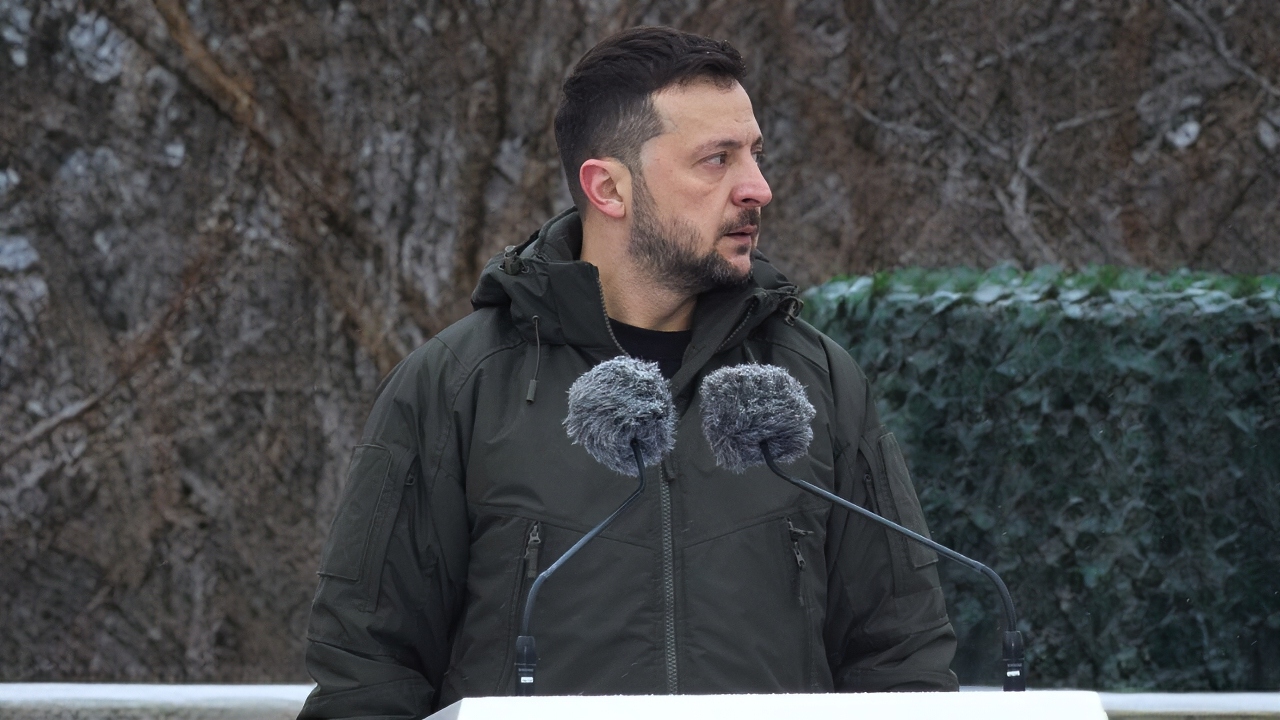
Image Credit: Office of the President, Ukraine.
Everything Changed After Operation Spider’s Web
If there was a moment that proved Ukraine was capable of inflicting damage on Russia, it was arguably Operation Spider’s Web. The operation, carried out by the Ukrainian Security Service (SBU), used more than 100 first-person-view drones launched from concealed positions inside Russia after they were smuggled over the border in trucks. The drones struck major air bases and aircraft inside Russia, with Ukraine claiming that 41 aircraft were damaged or destroyed in the strikes. Among them were high-value assets like the Tu-95 and Tu-22M bombers that are used to launch cruise missile attacks against Ukrainian cities.
While Russia has since disputed some of the exact details, the message was very clear, and damage was certainly done. Some of Russia’s most valuable aviation assets were destroyed by cheap drones that Ukraine continues to manufacture in the millions, and the operation proved that geography alone was no longer enough for Russia to protect itself.
The fight is now on Russian soil too, and the intensity of Ukrainian strikes has only increased since.
Crimea’s Fuel Crisis Is the Latest Embarrassment
Moscow is always incentivized to downplay the impact of Ukrainian strikes, but it is becoming increasingly harder to do so. Early in the war, Kyiv hit the headlines when it attacked the Kerch Bridge linking the Crimean peninsula to mainland Russia.
That was big news in 2022, and things have only gotten worse in Crimea. Ukrainian strikes have since targeted fuel convoys and supply routes across the region, with oil storage facilities, including the Semykolodezkaya oil plant and the Grushovaya oil base, recently hit. The effect has been so severe that fuel rationing measures have been implemented in Crimea, with fuel stations across the peninsula running dry.
Even the Kremlin has been forced to acknowledge the situation, with spokesman Dmitry Peskov admitting earlier this week that there are “certain problems” with fuel supplies.
Russia can no longer hide the impact Ukraine is having on both the war and its own economy.
About the Author: Jack Buckby
Jack Buckby is a British researcher and analyst specializing in defense and national security, based in New York. His work focuses on military capability, procurement, and strategic competition, producing and editing analysis for policy and defense audiences. He brings extensive editorial experience, with a career output spanning over 1,000 articles at 19FortyFive and National Security Journal, and has previously authored books and papers on extremism and deradicalization.


