


A B-47 Bomber and an F-86 Fighter Collided, and a Hydrogen Bomb Was Lost
The notion of lost, missing, or stolen weapons of mass destruction (WMDs)—chemical, biological, radiological, and nuclear (CBRN) alike—has unsurprisingly been the subject of many a fictional thriller story.
During the Cold War, you had bestselling novels from iconic authors like Clive Cussler and Tom Clancy (may they both R.I.P.), e.g., “Vixen 03” by the former and “The Sum of All Fears” by the latter. In the post-Cold War era, we’ve had movies like “Broken Arrow” starring Christian Slater and John Travolta (not to mention one of the earliest cinematic depictions of the B-2 Spirit stealth bomber).

B-36J Bomber National Security Journal Photo. Image Credit: Harry J. Kazianis
(Yes, “The Sum of All Fears” was also made into a major motion picture, but I’m loath to acknowledge that celluloid butchery of Mr. Clancy’s masterpiece.)
Now for the scary part: on more than one occasion, the U.S. military lost WMDs on more than one occasion back during the Cold War…and on more than one of those occasions, the weapons still haven’t been recovered to this day!
One such incident occurred way back in 1958 in the skies over Georgia (Jimmy Carter’s home state, that is, not Joseph Stalin’s birth country).
Technical Background
Before we get into the crux of the scary story itself, here’s a quick rundown of the weapons (nuclear and conventional alike) involved therein…
—Mark 15 hydrogen bomb, Serial No. 47782: 100 times more powerful than the “Little Boy” atomic bomb dropped on Hiroshima in August 1945, this device weighed 7,600 pounds (3,400 kilograms), including 400 pounds (181 kilograms) of high explosives and an undisclosed amount of enriched uranium. It was capable of producing a fireball with a radius of 1.2 miles (1.93 kilometers) and causing severe structural damage and third-degree burns for ten times that distance.
—Boeing B-47 Stratojet, Tail No. 51-2349: This was America’s first jet-powered medium bomber, and it gained some additional degree of fame for being flown by legendary actor Jimmy Stewart, both in his real-life second career as a U.S. Air Force Reserve officer and in his fictitious lead role in the 1955 movie “Strategic Air Command.”
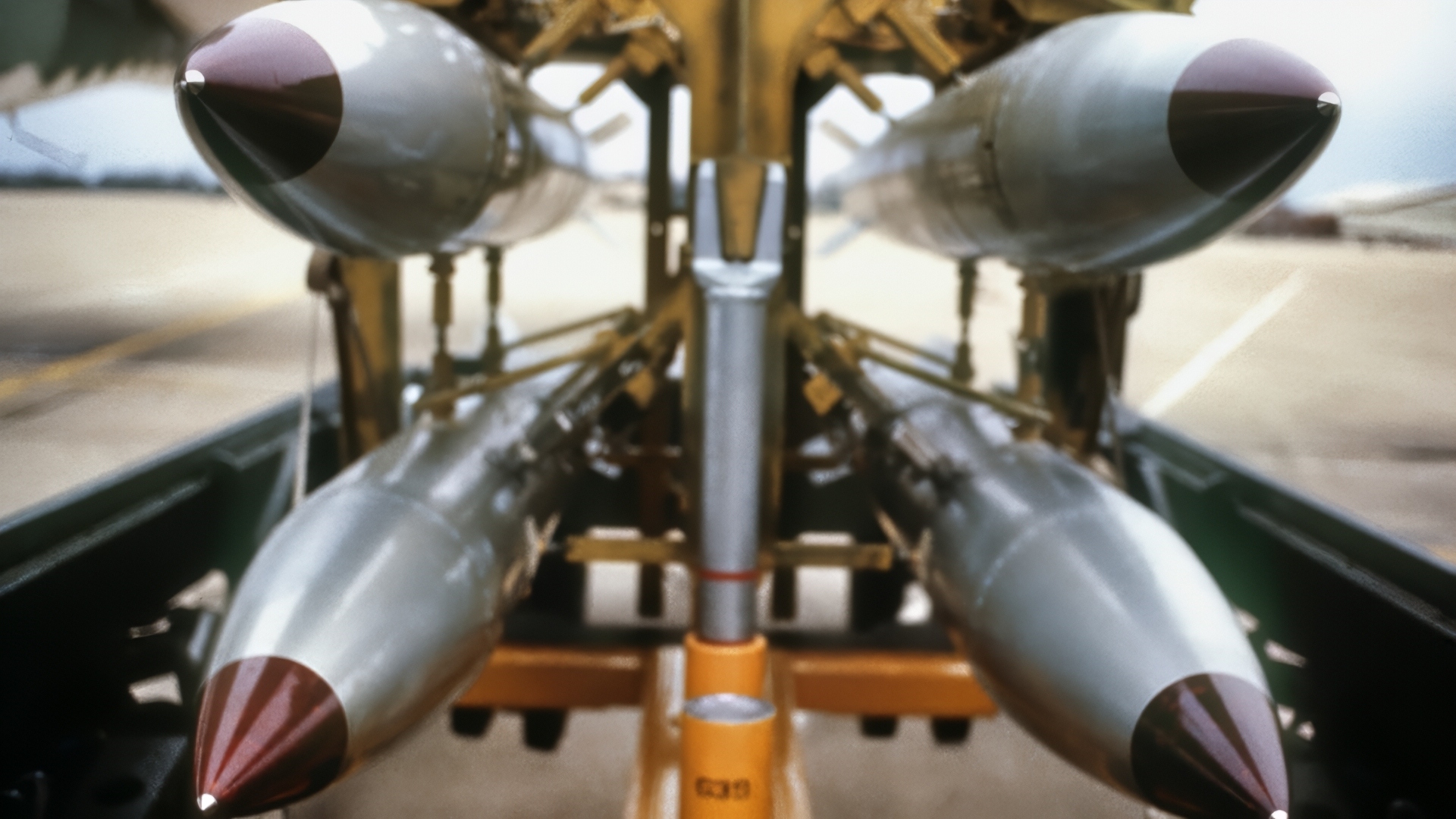
A front view of four nuclear free-fall bombs on a bomb cart. Image Credit: Creative Commons.
—North American F-86 Sabre, Tail No. 52-10108: A warbird that needs no introduction to military aviation history buffs, this was the jet fighter that proved to be the game changer in the aerial phase of the Korean War, putting the U.S. Air Force jet jocks on equal footing with the Soviet-designed MiG-15 fighter jet.
The Incident
At 2:00 a.m. on February 5, 1958 (when Dwight David Eisenhower was President of the United States), a B-47 flown by Col. Howard Richardson out of Homestead Air Force Base (now known as Homestead Air Reserve Base), Florida, for a simulated combat mission, collided with an F-86 flown by Lt. Clarence Stewart.
The young lieutenant failed to see the B-47 on the radar and descended into it. This caused the left wing of the fighter to be torn off and damaged the bomber’s tanks.
Lt. Stewart (no relation to the aforementioned Brig. Gen. Jimmy Stewart) safely ejected, with his parachute landing near Estill, South Carolina, ten miles (16 km) north of his stricken Sabre jet’s crash site east of Sylvania, Georgia.

B-36 Bomber National Security Journal Photos. Image Credit: National Security Journal.
As for the wounded Stratojet, Col. Richardson was able to regain control of it at 20,000 feet (6,100 m).
However, the good colonel and his two crewmates were concerned the bomb would break loose from the belly of their bomber and potentially detonate upon landing, so he jettisoned the bomb into waters around Wassaw Sound—a body of water bordering Tybee Island, Georgia—before safely landing at Hunter Air Force Base (now Hunter Army Airfield) outside of Savannah.
The Aftermath
Naturally, the U.S. government felt a compelling sense of urgency to find the jettisoned nuke, so accordingly, a U.S. Navy team of 100 personnel was dispatched, equipped with handheld sonar, and conducted cable sweeps in search of the bomb immediately following the accident.
However, the USN team was unsuccessful in their search and ceased their efforts on April 16.
Yet another effort to find the nuke in 2004 proved equally unsuccessful.
Since then, the missing weapon has become a local legend amongst the residents of the area, who refer to it as the “Tybee bomb.”
That local legend acquired an outright urban legend theme, via unproven rumors that the bomb was retrieved by a Soviet submarine.
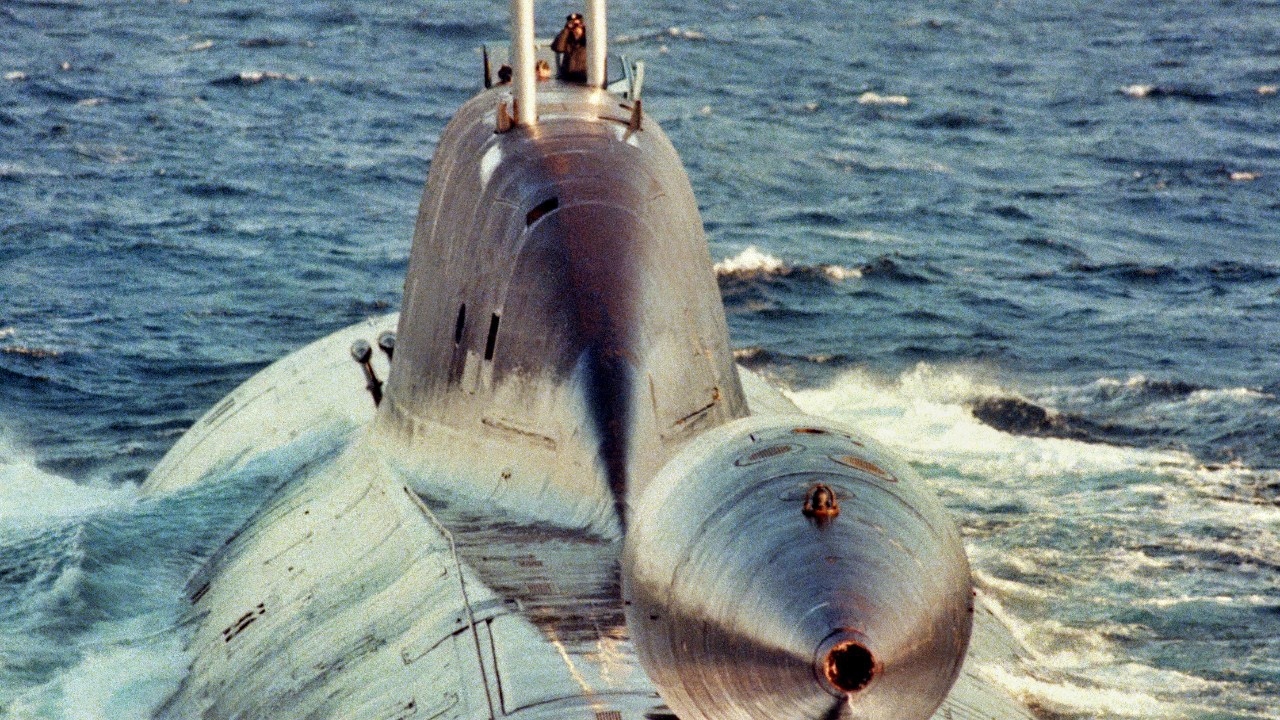
An aerial stern-on view of the Russian Northern Fleet AKULA class nuclear-powered attack submarine underway on the surface. Image Credit: Creative Commons.
For his part, retired USAF pilot Derek Duke conducted his own search in 2004 and initially thought he’d hit pay dirt, detecting high radiation 7-10 times higher than normal one mile offshore Tybee, but this was later concluded to be due to naturally occurring radioactive minerals (“NORM;” obviously not to be confused with Norm from the “Cheers” TV sitcom).
So, why is there no renewed effort on the government’s part to find the Tybee bomb?
Well, there’s a lack of sense of urgency: a 12 April 2001 USAF report concluded that if the bomb were still intact, the explosive in the bomb would pose no hazard.
That same year, a hydrographic survey of Wassaw Sound revealed that the bomb was buried under five to 15 feet of silt.
MORE – China’s New H-20 Stealth Bomber Will Be In the Air Soon Thanks to the Iran War
MORE – Move Over, F-35: The A-10 Warthog Is the ‘Punisher’ Iran Can’t Seem to Beat
About the Author: Christian D. Orr
Christian D. Orr is a Senior Defense Editor. He is a former Air Force Security Forces officer, Federal law enforcement officer, and private military contractor (with assignments worked in Iraq, the United Arab Emirates, Kosovo, Japan, Germany, and the Pentagon). Chris holds a B.A. in International Relations from the University of Southern California (USC) and an M.A. in Intelligence Studies (with a concentration in Terrorism Studies) from American Military University (AMU). He is also the author of the newly published book “Five Decades of a Fabulous Firearm: Celebrating the 50th Anniversary of the Beretta 92 Pistol Series.”


