

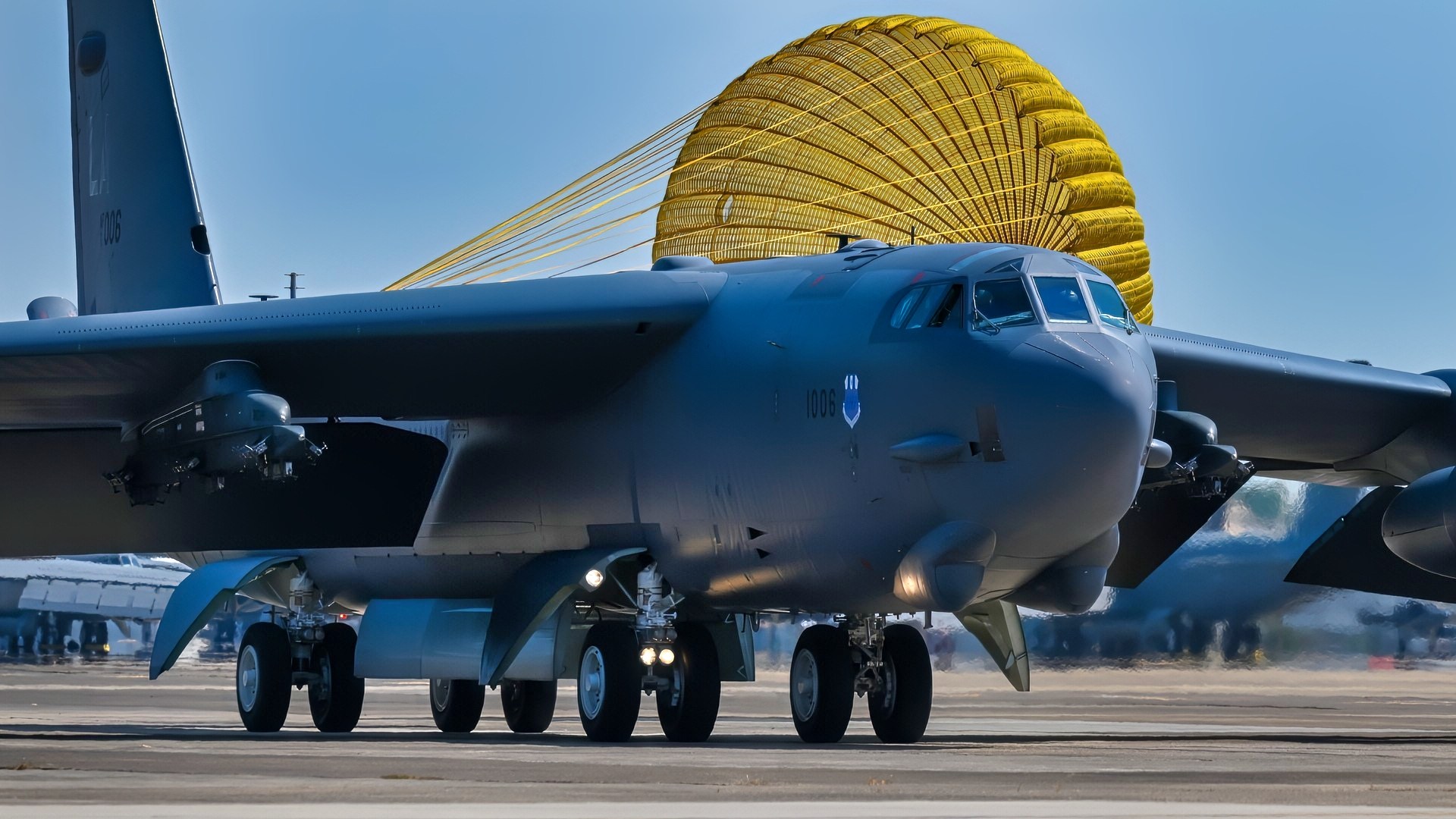
A B-52 Bomber Accident Turned Into a Nuclear Crisis
The theme of lost, missing, or stolen weapons of mass destruction (WMDs)—chemical, biological, radiological, and nuclear weapons—has unsurprisingly been the subject of many fictional thrillers. And when it includes a B-52 bomber, you know it can’t be good, as we will get to in a second.
During the Cold War, you had bestselling novels from authors like the late great Clive Cussler and Tom Clancy (both gone but not forgotten), e.g., “Vixen 03” by the former and “The Sum of All Fears” by the latter.
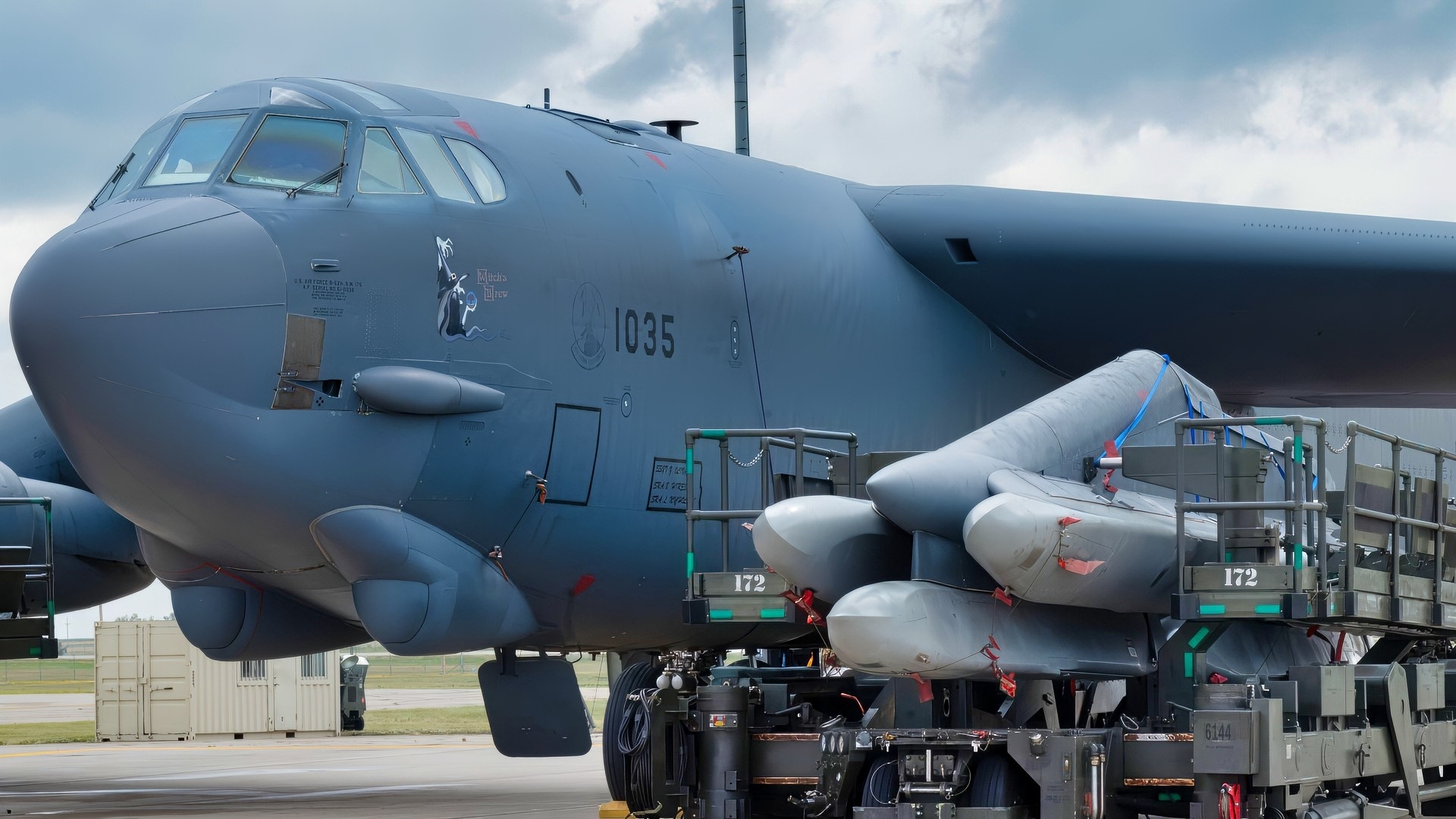
A B-52H Stratofortress sits on the flightline before a munitions load operation at Minot Air Force Base, North Dakota, Sept 5, 2025. The base-wide readiness exercise tested the wing’s ability to generate aircraft, conduct security operations and respond to challenging scenarios. (U.S. Air Force photo by Airman 1st Class Vincent Padilla)
In the post-Cold War era, we’ve had movies like “Broken Arrow“ starring Christian Slater and John Travolta (not to mention one of the earliest mainstream cinematic portrayals of the B-2 Spirit stealth bomber).
Now for the scary part: on more than one occasion, the U.S. military lost its fair share of WMDs on more than one occasion back during the Cold War—and six of these weapons still haven’t been recovered to this day! One such incident occurred way back in 1961 in the skies over North Carolina.
Technical Background
Before we get into the crux of the scary story itself, here’s a quick rundown of the weapons (nuclear and conventional alike) involved:
- MK39 nuclear bomb, Serial Nos. 434909 and 359943: Developed in 1955 and in official service from 1957 to 1966, this parachute-assisted gravity bomb weighed 10,000 pounds and had an explosive yield of 3.8 megatons.
- Boeing B-52G Stratofortress, Tail No. 58-0187: A warbird that needs no introduction to military aviation history buffs, the now septuagenarian “Stratosaurus,” aka the BUFF, is (in its H variant) still kicking butt and taking names on behalf of the United States Air Force, this time in Iran.
The Incident
Just after midnight on January 24, 1961 (a mere four days after John Fitzgerald Kennedy was inaugurated as president), the aforementioned star-crossed “BUFF” specimen embarked from Seymour Johnson Air Force Base, North Carolina, in support of Strategic Air Command’s (SAC) airborne alert mission known as “Cover All.”
It flew under the leadership of aircraft commander Major Walter Scott Tulloch and was in the midst of an aerial refueling linkup with a KC-135 Stratotanker in the skies over the North Carolinian city of Goldsboro. Maj. Tulloch’s bomber was carrying two of the MK39s (not to be confused with the M39 20mm aircraft cannon or the P-39 Airacobra fighter plane of WWII).
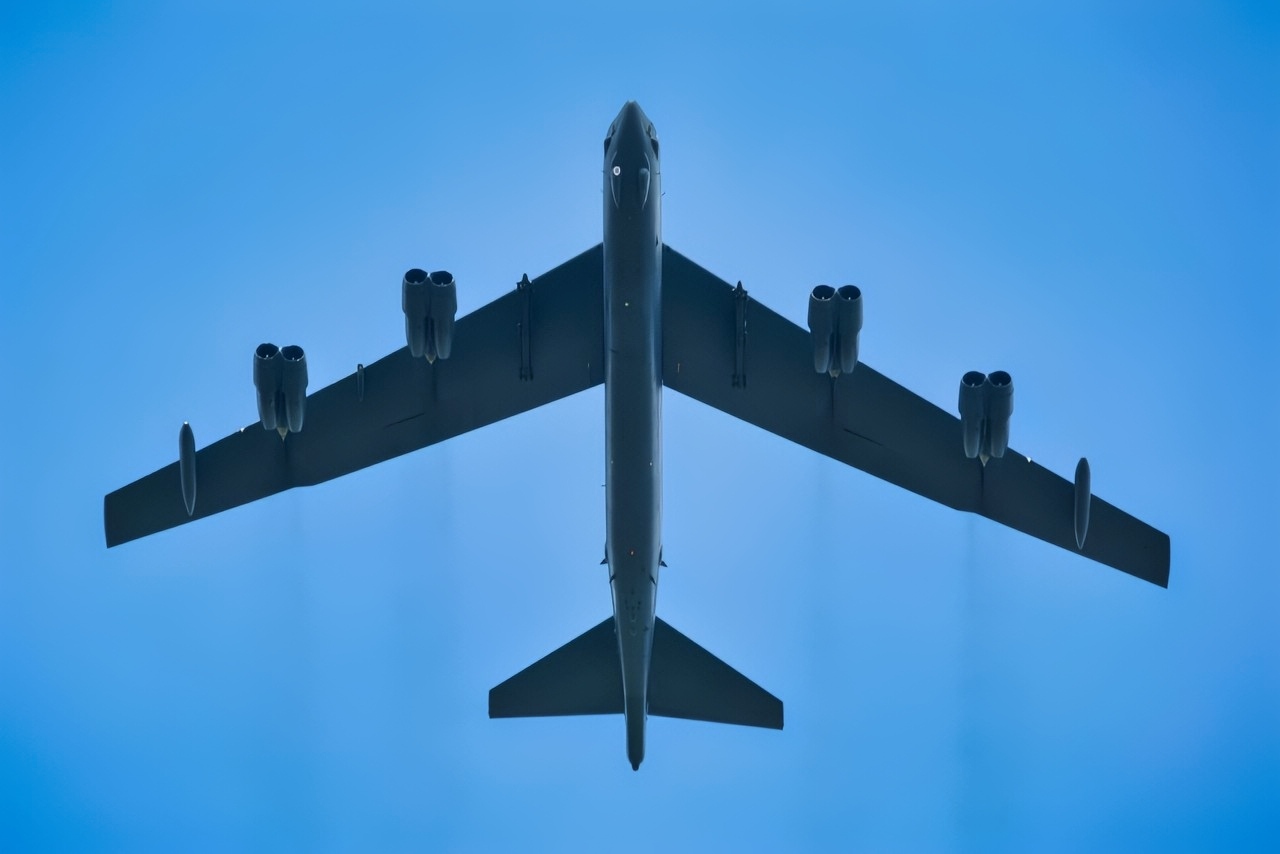
Military service members, veterans, and citizens of Guam gathered for the Memorial Day Commemoration at the Guam Veterans Cemetery. The Ceremony consisted of a fly over from a B-52H Stratofortress, a musical performance from the Guam Territorial Band & Cantate, guest speaking from the honorable Eddie Baza Calvo, a Fallen Soldier Gravesite Tribute, and the playing of Taps. (U.S. Marine Corps photo by Lance Cpl. Jacob Snouffer/Released)
Suddenly, in mid-refuel, the Stratotanker crew informed Maj. Tulloch reported that his plane had a fuel leak in the right wing, so the good major promptly aborted the flight. Seymour Johnson AFB ground control was notified of the problem, and they initially directed the B-52 into a holding pattern.
However, the bomber lost a whopping 37,000 pounds (17,000 kg) of jet fuel in a mere three minutes, so ground control immediately directed the bomber to return to base (“RTB”) for an emergency landing.
Alas, the BUFF began to break apart midair as it was making its descent (somewhere between 10,000 and 2,000 feet of altitude), so Maj. Tulloch ordered his crew to abandon the aircraft.
Five of the men landed safely after ejecting or bailing out through a hatch, with one of them, then-Lt. (later Capt.) Adam Mattocks, making a wee bit of aviation history in his own right as the only person known to have successfully bailed out of the top hatch of a B-52 without an ejection seat.
In Capt. Mattock’s own words, “Things were flying by me as I came down the chute. I was landing exactly where the plane went down and it was all on fire.” The Lord helped him survive, he added.
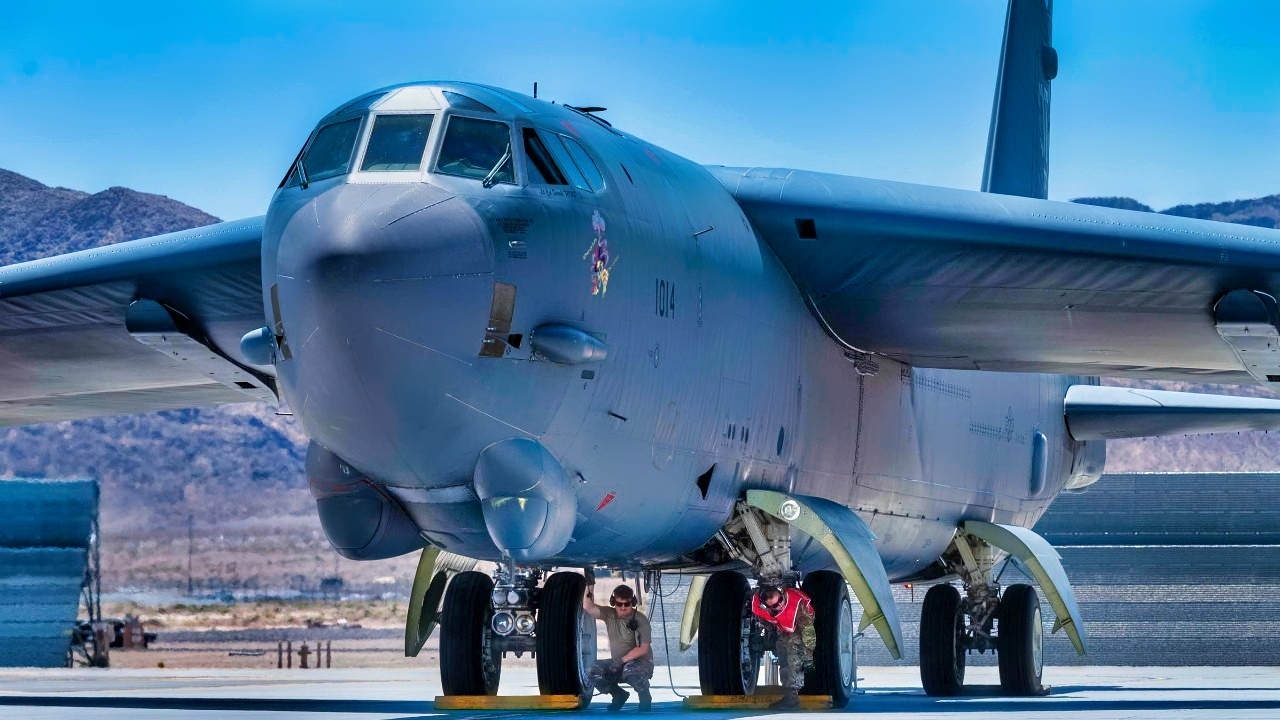
U.S. Air Force Tech. Sgt. Jacob Durham, left, and Staff Sgt. Kenneth Garris, crew chiefs assigned to the 307th Aircraft Maintenance Squadron, Barksdale Air Force Base, Louisiana, prepare to launch a B-52H Stratofortress in support of U.S. Air Force Weapons School Integration (WSINT) at Nellis Air Force Base, Nevada, June 3, 2025. WSINT serves as the culminating exercise for U.S. Air Force Weapons School students, bringing together air, space, and cyber forces in realistic, mission-critical training scenarios that mirror the complexities of modern warfare. (U.S. Air Force photo by William R. Lewis)
Sadly, one of the airmen did not survive his parachute landing, and two others perished in the crash.
As for the bombs themselves, conflicting stories emerge from the chaotic crisis (Carl von Clausewitz’s “fog of war“ is also applicable to peacetime military incidents). However, the prevailing consensus seems to be:
- The first bomb’s parachute was said to have deployed, allowing the weapon to land intact. The safing pins were removed from the generator, which thankfully prevented detonation.
- The second bomb had a far scarier, way too close for comfort situation. The chute failed to deploy, leading to an impact that put the indicator in “armed” mode. Luckily, an additional bomb component that was necessary to complete the detonation sequence was reportedly too damaged to function.
The Aftermath
Needless to say, the U.S. government felt a compelling sense of urgency to find the two lost nukes. Explosive ordnance disposal (EOD) technician teams from Seymour Johnson and other military installations were quick on the draw.
They disarmed the one bomb that was easily accessible—it was found in an upright position, with its parachute hanging on adjacent trees, about one mile (1.6 km) behind where the main wreckage of the aircraft crashed.

A U.S. Air Force B-52H Stratofortress strategic bomber assigned to the 69th Expeditionary Bomb Squadron flies within the U.S. Central Command area of responsibility, Nov. 15, 2024. The B-52H provides strategic options and flexibility to U.S. and coalition senior leaders with the aircraft’s ability to employ a wide range of weapons with precision and deliver a decisive response to adversaries who threaten peace and security across the region. (U.S. Air Force photo)
However, as noted back in 2013 by Seymour Johnson’s then-chief of public affairs, Maj. (now Lt. Col.) Amber Millerchip, “a portion of one weapon, containing uranium, could not be recovered despite excavation in the waterlogged farmland to a depth of 50 feet.” Millerchip hastened to add that there was no detectable radiation or hazards in the area.
In the wake of the accident, Kennedy ordered a reduction of SAC alert activity (though that activity would be reinstated a year-and-a-half later during the Cuban Missile Crisis) and the installation of permissive action links (PALs), which required a secret code to activate a nuclear bomb.
MORE: The U.S. Navy Sold 2 Aircraft Carriers for a Penny Each
About the Author: Christian D. Orr, Defense Expert
Christian D. Orr is a Senior Defense Editor. He is a former Air Force Security Forces officer, Federal law enforcement officer, and private military contractor (with assignments worked in Iraq, the United Arab Emirates, Kosovo, Japan, Germany, and the Pentagon). Chris holds a B.A. in International Relations from the University of Southern California (USC) and an M.A. in Intelligence Studies (concentration in Terrorism Studies) from American Military University (AMU). He is also the author of the newly published book “Five Decades of a Fabulous Firearm: Celebrating the 50th Anniversary of the Beretta 92 Pistol Series.”


