

Key Points and Summary – NATO must stop treating Ukraine’s struggle as someone else’s war and support Kyiv as a de facto future member until it formally joins the alliance.
-Ukrainian accession once seemed inevitable, only to be derailed by Vladimir Putin’s hard turn at the 2007 Munich Security Conference and Europe’s fear of escalation.
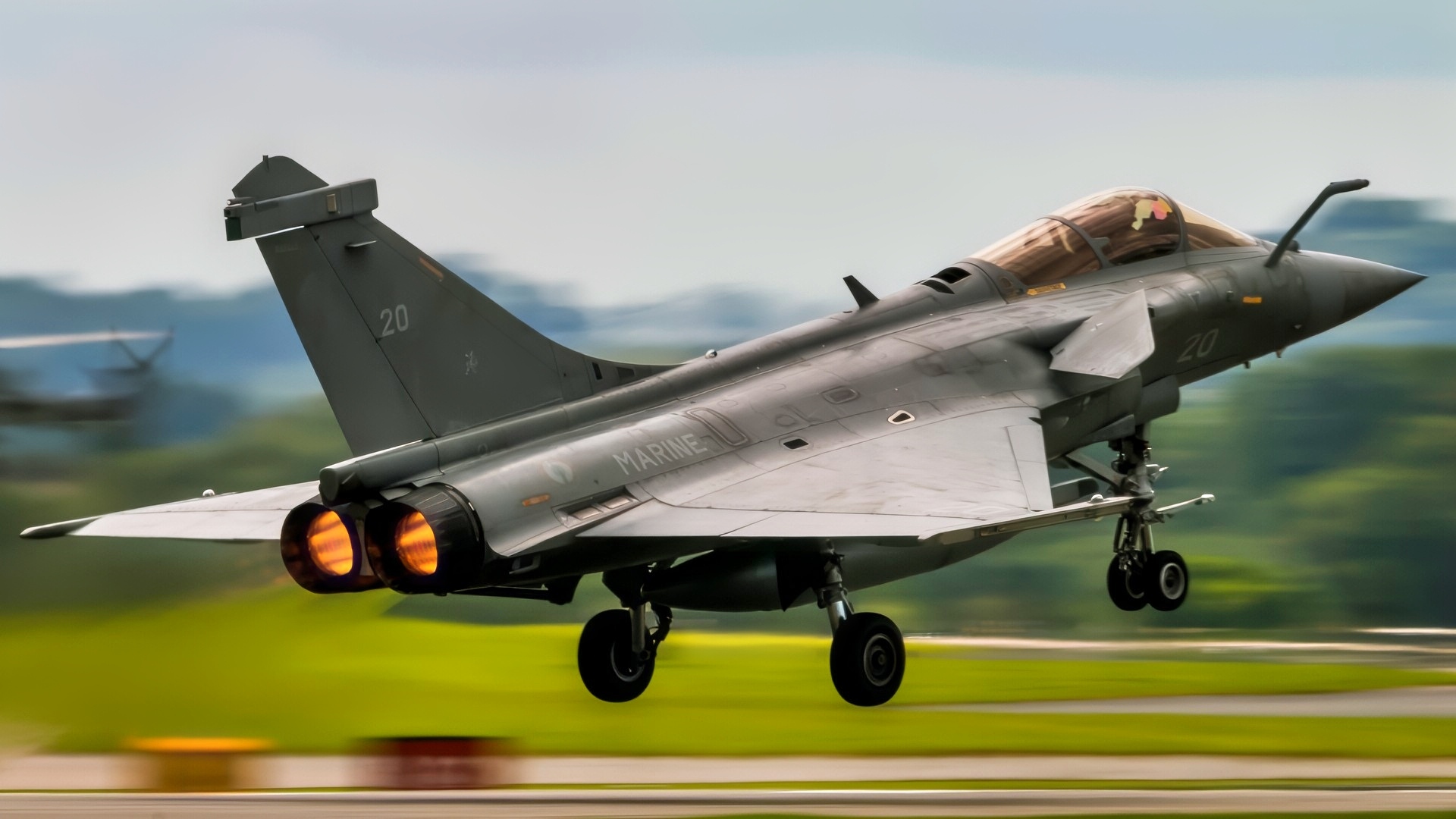
Dassault Rafale. Image Credit: Creative Commons.
-What is needed is sustained weapons flows via NATO mechanisms, solving financing for major air buys, and closing political rifts inside the alliance—and echoes Garry Kasparov’s warning: NATO must return to its core mission of deterring Russian aggression, or face endless war.
Can NATO Support Ukraine Until the Day It Becomes an Alliance Member?
What should the United States and NATO do about Ukraine? This question is a sore subject for those of us who lived in the country, lost everything when the Russians invaded, and had to leave as war refugees.
The reason that question is a sore spot is because back at the end of the 1990s, there was no drama around the idea that Ukraine eventually would join the NATO alliance. Those of us who remember this time are fairly dismayed that so many who cheered on the idea back then are now cowering in the shadows.
In April 1999 the NATO Liaison Office (NLO) was opened in Kyiv—Ukraine was the first former Soviet republic to have an NLO. There were no denunciations from Russia, no warnings that Ukraine should never be permitted to join the alliance.
By the early 2000s, cooperation between Ukraine and NATO was such that Ukraine joining NATO was regarded as not so much a question of “if” as of “when.”
It was not until Russian President Vladimir Putin’s infamous speech at the February 2007 Munich Security Conference—when he abruptly flipped from being neutral on the issue into a full-fledged opponent of the idea—that European panic and “fear of escalation” began to set in.
The former KGB official used the prestigious Munich event to condemn NATO’s eastern enlargement as a “serious provocation that reduces the level of mutual trust” and a threat to Russia’s security architecture. In a 30-minute address that was closer to being a harangue, he accused the United States of creating a unipolar world “in which there is one master, one sovereign.
“At the end of the day this is pernicious,” Putin added as he denounced the intentions and goals of the alliance.
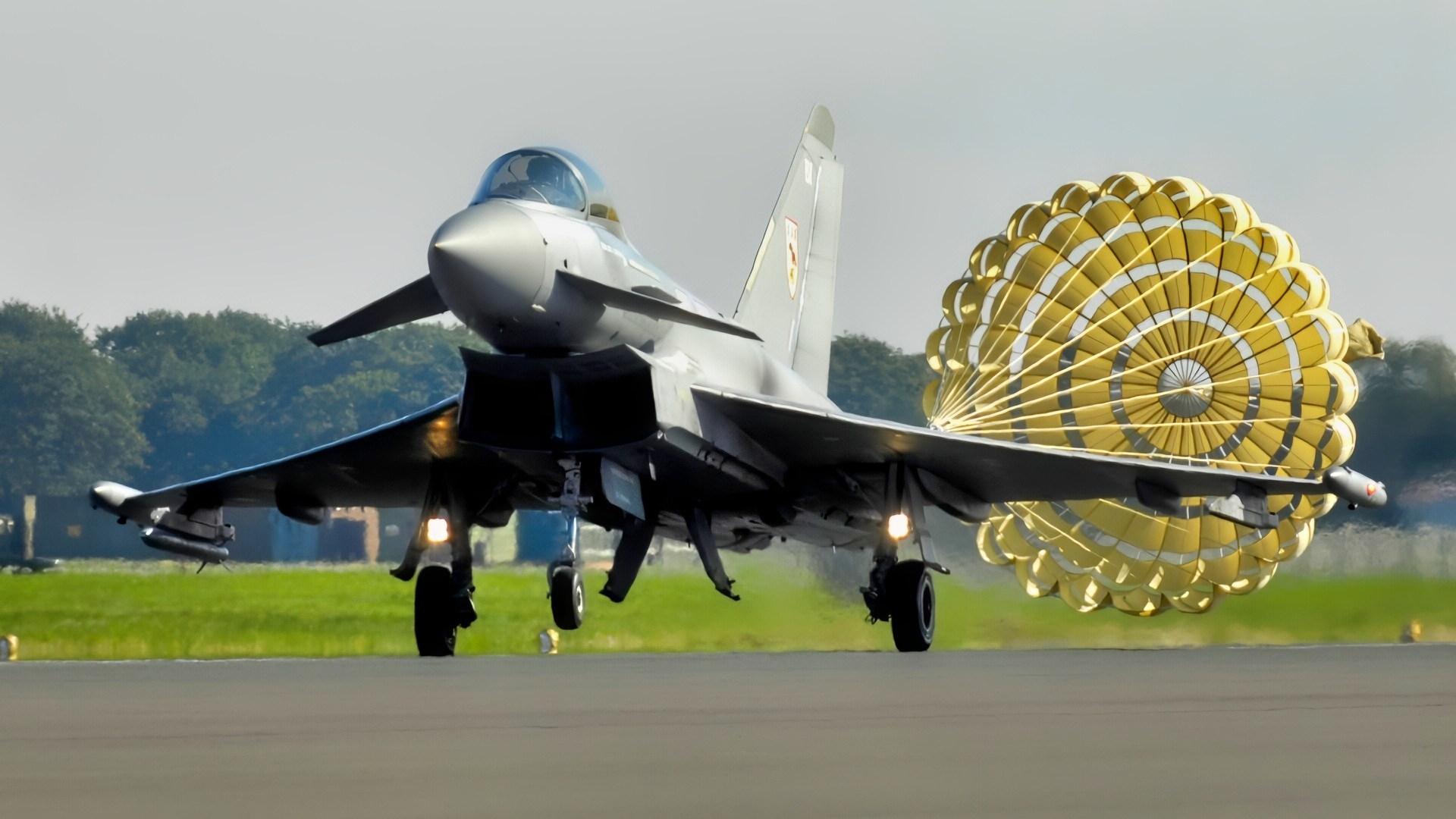
Eurofighter Typhoon with Parachute. Image Credit: Creative Commons.
NATO and Ukraine: A Complicated Dance
The question of Ukraine’s NATO membership, and what the alliance could do to support that outcome, faces one initial obstacle: NATO collectively has to accept the reality that including Ukraine in the alliance means taking a position in full opposition to the desires of Putin and his circle of former KGB operatives.
NATO and Russia working together as partners—once the ideal—is no longer even remotely possible.
As Daniel Fried and Kurt Volker wrote for Politico after Putin’s 2007 Munich address, Putin “has rejected the post-Cold War European security architecture and means it. He is on a deliberate and dedicated path to build a greater Russia, an empire where the Soviet Union once stood.”
What Ukraine needs from the alliance, then, is foursquare, unambiguous and united diplomatic support for its entry into NATO.
That means somehow overturning the recalcitrance of Hungary and Slovakia. Russian leaders live to find fault lines between different NATO members, or between the U.S. and the other states in the alliance, and then look for means of exploiting them. Russian distractions have to be shut down before it even starts.
But now that “the Europeans accept that they’re on their own when it comes to Ukraine, it raises an equally profound question: Is the European Union even capable of becoming a geopolitical player that can hold its own against Russia, China, and its nominal US ally,” writes Bloomberg’s Marc Champion. “The honest answer is ‘No,’” he asserts, continuing:
“The European project was designed to ensure its members would never again go to war against each other, as they’d just done in two cataclysmic conflicts and for centuries before that. It’s a job the EU has done so well it won the 2012 Nobel Peace Prize.
“But when it comes to defending against external threats, the road to today’s EU is littered with the corpses of failed common security projects, going right back to the 1954 Western European Union, if not before. That job was quickly outsourced to the North Atlantic Treaty Organization—meaning the U.S.—and there it has remained,” he concludes.
Concrete Measures
The way to square the circle is to keep supplying weaponry to Ukraine even though presidential drawdown authority has come to an end.
The most viable mechanism now is the Prioritized Ukraine Requirements List, under which European countries buy weaponry from the U.S. and then donate it to Ukraine under this NATO-administered program. Maintaining that effort is a near-term requirement for Ukraine to keep fighting off Russia until the day comes that it joins the alliance.
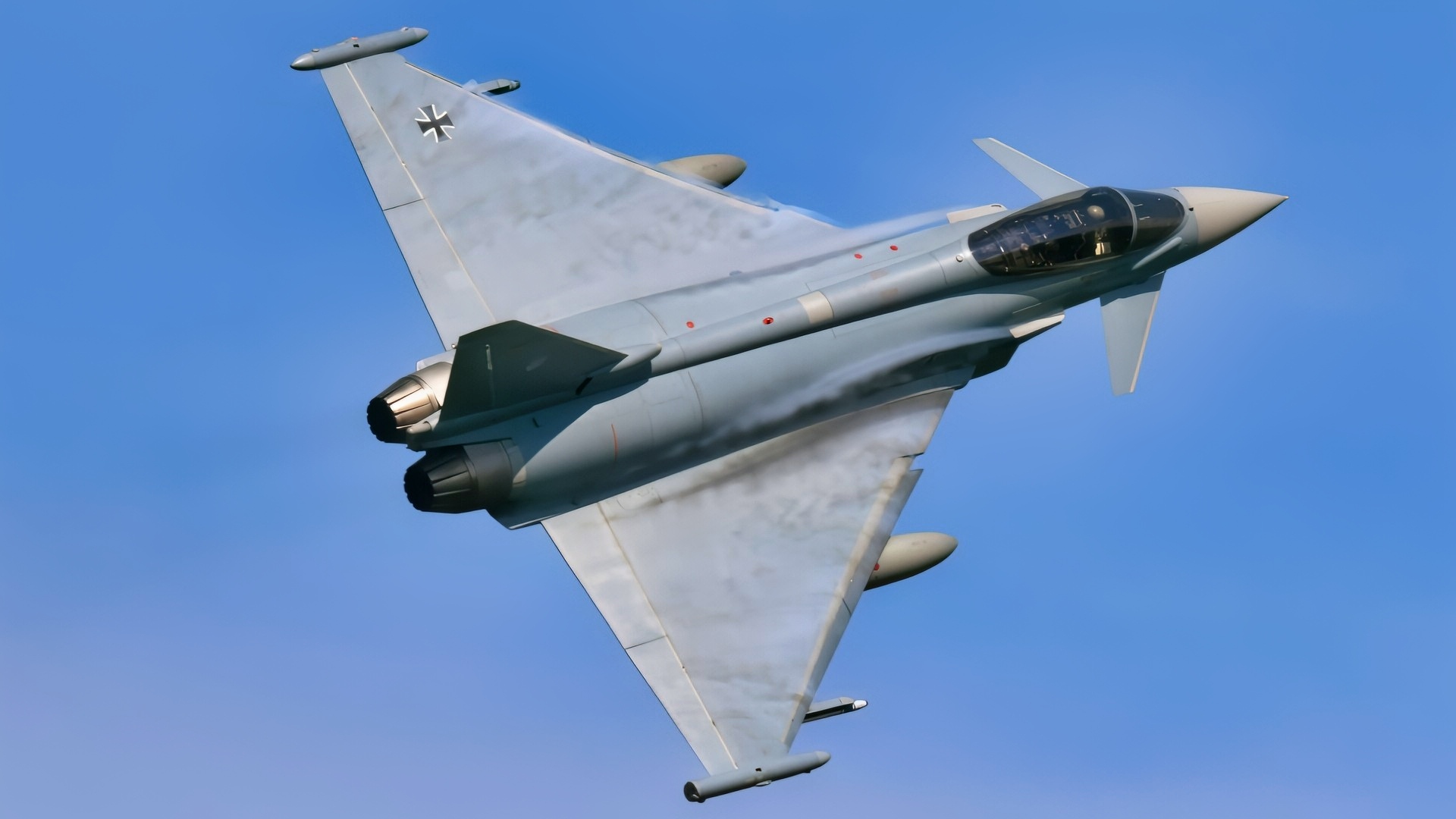
A German Air Force pilot, assigned to the German Air Force Weapons School, conducts strafing runs with an Eurofighter Typhoon in conjunction with U.S. Air Force Joint Terminal Attack Controller assigned to 2d Air Support Operations Squadron identifying targets on the ground at the 7th Army Training Command’s Grafenwoehr Training Area, Germany, June 9, 2021. (U.S. Army photo by Gertrud Zach)
In the meantime, other major acquisitions that have been agreed to, such as Ukraine purchasing up to 150 Swedish-made Saab JAS 39 fighter aircraft and as many 100 Dassault Rafale fighters from France. These are significant moves in the right direction.
However, almost every national security expert or defense analyst I have spoken with since has said the obvious: It still remains to be seen where the financing for these very large procurements will come from.
But by far the most significant action that NATO needs to take was blasted out with both barrels last week by longtime anti-Putin activist, former Russian chess master, and political commentator Gary Kasparov.

An M1A2 Abrams tanks, assigned to 1st Battalion, 16th Infantry Regiment, 1st Armored Brigade Combat Team, 1st Infantry Division, maneuver into fighting position during a battalion live-fire range during Agile Spirit 19 at Orpholo Training Area, Georgia, August 9, 2019. AgS19 is a joint, multinational exercise co-led by the Georgian Defense Forces and U.S. Army Europe which incorporates a command post exercise, field training and joint multinational live fires. (U.S. Army photo by Staff Sgt. True Thao)
Speaking at the Nov. 27 Halifax Security Forum in Washington, D.C., the exiled Kasparov told those present in no uncertain terms that, “NATO was built to fight only one war. Not Afghanistan, not Syria, one war: to save free Europe from Russian aggression. Ukraine is the only country that is fighting this war, and [yet] we’re still discussing should [we] include them [in NATO] or not.”
Kasparov said NATO is not strong and effectively “doesn’t exist.” He added that it’s not about “how many weapons you have.” He stated, “I’m willing to fight and die,” which he says many of NATO member-states are simply unwilling to declare themselves prepared to do.
“If it were not for NATO,” he said, “Russian tanks would already be in Poland.” Lampooning NATO’s infamous inability to make decisions at speed, he continued, saying, “Oh, it’s nice that you have a Canadian-led brigade in Latvia. Will they shoot if the Russians cross the border? We know the answer. It will take ages to negotiate.”
Kasparov thus pointed out the most critical move NATO must make to support Ukraine: Returning to the mission it was created for in the first place, and recognizing that Ukraine’s war is also NATO’s war.
This is the only way the situation ends positively for Ukraine—and for the rest of Europe as well.
Anything else guarantees only endless war and misery.
About the Author: Reuben F. Johnson
Reuben F. Johnson has thirty-six years of experience analyzing and reporting on foreign weapons systems, defense technologies, and international arms export policy. Johnson is the Director of Research at the Casimir Pulaski Foundation. He is also a survivor of the Russian invasion of Ukraine in February 2022. He worked for years in the American defense industry as a foreign technology analyst and later as a consultant for the U.S. Department of Defense, the Departments of the Navy and Air Force, and the governments of the United Kingdom and Australia. In 2022-2023, he won two awards in a row for his defense reporting. He holds a bachelor’s degree from DePauw University and a master’s degree from Miami University in Ohio, specializing in Soviet and Russian studies. He lives in Warsaw.


Jim
December 4, 2025 at 10:37 am
Yes, it’s true Ukraine is fighting NATO’s war.
Ukraine is a proxy army for NATO enlargement. Although, it didn’t acquire an air contingent equal to NATO’s, but on the ground it was functionally a NATO trained and supplied army, more so, as the war progressed and inherited Soviet armaments were destroyed and replaced by a flood of various NATO weapons systems (with accompanying NATO intelligence, support technicians, and military advice).
What’s better for the European Continent, a forever war which attempts to drag Ukraine into NATO as the author wants or a recognition NATO enlargement via Ukraine has failed and shoveling more money & weapons into a losing war is a waste of resources which the West simply can’t afford to do any longer?
The West has limitations on what it can do short of an existential struggle.
Do war supporters believe Ukraine’s fate is existential to Europe’s future, so worth all the risks & hazards (death & destruction) involved in another forever war with lingering potential for nuclear war and no end in sight?
How many times is Lucy going to pull the football on Charlie Brown and the American People?
George
December 5, 2025 at 8:54 am
I guess that means Reuben is going down to sign up right away to go and defeat those pesky Russians, right? Warmongers are all talk as long as YOUR children are doing the dying.
David Cain
December 5, 2025 at 11:21 am
Die Welt from Hamburg reports that NATO considers war with Russia as inevitable and is weighing preemptive strikes against the Federation. Europe is threatening to appropriate all $405 billion of frozen Russian assets while it sends jet fighters to Poland. German industry is in decline but the government touts a new “Sturmgewehr” that can fire 185 rounds/minute. Europe’e age-old fear of invasion from the east is now reaching a paranoid stage and Americans are not aware of the risk.
Francis Sempe is correct. The US needs to get out of Europe fast before the American people are dragged into a catastrophic war. This is an urgent priority more important than fretting over small boats off of Venezuela Just once, could we think this through before we stumble into the quicksand?