


A B-52 Stratofortress Bomber Did the Unthinkable: Lost A Load of Nuclear Weapons
Unsurprisingly, the premise of lost, missing, or stolen weapons of mass destruction—be they chemical, biological, radiological, or nuclear—has been the plot line of many a fictional thriller story.
During the Cold War, bestselling novels by authors such as Clive Cussler and Tom Clancy included Vixen 03 by the former and The Sum of All Fears by the latter.
In the post-Cold War era, we have had motion pictures such as Broken Arrow, starring John Travolta and Christian Slater, which also provided one of the first mainstream cinematic portrayals of the B-2 Spirit stealth bomber.
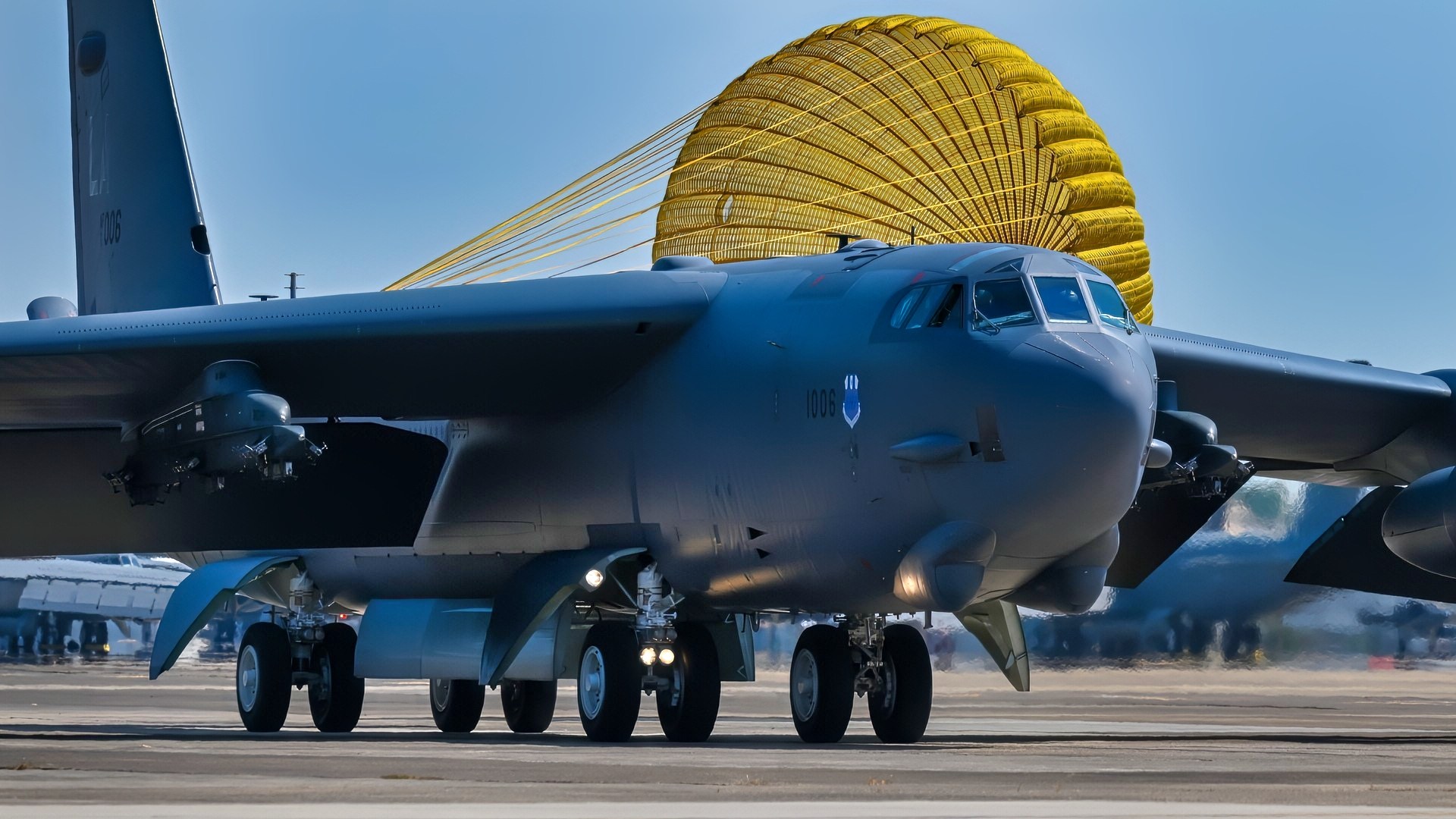
A B-52 Stratofortress from the 2nd Bomb Wing returns home to Barksdale Air Force Base following a Bomber Task Force mission at Andersen Air Force Base, Guam, Aug. 20, 2023. BTF missions demonstrate the credibility of the United States forces to address a global security environment that is more diverse and uncertain than at any other time in history. (U.S. Air Force photo by Airman 1st Class Seth Watson)
But truth is scarier than fiction.
More than once, the U.S. military has lost nukes. Indeed, six of these weapons are still missing, and a couple of them are discussed in separate articles.
This time, we shall discuss an incident in which missing bombs were fortunately recovered, but not before sparking a major diplomatic crisis with a NATO ally. That NATO ally was Spain, during the Palomares incident of 1966.
Technical Background
Here is a quick rundown of the weapons and flying machines involved in the incident:
—B28FI Mod 2 Y1 (AKA Mark 28) hydrogen bomb: First produced in 1958 and in official service until the early 1990s, this free-fall gravity bomb had a blast yield of up to 1,450 kilotons of TNT; an explosive power 100 times that of the A-bomb dropped on Hiroshima.
—Boeing B-52G Stratofortress, Tail No. 58-0256: A legendary strategic bomber that needs no introduction to military aviation history buffs, the now septuagenarian “Stratosaurus” in its H variant is still kicking butt and taking names on behalf of the U.S. Air Force, this time in Iran.
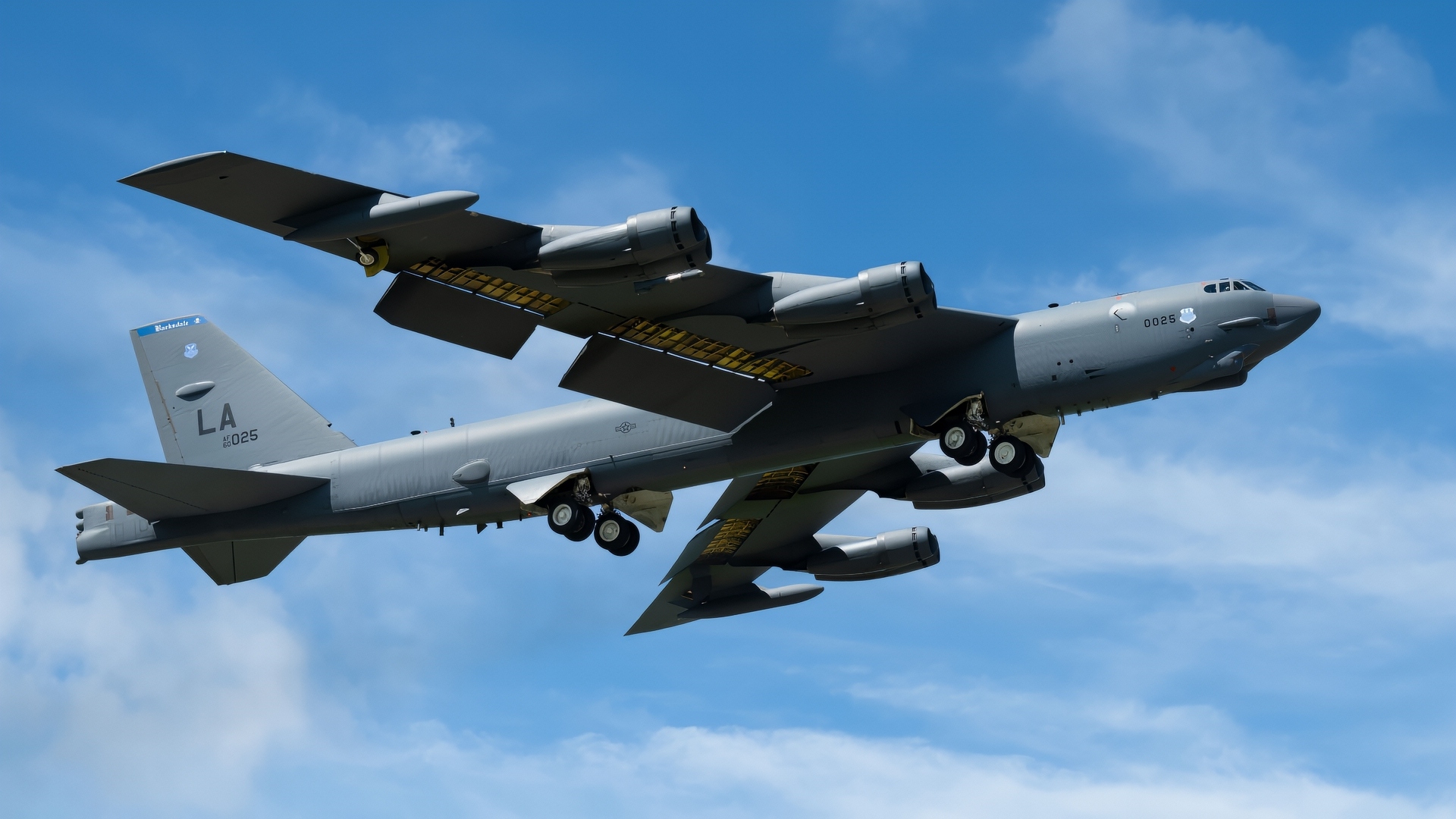
B-52 Bomber Flying High in Sky. Image Credit: Creative Commons.
—Boeing KC-135 Stratotanker, Tail No. 61-0273: the Air Force’s first jet-powered refueling tanker has been in service since 1957. It will continue serving until the KC-46 Pegasus completely supplants it.
In what could be seen as foreshadowing, Stratofortress and Stratotanker were also the two aircraft types involved in the Goldboro incident of January 1961.
The Incident
The fateful day was January 17, 1966—one week shy of the fifth anniversary of the Goldboro mishap. The ill-fated Stratofortress in question (callsign “Tea 16”), which had embarked out of Seymour Johnson Air Force Base, North Carolina, was carrying four Mk-28 bombs as part of the airborne alert mission Operation Chrome Dome. At 10:20 a.m. and at an altitude of 31,000 feet, the bomber, flown by Major Larry G. Messinger, linked up with the tanker, which had embarked from Spain’s Morón Air Base and was piloted by Major Emil J. Chapla.
Unfortunately, Major Messinger’s plane came in a little too fast. The Stratotanker’s refueling boom struck the Stratofortress’s longeron, and the left wing of the bomber snapped off.
In Messinger’s own words, “We came in behind the tanker, and we were a little bit fast, and we started to overrun him a little bit. There is a procedure they have in refueling where if the boom operator feels that you’re getting too close and it’s a dangerous situation, he will call, ‘Break away, break away, break away. ’… There was no call for a breakaway, so we didn’t see anything dangerous about the situation. But all of a sudden, all hell seemed to break loose.”
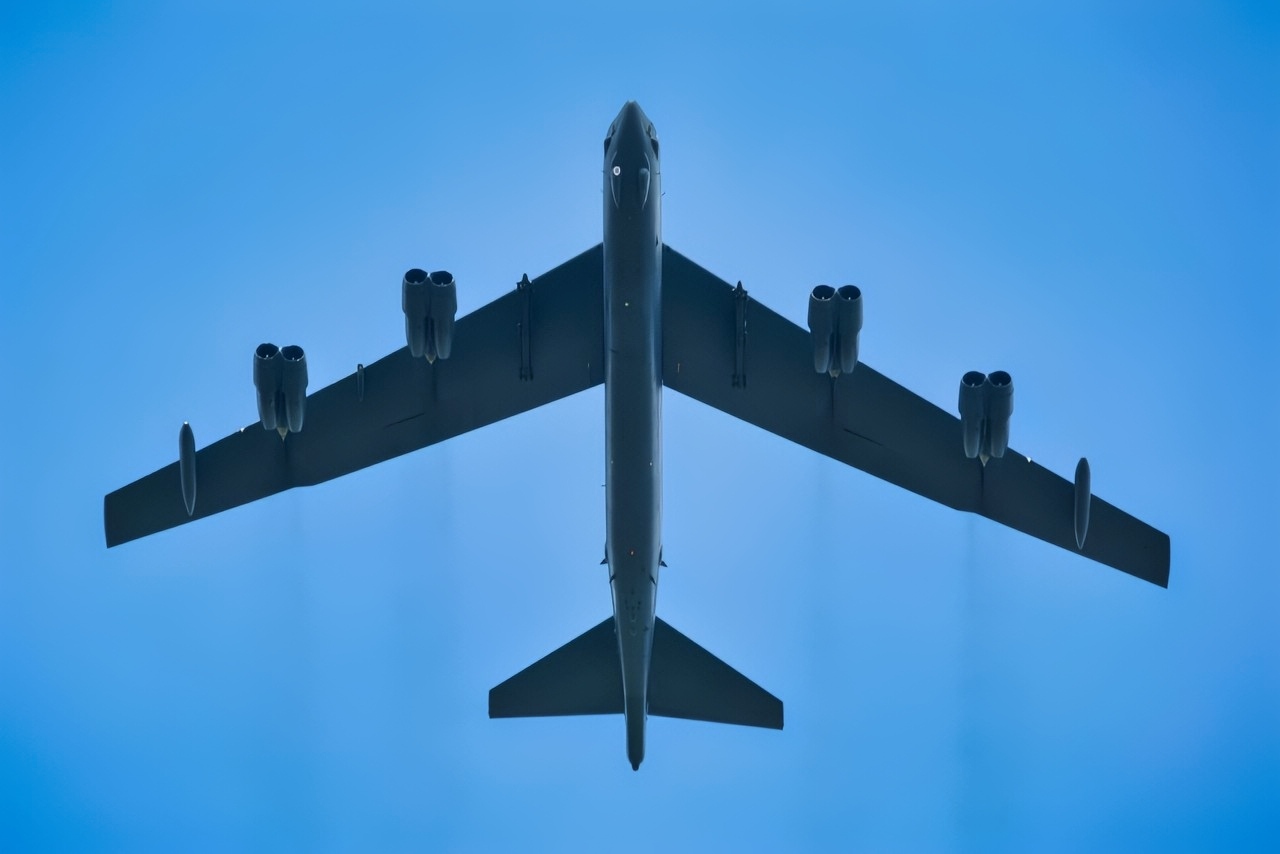
Military service members, veterans, and citizens of Guam gathered for the Memorial Day Commemoration at the Guam Veterans Cemetery. The Ceremony consisted of a fly over from a B-52H Stratofortress, a musical performance from the Guam Territorial Band & Cantate, guest speaking from the honorable Eddie Baza Calvo, a Fallen Soldier Gravesite Tribute, and the playing of Taps. (U.S. Marine Corps photo by Lance Cpl. Jacob Snouffer/Released)
All four crewmen on the KC-135 perished; besides the aforementioned Major Chapla, the star-crossed roster consisted of: copilot Captain Paul R. Lane, navigator Captain Leo E. Simmons, and boom operator Master Sergeant Lloyd Potolicchio. Three of Major Messinger’s B-52 crewmates also lost their lives: Navigator First Lieutenant Steven G. Montanus, electronic warfare officer George J. Glessner, and gunner Technical Sergeant Ronald P. Snyder.
The Aftermath
That degree of human tragedy was bad enough, but what about that quartet of nuclear bombs?
Well, three of them fell with the B-52 wreckage near the village of Palomares, on Spain’s Mediterranean coast, and were found by Air Force recovery teams fairly quickly. The first one was located near the beach, the second one dug deep into a tomato field, and the third landed near a cemetery.
The dirt dampened the plutonium, which escaped from the damaged devices and contaminated an area of roughly 0.77 square miles, thus requiring the recovery teams to haul away 1,400 tons of radioactive dirt.
That fourth bomb was the most vexing problem, however; it was missing. As it turns out, it had splashed down in the sea. Thirty-three U.S. Navy vessels were dispatched to search for the lost H-bomb. After almost two months of fruitless frustration, they hit paydirt thanks to an eyewitness account from a Spanish fisherman, who led the investigators to a one-mile area. On the Ides of March, a submarine spotted the bomb, and on April 7, the nuke was finally recovered—damaged, but thankfully intact.
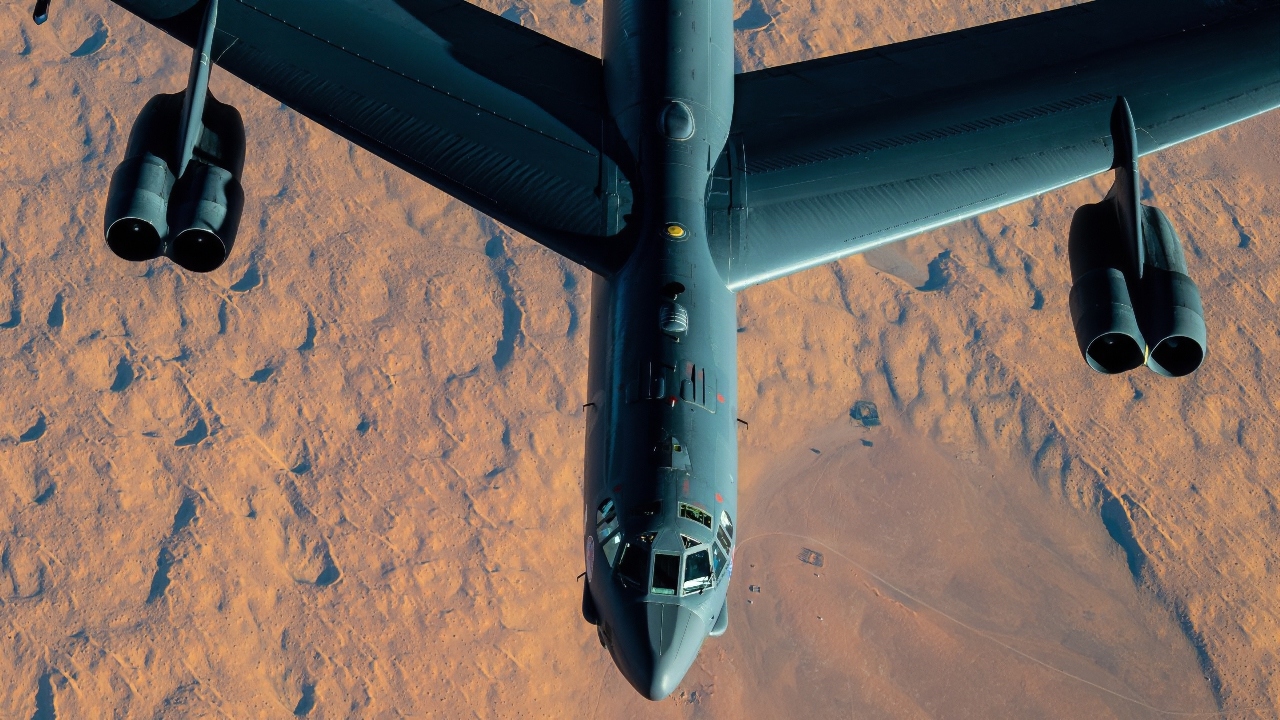
A U.S. Air Force B-52 Stratofortress, assigned to the 2nd Bomb Wing, receives fuel from a KC-135 Stratotanker, assigned to the 340th Expeditionary Air Refueling Squadron, during a multi-day Bomber Task Force mission over Southwest Asia, Dec. 10, 2020. The B-52 is a long range bomber with a range of approximately 8,800 miles, enabling rapid support of Bomber Task Force missions or deployments and reinforcing global security and stability.(U.S Air Force photo by Master Sgt. Joey Swafford)
The incident was arguably one of the three low points in Spain-U.S. relations, along with the Spanish-American War of 1898 and the current political disagreements between Washington and Madrid over NATO defense spending contributions and Spain’s refusal to support the Iran war effort.
The U.S. government eventually settled some 500 claims by residents whose health was adversely affected, and Spain’s government banned U.S. flights carrying nuclear weapons in its airspace.
Today, the town of Palomares has a street named “17 January 1966 [El Diecisite de Enero 1966]” to serve as a reminder of the tragic event. The event has also been covered in multiple motion pictures and TV programs, including the underrated 2000 film Men of Honor, starring Cuba Gooding Jr. as the Navy’s first black American master diver, Master Chief Petty Officer Carl Brashear.
About the Author: Christian D. Orr
Christian D. Orr is a Senior Defense Editor. He is a former Air Force Security Forces officer, Federal law enforcement officer, and private military contractor (with assignments worked in Iraq, the United Arab Emirates, Kosovo, Japan, Germany, and the Pentagon). Chris holds a B.A. in International Relations from the University of Southern California (USC) and an M.A. in Intelligence Studies (with a concentration in Terrorism Studies) from American Military University (AMU). He is also the author of the newly published book “Five Decades of a Fabulous Firearm: Celebrating the 50th Anniversary of the Beretta 92 Pistol Series.”


