

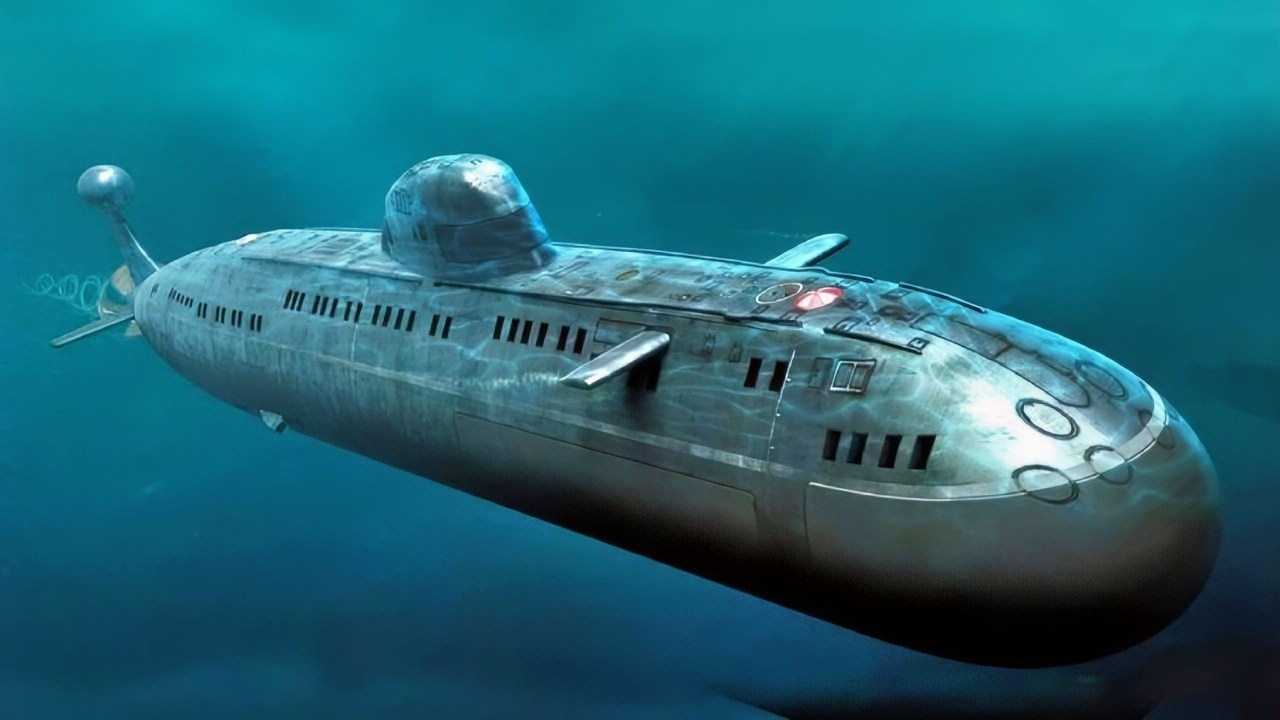
Summary and Key Points: Even after the Soviet Union collapsed, U.S. and Russian submarines continued to play cat-and-mouse in the Arctic, tracking boomers and attack boats to maintain deterrence and undersea awareness.
-In 1992, that shadow war surfaced when the Los Angeles-class USS Baton Rouge collided with the Russian Sierra-class B-276 Kostroma near Severomorsk in the Barents Sea.

Sierra II-Class Submarine. Image Credit: Creative Commons.

Sierra-Class-Submarine. Image Credit: Creative Commons.
-No one was killed, but the incident triggered a diplomatic storm, with Moscow furious the Americans were operating so close to a sensitive naval base.
-The episode fed suspicions of ongoing U.S. intelligence missions and became a cautionary tale about how quickly “peace” can turn risky underwater.
A Titanium-Hulled Russian Submarine Hit a U.S. Sub in 1992. Here’s Why It Mattered.
You may have thought that right after the Soviet Union disintegrated in 1991, there would be no chance of combat between the new Russian Federation and the United States.
Somehow, the navies from both countries didn’t get the message that peace was at hand.
You see, the Americans wanted to keep track of Russian submarines. They could launch nuclear missiles, after all, and the political leadership in the former Soviet Union was tenuous at best.
Submarines Were Still Tracking Each Other
The U.S. Navy was taking nothing for granted and was still sending its submarines on patrol to sniff out the locations of Russian “boomer” subs that were nuclear-equipped and its attack subs that could launch cruise missiles.
Both sides had no intention of sparking a shooting war, but neither wanted to lose their fighting edge underwater.
Then, There Was the Collision
In 1992, the USS Baton Rouge, a Los Angeles-class submarine, crashed into the Russian Navy’s Sierra-class submarine B-276 Kostroma near the Russian naval base at Severomorsk in the Barents Sea.
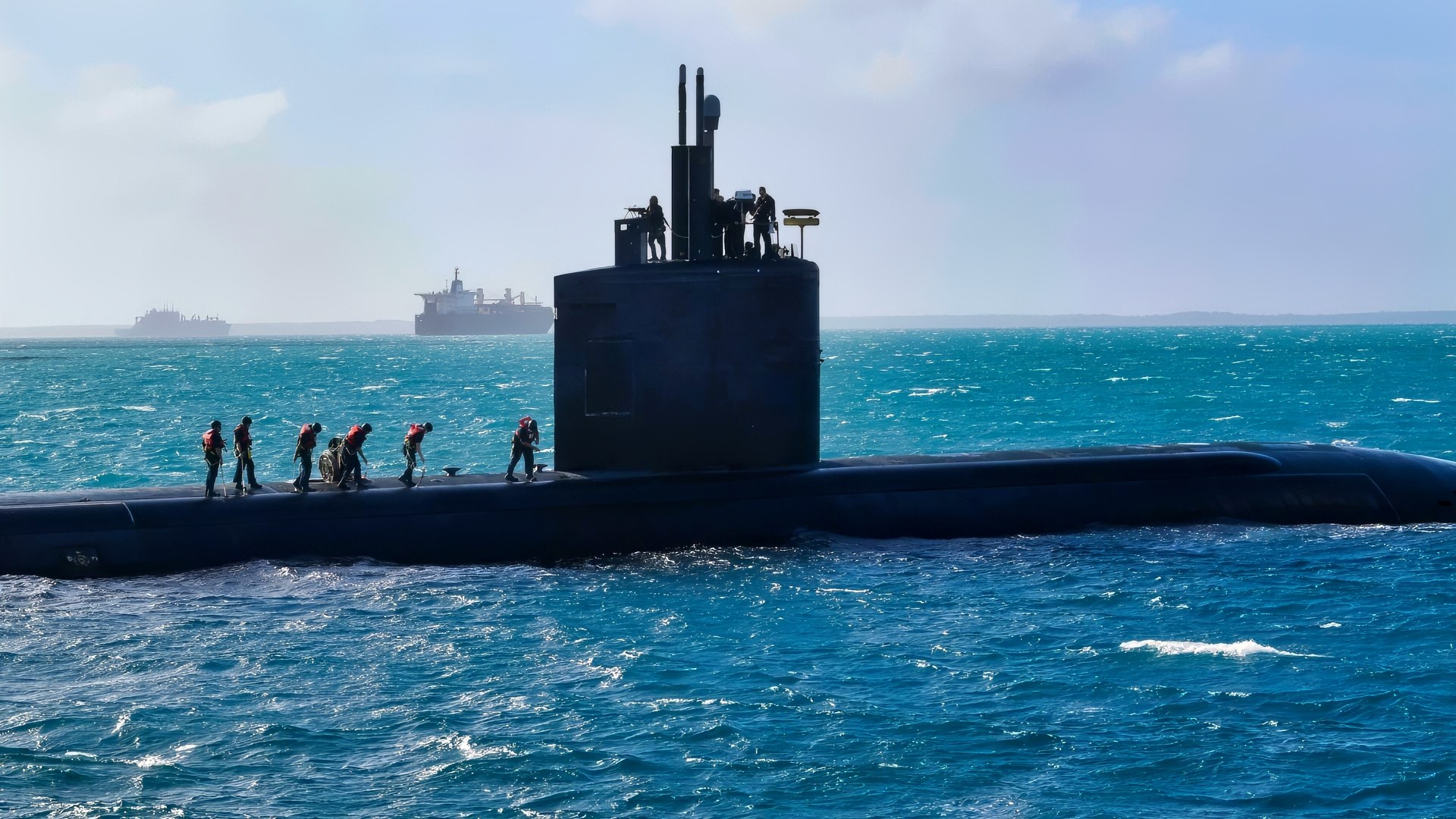
DIEGO GARCIA, British Indian Ocean Territory (Aug. 21, 2020) – USS Greeneville (SSN 772) enters Diego Garcia’s harbor Aug. 21, 2020. Sailors assigned to U.S. Navy Support Facility (NSF) Diego Garcia provided mail delivery and trash disposal for Greeneville. NSF Diego Garcia provides logistic, service, recreational and administrative support to U.S. and Allied Forces forward deployed to the Indian Ocean and Arabian Gulf. U.S. Navy Photos by Mass Communication Specialist Seaman Michael T. Porterfield. (Released)

(Mar. 21, 2025) – The Los Angeles-class fast-attack submarine, USS Santa Fe (SSN 763), transits the Pacific Ocean, March 21, 2025. Santa Fe is one of four Los Angeles-class fast-attack submarines assigned to Commander, Submarine Squadron 11. Santa Fe is part of Commander Submarine Squadron 11, home to four Los Angeles-class fast-attack submarines, which are capable of supporting various missions, including anti-submarine warfare, anti-ship warfare, strike warfare and intelligence, surveillance and reconnaissance. (U.S. Navy photo by Mass Communication Specialist 1st Class Keenan Daniels)
This Russian submarine was unique, as it had a rare Titanium hull.
Moscow was shocked after the initial news of the mishap. What was Baton Rouge doing so close to a key Russian military installation?
This caused major headaches for both sides even though damages were minimized, and no one was hurt or killed.
This Raised Some Uncomfortable Questions for the U.S. Navy
Still, diplomatic tensions were at a boiling point.
It showed the Russians that the Americans were still playing for keeps even though the Cold War ended.
Besides, wasn’t the United States supposed to be focused on the Middle East after Operation Desert Storm? Why were the Yanks still bothering Russia?
The Department of Defense admitted the collision happened, but this did nothing to alleviate the incensed Russians.
President George HW Bush sent Secretary of State James Baker to the Kremlin for a mea culpa to Russian President Boris Yeltsin.
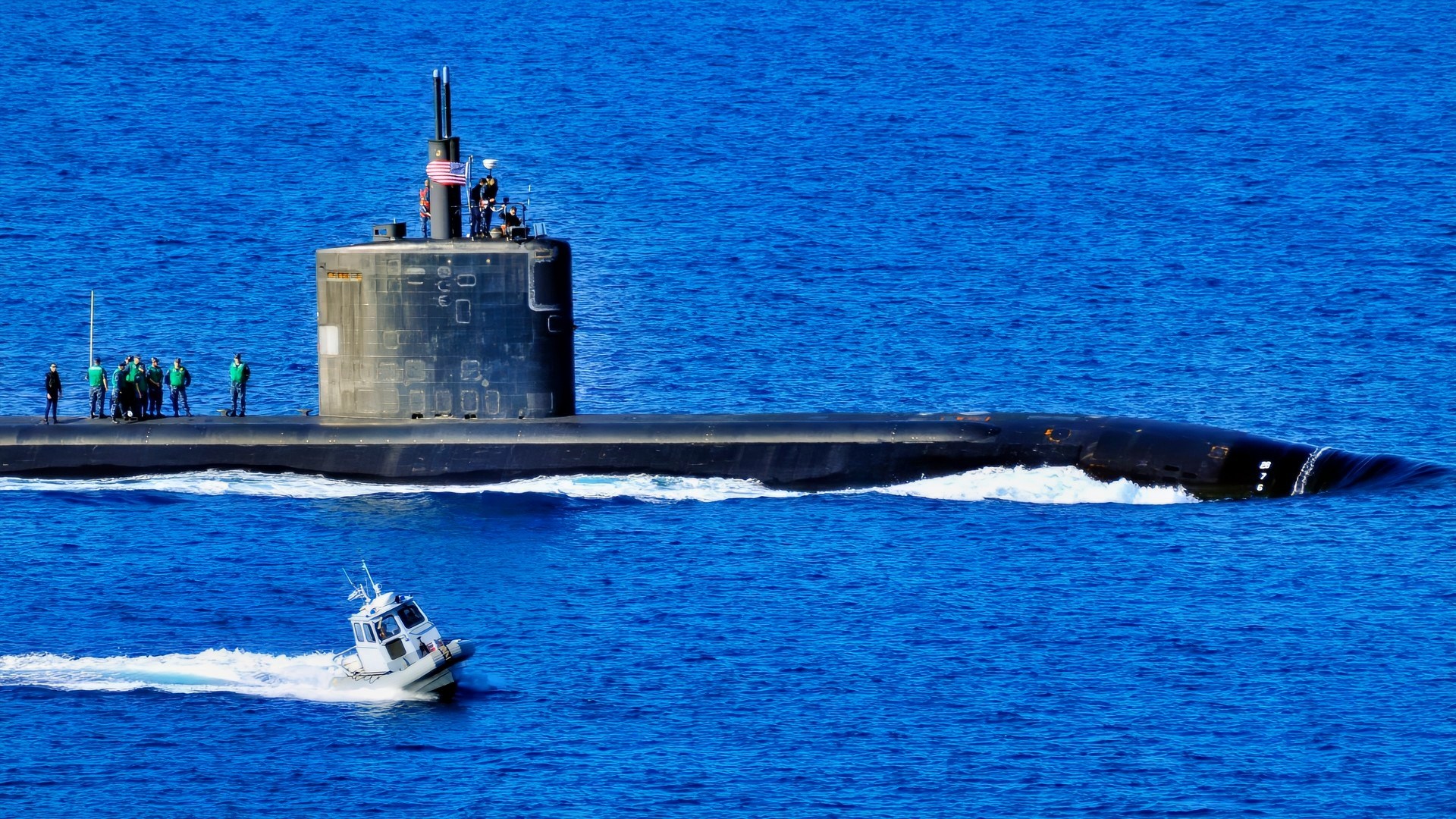
A harbor security boat escorts the attack submarine USS Annapolis (SSN 760) as the ship departs Souda Bay, Crete, following a port visit on March 20, 2010. DoD photo by Paul Farley, U.S. Navy. (Released)

241204-N-VW723-2064 PACIFIC OCEAN (Dec. 4, 2024) The Los Angeles-class fast-attack submarine USS Greeneville (SSN 772) transits the Pacific Ocean while supporting a distinguished visitor embark, Dec. 4, 2024. Greeneville is one of four Los Angeles-class fast-attack submarines assigned to Commander, Submarine Squadron 11. These submarines are capable of supporting various missions, including: anti-submarine warfare; anti-ship warfare; strike warfare; and intelligence, surveillance, and reconnaissance. (U.S. Navy photo by Mass Communication Specialist 1st Class Keenan Daniels)
Baker, the silver-tongued Texan, was going to have his work cut out for him when dealing with the mercurial and often hung-over Yeltsin, who never met a glass of vodka he didn’t like.
Baker Was as Wily As Ever
Baker knew that the United States was also surreptitiously tapping into undersea communication cables during Operation Holy Stone to collect intelligence on the Russians. The smooth diplomat wanted to keep that one secret.
Yeltsin was probably suspicious that the Americans were still spying on Russia somehow, and this added to his dismay.
The U.S. media reported that Baton Rouge was listening to communications between Russian bases. That was probably spot on. The Russians believed that the Americans were being chased by their own ever-alert submarine.

(June 11, 2025) – The Los Angeles-class fast-attack submarine USS Annapolis (SSN 760) transits Apra Harbor, Naval Base Guam, June 11, 2025. Assigned to Commander, Submarine Squadron 15, based at Polaris Point, Naval Base Guam, Annapolis is one of five forward-deployed fast-attack submarines. Renowned for their unparalleled speed, endurance, stealth, and mobility, fast-attack submarines are the backbone of the Navy’s submarine force. Regarded as apex predators of the sea, fast-attack submarines serve at the tip of the spear, helping to reaffirm the submarine force’s forward-deployed presence in support of a free and open Indo-Pacific. (U.S. Navy photo by Lt. James Caliva)

(Dec. 10, 2010) The Los Angeles-class attack submarine USS Houston (SSN 713) takes part in a photo exercise as part of Keen Sword 2011. Keen Sword is a joint, bilateral exercise designed to strengthen Japan-U.S. military operations. (U.S. Navy photo by Mass Communication Specialist 3rd Class Casey H. Kyhl)
This would make it look like the Russian navy was still capable and could find enemy submarines with ease. Meanwhile, Baker had to reassure Yeltsin that the U.S. Navy had no intention of spying.
Yeltsin was sure the collision showed that the Americans were up to no good and that their actions were illegal. Baker likely claimed that the mishap happened in international waters.
Did the Russians “Win the Battle?”
The Russian navy had some fun with the incident. The Baton Rouge had to be scrapped after the collision, so the sailors aboard the Kastroma “painted a kill marking on its conning tower to commemorate the ‘defeat’ of the USS Baton Rouge,” according to various reports.
If this accident happened today, it wouldn’t end in fun and games. There’s a war on, and Vladimir Putin hates American military assistance to the Ukrainians.
It would be a full-blown crisis that could conceivably happen again.
Thus, a repeat of the Baton Rouge—Kastroma incident would be a disaster, and the Kremlin would determine that it was an act of war.
Diplomacy would be out the window. U.S. submarines are certainly spying on the Russians and sailing close to their bases in 2025.
Let’s hope they don’t get caught, or Trump would be in a diplomatic tangle he couldn’t get out of.
About the Author: Dr. Brent M. Eastwood
Brent M. Eastwood, PhD, is the author of Don’t Turn Your Back On the World: a Conservative Foreign Policy and Humans, Machines, and Data: Future Trends in Warfare, plus two other books. Brent was the founder and CEO of a tech firm that predicted world events using artificial intelligence. He served as a legislative fellow for U.S. Senator Tim Scott and advised the senator on defense and foreign policy issues. He has taught at American University, George Washington University, and George Mason University. Brent is a former U.S. Army Infantry officer. He can be followed on X @BMEastwood.


