


Summary and Key Points: Harrison Kass, a national security analyst and former US Air Force pilot selectee, evaluates the 1967 crash of ASPEN 28, an SR-71 Blackbird (serial number 61-7965).
-During a night training sortie over Nevada, a catastrophic Inertial Navigation System (INS) platform tumble provided false attitude data, leading to an unrecoverable descending turn at Mach 2.

YF-12A. A similar plane to the A-12 Oxcart and SR-71. Credit: NSJ.

SR-71 Blackbird Spy Plane Back in 2022. Image Credit: National Security Journal/Harry J. Kazianis.
-This report analyzes the failure of the Attitude Director Indicator (ADI) and the subsequent supersonic ejection of the pilot and RSO, evaluating the fleet-wide instrumentation and training reforms that followed this rare “Instrumental Paradox” failure.
The Elko Incident: How a Tumbling Gyroscope Sent an SR-71 into a Supersonic Death Spiral
The SR-71 Blackbird is one of the more remarkable machines ever built. Capable of Mach 3 speeds and 80,000-foot altitudes, the SR-71 was a Cold War ISR platform that, from a technical perspective, was decades ahead of its time. Packed with innovative features and tech, the SR-71 was complex and exquisite.
But with such complexity comes operational and mechanical risk. And at Mach 3 speeds, those risks are especially acute—as the crew of ASPEN 28 learned, in 1967, on what was supposed to be a routine training sortie.
Deviations from the Routine
On October 25th, 1967, SR-71A serial number 61-7965 ran a night training sortie. The SR-71, call sign ASPEN 28, ran the “Papa Route” profile, a fairly routine training mission. Departing Beale AFB for the three-hour flight, Papa Route “consisted of a high-altitude, supersonic leg to BUSY PALACE air refueling area near Albuquerque followed by a second climbing acceleration east of Denver and return to Beale on a westbound leg north of Salt Lake City,” according to thesr71blackbird.com.
Everything began normally, through the air refueling and the second acceleration, and once ASPEN 28 reached the Elko, Nevada area, 2 hours and 15 minutes after takeoff, the aircraft descended and decelerated from supersonic cruise. After slowing to Mach 2, the pilot observed “a warning flag on the bank steering bar of the attitude director indicator (ADI)” and also that the autopilot had become disengaged.

SR-71 and SR-71 Nose Section Original Photo from NSJ.

SR-71 Side Angle National Security Journal Original Photo.

SR-71 National Security Journal Image.
Problems over Elko
The ADI indicated that the SR-71’s wings were in level flight. Meanwhile, the horizontal situation indicator (HSI) showed straight, non-turning flight. But because of the warning flag on the ADI, the pilot switched the attitude reference source to the Flight Reference System (FRS).
“The ADI showed an immediate unusual attitude of undetermined magnitude, and both the warning flag on the steering bar and the OFF flag on the ADI appeared simultaneously.” The pilot told the backseat RSO about the ADI malfunction, and the RSO confirmed that his astronaut inertial/navigation system (ANS) was also malfunctioning. The RSO observed that “his attitude indicator reflected a large left wing low, dive turn,” which is a radical attitude and cause for high alarm at Mach 2 speeds.
The RSO stated to the pilot that the FRS was not working, yet there were no OFF flags on the RSO’s attitude indicator. “The RSO switched to ANS and it showed wings level, constant heading.” Yet, the ANS was incorrect. “The crew was not aware that the aircraft was making a 180-degree turn towards the east as observed by Oakland Center.”
ASPEN 28’s speed had increased, compounding matters, to 480 KEAS. But “the pilot had no outside reference to assist him in the recovery from the unusual attitude because of the darkness.” Recovery was not possible because of the malfunctioning ADI. So, the pilot instructed the RSO to bail out at an estimated 30,000 feet. The pilot stayed with the aircraft, fighting to recover controlled flight, but was ultimately unsuccessful.
He bailed out, too—at 10,000 feet and Mach 1.4. Both ejections were successful—and wise; the aircraft “struck the ground in a near vertical dive and was totally destroyed upon impact.” The crash occurred in an isolated area with no witnesses.
Extreme Danger
The crew’s survival is highly fortunate. An SR-71 at Mach speeds has immense energy and high inertia.
The control authority is limited. At such speeds, even small inputs are magnified. An INS tumble, as ASPEN 28 experienced, is rare—but catastrophic. Back in the 1960s, the SR-71 didn’t have the redundancy of a modern glass cockpit. There was no synthetic horizon or GPS backup. And flying at night, in total darkness, the vestibular system was unreliable, the inner ear was unreliable. The pilot and his RSO had only their instruments. And in the case of ASPEN 28, the instruments disagreed, which meant a paralyzing problem.
The core failure was an INS platform tumble—not some structural or aerodynamic failure. The SR-71 used a mechanical inertial navigation system with stabilized gyroscopic platforms to determine attitude and position. A platform tumble occurs when the gyro exceeds its gimbal limits or experiences forces outside its design envelope, causing it to lose orientation reference. Once the INS platform tumbles, it begins feeding incorrect attitude data to cockpit instruments.
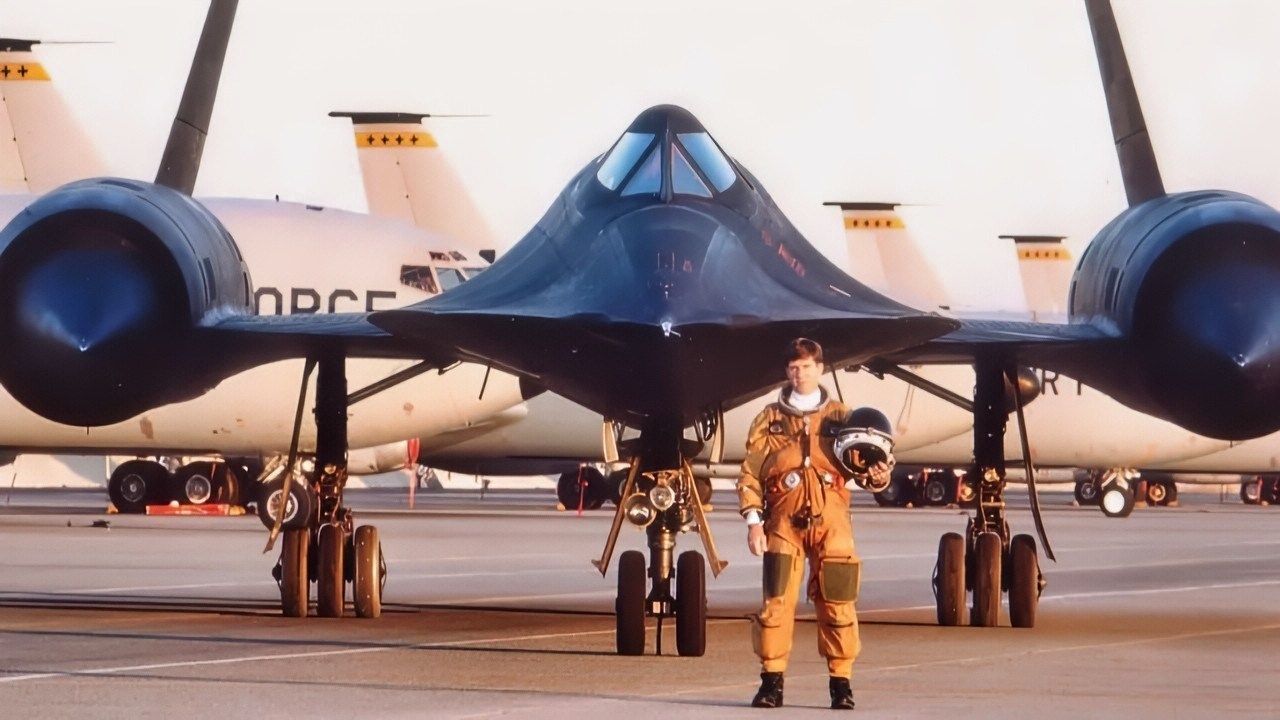
SR-71 and Pilot Creative Commons Image
The INS in ASPEN 28 did not provide clear annunciation that it had tumbled; there was no bright master warning light explicitly stating “INS failure.” And that failure cascaded because the autopilot relied on valid attitude input, so when the INS data became unreliable, the autopilot disconnected.
Interpreting the Problem
The INS was sensitive to acceleration, high-G, and unusual attitudes. The potential for a tumble was always high. Yet, the INS is the backbone of navigation and attitude reference. A single failure leads to a cascade of bad information; the pilots relied on the INS for accurate information. And at Mach 2, in the dark, with an already heavy cockpit workload, time compresses drastically.
When the ADI appeared to be failing, the pilot switched to the FRS, which showed a radically different altitude, and now the crew had two systems disagreeing, with no clear indication of which one was correct. And at Mach 2-plus, in descent, the aircraft’s energy state builds rapidly. Small deviations become steep dives quickly. In total darkness with no moonlight and no visible horizon, the crew had zero external visual reference, and the aircraft entered a descending turn nd accelerated to approximately 480 KEAS. At that speed, structural and control margins shrink. The crew essentially lost reliable attitude reference while supersonic—one of the most dangerous states possible in aviation.
Ejecting at Mach
That both crew members survived the Mach-speed ejection is remarkable. The SR-71 ejection seat is designed for high altitudes; the pilot ejected at just 10,000 feet. In both instances, the pressure suit that the crew wears was critical, as both ejections were at supersonic speeds. Ejections at such speeds are rare and obviously quite dangerous. The crew’s survival is a testament to the pressure suits and the engineering of the ejection seats.
The ejection, for the pilot, occurred just in time. The crash occurred moments after, near Lovelock, Nevada. The location was isolated, in the desert, and not immediately discovered. It wasn’t until 1999 that Peter Merlin and Tony Moore discovered the crash site. The crater was eventually erased, and debris scattered. The remote crash site reinforced the SR-71’s mythic standing as a mysterious program.
Post-Accident Reforms
After ASPEN 28’s crash, the Air Force implemented fleet-wide changes, starting with instrumentation. The instrument location was modified across the SR-71 fleet, with improved annunciation logic and more prominent warning flags. Procedural reforms were implemented, too. Specifically, crews were required to fly 50 daytime hours in the SR-71 before qualifying for night flights. Also, an increased emphasis was placed on unusual attitude recovery training, and enhanced crew coordination protocols were designed for when reference systems disagree.
Training changes included stronger cross-check discipline between the pilot and RSO, clear decision criteria for bailout in high-energy states, and simulator scenarios that incorporated instrument disagreement. Operationally, greater scrutiny of night supersonic training profiles was implemented, as were refined descent procedures during Mach deceleration phases.
In all, the ASPEN 28 crash served as a reminder that no flight is ordinary or routine at Mach 3. At such speeds, every system, instrument, and operator must be perfectly synchronized; even a tumbling gyro can cascade, exacerbate, and create an unrecoverable supersonic dive. The ASPEN 28 crew’s survival was fortunate—and their ordeal became a pivot point in SR-71 operations.
About the Author: Harrison Kass
Harrison Kass is an attorney and journalist covering national security, technology, and politics. Previously, he was a political staffer and candidate, and a US Air Force pilot selectee. He holds a JD from the University of Oregon and a master’s in global journalism and international relations from NYU.


look-in-the-mirror
February 28, 2026 at 4:23 am
SR-71 hit the ground in 1967.
But, today, feb 28 2026, US and israeli bombs and rockets have hit the ground in iran.
That’s patently illegal, unlike the lone 1967 hit.
According to israeli boasts, the hit on iran has long been planned, months in advance, while iran was busily very being misled that washington wanted to talk.
That approach was itself adopted by japan in 1941.
Never did the japs any good.
Trump has his name mentioned over a million times in the epstein files. Much much greater in fame, or many more times than andrew mountbatten.
Impeachment coming, coming.
Shittaya
February 28, 2026 at 4:29 am
The SR-71 is finished today. Finished because it doesn’t fit in today’s world.
But What about trumpo trump.
Trumpo trump is finished today.
Due to constant fibbs and lies and untruths and illegal attacks on foreign nations, not consulting congress, illegal tariffs, fast-disappearing affordability, lack of voter support, coming midterm defeat and the looming danger of impeachmemt due to massive fame in epstein files.
Trump is finished.