
Ukraine continues its long-range strike campaign against Russian oil and energy infrastructure, and the damage so far may be having a bigger effect than previously thought, with Kyiv now claiming it has disabled more than half of the country’s refining capacity.
According to a statement from the Ukrainian Ministry of Defense on October 4, citing an assessment by military intelligence and the General Staff, more than 51% of Russian refining capacity has been targeted by Ukrainian strikes.
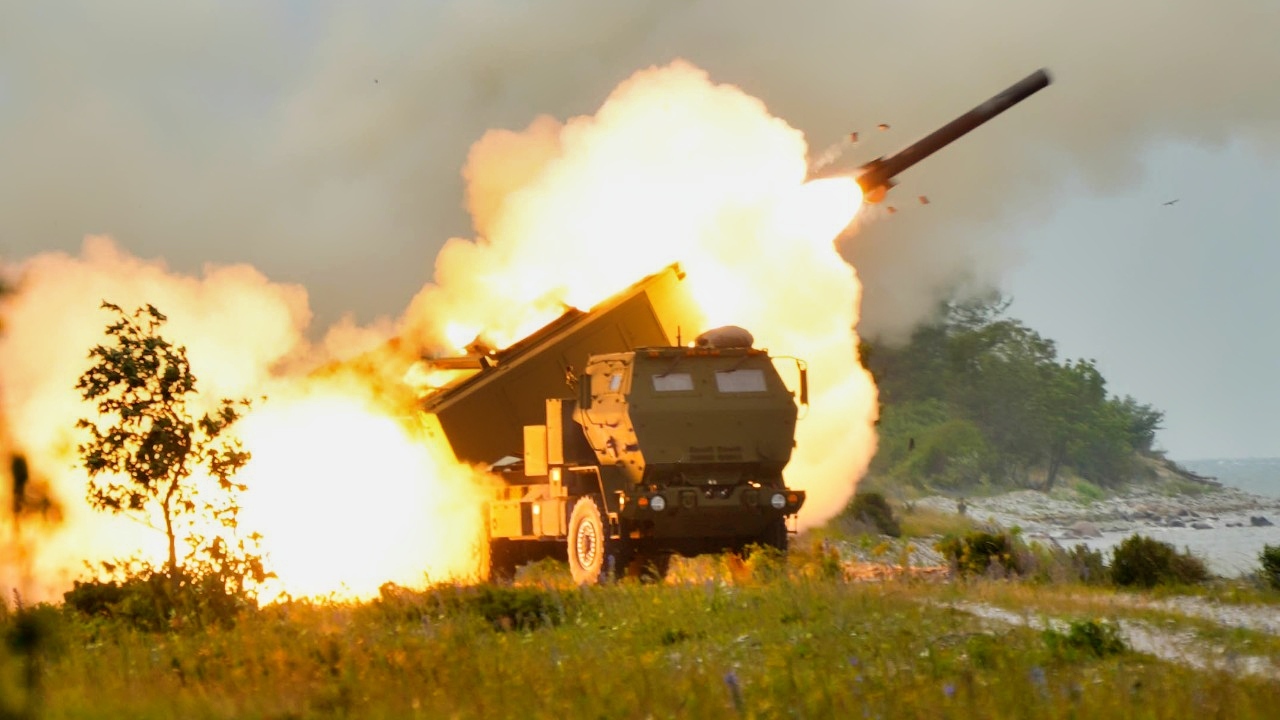
An Estonian Defense Forces M142 High Mobility Artillery Rocket System (HIMARS) fires a training rocket during a live-fire exercise in Undva, Estonia, July 11, 2025. U.S. Army elements from Bravo Battery, 1st Battalion, 14th Field Artillery Regiment, 75th Field Artillery Brigade, supporting Task Force Voit, assisted in the training process. The task force was originally formed in 2023 to support the Estonian Defense Forces in the creation of a HIMARS unit. Task Force Voit works closely with the Estonian Armed Forces, sharing critical defense strategies, training, and military readiness support. The presence of U.S. troops in the region serves as a cornerstone of NATO’s commitment to security in the Baltic region. The task force provides combat-credible forces to V Corps, America’s only forward-deployed corps in Europe. (U.S. Army photo by Staff Sgt. Rose Di Trolio)
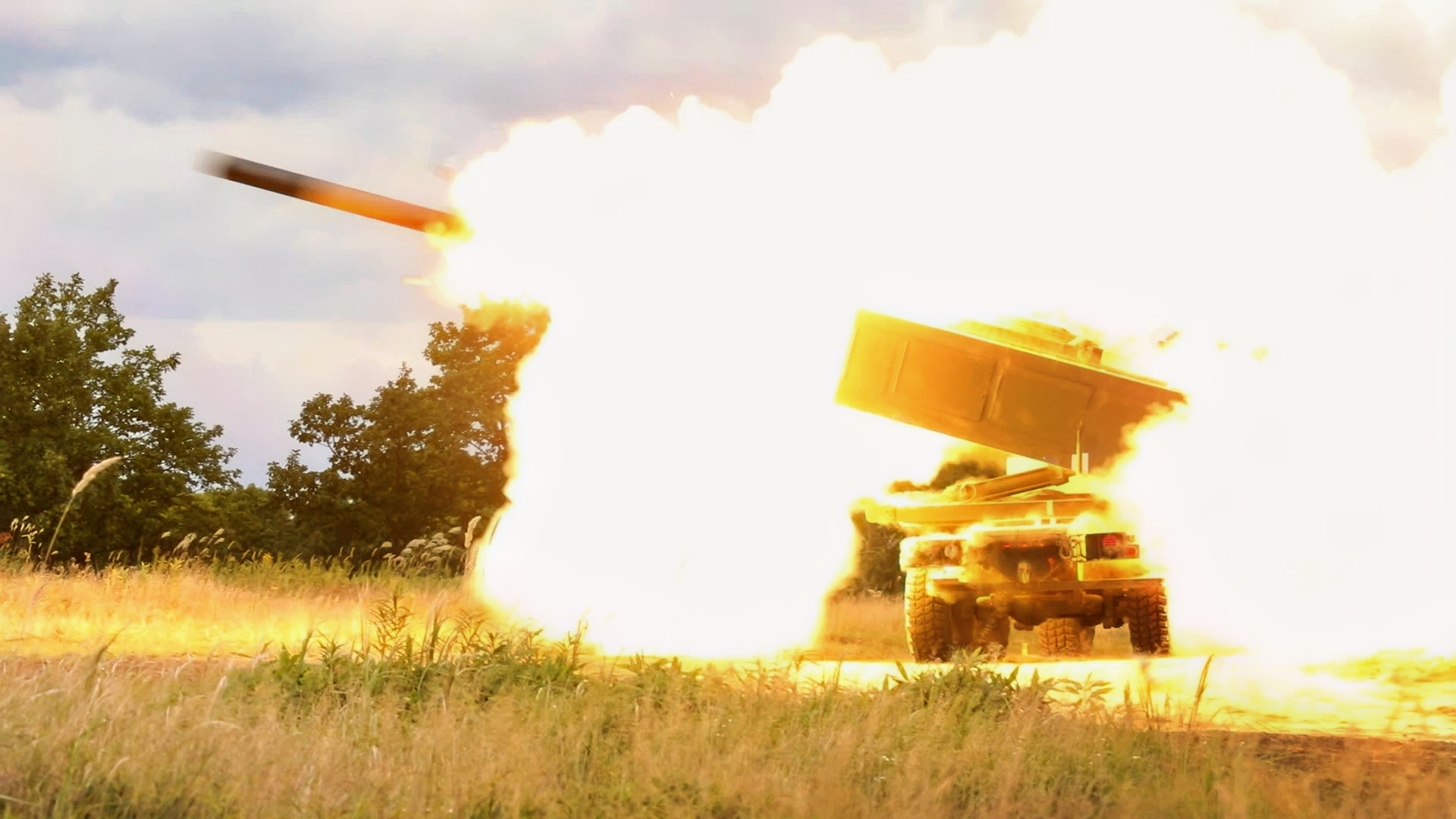
A High Mobility Artillery Rocket System (HIMARS) with the 1st Battalion, 181st Field Artillery Regiment fires toward a designated target at Yausubetsu Training Area, Hokkaido, Japan on Sept. 20, 2023. U.S. Army soldiers and Japan Ground Self-Defense Force (JGSDF) members participated in showcasing their artillery prowess in front of VIPs and dignitaries. (Photo by U.S. Army National Guard Staff Sgt. Ryan S. Gay)
The figure has not been independently verified, but plenty of evidence suggests the strikes are having a serious impact on Russia.
Russia continues to experience widespread fuel shortages, its exports are still limited, and it continues to import refined products from friendly countries – and President Vladimir Putin himself admitted last week that the Ukrainian long-range strike campaign is measurably hurting the Russian economy.
Kyiv shows no signs of stopping
Hitting Refineries Across Russia
Ukraine’s refinery campaign, which accelerated following the announcement of a 40-day strike operation in June, has expanded dramatically.
Recent attacks have targeted facilities in Moscow, Yaroslavl, Perm, Ilsky, Saratov, Syzran, Ust-Luga, and the Kirishi refinery complex near St. Petersburg.
The strikes are doing serious damage, taking out specialized equipment that is difficult to replace—especially quickly.
The International Energy Agency reported in September that Ukraine has been deliberately targeting secondary refining equipment, including catalytic crackers and hydrotreaters, to make it as difficult as possible to get refineries back up and running after the strikes.
While relatively minor damage to crude distilling equipment can be repaired within weeks, the IEA says that it can take six to eight months to restore the seriously damaged secondary units.
The Moscow refinery, famously hit in June, illustrates the problem.
An additional strike on September 20 damaged the facility’s two primary crude processing units, forcing it to suspend processing.
Ukraine also says that it has now tripled the production and procurement of long-range attack drones this year — meaning Kyiv still has room to expand the campaign.
Russia Runs Short Of Fuel
Russia can no longer hide the consequences of those strikes at this stage.
The IEA estimates that Russian refinery throughput fell to 3.8 million barrels per day in June, the lowest level in more than 20 years and about 30% below the previous year.
Gasoline production is also down by around 20%, and diesel production has fallen almost 30%.
By the end of June, fuel shortages were spreading across 92% of Russia’s regions, and many regions had begun introducing some form of rationing.
Reports also say motorists have waited up to 40 hours for fuel.
Russia has also restricted its own fuel exports to protect its domestic supplies and has begun importing additional refined products from overseas.
In August, imports reached a record 368,000 metric tons, with over 176,000 tons of petroleum products imported from South Korea to Russia during July and August.
South Korean supplies also accounted for 31% of Russian imports in August.
Russia is also turning to suppliers in Belarus, India, and Kazakhstan to help plug the gap caused by Ukrainian strikes.
Putin Admits the Strikes Are Working
While the Kremlin has not confirmed the exact 51% figure, Vladimir Putin has publicly acknowledged that the campaign is causing trouble for Russia’s economy – and it’s not the first time he has done so.
Speaking at the Valdai Discussion Club in Moscow on October 1, Putin said that Ukraine had openly attempted to hurt the Russian economy by deliberately targeting refineries.
“They started attacking oil refineries and openly declared the goal of damaging our economy. Did they achieve their goal? Partially,” Putin said at the meeting of foreign policy experts.
Energy Finances Under Pressure
Russia’s energy revenue is also declining, down 17% this year to 5.47 trillion rubles, from 6.61 trillion in the same period in 2025.
Russian oil production fell to 8.718 million barrels per day in August 2026, its lowest in 17 years, despite high global crude prices that, under other circumstances, would have provided Russia with a substantial windfall.
And with oil and gas revenues a critical source of funding for the Russian state and the war, it’s clear that Ukraine’s strike campaign is having a major impact on Moscow’s ability to continue fighting.
Ukraine Hits Major Moscow Fuel Hub
The strikes continue, with an overnight strike on October 6 striking the Volodarskaya oil storage and distribution facility outside of Moscow.
The strikes ignited a fuel tank.
The facility is the largest of its kind in the region and part of Russia’s Transneft network, which supplies fuel to Moscow’s major international airports.
About the Author: Jack Buckby
Jack Buckby is a British researcher and analyst specializing in defense and national security, based in New York. His work focuses on military capability, procurement, and strategic competition, and he produces and edits analysis for policy and defense audiences. He brings extensive editorial experience, with a career output spanning over 1,000 articles at National Security Journal, and has previously authored books and papers on extremism and deradicalization.


