


Key Points and Summary – The 1989 defection of Soviet pilot Aleksandr Zuyev provided the West with a “windfall” of critical intelligence on the MiG-29. Zuyev’s extensive debriefing detailed the fighter’s performance, limitations, sensor range, and Soviet training tactics.
-This analysis argues that this invaluable information was “likely” used by U.S. engineers to design the F-22 Raptor, specifically its speed, stealth, and agility, to ensure it could defeat its Russian counterpart.

MiG-29 Fighter. Image Credit: Creative Commons.
The Great MiG-29 Defection Explained
The 1989 “defection” of Russian MiG-29 pilots to the West has come to be regarded as a defining moment in the development of US and allied military thinking, tactics, strategy, and modernization.
Captain Aleksandr Zuyev defected in his MiG-29 to a Turkish air base.
He was subsequently extensively debriefed by US and NATO intelligence agencies, activities which delivered a windfall of critical intelligence information to the West.
The MiG-29 Defection: What We Might Know
Indeed, many of the learned details are unlikely to be available, yet it has been widely reported that Zuyev provided detailed insights into the MiG-29’s performance.
Specifics related to its capabilities and limitations in key areas, such as maneuverability, targeting, information processing, and maintenance demands, were surely extensively studied.
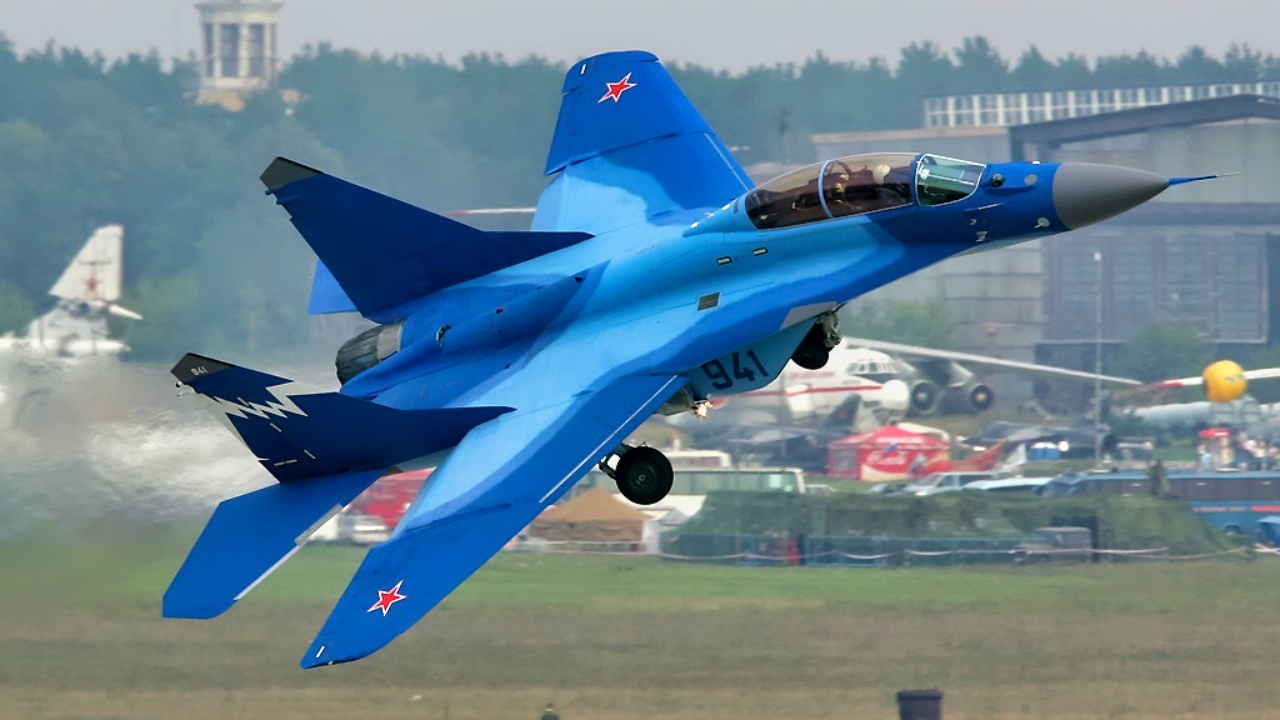
MiG-29K. Image Credit: Creative Commons.
Although the aircraft itself was quickly returned to the Soviet Union, Zuyev offered invaluable detail and perspective on a wide range of technologies, operational areas of emphasis, and Russian military tactics and procedures.
Zuyev reportedly offered specifics related to Soviet training methods, command and control structure, and ground-control networking, areas of knowledge and experience that have subsequently been taught to several generations of emerging US pilots.
Specifics related to the MiG-29’s vectoring, angle of approach, and speed of engagement are all things an experienced pilot could explain in great detail.
Alongside offering technical and tactical specifics, Zuyev was able to provide unprecedented insight into the morale living conditions, flight training regimen, and operational tempo of Russian pilots.
MiG-29 vs F-15
The MiG-29 was engineered during the height of the Cold War in the late 1970s to counter the US F-15 by reaching speeds above Mach 2.3, making it among the fastest fighter jets ever built.

A U.S. Air Force KC-135 Stratotanker offloads fuel to U.S. Air Force F-15 Strike Eagles over the U.S. Central Command area of responsibility, April 11, 2025. The F-15E is deployed to the CENTCOM AOR to reinforce regional stability and deter aggression from violent extremist organizations.. (U.S. Air Force photo by Senior Airman Keegan Putman)
Particularly, the speed at which the MiG-29 could maneuver into position, process targeting information, and “attack” is the kind of detail that is likely to continue helping US fighter pilots develop countermeasures against advanced Russian aircraft.
While Zuyev was primarily discussing 1980s technologies, some trends, capability gaps, and performance “needs” of fighter jets likely remain highly relevant.
MiG-29 Inspire F-22?
The challenges, limitations, and capability gaps associated with the MiG-29 are precisely the kinds of nuances weapons developers and modernization experts are interested in acquiring in the process of engineering next-generation platforms.
Therefore, it would make sense if Zuyev’s information on the MiG-29 in some way contributed to design specifics woven into the F-22.

An F-22 Raptor soars over the Pacific Sea Test Range on December 19, 2024. The aircraft is assigned to the 411th Flight Test Squadron, Air Dominance Combined Test Force, at Edwards Air Force Base, CA. (Courtesy photo)
The speed, agility, air superiority, and vectoring ability of the F-22 were likely heavily influenced by both the F-15 and the MiG-29, as Zuyev details.
The F-22 succeeded in blending speed, maneuverability, and stealth, something the MiG-29 clearly lacked.
Following Zuyev’s defection, Western engineers were able to design and manufacture the F-22 Raptor with a specific focus on how a fighter would need to operate and maneuver to prevail against a MiG-29 or a future-generation Russian fighter.
Sensing and Targeting
The most helpful information likely offered by Zuyev might have pertained to sensor range questions, as the ability of a fighter jet to “see” and “destroy” an enemy aircraft from safe standoff distances is often what provides the margin of difference in an air war engagement.
How far away can a MiG-29 see and identify targets?
What are the exact ranges and guidance systems of its weapons? Zuyev likely had extensive, detailed answers to these questions, which could have informed US Air Force and Lockheed efforts to design and engineer the F-22 to be superior.
The configuration of the back-half of the F-22 twin-engine fuselage does seem to resemble the shape of the MiG-29, so it’s entirely conceivable that the F-22’s breakthrough speed was, at least in part, enabled by Zuyev’s defection and details learned about the MiG-29.
About the Author: Kris Osborn
Kris Osborn is the President of Warrior Maven – Center for Military Modernization. Osborn previously served at the Pentagon as a highly qualified expert in the Office of the Assistant Secretary of the Army—Acquisition, Logistics & Technology. Osborn has also worked as an anchor and on-air military specialist at national TV networks. He has appeared as a guest military expert on Fox News, MSNBC, The Military Channel, and The History Channel. He also has a Masters Degree in Comparative Literature from Columbia University.
More Military
Europe and Canada Are Finally Saying No to the F-35 Stealth Fighter
The Exact Day Navy Battleships Became Obsolete Is Clear
The X-44 Manta Has a Message for Every Air Force on Earth


