

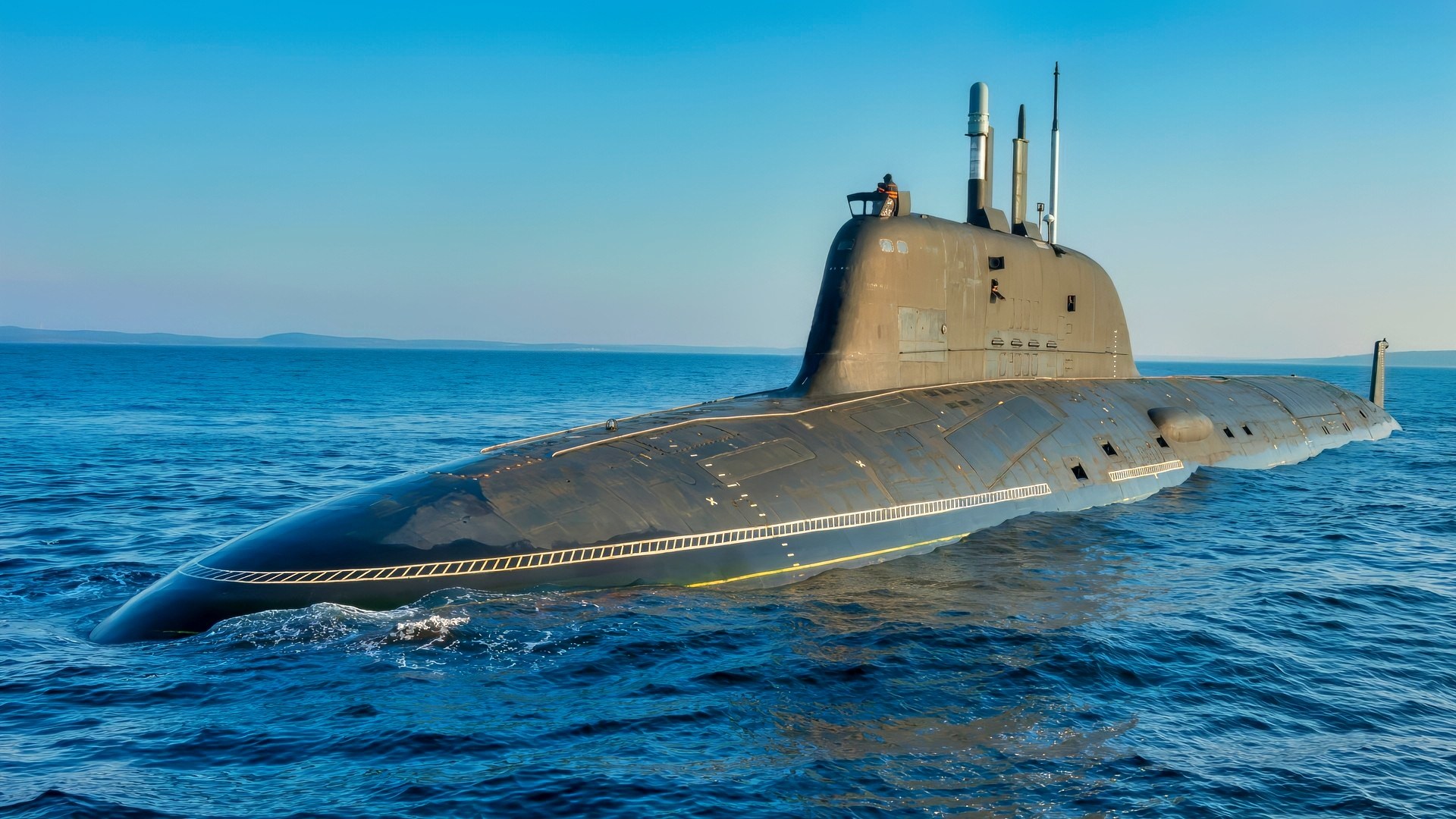
Key Points and Summary – The 1983 sinking of Soviet nuclear submarine K-429 was less a freak accident than a case study in naval malpractice.
-Ordered to sea mid-maintenance with an improvised, partly unqualified crew, the boat skipped key safety checks—and dived with a ballast tank left open.
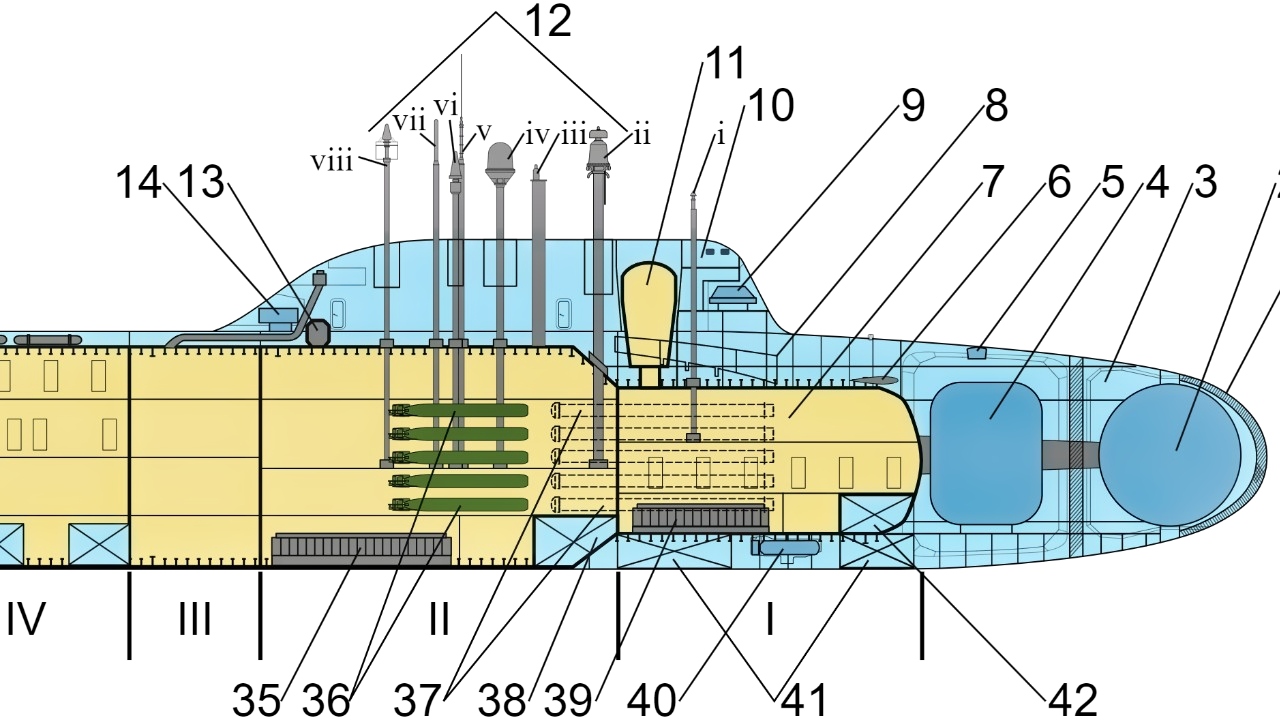
Yasen-Class Submarine from Russia. Image Credit: Creative Commons.
-K-429 flooded and settled on the seabed at 33 meters, but Captain Nikolay Suvorov’s insistence on a shallow test dive spared his crew from a fatal deep-water loss.
-Most sailors escaped via torpedo tubes and rescue hatches, yet Suvorov was jailed.
-Secretive, punitive, and careless, the episode laid bare deep structural rot in the late-Soviet Navy.
A Russian Nuclear Submarine Did What Sounds Almost Impossible: Sink an Sink Again
The captain of the K-429 submarine’s insistence on following safety procedures saved his own life—and those of many of the submarine’s crew.
The Soviet Navy’s loss of the K-429 submarine in 1983 was one of the Cold War’s more revealing accidents, but not because of the loss of life caused by the disaster. Instead, the accident revealed the state of the Soviet Navy at that time.
The submarine, a Charlie-I-class submarine, was primarily a cruise-missile platform.
First laid down in 1971, the K-429 was not particularly aged by the 1980s, but it was in need of maintenance and sank due to a combination of poor readiness, incomplete maintenance, and an extremely rigid command structure.
In 1983, the K-429’s Captain First Rank Nikolay Suvorov was ordered out to sea to partake in a training mission. Her captain profusely refused initially, as the K-429’s crew was on leave and the submarine had not completed its maintenance.
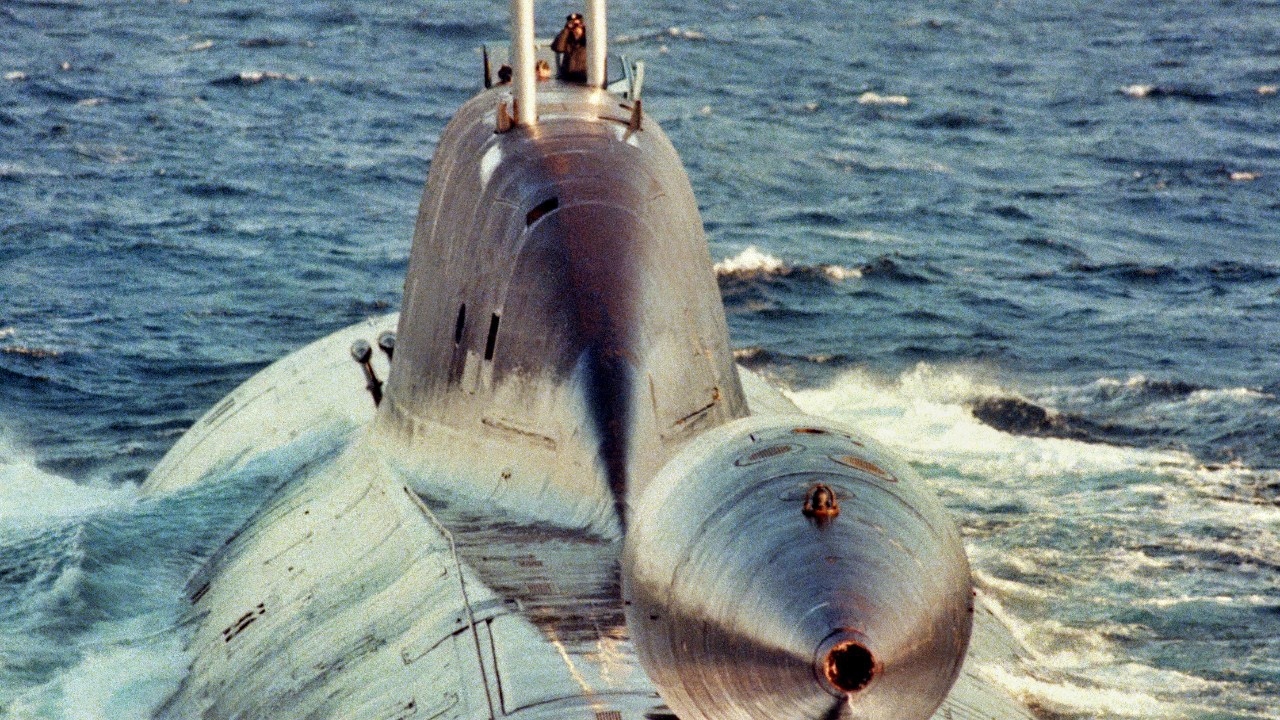
An aerial stern-on view of the Russian Northern Fleet AKULA class nuclear-powered attack submarine underway on the surface. Image Credit: Creative Commons.
Despite Captain Suvorov’s protestations, however, he was put under enormous pressure to get K-429 out of port and underway in a hurry. Then, a Rear Admiral in the Soviet Navy, Oleg Yerofeyev, told Captain Suvorov that he would be stripped of his Communist Party membership—a prerequisite to commanding a vessel in the Soviet Navy.
Prompted by Yerofayev’s threats, Captain Suvorov assembled an ersatz crew of submariners: some K-429 crew members, but also including many sailors who were either unfamiliar with the K-429 or who had never spent time on a submarine. To get underway as quickly as possible, a number of system and safety checks were either abbreviated or skipped entirely.
While at sea, the K-429’s plight went from not ideal to dangerous. Captain Suvorov received orders to sail to a torpedo test range. The captain initially refused the order, insisting that the K-429 perform a test dive first, as part of standard operating procedure. And although Captain Suvorov’s decision caused the submarine to sink, it also saved both the submarine and several crew members.
During that test dive, one of the submarine’s ballast tanks had been left open, an operational error that the K-429’s crew should have caught had they been given the chance to complete the required safety checks and inspection before heading out to sea.
Thousands of pounds of seawater flooded the submarine’s compartments, which could not be flushed of water thanks to the open tanks. Though this technical oversight initially caused the submarine to drop precipitously into the water, the K-429’s temporary crew, unfamiliar with its particularities, was ill-prepared to respond to an emergency.
K-429 sank in relatively shallow 33-meter deep water, or nearly 110 feet. While this depth was conducive to a rescue, power failures, extensive flooding, and communications issues made the crew’s efforts to escape more difficult.
While some of the temporary K-429 crew members escaped to the surface using individual rescue gear, not everyone could be rescued immediately. Several crew members died in the initial flooding or in the aftermath, while the submarine was lying on the bottom of the seafloor.
Relatively safe inside the submarine, the captain and surviving crew members assumed an alarm would be raised when they failed to reach their assigned location, but K-429’s absence went unnoticed.
Most of the crew survived by escaping from the stricken submarine’s torpedo tubes or escape hatch, aided by rescue divers. Ultimately, 104 of the 109 sailors survived, in large part thanks to Captain Suvorov’s insistence on following normal safety rules.
Captain Suvorov’s decision to perform a test dive before transitioning to deeper waters saved his own life and those of several crews. Had K-429 transitioned to the torpedo firing range first, the ship would have settled in 200 meters of water, about 650 feet below the surface, and potentially become an unrecoverable wreck.
Soviet rescue crews eventually returned the submarine to port and raised her, but the aftermath of the incident was dire. Captain Suvorov and several of his officers were court martialed and found guilty.
Despite their arguments that the K-429 sinking was caused by pressure to skip routine operating procedures and that systematic shortcomings within the Soviet Navy were to blame, the captain was imprisoned.
Today, the K-429 sinking is emblematic of the sclerotic structural problems inherent to the Soviet naval establishment in the waning years of the Cold War. In typical Soviet fashion, the details of K-429’s sinking were sealed, only coming to light years later after the end of Cold War hostilities.
But the accident paints a picture of strained submarine fleets and crews, difficulty keeping aged nuclear-powered vessels seaworthy, and a command environment that enforced blind adherence to orders — even in the face of standard, institutionalised safety procedures.

Lada-Class Submarine. Image Credit: Creative Commons.
In a twist of irony, the K-429 sank a second time, in 1985, while moored at port.
Raised a second time, the submarine was decommissioned shortly thereafter, closing a strange chapter on an unlucky submarine.
About the Author: Caleb Larson
Caleb Larson is an American multiformat journalist based in Berlin, Germany. His work covers the intersection of conflict and society, focusing on American foreign policy and European security. He has reported from Germany, Russia, and the United States. Most recently, he covered the war in Ukraine, reporting extensively on the war’s shifting battle lines from Donbas and writing on the war’s civilian and humanitarian toll. Previously, he worked as a Defense Reporter for POLITICO Europe. You can follow his latest work on X.


