

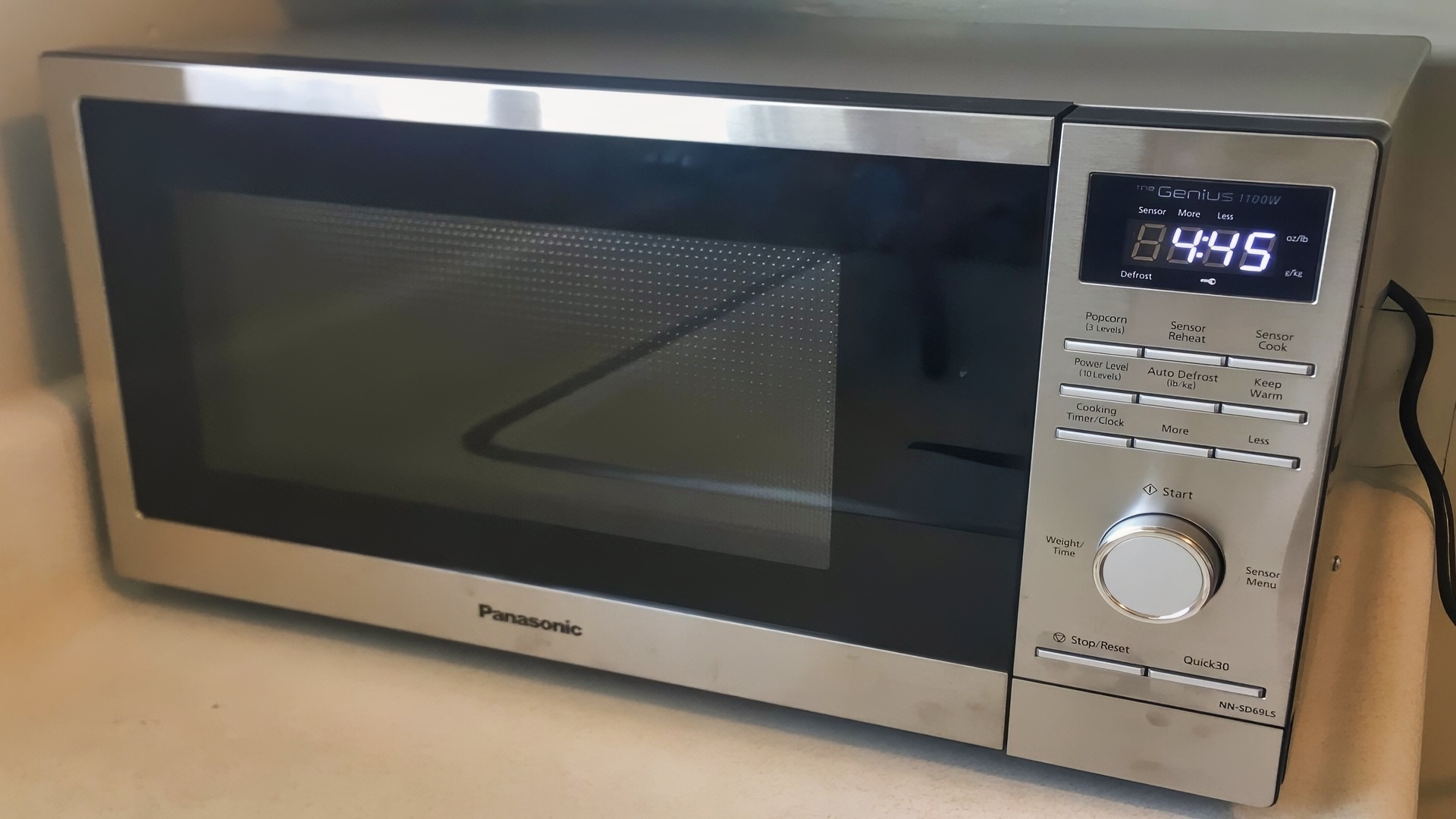
Percy Spencer invented the microwave oven at Raytheon after a chocolate bar in his pocket melted near an active radar magnetron in 1945. Spencer was a self-taught engineer. He had dropped out of grammar school. Spencer became one of America’s foremost experts on radar magnetrons during World War II. Raytheon filed a patent for the microwave oven technology in October 1945. Raytheon’s first commercial microwave oven was the Radarange. The Radarange arrived in stores in 1947. The Radarange stood 6 feet tall. The Radarange weighed 750 pounds. The Radarange cost between $2,000 and $5,000. Raytheon paid Spencer $2 for the microwave patent.
How the Microwave Was Born
The confluence of consumer technology and wartime technology is hard to ignore. Everything from the internet to the GPS capability of your car has benefited from–or been the direct result of–wartime developments translated to the civilian economy. One of the most interesting stories, though, is the invention of the microwave oven. Its creation was entirely accidental, but it transformed the civilian economy, both in how we make and consume food every day.
Just imagine life without the microwavable Hot Pocket!
Percy Spencer: The Self-Taught Genius Behind the Microwave
Unsurprisingly, the microwave was the result of radar research during the Second World War. Percy Spencer, a self-taught engineering guru working for Raytheon, is the man behind this invention.
Spencer had almost no formal education, having dropped out of grammar school. Yet, he was not your typical school dropout. Percy Spencer was an autodidact who taught himself advanced engineering, rising to become one of America’s foremost experts on radar magnetrons during World War II.
What Exactly Is a Magnetron?
First, let’s explain what a magnetron is because it sounds like something from a cheesy 1950s science fiction B-movie. It’s a very real, important technology. Essentially, a magnetron is a vacuum tube used in radar systems to power the entire system.
The cavity magnetron improved radar performance during the war. Some historians have even dubbed the British decision to transfer the magnetron to the United States during the war as one of the most important technology transfers of the war.
Spencer was testing an active magnetron in 1945 when he noticed a chocolate bar in his pocket had melted. Most people would have shrugged off the melted bar as unrelated to the research they were conducting. But not the autodidact Percy Spencer. He immediately concluded that the microwaves emitted by the radar equipment were responsible.
Spencer began experimenting with microwaves immediately.
First, he employed popcorn kernels in his experiments. They popped. Next up was an egg, which famously exploded. Spencer realized that microwaves could rapidly excite water molecules in food, heating it from within rather than relying on conventional external heat transfer.
From Radar Lab to Kitchen Appliance
He invented the first crude microwave cooking chamber by directing microwave energy from a magnetron into a sealed metal box. Raytheon filed a patent for the technology in October 1945, just two months after the atomic bombs were dropped over Hiroshima and Nagasaki, ending WWII.
When compared to their modern counterparts, the first generation of microwave ovens was huge. Raytheon’s first commercial model was the “Radarange,” which arrived in stores in 1947. That unit stood at an astonishing six feet tall and weighed a heavy 750 pounds. The Radarange required water cooling, too. It costs people anywhere between $2,000 and $5,000, depending on the configuration.
Initially, only restaurant kitchens, ships’ galleys, military facilities, and industrial cafeterias installed the monstrous-sized microwave ovens.
How the Microwave Went Mainstream
Like so many products we take for granted today, the microwave oven did not come from military research; it began as a luxury good in the consumer market. But that’s how capitalism works. What begins as a high-priced item for the wealthy, if it catches on and receives sufficient investment and innovation through the iterative process, becomes cheaper and more widely available to the public.
Thanks to miniaturization and falling production costs in the 1960s and 1970s, countertop microwaves became household appliances.
Despite his brilliance, Spencer himself never profited from the microwave oven. He instead received only $2 in payment from Raytheon for the microwave patent because the company’s policy assigned patent ownership to the corporation. It’s a sad reminder that inventors are not automatically guaranteed money for their insight and hard work–regardless of how instrumental they were.
A Reminder of What America Once Built
Today, microwave ovens are everywhere. But there was a time, in the course of some people’s lives, when microwaves were a luxury product that intimidated most people because of their size, complexity, and cost. It’s even easier to forget that this technology emerged from classified radar laboratories and accidental experimentation involving a melted candy bar in the shirt pocket of an engineer working for Raytheon.
But the story of the microwave is important because it reminds us not only of the influence the war state has on our lives. This experience reminds us how innovative we once were. The system today would never make the microwave under today’s onerous regulations and legal codes governing innovation in America.
About the Author: Brandon J. Weichert
Brandon J. Weichert is the Senior National Security Editor at 19FortyFive.com. Recently, Weichert became the editor of the “NatSec Guy” section at Emerald. TV. He was previously the senior national security editor at The National Interest. Weichert hosts The National Security Hour on iHeartRadio, where he discusses national security policy every Wednesday at 8 p.m. Eastern. He hosts a companion show on Rumble entitled “National Security Talk.” Weichert consults regularly with various government institutions and private organizations on geopolitical issues. His writings have appeared in numerous publications, among them Popular Mechanics, National Review, MSN, and The American Spectator. And his books include Winning Space: How America Remains a Superpower, Biohacked: China’s Race to Control Life, and The Shadow War: Iran’s Quest for Supremacy. Weichert’s newest book, A Disaster of Our Own Making: How the West Lost Ukraine, is available for purchase at any bookstore. Follow him via Twitter/X @WeTheBrandon.


chuanpu
May 14, 2026 at 2:59 am
Microwave ovens are dirt cheap today, but the magnetron usually lasts for only a few years, typically less than five years, if it’s used every day.
It’s best to use a ceramic tray or plate to carry in the cooking container, in case of spills, and the cooking container needs to be covered as well. To prevent food shooting into the top.
Super convenient, but doesn’t last forever, unlike the traditional electric rice cooker.