


Despite its stealthy appearance and purported speed, many questions remain about how much of a threat Russia’s 5th-generation Su-57 Felon poses to adversaries.
Russian media reports extensively on the airframe’s performance parameters, yet little is known about its computing, weapons interfaces, sensing, and manned-unmanned teaming capabilities.
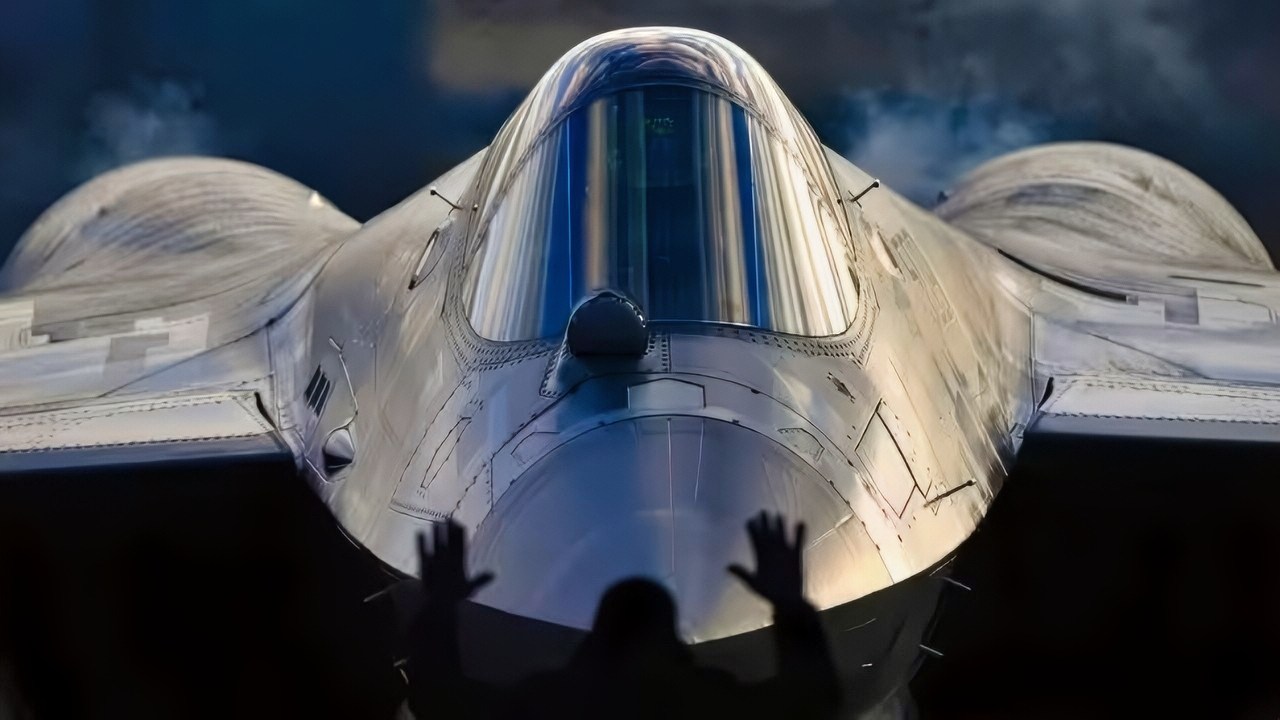
Su-57 Felon Fighter. Image Credit: X Screenshot.

Su-57 Felon Fighter from Russia. Image Credit: Creative Commons.
The Su-57 looks stealthy to the observer, with its blended-wing body and rounded fuselage.
How might it compare, however, with the F-35 in terms of sensing and high-speed, AI-enabled computing that can gather sensor input from disparate data sources and perform immediate analysis and organization to present integrated information to a pilot?
The airframe’s capabilities remain unanswered.
Additional specs on the Felon suggest it can reach Mach 2 and travel up to 2,200 miles. This makes the jet slightly slower than an F-22, which reportedly reaches Mach 2.25.
Also, the Su-57 may not have a thrust-to-weight ratio that rivals an F-22, making it less competitive than a true air-dominance platform such as the Raptor.
Nonetheless, the Sukhoi Su-57’s speed can be an important factor, making it a potential threat to the Lockheed Martin F-35 Lightning II in certain combat scenarios.
While both aircraft are advanced fifth-generation fighters designed with stealth, sensors, and networked warfare in mind, differences in speed and flight performance can influence how each aircraft engages in air combat.
Su-57 Speed
One of the most notable characteristics of the Su-57 is its high top speed.
The aircraft is estimated to reach speeds of around Mach 2, significantly faster than the F-35, which typically reaches about Mach 1.6. This difference in maximum speed gives the Felon the potential to close distances more quickly in a combat situation.
If a Felon detects an enemy aircraft or receives targeting data from external sensors, its higher speed could allow it to intercept the target faster than an F-35 might expect, reducing the time the opposing pilot has to react or reposition.
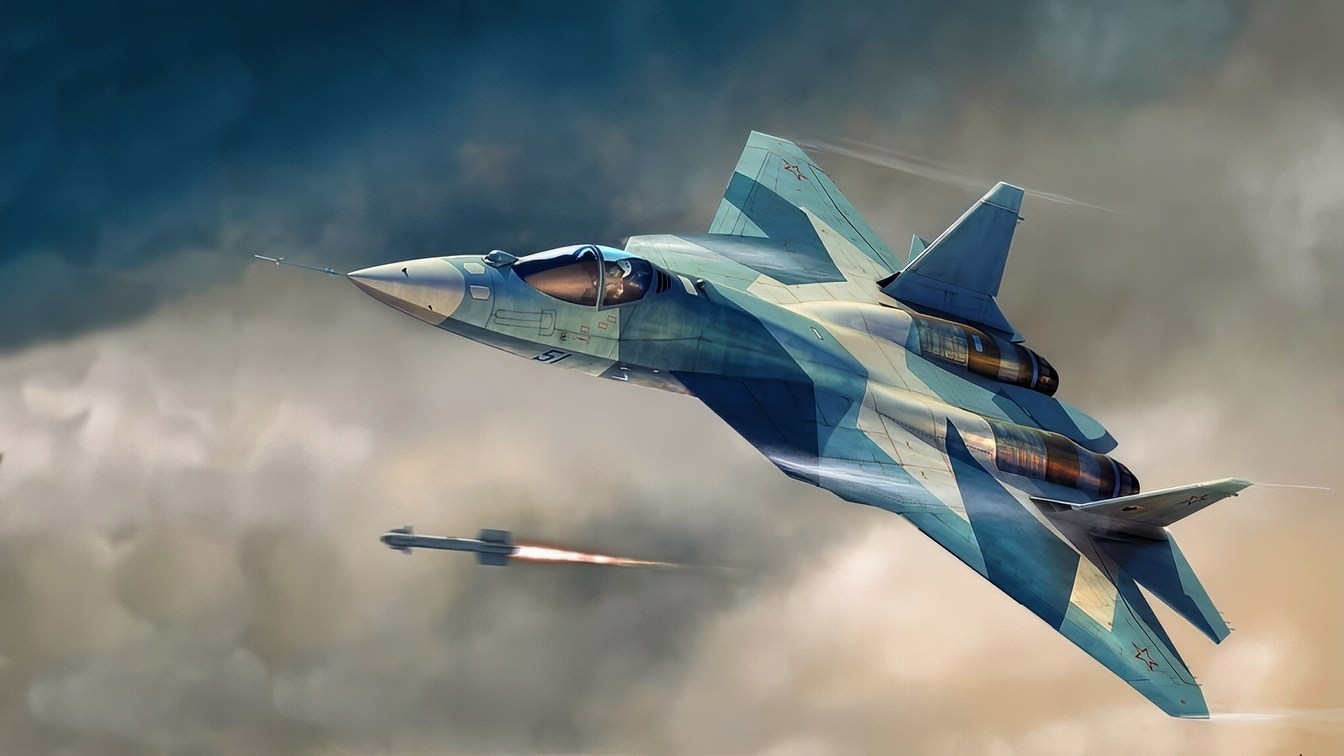
Su-57 Felon in the Sky. Image Credit: Creative Commons.

Su-57 Felon Stealth Fighter. Image Credit: Creative Commons.
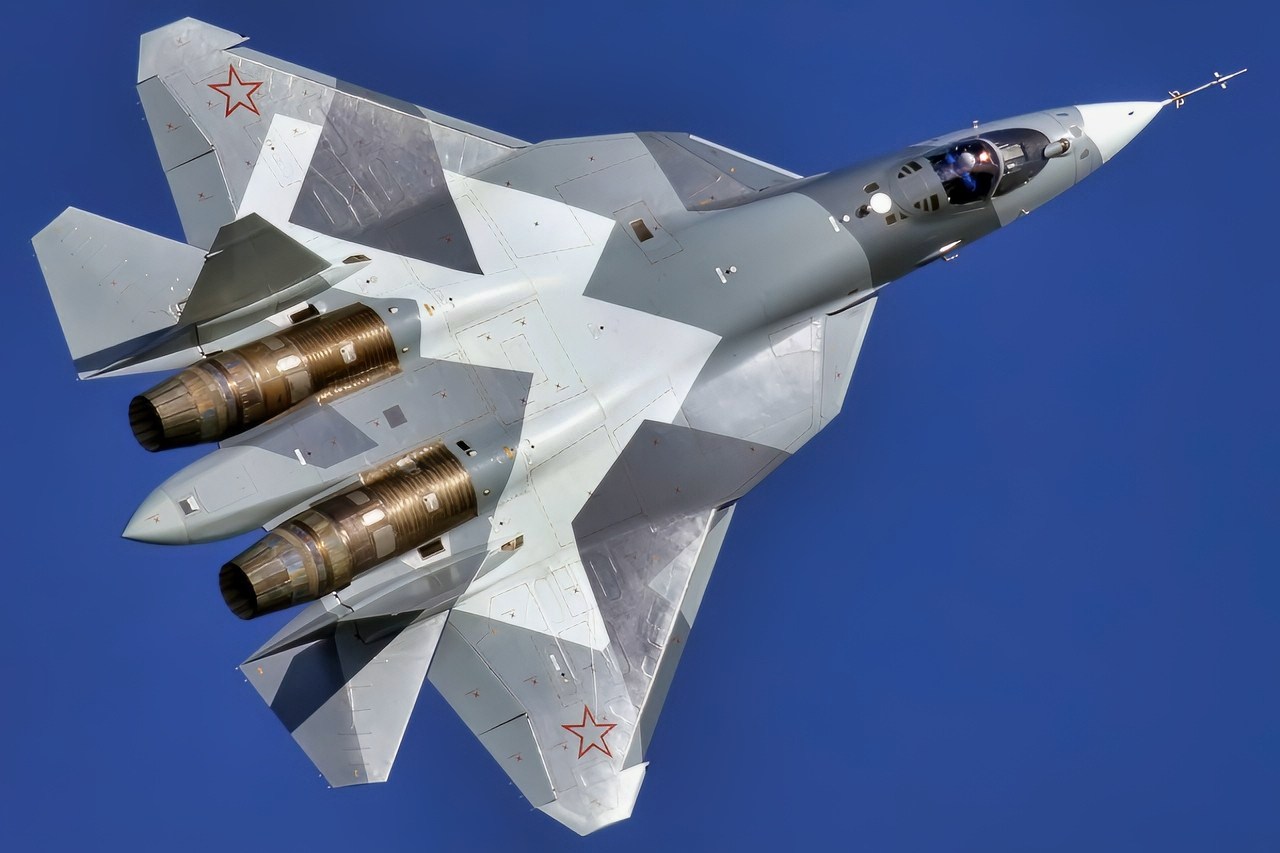
Su-57 Felon Back in 2011. Image Credit: Creative Commons.
However, this advantage could be largely offset by the range and fidelity of the F-35’s targeting sensors, which could likely locate the Felon before it could detect an F-35.
However, speed alone does not determine superiority. The F-35 emphasizes stealth, sensor fusion, and advanced networking capabilities, which are designed to detect and engage adversaries before they are even aware of its presence.
In many scenarios, the F-35’s lower radar signature and advanced avionics could allow it to fire first, potentially neutralizing a faster opponent before speed becomes a decisive factor.
Su-57 AESA Radar & Targeting
It is reported that the Su-57 has an AESA (Active Electronically Scanned Array) radar and a phased-array radar, supported by extensive electronic countermeasures.
Further details suggest the Su-57 uses an F/A-18-like Infrared Search and Track targeting technology, which, among other things, enables fighter jets to operate in a high-threat “jamming” environment.
Not Enough Su-57s
Regardless of the extent to which the Su-57 can truly rival U.S. 5th-generation aircraft, Russia’s next-generation aircraft primarily suffers from a numbers problem.
There are just not that many of them, as multiple public reports say there are currently between 4 and 15 operational Su-57 aircraft, and Russia’s TASS news agency has reported plans to acquire 76 Su-57s over the next 5 years.
The U.S., by contrast, operates hundreds of F-35s or more, and that is not including the fast-arriving NATO and European F-35s, something which gives the U.S. and NATO a sizeable margin of superiority when it comes to a possible air superiority war with the Su-57.
Manned-Unmanned Teaming
There is also the question of manned-unmanned teaming, as Russian media reports have mentioned efforts to connect drones with manned fighter jets, using what the U.S. Air Force refers to as a “loyal wingman” type of scenario.
The U.S. Air Force, for instance, has demonstrated that its Valkyrie drone can share real-time data with an F-35, and it is not at all clear that Russia’s Su-57 is capable of such technology.
Russia’s Izvestia news outlet has reported in recent years that the Su-57 is working to network with Russia’s S-70 Okhotnik B drone. The extent of Russian progress on this may be unknown, including whether the Su-57 can operate drones in real time.
It’s conceivable that the Russian Su-57 is far behind the U.S. 6th-Gen Next Generation Air Dominance family of systems in which manned stealth aircraft operate groups of autonomous drones.
About the Author: Kris Osborn
Kris Osborn is the President of Warrior Maven – Center for Military Modernization. Osborn previously served at the Pentagon as a highly qualified expert in the Office of the Assistant Secretary of the Army—Acquisition, Logistics & Technology. Osborn has also worked as an anchor and on-air military specialist at national TV networks. He has appeared as a guest military expert on Fox News, MSNBC, The Military Channel, and The History Channel. He also has a Masters Degree in Comparative Literature from Columbia University.


