
Ukrainian drone attacks forced a major Russian oil refinery to suspend operations, according to industry sources.
The Ryazan oil refinery, located approximately 120 miles southwest of Moscow, was struck on Sunday, 6th September, by Ukrainian forces.

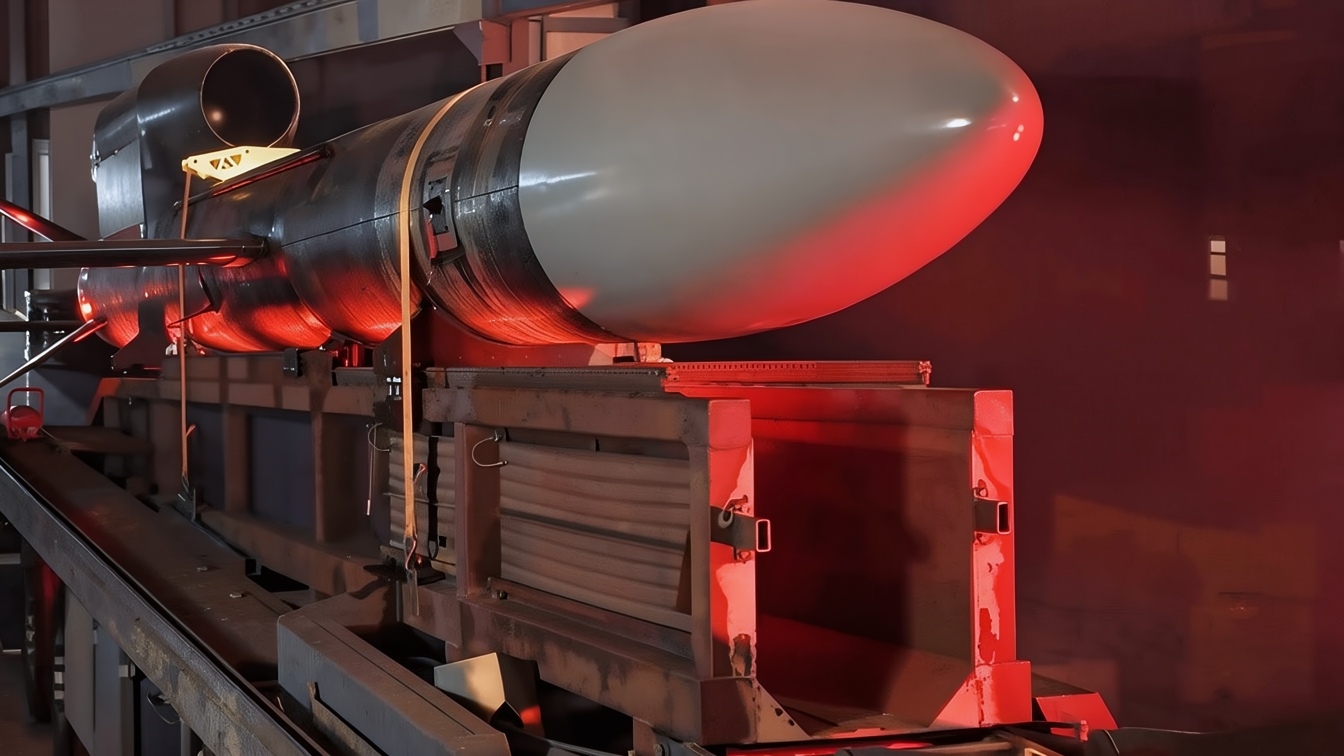
Shahed Drone from Ukraine. Image Credit: Creative Commons.
The closure marks the latest disruption to Russia’s energy infrastructure as part of an ongoing campaign by Ukraine.
Sunday’s Strikes
Ukraine struck targets across Russia on Sunday, including the oil refinery in Ryazan.
Russian air defenses were deployed in several parts of the country, including Bataysk in the suburbs of Rostov-on-Don.
Ukrainian drones reportedly circled Rostov-on-Don for four hours, with regional governor Yuri Slyusar confirming the attack.
He claimed three residential buildings were struck, with a child taken to hospital.
Ukraine’s General Staff confirmed Sunday’s strikes, with targets including an airfield in Rostov-on-Don, a radar station and two Pantsir-S1 air defense systems.
Rostov is a key region for Russia in its full-scale invasion of Ukraine.
It borders the Donbas – an area of eastern Ukraine that Russia recognizes as independent – which President Vladimir Putin is seeking to capture by the end of 2026.
Refinery on Fire
Ukraine’s General Staff also confirmed the strikes on the Ryazan oil refinery, where a fire broke out.
“Units of the Ukrainian Defense Forces struck a number of targets. Specifically, an oil refinery in Ryazan… was struck,” a Telegram post confirmed.
The impact of the assault was initially unclear.
However, on Thursday, two industry sources told Reuters that the Rosneft-owned facility was forced to suspend operations as a result of the attack.
The sources said the refinery’s main unit, CDU-6, and another primary unit, CDU-4, were shut down as a result of the drone strike.
A Key Facility
Together, the two units can produce 12 million tons of oil per year when operating at full capacity.
CDU-6 processes two-thirds of this total, while CDU-4 processes the remaining 4 million tons.
The entire refinery can process just over 16 million tons of oil each year.
Given its proximity to Moscow, the Ryazan refinery is important in supplying the Russian capital with fuel. Alas, it has been repeatedly targeted by Ukraine as part of its ongoing drone campaign.
In May, the oil refinery was attacked, with another primary unit, CDU-3, forced to suspend processing while repairs took place.
A follow-up strike in July forced a suspension of operations for nearly three weeks, sources said.
The facility, about 325 miles from the frontline, is expected to remain closed for several weeks.
Attacks Continue with Little End in Sight
The strikes took place during a three-day temporary ceasefire, during which the Russian and Ukrainian presidents agreed not to strike each other’s capitals while United States envoys Steve Witkoff and Jared Kushner visited both cities.
Witkoff and Kushner met with President Putin last Saturday for more than three hours of talks.
The White House said the meeting saw both sides discuss “substantive plans for next steps” towards ending the conflict, which would be announced in the “coming weeks,” while Kremlin aide Yuri Ushakov described the talks as “highly useful.” The following day, the U.S. officials met President Zelensky, who described discussions as “very substantial” while indicating that the war looked likely to continue into the forthcoming winter.
With no immediate end in sight to the conflict which has spanned four and a half years, Ukraine has sought to ramp up strikes on Russian targets in recent months.
This multi-pronged strategy has been to disrupt its aggressor’s war effort. Oil refineries – producing fuel which can be used by the Russian military as well as sold to trading partners – have frequently been targeted during Ukraine’s drone campaign.
This impact on supply lines and Russia’s economy is being felt by its citizens, with the drone assaults extending to online retailer warehouses to disrupt everyday Russian life.
Ukraine’s campaign comes after nearly five years of Russian bombardment.
Every year since the full-scale invasion began, Russia has targeted Ukrainian energy facilities, prompting power cuts and heating failures across the country during the freezing winter months.
It has also targeted civilian infrastructure throughout the conflict. Earlier this week, five people were killed and at least 67 wounded after a Russian drone struck a shopping mall in Pavlohrad in Ukraine’s Dnipropetrovsk region.
Two other shopping malls were also reportedly struck by Russian missiles.
About the Author: Shay Bottomley
Shay Bottomley is a British journalist. He has written for the Western Standard, Business Insider, Maidenhead Advertiser, Slough Express, Windsor Express, Berkshire Live and Southend Echo.