


Key Points and Summary – The USS Nimitz, America’s oldest Navy nuclear-powered aircraft carrier, is slated to retire in April 2026 after more than 50 years at sea.
-That decision now collides with a brutal reality: Ford-class carriers are delayed, Newport News is overloaded, and global demand for carrier strike groups is soaring from the Indo-Pacific to the Middle East and Europe.

An F/A-18F Super Hornet, attached to the “Blacklions” of Strike Fighter Squadron (VFA) 213 and a F/A-18E Super Hornet, attached to the “Golden Warriors” of Strike Fighter Squadron (VFA) 87 fly over the world’s largest aircraft carrier, USS Gerald R. Ford (CVN 78), the Arleigh Burke-class guided-missile destroyer USS Mahan (DDG 72), April 11, 2025. The Gerald R. Ford Carrier Strike Group is underway in the Atlantic Ocean completing integrated naval warfighting training. Composite Training Unit Exercise (COMPTUEX) is the Joint Force’s most complex integrated training event and prepares naval task forces for sustained high-end Joint and combined combat. Integrated naval training provides America’s civilian leaders and commanders highly-capable forces that deter adversaries, underpin American security and economic prosperity, and reassure Allies and partners. (U.S. Navy photo by Mass Communication Specialist 2nd Class Maxwell Orlosky
-Advocates of a short life extension argue the Navy risks dipping below its 11-carrier requirement at exactly the wrong moment.
-Critics counter that Nimitz is at the edge of her lifecycle and a maintenance black hole. On balance, the Navy is probably right—but only barely.
Should the US Navy Reconsider Decommissioning The Nimitz?
Nimitz-class carriers and their carrier strike groups are the centerpiece of the U.S. Navy. They project immense power worldwide.
The Navy’s supercarriers have been among the most successful warships in history. They have an outstanding combat record.
But the Nimitz-class carriers are aging and in some circles are considered obsolete. They are expensive and time-consuming to maintain.
As great as the carriers have been, they have their flaws—and all nuclear-powered vessels eventually must be retired. The Navy announced several years ago that it would replace the iconic Nimitz-class with the new Ford-class carriers.
The USS Nimitz, the nation’s oldest aircraft carrier, is set to retire in 2026, ending a 50+ year service life.
However, should the Navy reconsider the decision to retire the USS Nimitz, when coupled with the news that the Ford-class carriers are facing the inevitable delays that run rampant in the US shipbuilding industry?
Balancing Needs Versus Costs
The debate over decommissioning the USS Nimitz (CVN-68) involves balancing its proven service and strategic need with its age, high upkeep, and the arrival of next-gen carriers; arguments for keeping it involve maintaining the crucial 11-carrier fleet during Ford-class transitions.
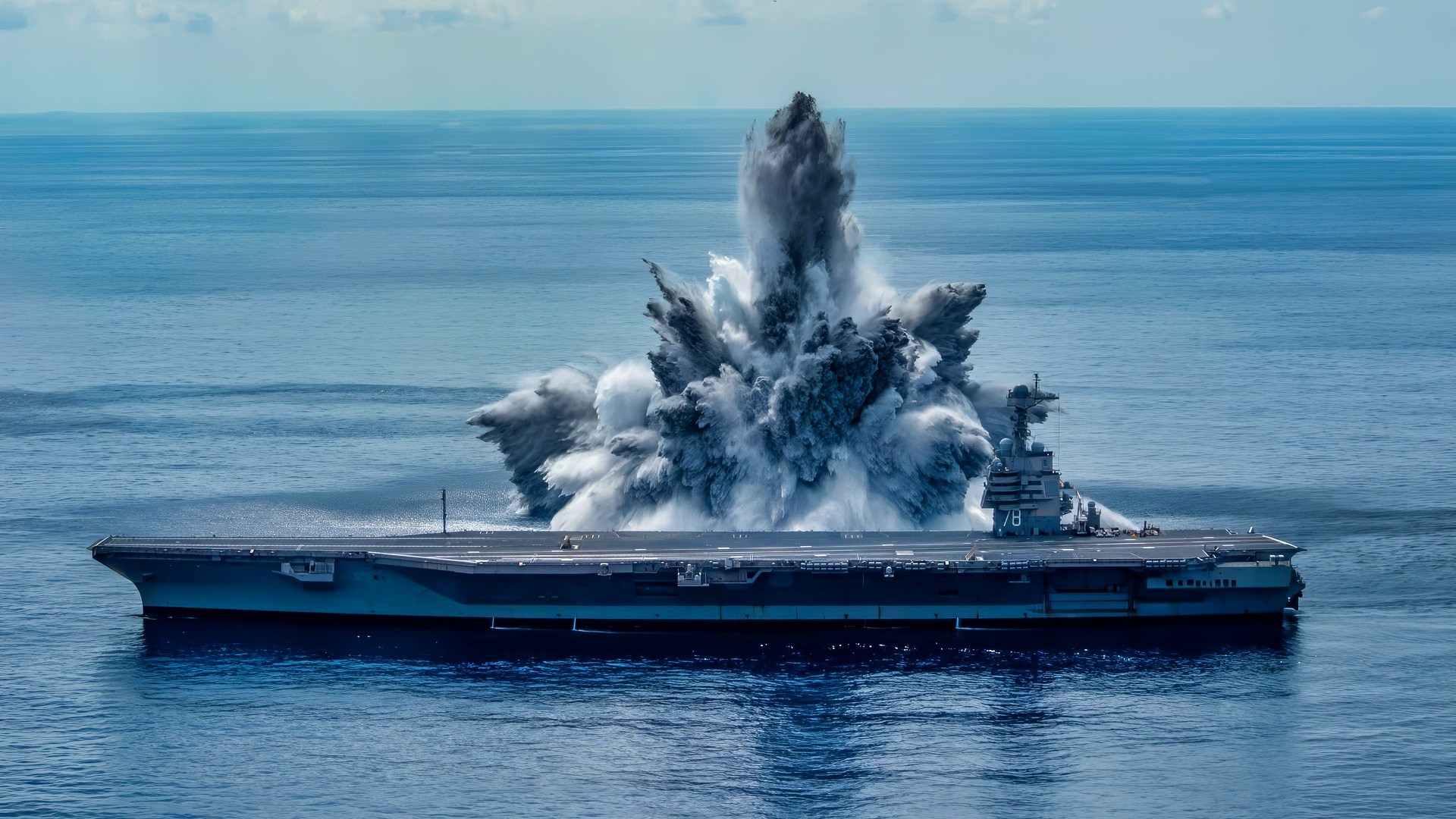
The aircraft carrier USS Gerald R. Ford (CVN 78) successfully completes the third and final scheduled explosive event of Full Ship Shock Trials while underway in the Atlantic Ocean, Aug. 8, 2021. The U.S. Navy conducts shock trials of new ship designs using live explosives to confirm that our warships can continue to meet demanding mission requirements under harsh conditions they might encounter in battle. (U.S. Navy photo by Mass Communication Specialist 3rd Class Novalee Manzella)
While arguments for retiring it cite reaching its 50-year lifespan, obsolescence, and the cost of maintaining aging infrastructure, the Navy has announced its retirement on April 12, 2026, despite current high demand.
Is it a mistake for the Navy to decommission the Nimitz right now, when issues with the Ford-class carriers are delaying their production, while the numbers the Navy needs to maintain its deterrence worldwide are rising?
Current Demand For Aircraft Carrier Strike Groups Is High
The current world situation is volatile, and the demand for US carrier strike groups in the Indo-Pacific, the Middle East, and Europe is very high. US doctrine states that the US maintains 11 aircraft carriers to meet the nation’s needs.

Ford-Class Aircraft Carrier. Image Credit: Creative Commons.
Even with the Nimitz operational, those capabilities have been stretched thin due to the Navy’s OPTEMPO. Now, with the next-generation USS John F. Kennedy (CVN-79) and Ford-class vessels delayed or still in trials, the retirement of the USS Nimitz from the fleet risks making America’s carrier force weaker than is advisable, considering the situation.
And the issues with the shipbuilding industry are not getting any better anytime soon.
The Case for Keeping the USS Nimitz (CVN-68) Active:
The high demand for carrier strike groups in the Indo-Pacific, the Middle East, the Arctic, and elsewhere (Caribbean) has already stretched the Navy thin. Carrier Strike Groups are vital for U.S. power projection in the Indo-Pacific, Middle East, and Europe, and removing one carrier weakens the force.
The transition gap leaves the Navy shorthanded.
New Ford-class carriers (such as USS John F. Kennedy) are facing delays, potentially creating a gap in available carriers if the Nimitz leaves service too soon.
There is a valid argument that keeping the Nimitz active, at least until the USS Kennedy is operational, is a good idea.
The Nimitz’s proven capability is, without question, a plus, despite her age. The Nimitz is a reliable, proven nuclear-powered platform that provides significant operational flexibility.
The Case for Decommissioning Now (Scheduled for April 2026)
The Nimitz has reached its age & lifecycle limit. The ship has served for over 50 years (commissioned 1975), exceeding typical lifespans, and is reaching the end of its operational life.
The maintenance costs will be excessively high. The ship’s nuclear reactors, combined with hull wear and aging systems, place a heavy maintenance burden on the vessel. Older ships require more upkeep, and the Nimitz’s aging infrastructure becomes increasingly complex and expensive to maintain.
Issues of technological obsolescence need to be addressed. While upgraded, the Nimitz-class lacks some advanced features of the newer Ford-class, like EMALS. And although the Navy is having some issues with EMALS, the quicker they are fixed, the faster the Navy can upgrade its air operations.
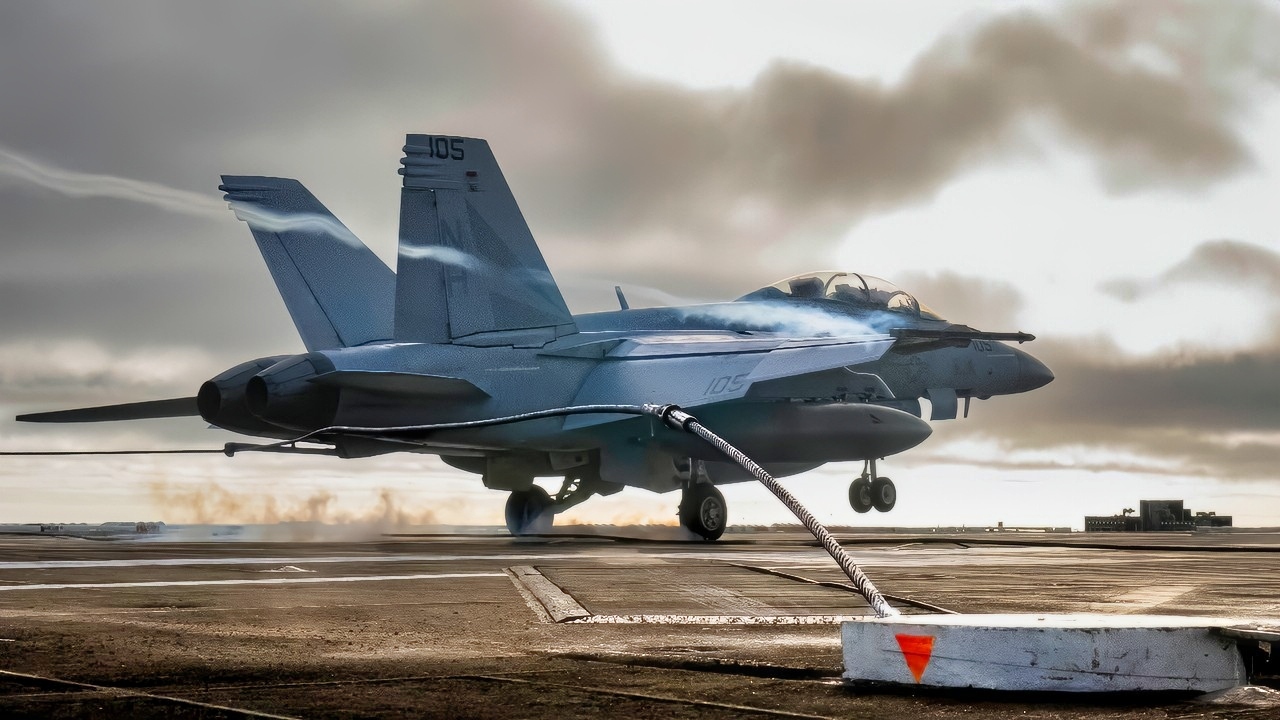
A U.S. Navy F/A-18F Super Hornet, assigned to the “Black Knights” of Strike Fighter Squadron (VFA) 154, lands on the flight deck of Nimitz-class aircraft carrier USS Theodore Roosevelt (CVN 71), July 24, 2025. Theodore Roosevelt, flagship of Carrier Strike Group (CSG) 9, is underway conducting exercises to bolster strike group readiness and capability in the U.S. 3rd Fleet area of operations. (U.S. Navy photo by Mass Communication Specialist 3rd Class Aaron Haro Gonzalez)
Fleet modernization is a priority. Retiring older ships make way for newer, more capable carriers (Ford-class carriers) and streamlining the fleet. By retiring the Nimitz on time, the Navy is freeing up skilled manpower, dock space, and funding for newer carriers and other priorities.
Also, the Navy has already earmarked funds for the USS Nimitz’s deactivation. This includes defuelling of the ship’s reactors and preparation for inactivation. The process of deactivating the ship, as one would predict, is time-consuming and expensive.
There Is No Easy Answer on USS Nimitz Retirement
The Navy, as stated above, will be balancing the current needs (an 11-carrier fleet) against the costs of maintaining a 50+-year-old aircraft carrier. Keeping the Nimitz active would place additional strain on Newport News Shipyard’s already overtaxed maintenance capability, which is far behind schedule.
It is the only shipyard that handles aircraft carrier RCOHs, deactivation procedures, and new carrier construction.
The Navy feels that while extending the Nimitz would temporarily bridge the operational gap, it would also create additional shipyard issues that would further delay new carrier construction.
That’s why the Navy has decided that it will retire the Nimitz this upcoming spring.
And while it is debatable, it is probably the correct choice.
About the Author:
Steve Balestrieri is a National Security Columnist. He served as a US Army Special Forces NCO and Warrant Officer. In addition to writing on defense, he covers the NFL for PatsFans.com and is a member of the Pro Football Writers of America (PFWA). His work was regularly featured in many military publications.


Darkwing
December 9, 2025 at 11:19 am
The US military does not need 12 aircraft carriers